
Puppy Commands
How to Teach Puppy Commands: The Ultimate Beginner’s Guide

Quick Overview:
Puppy commands are simple words like sit, stay, and come that help your puppy learn good behavior. Teaching puppy commands early builds trust between you and your dog, keeps your puppy safe, and makes daily life easier.
This guide shows you the best puppy commands to teach first, step-by-step training tips, common mistakes to avoid, and answers to the most asked questions about puppy commands.Bringing home a new puppy is one of the best feelings in the world. But along with the cuddles and playtime comes a big job: training.
If you want a puppy that listens, behaves, and feels safe in any situation, you need to start with the basics. That is where puppy commands come in.In this guide, we will walk you through everything you need to know about puppy commands.
You will learn which commands to teach first, how to teach them the right way, and how to avoid common training mistakes. Whether you just got a new puppy or you are still struggling with training, this guide will help.
What Are Puppy Commands and Why Do They Matter
Puppy commands are short, clear words you use to tell your puppy what to do. Common puppy commands include sit, stay, come, down, and leave it. These simple words act as a shared language between you and your puppy.
Your puppy does not understand English, but with repetition and rewards, they learn to connect each word with a specific action. This is why puppy commands are often called the building blocks of all dog training. Every advanced trick or behavior your dog will ever learn starts with these basic commands.
Teaching puppy commands is not just about having a well-behaved pet. It also keeps your puppy safe in everyday situations. Puppies are naturally curious, and that curiosity can quickly lead to danger without the right training.
For example, a strong “come” command can stop your puppy from running into traffic if they slip out the front door or off their leash. A solid “leave it” command can stop your puppy from eating something dangerous, like a dropped pill, a piece of chocolate, or a sharp object on the ground.
In these moments, a well-trained puppy command can be the difference between a close call and a serious accident.Beyond safety, puppy commands also help your puppy feel secure. Dogs are naturally social animals that look for structure and leadership. When your puppy does not know what is expected of them, they can feel confused or anxious.
But when you teach puppy commands with patience and love, your puppy starts to understand the rules of their new world. This clarity helps them feel calmer in new situations, whether that is meeting new people, visiting the vet, or exploring a new environment.
Most importantly, this process builds trust between you and your puppy. Every time you teach a command using kindness instead of punishment, your puppy learns that you are someone who guides them, not someone to fear. This trust becomes the foundation of your entire relationship, making every future stage of training easier and more enjoyable for both of you.
When to Start Teaching Puppy Commands
Many new owners wonder when the right time is to begin training. The good news is that you can start teaching puppy commands as early as 7 to 8 weeks old. Puppies have short attention spans, so keep training sessions short, about 5 minutes at a time, a few times a day.
Young puppies learn best through repetition and positive rewards. You do not need to wait until your puppy is older to begin. In fact, starting early makes it easier to build good habits before bad ones form.
If you are still working on house training alongside command training, our puppy potty training guide can help you manage both at the same time.
Best Puppy Commands to Teach First
Not all puppy commands are equal. Some are more important for safety, while others help with everyday manners. Here are the top puppy commands every owner should teach first.
Sit Command
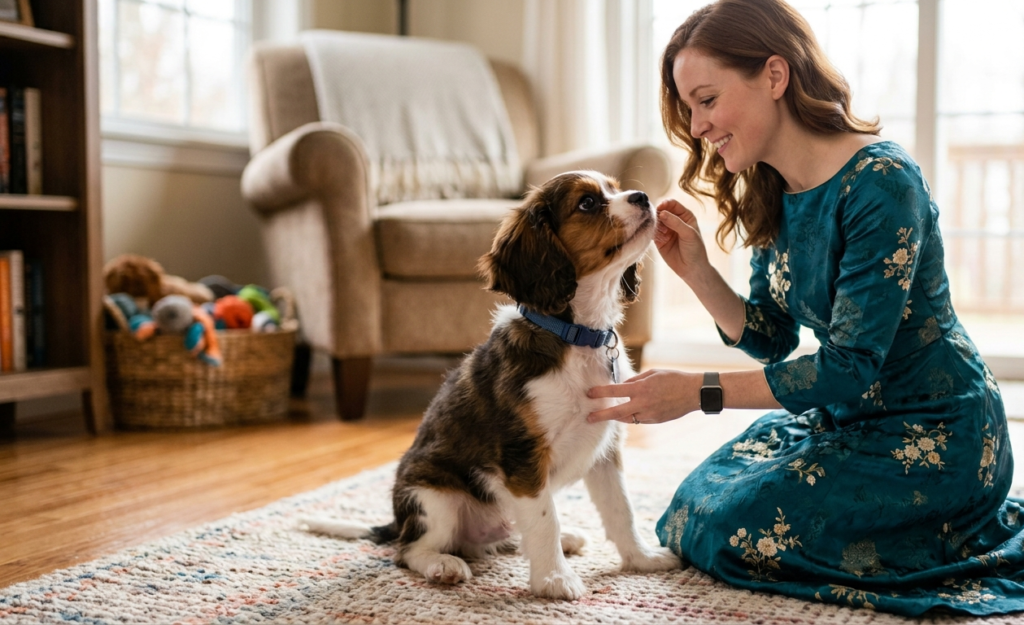
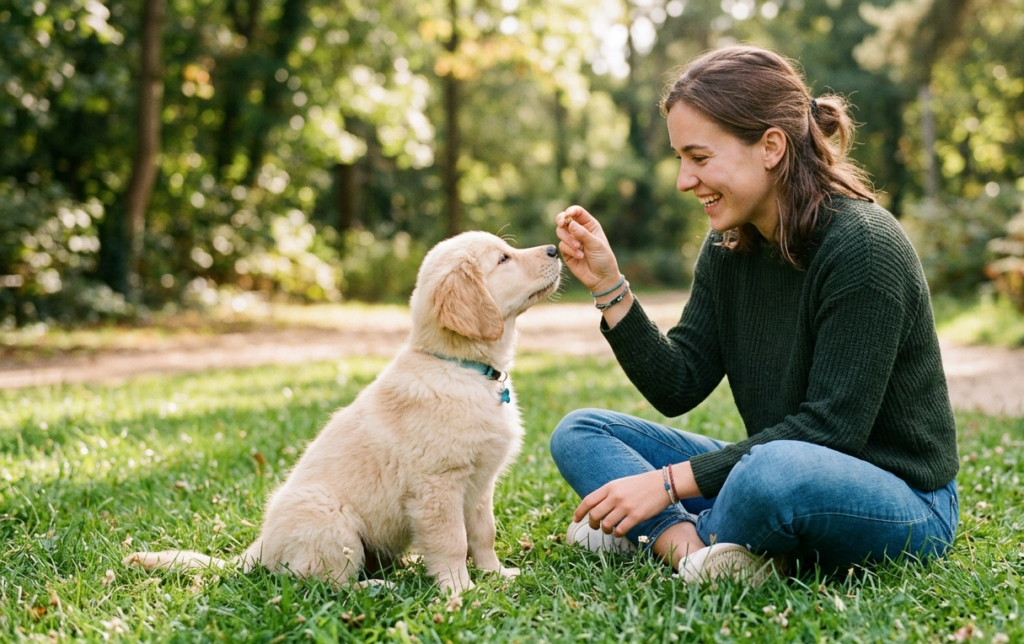
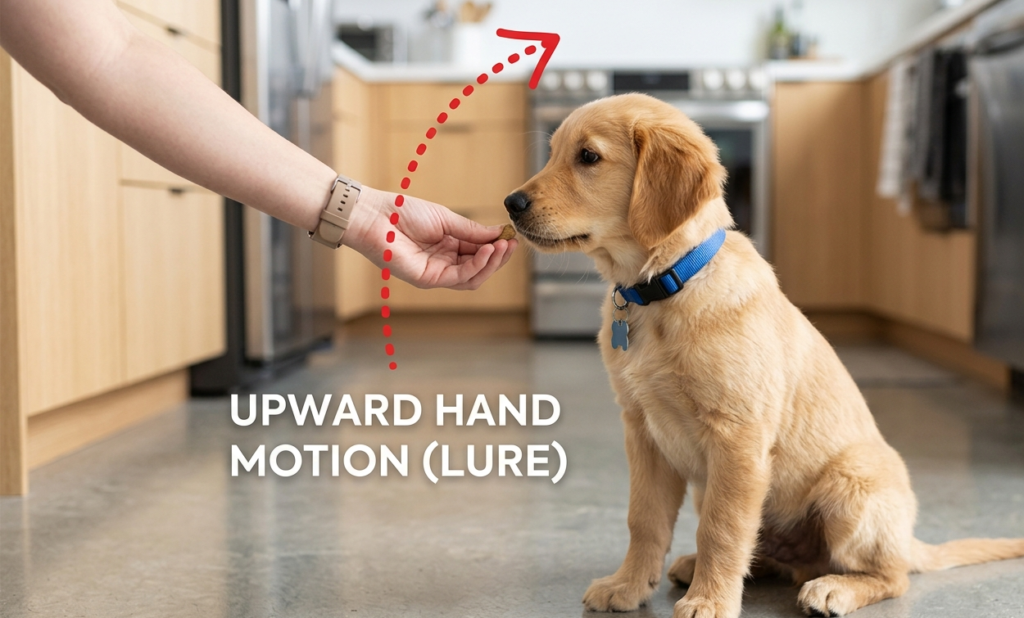
The sit command is usually the easiest and first command puppies learn. It teaches your puppy to control their body and pay attention to you. To teach it, hold a treat close to your puppy’s nose, then move your hand up. As their head follows the treat, their bottom will naturally lower into a sit position.
Stay Command
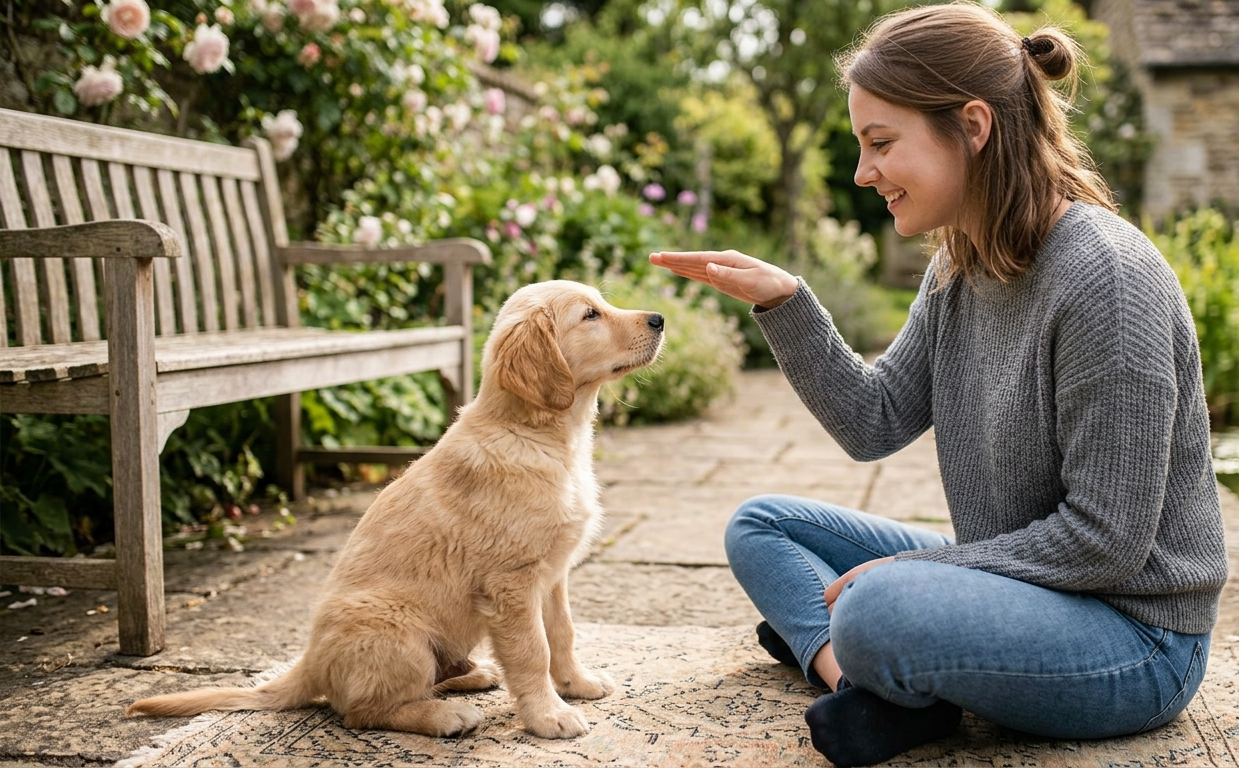
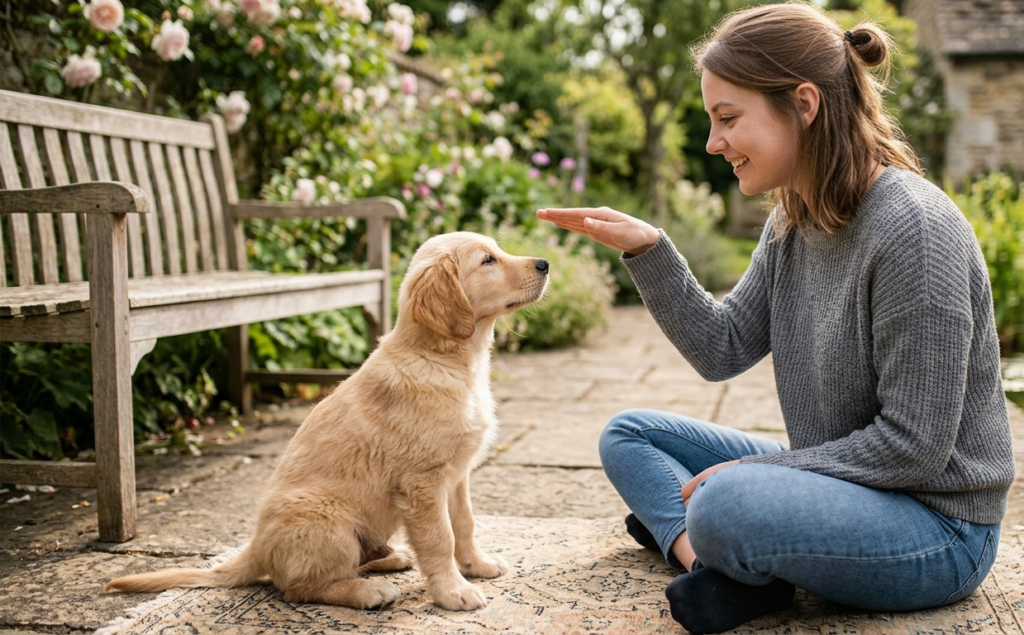
The stay command teaches your puppy patience. Once your puppy understands sit, you can add stay by holding your hand up like a stop sign and saying “stay” while slowly stepping back. Reward your puppy for staying still, even for just a few seconds at first.
Come Command
The come command may be the most important puppy command for safety. It calls your puppy back to you no matter what they are doing. Practice this in a quiet space first, using treats and a happy tone of voice to make coming back exciting.
Down Command
The down command helps your puppy settle and relax. It is useful when you want your puppy to stay calm, such as when guests arrive. Guide your puppy into a lying position using a treat, moving your hand down and toward the ground.
Leave It Command
The leave it command protects your puppy from grabbing dangerous or unwanted items. This is one of the most useful puppy commands for everyday safety, especially during walks or when something falls on the floor.
If you want to explore more foundational skills beyond these five, check out our full puppy training basics guide for a complete training roadmap.
Step-by-Step Guide to Teach Puppy Commands
Teaching puppy commands does not need to be complicated. Follow these simple steps for success.
- Choose one command at a time.
Do not overwhelm your puppy by teaching too many puppy commands at once.
- Use short, clear words.
Say the command once, not several times in a row.
- Reward immediately.
Give a treat or praise right after your puppy follows the command correctly.
- Practice in short sessions.
Five minutes, two to three times a day, works better than one long session.
- Practice in different places.
Once your puppy learns a command at home, practice it outside and around distractions.
- Be consistent.
Everyone in the household should use the same words and hand signals for each command.
- End on a good note.
Always finish training with a command your puppy knows well, so they feel successful.
Consistency is the secret ingredient behind every successful puppy command training plan. Puppies thrive on routine, so the more consistent you are, the faster they learn.
Common Mistakes to Avoid When Teaching Puppy Commands
Many new puppy owners make small mistakes that slow down training. Here are the most common ones to avoid.
- Repeating commands too often. Saying “sit, sit, sit” teaches your puppy to ignore the first request.
- Training for too long. Puppies get bored and distracted after just a few minutes.
- Using punishment. Yelling or scolding can make your puppy scared instead of obedient. Positive reinforcement always works better for puppy commands.
- Skipping practice in real-life situations. A puppy that sits perfectly at home may not listen outside without extra practice.
- Giving up too soon. Some puppy commands take weeks of practice before they become reliable.
According to the American Kennel Club, positive reinforcement training methods lead to better long-term results and a stronger bond between dogs and their owners.
Tips to Make Puppy Command Training Fun and Effective
Training should feel like a game, not a chore. Here are a few ways to keep your puppy engaged while learning puppy commands.
- Use small, soft treats that your puppy can eat quickly.
- Keep your voice upbeat and happy during training.
- Add hand signals along with verbal commands for extra clarity.
- Practice puppy commands during walks, mealtime, and playtime, not just formal sessions.
- Celebrate small wins. Every successful command deserves praise.
Choosing the right food can also affect your puppy’s energy and focus during training. If you are unsure what to feed your growing puppy, take a look at our guide on best dog food for puppies to keep them healthy and ready to learn.
Final Thoughts
Teaching puppy commands is one of the most rewarding parts of raising a puppy. With patience, consistency, and positive rewards, your puppy can learn to sit, stay, come, down, and leave it in just a few weeks.
Remember to keep sessions short, stay consistent, and always end training on a positive note.Start small, stay patient, and watch your puppy grow into a well-behaved, happy companion.
FAQs About Puppy Commands
What are the first puppy commands to teach?
The first puppy commands to teach are usually sit, stay, come, down, and leave it. These basic commands build the foundation for all future training.
At what age should I start teaching puppy commands?
You can start teaching puppy commands as early as 7 to 8 weeks old. Keep sessions short and use positive rewards.
How long does it take to teach a puppy commands?
Most puppies learn basic commands within a few days to a few weeks with consistent, short training sessions.
What is the easiest command to teach a puppy?
Sit is usually the easiest puppy command to teach because it uses your puppy’s natural body movement.
Should I use treats to teach puppy commands?
Yes, treats are a great way to reward your puppy and reinforce good behavior. Over time, you can reduce treats and use praise instead.
Why does my puppy not listen to commands?
Puppies may not listen if training sessions are too long, commands are repeated too often, or there is not enough consistency. Short, positive sessions usually solve this issue.

Puppy Obedience Training 101: A Beginner’s Guide to Raising a Well-Mannered Dog

Common Dog Behavior Problems and How to Fix Them

Puppy Commands for Off-Leash Safety: What Every Owner Needs

Best Age to Start Leash Training a Puppy for Calm Behavior

How to Fix Puppy Behavior Using Gentle Training

puppy-obedience-training-commands/Puppy Training Tips: A Complete Step-by-Step Guide for Beginners

Puppy Obedience Training 101: A Beginner’s Guide to Raising a Well-Mannered Dog
Common Dog Behavior Problems and How to Fix Them
Puppy Commands for Off-Leash Safety: What Every Owner Needs
Best Age to Start Leash Training a Puppy for Calm Behavior
How to Fix Puppy Behavior Using Gentle Training