Puppy Training
Best Age to Start Leash Training a Puppy for Calm Behavior


Leash training a puppy might be a difficult task, but it’s a necessary skill to keep them safe when they’re outside. Taking a new puppy home is a happy event, but it also takes a lot of work. Fortunately, you can make them enjoy and even look forward to being onthe leash with patience, rewards, and effective communication.
Choosing the appropriate collar and leash can significantly impact your puppy’s success. Certain breeds respond better to particular training aids, and using the incorrect kind may hinder training or even endanger you or your pet. These suggestions can help you make the best decisions while leash training a puppy.
Puppies beginning at eight weeks old can learn the crucial ability of walking on a leash. While some people pick up leash training fast, others need a bit more time. In any case, it’s necessary to maintain consistency, optimism, and most importantly, patience.
According to common opinion, pups do not naturally know how to walk on a leash beside their owners. In actuality, a puppy may find leash training perplexing. It will take some time for them to get used to being restrained by a collar, harness, or leash before they can be expected to walk calmly beside you without tugging on the leash.
At what age should you start leash training a puppy?
Leash training a puppy as early as possible is generally advised. Remember, though, that the exact moment may change according to each puppy’s development. Early on, concentrate on gradually and positively adjusting the puppy to the collar/harness and leash.
Give them time to get acquainted with the equipment and connect it to enjoyable activities like games and treats. Once the puppy is comfortable wearing the collar or harness at home and has had time to get used to the leash, formal leash training and walking exercises can begin.
As the puppy matures and becomes more at ease, start with short, gentle walks in a controlled setting and progressively increase the length and complexity of the walks. Keep in mind that pups have short attention spans, so make sure your training sessions are interesting and quick. Throughout the leash training process, patience, consistency, and positive reinforcement are essential.
THE STEP-BY-STEP PROCESS FOR PUPPY LEASH TRAINING
Pulling on both sides of the leash becomes unnecessary when a puppy learns to walk peacefully beside you. Rather, your puppy will learn to walk next to you within the length of the leash, making the process easier and more pleasurable for both of you.
Discover our methodical approach to teaching a puppy to walk peacefully next to you on a leash by continuing to read.
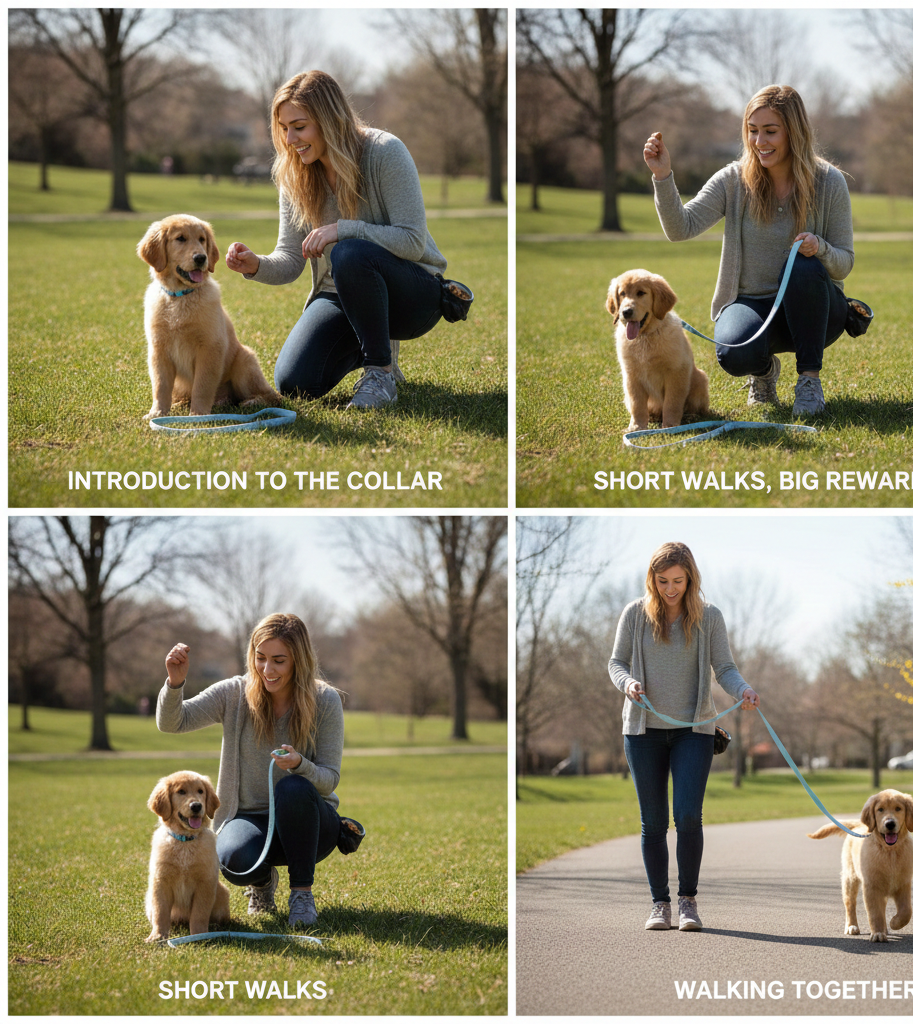
1) INTRODUCE YOUR PUPPY TO THEIR NEW LEASH
First, allow your puppy some time to become used to their new lead and collar. Considering there is less stimulation to divert your puppy, it is best to begin inside. Avoid hurrying. While providing lots of positive reinforcement, give your puppy some time to sniff about their new leash. Once they lose interest, secure the harness and give them enough time to adjust.
(2) TEACH YOUR PUPPY A NEW COMMAND
When your puppy is at ease with the leash over their body, give them a command like come to help them approach you while wearing it. Give them a treat and lots of encouragement as soon as they do.
3 WALK YOUR PUPPY AROUND THE ROOM ON A LEASH
Providing your puppy enough time to adjust to their leash and feel at ease with their new accessories is important. The first step to teaching your puppy to walk on a leash is to avoid pulling or coercing them to walk next to you or in your desired direction.
Rather, allow them to acclimate to the sensation of the leash. Wait for them to settle down before proceeding if they get too enthusiastic and attempt to pull. They will soon discover that little pressure on the leash indicates stop, whereas no pressure indicates go.
4 TAKE YOUR LEASH TRAINING OUTSIDE
It’s time to begin teaching your puppy outside once you’ve mastered these techniques.It’s necessary to train your puppy in a low-distraction location in your backyard, for example, because the outer world is full of distractions.
As you take a few steps forward, practice asking the puppy to pay attention to you. Although you may have to deal with a few additional distractions as your puppy experiences the big outdoors, the training process will still be very simple.
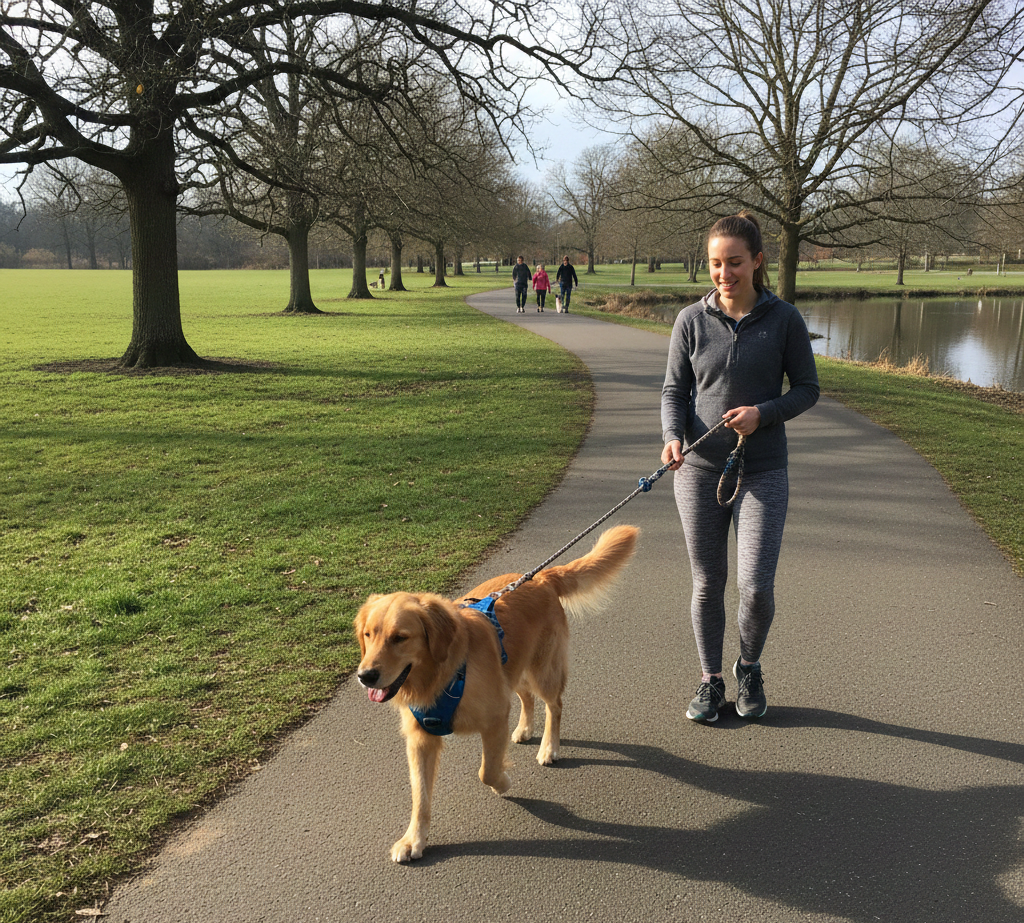
LEASH TRAINING ESSENTIALS FOR YOUR PUPPY
It pays to be prepared when it comes to puppies, and leash training is no exception. The following tools for leash training will help your dog learn more quickly:
Leash
- Treats
- Treats Barriers, such as playpens, pet pens, and crates. When teaching your puppy indoors, these can assist in creating a straightforward path.
- Longline leash; for when your puppy becomes self-assured
- Patience, as well as lots of encouragement

Why Is Dog Leash Training Important?
Safety: Your dog’s and other people’s safety is guaranteed by leash training. You can better manage your dog’s activities and keep them from getting lost, running into hostile animals, or approaching potentially dangerous objects when they are properly leash-trained.
Respectful interactions: Teaching dogs good manners through leash training makes it possible for them to behave politely and interact with others in a respectful manner. Dogs learn to walk peacefully beside their owners without yanking or lunging. By eliminating jumping on individuals and unwanted smells without permission, this training aids in setting limits.
Communication and bonding: Leash training fosters a closer relationship between you and your puppy This mutual understanding improves your relationship and increases the enjoyment of your walks.
Legal requirements: Leash etiquette mandates that puppy be kept on leashes in public locations in several places. You may exhibit responsible dog ownership, adhere to these regulations, and stay out of trouble with the law or fines by leash training your dog.
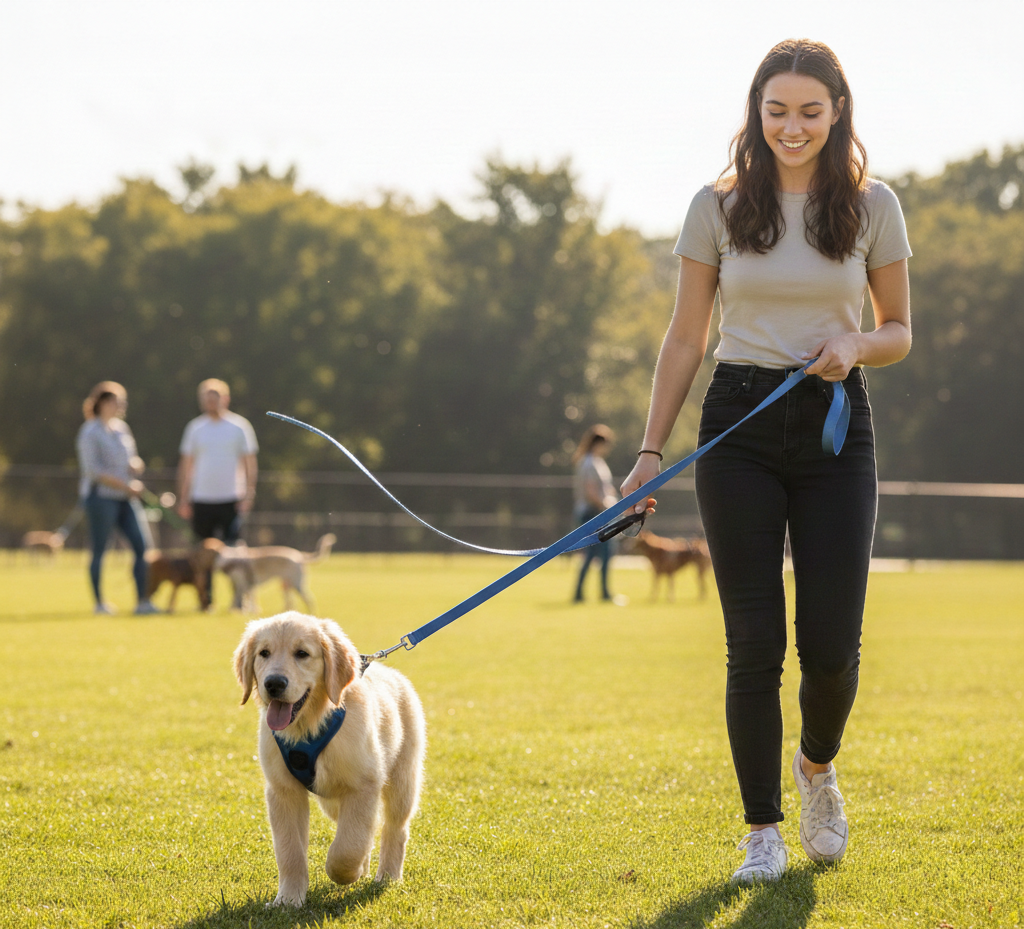
What is the best age to leash train a puppy?
The best age to leash train a puppy is between 8 and 12 weeks old. At this age, puppies are naturally curious and more willing to accept new experiences, including wearing a collar or harness and walking on a leash. Early leash training helps prevent common problems like pulling, fear, or refusal to walk later in life.
Puppies learn faster during this stage, especially when training is gentle and reward based. Short, positive sessions with treats and praise help the puppy feel comfortable and confident. Even if a puppy is older, leash training is still possible, but starting early makes the process easier and builds good walking habits from the beginning.
What is the 7 7 7 rule for puppies?
Before 7 weeks of age, a puppy should experience:
1. 7 different surfaces
Examples include grass, carpet, tile, sand, concrete, or wood floors. This helps prevent fear of new textures.
2. 7 different objects
Such as toys, balls, boxes, umbrellas, grooming tools, or household items. This builds curiosity instead of fear.
3. 7 different locations
For example, different rooms, the yard, a friend’s house, the car, or a quiet outdoor area. This improves adaptability.
4. 7 different people
Men, women, children, people wearing hats or glasses. This reduces the fear of strangers later.
5. 7 gentle handling experiences
Touching ears, paws, tail, mouth, and belly helps puppies accept grooming and vet care.
6. 7 different sounds
Vacuum cleaner, doorbell, traffic, TV, clapping, or music. This prevents noise sensitivity.
7. 7 short car rides
Even brief rides help puppies become comfortable with travel.
What is the 10 10 10 rule for puppies?
The 10-10-10 rule for puppies is a simple guideline often used during the first days in a new home, especially for adopted or newly rehomed puppies. It helps owners understand how puppies adjust emotionally and behaviorally over time.
First 10 minutes
Your puppy may feel overwhelmed, nervous, or cautious. New smells, people, and sounds can be scary. It’s normal if the puppy seems quiet or unsure.
First 10 hours
The puppy begins to observe and explore. You may notice curiosity mixed with confusion. Some puppies show stress behaviors like whining or pacing during this period.
First 10 days
Your puppy starts to settle in and feel safer. Personality begins to show, routines make sense, and learning becomes easier. This is when training and bonding truly begin.
How do you teach a puppy calmness?
Teaching a puppy calmness is just as important as teaching basic commands. Calm behavior doesn’t happen automatically it’s learned through routine, guidance, and positive reinforcement.
1. Reward calm behavior
Any time your puppy is lying quietly, sitting politely, or relaxing, gently praise and reward them. This teaches the puppy that calm behavior brings good things.
2. Create a predictable routine
Puppies feel calmer when they know what to expect. Regular times for meals, walks, play, training, and rest reduce overexcitement and anxiety.
3. Teach settle or place
Encourage your puppy to relax on a mat or bed. Reward them for staying there calmly. This helps them learn how to switch off.
4. Provide enough exercise and mental stimulation
A tired puppy is a calm puppy. Short walks, play sessions, puzzle toys, and basic training help release excess energy without overstimulation.
5. Stay calm yourself
Puppies copy human behavior. Speaking softly and moving slowly during exciting moments helps your puppy mirror your calm energy.
6. Ignore attention-seeking excitement
Jumping, barking, or nipping for attention should be calmly ignored. Reward your puppy once they settle down instead.
7. Use gentle handling and positive reinforcement
Avoid shouting or punishment. Calm, reward-based training builds trust and emotional control.
Conclusion
Leash training is an essential part of raising a calm, well-behaved puppy, and the best age to start is between 8 and 12 weeks. Beginning early helps your puppy feel comfortable with the leash, prevents pulling habits, and supports calm walking behavior.
By following a step-by-step leash training process, using positive reinforcement, and understanding helpful guidelines like the 7-7-7 rule and 10-10-10 rule, you can make training stress-free and effective.
Teaching calmness through routine, rewards, and gentle handling builds emotional balance and confidence. With patience, consistency, and kindness, leash training becomes a powerful tool for shaping a relaxed, happy, and obedient puppy for life.


Puppy Obedience Training 101: A Beginner’s Guide to Raising a Well-Mannered Dog

Common Dog Behavior Problems and How to Fix Them

Puppy Commands for Off-Leash Safety: What Every Owner Needs

Best Age to Start Leash Training a Puppy for Calm Behavior

How to Fix Puppy Behavior Using Gentle Training

puppy-obedience-training-commands/Puppy Training Tips: A Complete Step-by-Step Guide for Beginners

Puppy Obedience Training 101: A Beginner’s Guide to Raising a Well-Mannered Dog
Common Dog Behavior Problems and How to Fix Them
Puppy Commands for Off-Leash Safety: What Every Owner Needs
Best Age to Start Leash Training a Puppy for Calm Behavior
How to Fix Puppy Behavior Using Gentle Training