
Puppy Training
puppy-obedience-training-commands/Puppy Training Tips: A Complete Step-by-Step Guide for Beginners

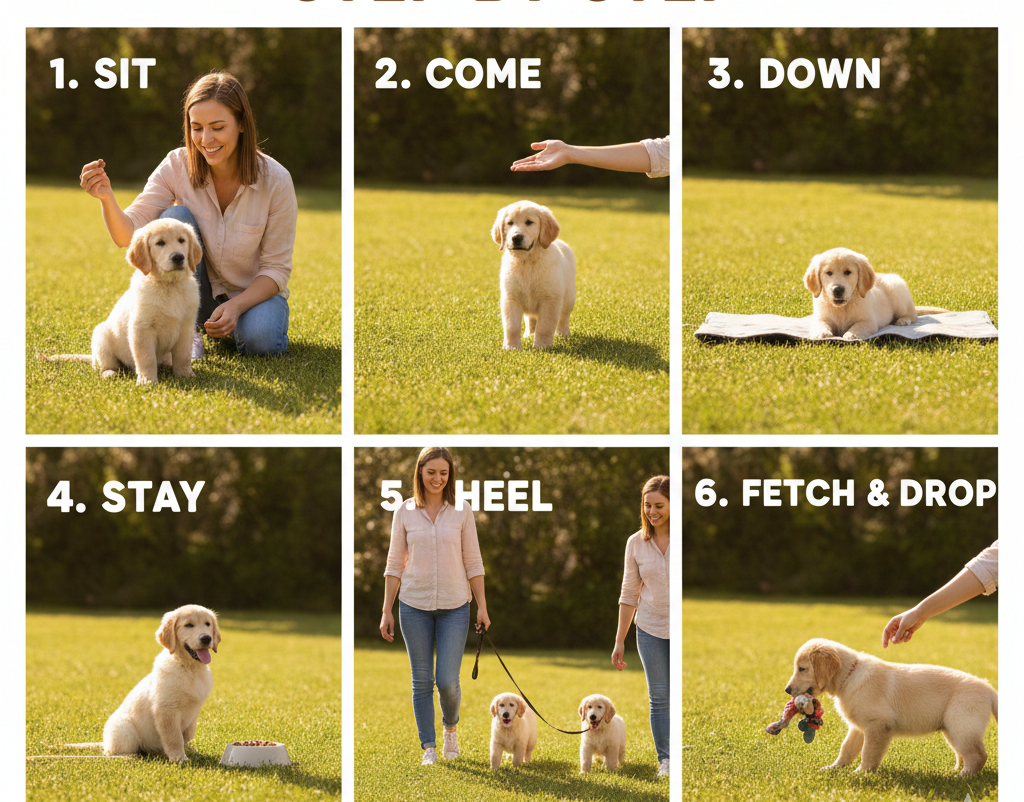
Puppy training isn’t about how you train your puppy easily, it’s about how you are connected with your puppy emotionally and how you are consistent in giving time and attention to your new family member. In early stages your pups need time, attention, and love from your side. Once you are ready to give these things your puppy will be more happy and eager to learn from you.
If you want your pup to follow what you want to command then remember one thing that rewarding and patience are really important. Being playful for puppies is another plus point because puppies love to play at an early age so remember that you have to be available for pups and give your time and emotions consistently.
Giving regards in the form of treats and his favorite food can be really helpful when you train him for commands and calling instructions. In this article we’ll explain how you can train your puppy from the basics and we’ll share some practically proven and researched techniques with you.
How to Train a Puppy Step by Step?
Train a puppy gradually, provide positive reinforcement, and conduct brief, regular sessions 5–10 minutes that concentrate on socializing, potty training, and fundamental commands like “Sit” and “Come,” reinforcing desired behaviors with praise and treats while exercising patience .
.
Potty Training
puppies can often start toilet training between the ages of 8 and 12 weeks. Dogs cannot toilet train themselves, so pet parents must supervise the procedure, which usually takes a week to a month.
Once a day, take a puppy outside on a leash for half an hour, and then calmly remain still for five minutes to toilet train them. This encourages them to leave and reduces distractions. Make sure to give them a treat and compliment them when they succeed.
Crate Training
It helps with potty training, provides a secure environment for them, and may even lessen separation anxiety. Choosing the appropriate crate size and setting up a friendly environment are the first steps.
Next, pick the perfect spot, such as a corner of the living room, which is peaceful but not too remote. You can then present the crate to them and allow them to sniff inside.
In later door-closing exercises, practice shutting the door and take a quick step back.
Make sure your puppy is constantly at ease by keeping an eye on them, and allow them out of the crate if you notice any indications of worry. Work your way up to lengthier stays.
Basic Cues (Sit, Stay, Come)
Obedience training is crucial for your dog’s safety, even while it’s entertaining to see them listen and react to basic training cues like sit, stay, and come.Although each command calls for a somewhat different strategy, we advise employing positive reinforcement for each in order to foster a connection based on trust. This means giving your dog the cue and rewarding them when they react appropriately.
Leash Training
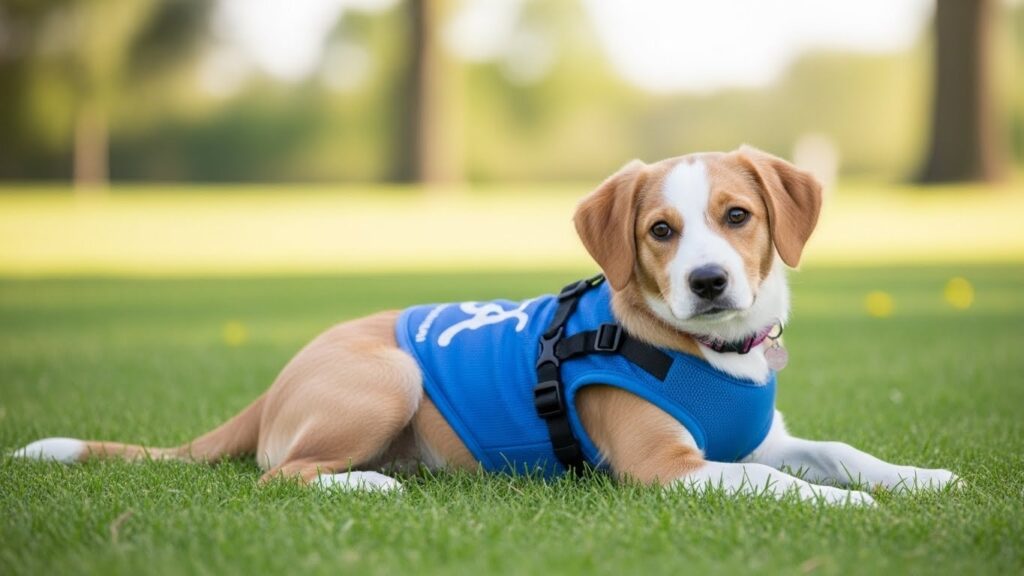
A leash is your puppy’s best friend; it gives you both a lot of freedom to explore, exercise, and enjoy the sunshine. A leash-trained puppy won’t pull or try to dart away, which makes time outside much less stressful.
To leash train a puppy, start inside in a small, quiet room; show them the leash and attach it to their harness so they can get a feel for it in a familiar area; walk around the space, taking tiny steps and stopping and starting to encourage them to stay by your side. Give them treats whenever they stop when you stop.
When to Start Training a Puppy?
The moment your puppy comes to your house is the ideal time to begin teaching them. On the first day, teach them what is good and wrong, and as they get older, keep teaching them the rules. Recall that training occurs during all of your interactions with your puppy, not only during training sessions.
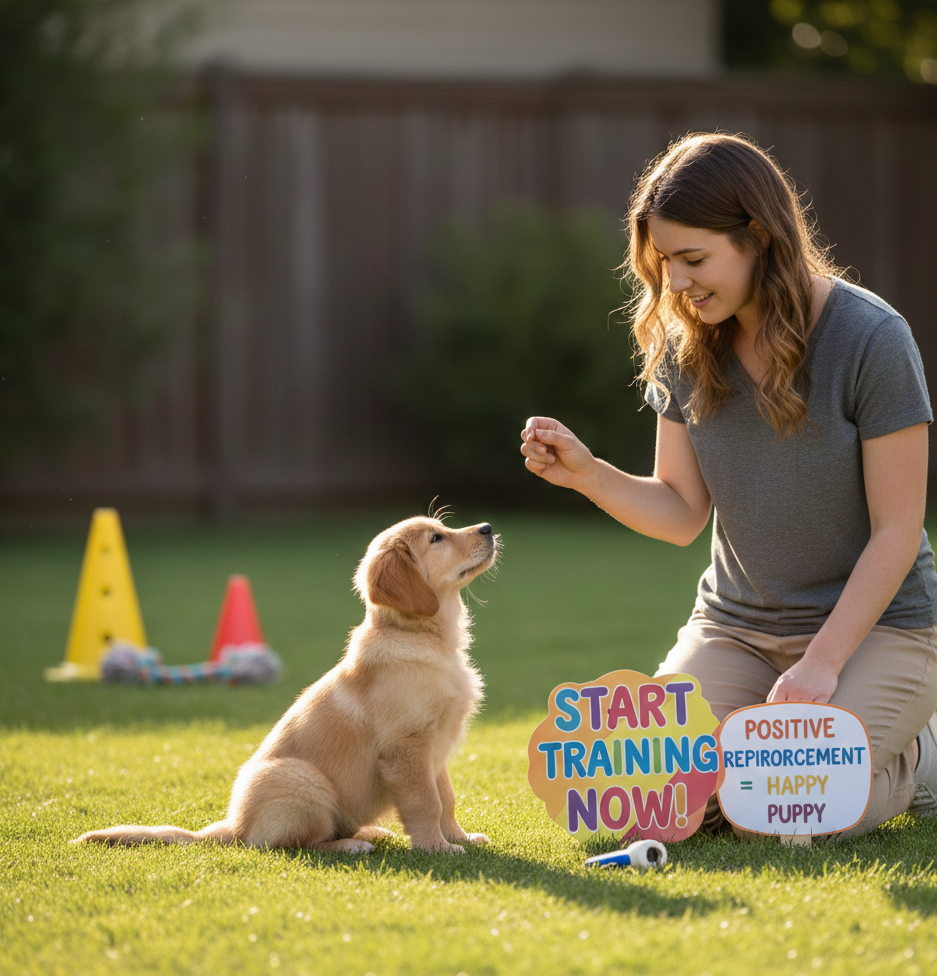
It’s acceptable if you overlook something along the road. It’s true that you can teach an aging dog new skills. In the interim, contact your veterinarian if you have any queries or encounter any issues during training.
Essential Commands to Teach Your Puppy First
The goal of training pups is to ensure their safety and well-being as they develop into healthy adults. While entertaining friends and family with adorable skills is nice, it’s more crucial that your puppy initially learn the four fundamental commands: sit, stay, come, and heel.
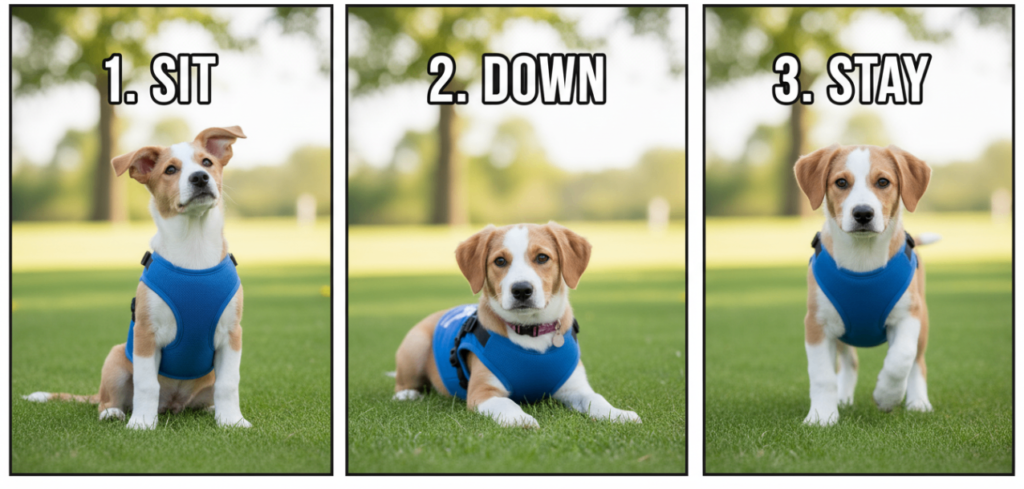
How to Train a Puppy to Sit?
Your puppy needs to understand that certain terms are associated with particular behaviors. “Sit” is a wonderful place to start because it is one of the most fundamental and significant commands.Say “sit” to them as this occurs, and give them a treat and lots of praise.
Once your dog has mastered this command, take the treat out of the mix and keep saying “sit”until they get it right.
How to Improve Dog Recall?
As you and your dog learn to know one another, the “come” command comes in handy. If they stray or break free from their leash, it’s very crucial that they learn this command.First, put your dog on a leash in a peaceful, distraction-free setting.
It works best indoors, but it also works well outdoors in a calm, contained space.Kneel two to three feet away from your puppy while holding the leash. Say “come” and gently pull the leash.
Puppy Behavior, Socialization, and Discipline
Puppies go through important phases of development. Their experiences throughout the primary socializing phase, which typically lasts from 3 to 14–16 weeks of age, significantly influence their disposition as adults.
They are extremely impressionable during this period, but they are also susceptible to fear; bad experiences can have long-lasting effects, so it’s important to make sure that interactions are positive.

Puppy behavior
A well-behaved puppy needs a stimulating environment, regular exercise, a regular schedule, and constructive social contacts.Dog behavior can be strange and even concerning, or it can be humorous and endearing. Almost all dog owners have concerns about their dogs’ actions, such as eating grass, digging in the yard, or acting aggressively, at some point.
When it comes to dog behavior training ideas, our behaviorists can assist. Common puppy habits like nipping, jumping, chewing, and house-soiling should be redirected rather than punished.
Puppy socialization
It is advisable to start socializing your dog between the ages of 0 and 16 weeks.A puppy’s brain development is most pliable and impressionable during this period when their
personality starts to take shape, even though socializing them is a continuous endeavor.
A puppy learns how to play, interact with people and other animals, develop self-discipline, develop bite inhibition, and more throughout this stage of life. As they continue to mature, they start to recognize acceptable boundaries and typical dog behavior.
Encouraging your dog during this time will lay the groundwork for your loved one to be successful in fostering excellent social interactions for the rest of their lives.
Puppy Discipline
Discipline refers to training techniques that address your puppy’s behavioral issues without using physical or verbal punishment. Redirection, simple commands that punish in a firm but calm tone of voice, supervision, and positive reinforcement are all used in puppy discipline.
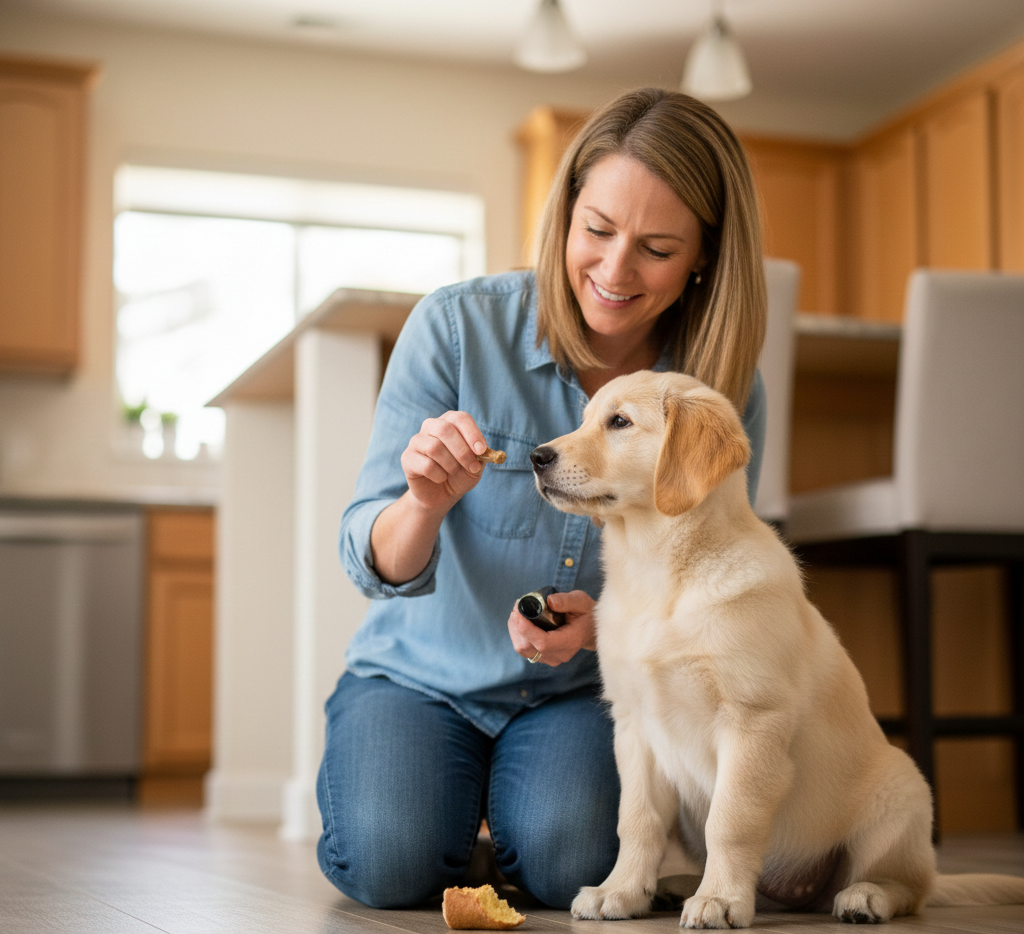
Using positive reinforcement: Give puppies verbal praise, playtime, treats, or petting when they behave well or correct their misbehavior. The best way to build a trusting relationship with your new puppy is to reward excellent conduct with positive reinforcement, which motivates them to repeat the behavior in order to receive the benefits.
Puppy Training Schedule by Ages
age-specific training plan to help you in moving through each phase. Since puppies are usually still with their mother and littermates, the 0–8 week period is not covered.
They pick up crucial traits like biting inhibition and social cues from their mother during this period. Furthermore, puppies are not yet mature enough for formal training at this age.
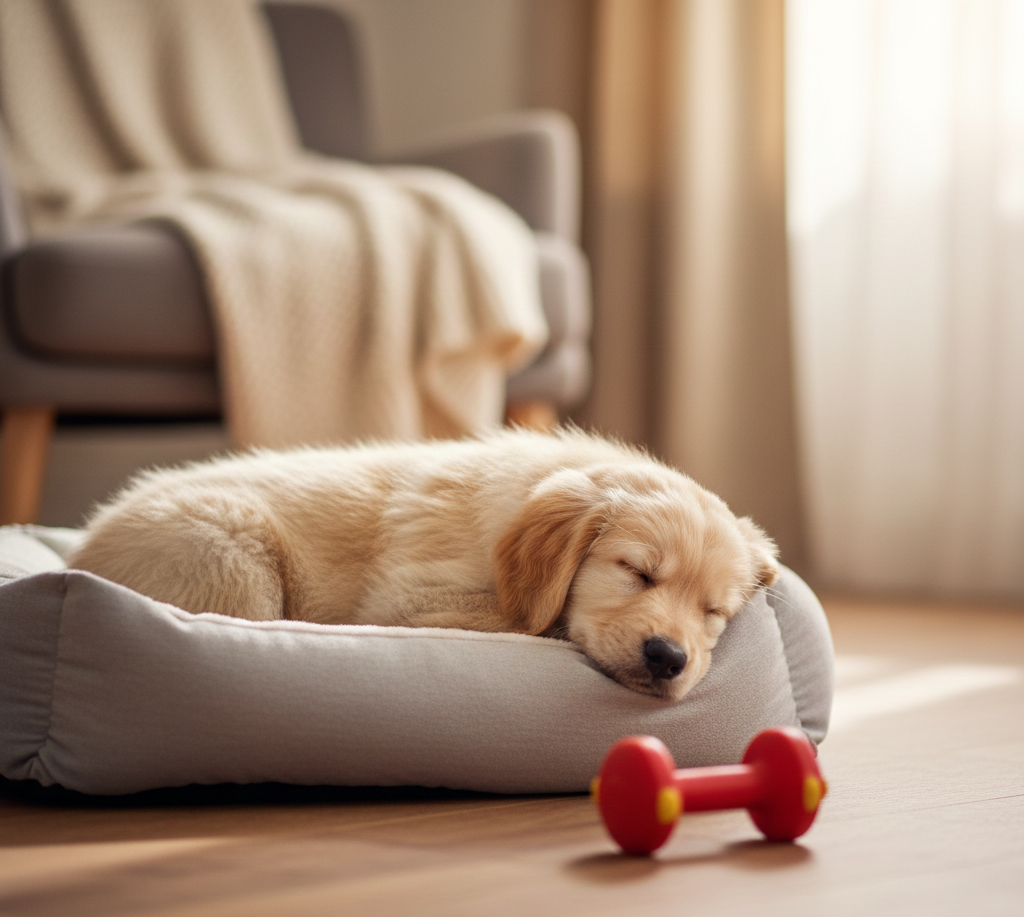
8–10 Weeks Old
Your puppy is eager to explore at this age and is rapidly learning new things. They are beginning to bond with you and their new surroundings, but they are still heavily reliant on their mother and littermates for security and comfort.
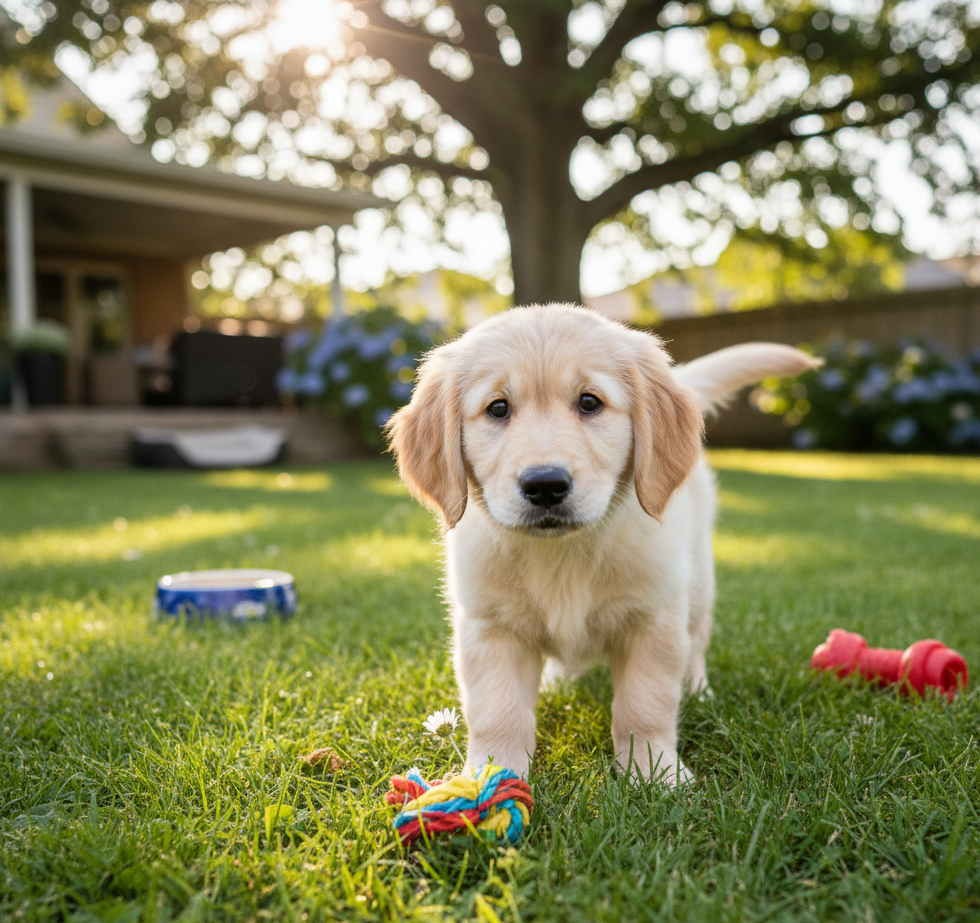
10–12 Weeks Old: Foundation training
Your puppy is getting increasingly self-reliant and is full of curiosity. Regular training is crucial because they will begin to push boundaries.This is a crucial time to establish trust and lay a solid basis for learning in the future.
3–4 Months Old: Confidence building
At this point, your puppy is starting to feel more at ease and confident. They have a strong desire to learn, but they can also get easily confused or overwhelmed, so patience and persistence are essential.
4–6 Months Old: Structure & consistency
Although your puppy is growing more confident, they still want consistency and structure. They’re pushing themselves, therefore it’s critical to uphold boundaries and follow the rules.
6–9 Months Old: Adolescence
Your puppy may become easily sidetracked and begin to push boundaries more than before. With the correct guidance, they will continue to grow into well-mannered adults, even though they may show greater independence and a little rebelliousness.
9–12 Months Old: Maturity & Reinforcement
Your puppy is almost an adult at this point and may start to settle down a little. Now is the moment to keep up the framework you’ve established, reinforce all of your prior training, and make sure your dog is self-assured and well-rounded.
What is the first thing you should train a puppy on?
The first things to train a puppy are their name recognition, followed by potty training, and essential socialization, all using short positive sessions with treats or praise.
Building attention to their name is crucial for future commands, while potty training and socialization (safe exposure to new things) are foundational for a well-adjusted dog, even before all vaccines are complete.
What is the 7 7 7 rule for puppies?
- Been in at least 7 different locations (backyard, garage kitchen, neighbor’s yard, etc.)
- Eaten from at least 7 different containers Been held and petted by at least 7 different people
- Taken at least 7 one mile car rides Been in a crate at least 7 times Played with at least 7 different kinds of toys
- Walked on at least 7 different substrates (grass, gravel, concrete, etc.)
- Been taken somewhere alone, without mom or littermates, at least 7 times
- Been exposed to at least 7 challenges (climbed on a box, gone through a tunnel, climbed up steps, etc.)
What is the 10 minute rule for puppies?
Try to train before you feed your puppy, because your dog will be hungry and will work for food. At first he she may try to jump all over you, ignore it, be persistent, I’ll teach you how. It is the easiest thing to teach.
It doesn’t matter what is going on, who is around you,but try to train if at all possible outside so when done training then you exercise and play with your dog, it’s all part of saying good boy or good girl.
With your pea size ground beef balls, the puppy will find you, and start coming to you outside, he or she will learn your ten minute routine. Yup,10 minutes is all it takes.
What age should a puppy start training?
A puppy should start training at 7–8 weeks of age, which is usually when they come home. At this stage, puppies learn very quickly and are open to new experiences.Early training helps puppies develop good habits and prevents behavior problems later in life.
As the puppy grows, training can gradually become more structured. By three to six months of age, puppies can learn additional commands, leash walking, and better self-control. Starting training early builds a strong foundation for obedience, confidence, and a healthy relationship between the puppy and the owner.
Conclusion
Puppy training is not just about teaching commands it is about building a lifelong bond based on trust, consistency patience and positive reinforcement.By incorporating step-by-step training methods such as potty training, crate training, leash training and basic obedience commands like sit, stay, come, and heel, pet parents can guide their puppies toward safe and desirable behaviors.
Equally important are puppy behavior management, socialization, and gentle discipline. Redirecting unwanted behaviors, exposing puppies to positive social experiences during their critical developmental window, and avoiding harsh punishment ensure emotional stability and healthy social skills.
An age-appropriate training schedule further supports gradual learning, allowing puppies to progress naturally through each developmental phase.

Puppy Obedience Training 101: A Beginner’s Guide to Raising a Well-Mannered Dog

Common Dog Behavior Problems and How to Fix Them

Puppy Commands for Off-Leash Safety: What Every Owner Needs

Best Age to Start Leash Training a Puppy for Calm Behavior

How to Fix Puppy Behavior Using Gentle Training

puppy-obedience-training-commands/Puppy Training Tips: A Complete Step-by-Step Guide for Beginners

Puppy Obedience Training 101: A Beginner’s Guide to Raising a Well-Mannered Dog
Common Dog Behavior Problems and How to Fix Them
Puppy Commands for Off-Leash Safety: What Every Owner Needs
Best Age to Start Leash Training a Puppy for Calm Behavior
How to Fix Puppy Behavior Using Gentle Training