
Puppy Obedience Training
When Should a Puppy Start Obedience Training? The Right Age to Begin


Puppy obedience training is one of the first questions every new dog owner asks, and the answer matters more than most people realize. Many people assume they should wait until their puppy is several months old, but the truth is, training can and should begin much earlier than most people think.
A puppy’s brain is developing rapidly in those first few weeks, and every interaction you have with them is teaching them something, whether you intend it to or not. Puppy obedience training doesn’t need to wait for a formal class or a certain ready age.
In this guide, we’ll break down the ideal age to start training, what your puppy can learn at each stage, how training needs differ by breed size, and how to build good habits early without overwhelming your new companion. By the end, you’ll have a clear, practical roadmap for the first year of your puppy’s life.
Why Early Training Matters

Puppy obedience training matters from day one because puppies are learning constantly, whether you’re actively teaching them or not. If you don’t guide their behavior early on, they’ll form habits on their own and not all of them will be ones you want.
A puppy that isn’t taught to jump, for example, will simply keep jumping because it gets attention, which is its own reward. Early training helps with:
- Building a strong bond between you and your puppy
- Preventing bad habits like biting, jumping, and excessive barking
- Socializing your puppy with people, animals, and new environments
- Setting the foundation for more advanced obedience work later
- Reducing anxiety and fear-based behavior as your puppy matures
Puppy obedience training also gives structure to your puppy’s day, which many dogs find comforting. Puppies thrive on routine, and short, predictable training sessions help them understand what’s expected of them in a low-pressure way.
The Right Age to Start: 7 to 8 Weeks

Puppy obedience training can begin as early as 7 to 8 weeks old, according to most veterinarians and professional trainers, which is typically when puppies leave their mother and join a new home. At this age, puppies are capable of learning simple commands and are highly receptive to positive experiences.
Their brains are like sponges, absorbing information about their new environment, their new family, and the rules of the household.Puppy obedience training at this stage doesn’t require formal classes. Short, gentle training sessions at home can start almost immediately.
The goal isn’t to teach complex commands right away, it’s to start building communication, trust, and a foundation of good habits that will carry into later training stages.
What You Can Teach at 7–8 Weeks
- Responding to their name
- Basic crate and potty training
- Simple commands like “sit” using positive reinforcement
- Gentle handling exercises (touching paws, ears, and mouth)
- Positive exposure to new sounds, people, and surfaces
Puppy obedience training at this early age should always be gentle and reward-based. Puppies at 7–8 weeks are still very sensitive, and harsh corrections or long sessions can create fear or confusion rather than good behavior.
8 to 16 Weeks: The Critical Socialization Window
Puppy obedience training reaches a critical stage between 8 and 16 weeks, often called the critical socialization window. Experiences during this time, good or bad, can shape your dog’s temperament for life. Veterinary behaviorists widely agree that this is the single most important developmental period for shaping how a dog will react to new people, animals, and situations as an adult.
Puppy obedience training during this stage should focus on:
- Socializing with different people, pets, and environments
- Introducing a leash and collar
- Teaching basic cues: sit, stay, come, down.
- Crate training and house training
- Beginning puppy obedience classes (many trainers accept puppies from around 10–12 weeks, once they’ve had their initial vaccinations)
Puppy obedience training during the socialization window should include controlled, positive exposure to new experiences, different surfaces, sounds, car rides, and calm, healthy dogs. Try to keep every new experience positive; a single frightening event during this window can create long-lasting fear or reactivity.
4 to 6 Months: Building on the Basics
Puppy obedience training becomes more structured between 4 and 6 months, as most puppies develop longer attention spans and can handle slightly more advanced sessions. This is also around the time puppies start teething heavily, which often brings on a new wave of nipping and chewing behaviors that need to be addressed consistently. This is a great time to:
- Reinforce basic commands in different environments.
- Start leash manners and loose-leash walking.
- Address any emerging behavioral issues like nipping or jumping.
- Introduce impulse control exercises (like “wait” before meals or doorways)
- Begin practicing commands around mild distractions, like other people or toys.
Puppy obedience training at this stage should also start incorporating “real world” practice. Instead of only training in a quiet room, start asking to sit, stay, or come in the backyard, on walks, or when guests arrive, so your puppy learns to listen even when things are more exciting.
6 Months and Beyond: Advanced Training
Puppy obedience training moves into a more advanced phase once your puppy has a solid grasp of the basics. You can begin off-leash reliability work and behavior-specific training depending on your goals whether that’s therapy work, agility, or simply a well-mannered family dog.
Many dogs also go through an adolescent phase around 6 to 18 months where they seem to “forget” their training; this is normal and simply requires patient reinforcement rather than starting over.
Puppy obedience training in this phase can also branch into specialized areas, such as scent work, advanced recall training, or preparing for a Canine Good Citizen certification. The foundation built in the earlier stages makes all of this advanced work much easier to achieve.
Does Breed Size Affect When to Start Training?

Puppy obedience training timelines are broadly similar across breeds, but breed size and energy level can affect how training sessions are structured. Small breeds often mature faster mentally but may have shorter attention spans in short bursts,
while large and giant breeds, such as Great Danes or Mastiffs, mature more slowly and benefit from extra patience, especially around impulse control and leash manners, since their size makes unwanted behaviors harder to manage later.
Puppy obedience training for high-energy working breeds like Border Collies, German Shepherds, or Labradors often benefits from starting mental stimulation exercises earlier, since these breeds can become bored and develop nuisance behaviors like digging or excessive barking if their minds aren’t engaged.
Tips for Successful Puppy Training at Any Age
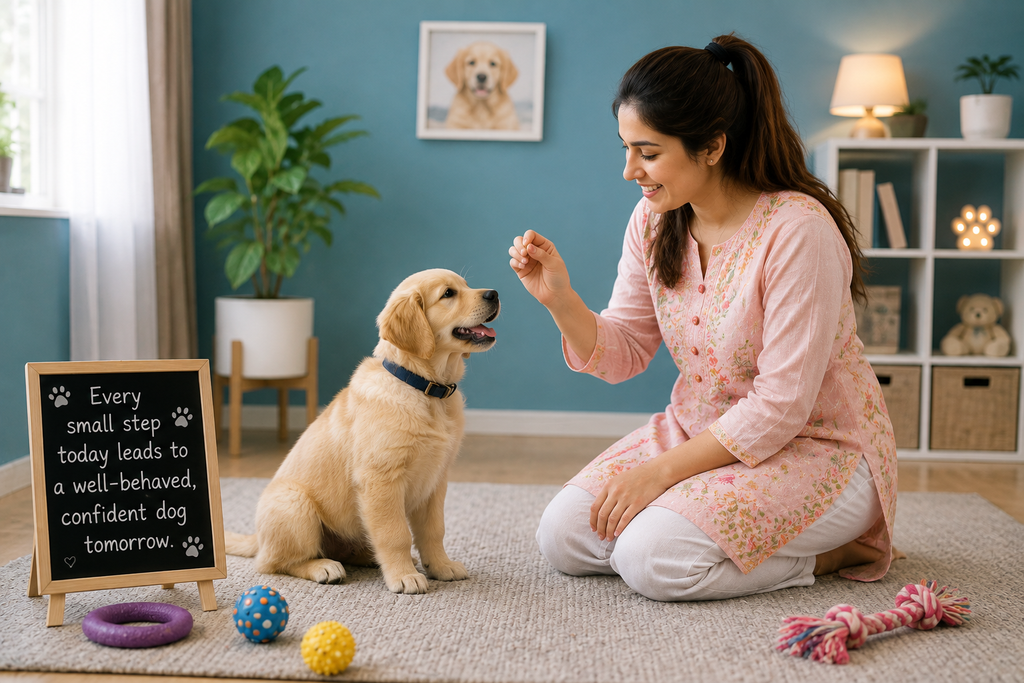
Puppy obedience training is most effective when it follows a few core principles, regardless of your puppy’s age or breed:
- Keep sessions short :5 to 10 minutes is ideal for young puppies.
- Use positive reinforcement: treats, praise, and play work far better than punishment.
- Be consistent and use :the same commands and rules across the whole household.
- Be patient, puppies :learn at different speeds, and setbacks are normal.
- To make it fun, training: should feel like a game, not a chore.
- Train before meals: a slightly hungry puppy is often more food-motivated and focused.
- End on a good note: always finish a session with a command your puppy knows well, so they end on success.
Puppy obedience training works best when it’s broken down into a clear, week-by-week plan. If you want a more detailed breakdown of early training milestones, check out our complete puppy training guide for practical tips tailored to every stage of your puppy’s growth.
Common Mistakes to Avoid
Puppy obedience training can go wrong when owners fall into a few common traps:
- Waiting too long to start :delaying training until 6 months means missing the critical socialization window.
- Overtraining :long sessions can overwhelm young puppies and make training feel negative.
- Skipping socialization :obedience commands matter, but so does exposure to the world around them.
- Inconsistent rules :if one family member allows something and another doesn’t, it confuses the puppy.
- Relying on punishment :fear-based training methods can damage trust and lead to more behavioral problems down the line.
Puppy obedience training is also supported by science-backed guidance from veterinary and canine behavior experts. For additional reading, the American Kennel Club offers a helpful overview of what to expect at each age.
Conclusion
Puppy obedience training should ideally begin earlier than most people expect as soon as your puppy comes home, around 7 to 8 weeks of age. Early, gentle, and consistent training during the critical socialization window sets the stage for a well-behaved, confident adult dog.
Keep sessions short, positive, and fun, stay consistent through the adolescent phase, and you’ll see steady progress as your puppy grows into a well-mannered companion.
Frequently Asked Questions (FAQ)
Q1: Can I start training my puppy before it gets all its vaccinations?
Puppy obedience training at home like name recognition, potty training, and simple commands can start right away. Just avoid public places with lots of unknown dogs until your puppy has completed its core vaccination schedule, as advised by your vet.
Q2: Is 8 weeks too young to start obedience training?
Puppy obedience training at 8 weeks is actually ideal, not too early. Puppies at this age can learn basic commands and are in a key developmental period for forming good habits.
Q3: How long should puppy training sessions be?
Puppy obedience training sessions should be short; 5 to 10 minutes is enough for young puppies. Puppies have short attention spans, so multiple short sessions throughout the day work better than one long session.
Q4: What is the most important thing to teach a puppy first?
Puppy obedience training usually starts with name recognition and basic potty training, followed by simple commands like “sit” and “come” using positive reinforcement.
Q5: When should I enroll my puppy in a formal obedience class?
Puppy obedience training in a formal class setting is typically available from around 10 to 12 weeks old, once puppies have received their initial round of vaccinations. Check with the specific training facility for their requirements.
Q6: Does breed size change when I should start training?
Puppy obedience training can start at the same age regardless of breed, though large and giant breeds often benefit from extra focus on impulse control and leash manners, since unmanaged behaviors become harder to correct as they grow bigger and stronger.
Q7: Is it ever too late to start training an older puppy or dog?
Puppy obedience training methods still work on older dogs. While early training has advantages, dogs of any age can learn new commands and behaviors with patience and consistent, positive training methods.
Puppy obedience training resources, expert tips, and step-by-step guides are all available at DogsGuide.info to help your puppy grow into a happy, well-trained dog.

Puppy Obedience Training 101: A Beginner’s Guide to Raising a Well-Mannered Dog

Common Dog Behavior Problems and How to Fix Them

Puppy Commands for Off-Leash Safety: What Every Owner Needs

Best Age to Start Leash Training a Puppy for Calm Behavior

How to Fix Puppy Behavior Using Gentle Training

puppy-obedience-training-commands/Puppy Training Tips: A Complete Step-by-Step Guide for Beginners

Puppy Obedience Training 101: A Beginner’s Guide to Raising a Well-Mannered Dog
Common Dog Behavior Problems and How to Fix Them
Puppy Commands for Off-Leash Safety: What Every Owner Needs
Best Age to Start Leash Training a Puppy for Calm Behavior
How to Fix Puppy Behavior Using Gentle Training