
Puppy Commands
Puppy Commands for Off-Leash Safety: What Every Owner Needs


Letting your puppy run free at the park or on a trail is one of the best feelings for any dog owner. But before you ever unclip that leash, your puppy needs a set of rock-solid commands that keep them safe when there’s no leash to catch them.
Off-leash freedom is a privilege your puppy earns through training, not something you give on day one just because they’re old enough or seem calm at home. Many new owners assume a puppy who behaves well indoors will act the same way outside, off-leash, surrounded by new smells, sounds, and other animals.
In reality, indoor obedience and off-leash reliability are two different skill sets.A puppy can sit perfectly in the living room and still bolt after a squirrel the moment the leash comes off in an open park.
This guide breaks down the exact commands your puppy needs before going off-leash, how to teach each one safely, and the common mistakes that get puppies and their owners into trouble.
Why Off-Leash Safety Depends on Commands, Not Luck
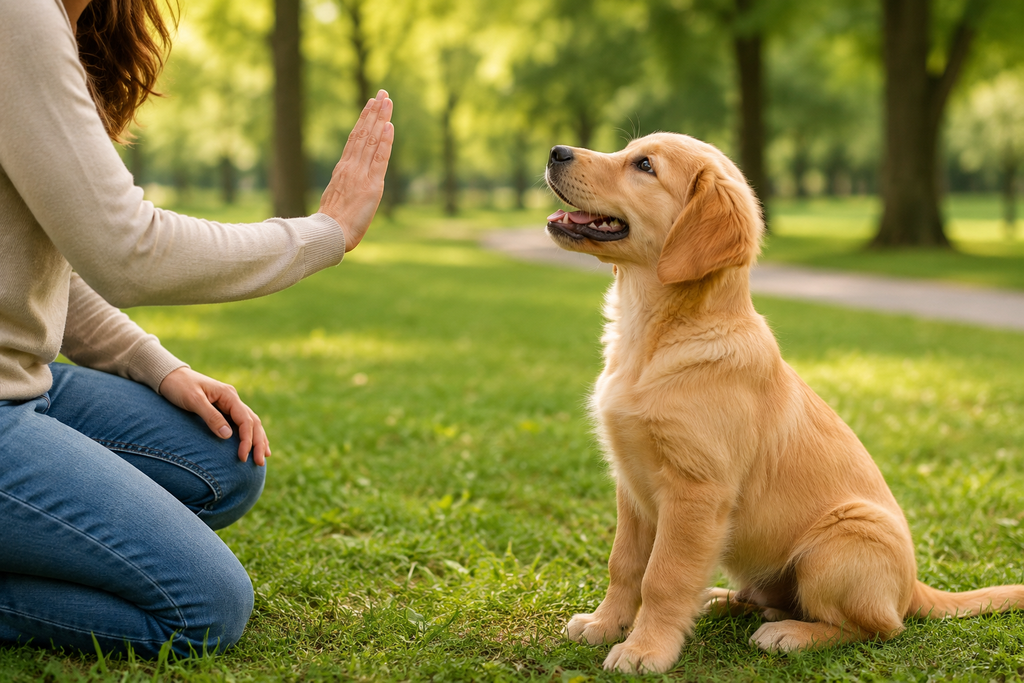
Puppy Commands A leash is a backup, not a training plan. The moment it comes off, your puppy’s safety depends entirely on how well they respond to your voice and hand signals. Without solid commands, an off-leash puppy is exposed to real risks:
running into traffic, approaching an aggressive dog, eating something toxic off the ground, jumping into unsafe water, or simply bolting out of pure excitement and getting lost.These aren’t rare, worst-case scenarios they’re among the most common reasons puppies end up injured or missing in their first year.
A puppy that’s never learned a reliable recall has no way of knowing that chasing a rabbit toward a road is dangerous. To them, it’s just instinct. The good news is that off-leash reliability isn’t about luck or having a “naturally obedient” dog. It’s a trained skill, built the same way you’d build basic obedience training through repetition, positive reinforcement, and gradually increasing distractions.
Before You Go Off-Leash: The Readiness Checklist
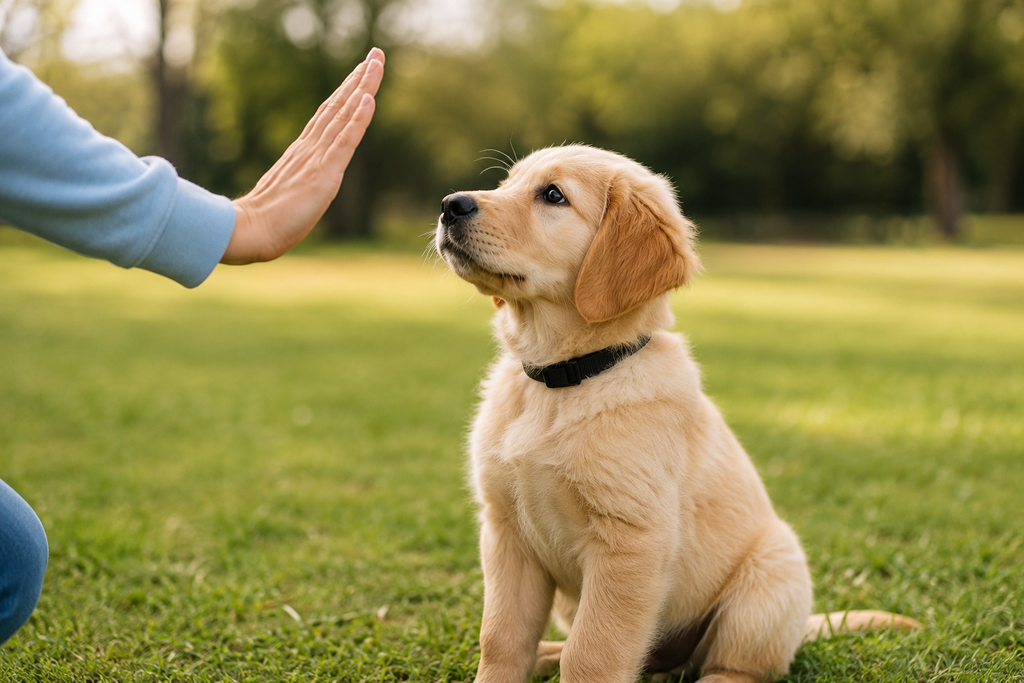
Puppy Commands is Your puppy shouldn’t go off-leash just because they’re a certain age, size, or breed. What matters isn’t the calendar, it’s consistent, tested behavior. Your puppy is ready when they can reliably do the following, every single time, while still on-leash:
- Puppy Commands Respond to their name instantly, even when distracted by another dog, person, or noise.
- Hold a sit and stay for at least 30 seconds around mild distractions.
- Walk calmly on a leash without constantly pulling toward every smell, sound, or squirrel.
- Come back to you when called from a few feet away, both indoors and outdoors.
- Show basic impulse control, such as waiting for permission before eating or going through a doorway.
If your puppy is still struggling with any of these basics, start with a structured puppy training guide before attempting any off-leash work. Rushing this step is the single biggest reason off-leash training fails and the consequences can be far more serious than a frustrating walk.
The 5 Essential Puppy Commands for Off-Leash Safety
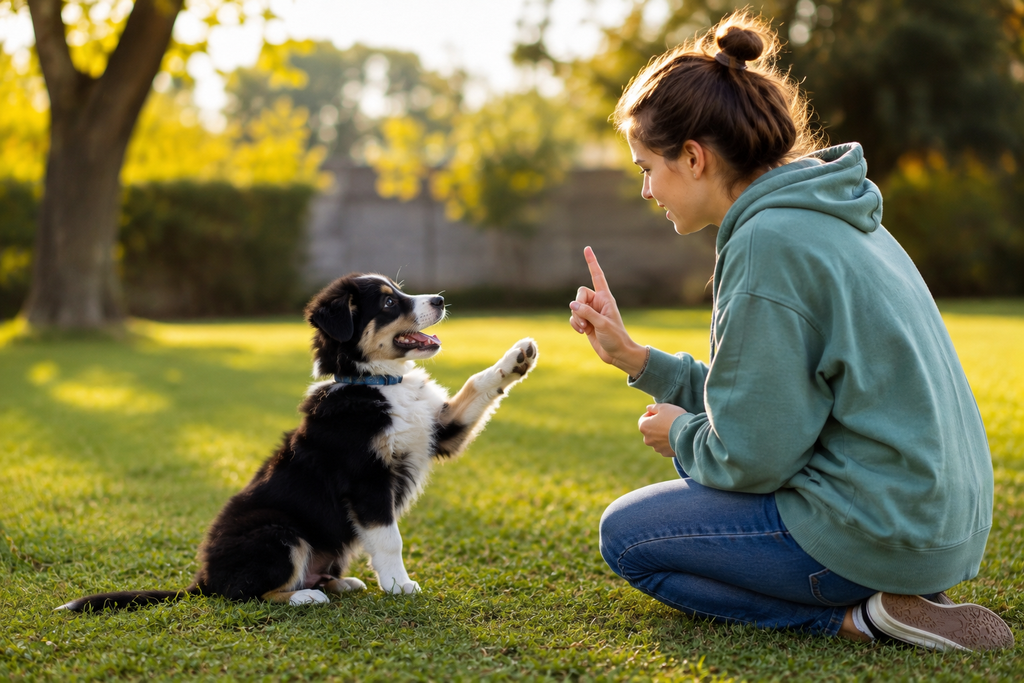
1. Recall (“Come”)
Puppy Commands Recall is the most important command your puppy will ever learn — it can genuinely save their life. A reliable recall means your puppy immediately stops whatever they’re doing and comes straight to you, no matter what’s happening around them, whether that’s another dog, a jogger, or something fascinating on the ground.
How to train it:
- Start indoors with zero distractions. Say your puppy’s name, then “come,” in a happy, upbeat tone rather than a stern one.
- Reward generously and immediately the instant they reach you use a high-value treat your puppy doesn’t get at any other time, so recall always feels like the best thing that could happen.
- Never call your puppy over just to end playtime or bath them. If “come” only predicts something unpleasant, your puppy will quickly learn to ignore it.
- Once reliable indoors, move to the backyard, then to a quiet fenced area, then to a long training line (15–20 feet) before ever attempting it fully off-leash.
Trainers at the AKC recommend building recall in clear stages, mastering it in a quiet space first, then gradually adding distance and distractions before removing the leash entirely. A recall that only works in your kitchen isn’t a real recall yet; it needs to hold up in the exact environments your puppy will eventually be off-leash in.
2. Emergency Stop (“Wait” or “Stop”)
Puppy Commands command freezes your puppy in place instantly, which is critical if they’re about to run toward a road, another aggressive dog, or off a ledge. Unlike “stay,” which implies a longer, calmer hold in one position, “wait” is meant for split-second situations where every second matters.
How to train it: Practice at doorways and curbs first, since these are natural, low-risk moments to build the habit. Say “wait” before opening a door or stepping off a curb, and only let your puppy move forward once you give a release word like “okay.”
Repeat this during normal routines every walk, every mealtime, every door so the response becomes automatic. Over time, your puppy learns that “wait” always means an immediate freeze.
3. Leave It
“Leave it” stops your puppy from picking up something dangerous trash, a dead animal, another dog’s food, or something toxic on the trail before they ever get close enough to grab it.
How to train it: Hold a treat in a closed fist and let your puppy sniff and paw at it. Say “leave it” calmly, and only open your hand once your puppy stops trying to get it and looks up at you instead. Gradually practice with more tempting items
a dropped shoe, food on a low table, something on the ground during a walk so the command holds up in real situations, not just controlled ones.
4. Heel
Heel keeps your puppy close to your side even without a physical leash connecting you, which is especially useful in areas with light foot traffic, near roads, or in transition zones where full off-leash freedom isn’t appropriate yet but a leash also isn’t practical.
This command builds directly on proper leash walking skills, so it’s easiest to teach once your puppy has already learned not to pull. Practice heel on-leash first, rewarding your puppy for staying at your side, then test it off-leash in short bursts within a fenced area before relying on it anywhere with real traffic or open space nearby.
5. Name Recognition and Eye Contact
Before any of the commands above can work, your puppy needs to instantly turn their head and give you eye contact the moment you say their name. This sounds simple, but it’s the foundation every other off-leash command is built on.
If your puppy doesn’t check in with you first, they have no way of processing what you say next.Practice this constantly throughout the day, not just during formal training sessions. Say your puppy’s name once in a happy tone, and reward any glance in your direction. Over time, build up to saying it with distractions present, until your puppy reliably looks at you even when something exciting is happening nearby.
The Right Equipment for Off-Leash Practice
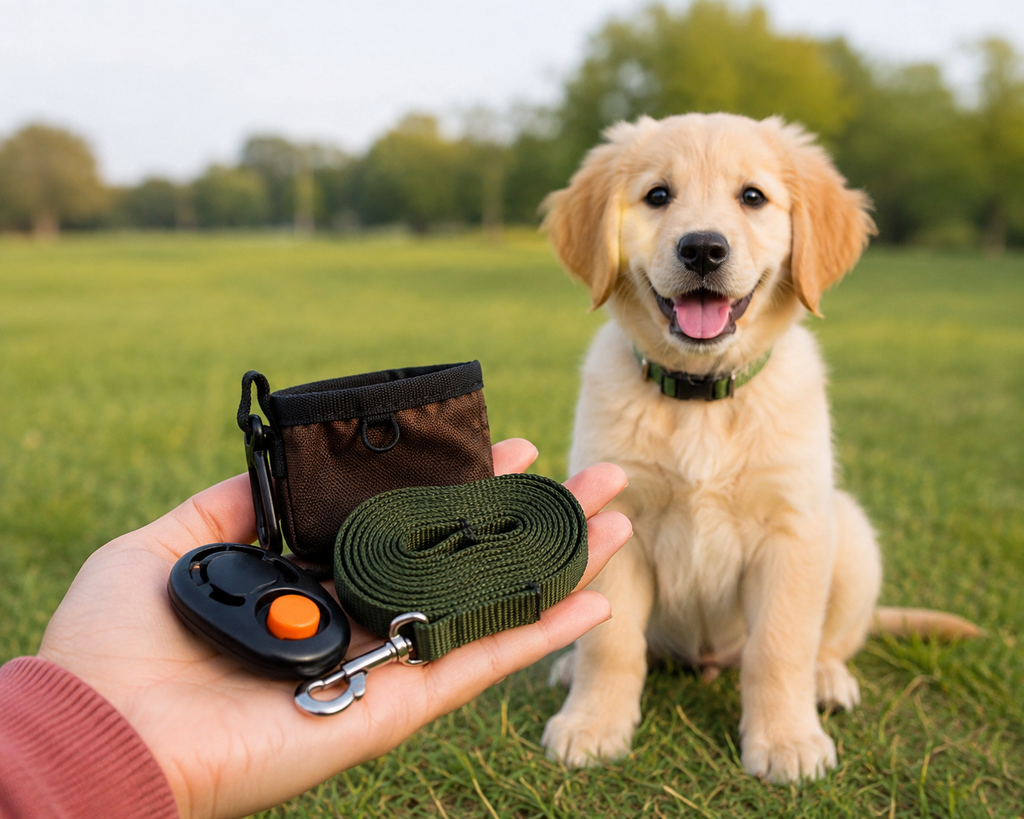
Puppy Commands are only half the equation; the right tools make the transition safer. A long training line, typically 15 to 30 feet, is the single most useful piece of equipment for this stage. It gives your puppy a sense of freedom while still letting you physically intervene if a command doesn’t land.
A well-fitted harness or collar with an ID tag and updated microchip information is also essential, since even well-trained puppies can occasionally get spooked and bolted. Avoid retractable leashes for this kind of training they offer far less control than a flat long line.
Where to Practice: A Step-by-Step Progression
Never go straight from a fenced backyard to an open trail. Follow this progression instead:
- Indoors, no distractions :Master name recognition, recall, and leave it in a quiet room.
- Fenced yard, on-leash :Add mild distractions like toys or other family members.
- Fenced yard, off-leash :Practice the same commands with the leash removed, but still inside a secure boundary.
- A long line in a low-distraction park :A 15–20 foot line gives your puppy freedom while you retain a physical backup.
- Designated off-leash area :Only after consistent success at every earlier stage, and only where it’s legally permitted.
Puppy Commands Skipping stages is the most common mistake owners make, and it’s why so many “good at home” puppies fall apart the moment they’re off-leash somewhere new.
Common Mistakes That Compromise Off-Leash Safety
- Removing the leash too early. Age isn’t the deciding factor — consistent behavior is. Check our guide on when to start obedience training for realistic timelines.
- Only using recall to end fun. If “come” always means the walk is over, your puppy will start avoiding it.
- Practicing in high-distraction areas too soon. Build confidence in quiet spaces before testing it at a busy dog park.
- Ignoring leash laws. Even a perfectly trained puppy should only go off-leash in areas where it’s legally allowed; most parks, trails, and neighborhoods require a leash by law.
- Skipping the long line stage. A long training line is the safest bridge between full leash control and true off-leash freedom.
Keeping Training Consistent
Puppy Commands Off-leash commands fade quickly without regular practice, especially in puppies who are still developing focus and impulse control. Pair your off-leash sessions with the fundamentals covered in our puppy commands training guide, and keep sessions short, positive, and frequent rather than long and occasional.
If your puppy has started ignoring commands they used to know well, it’s often a sign they need to go back a step in distraction level rather than more repetition of the same exercise.
Frequently Asked Questions
At what age can a puppy go off-leash?
Puppy Commands There’s no fixed age. What matters is reliable performance on recall, sit, stay, and leave it most puppies aren’t ready for open off-leash freedom until they’ve had several months of consistent on-leash training.
What’s the safest first place to try off-leash training?
Puppy Commands A securely fenced yard or an enclosed, empty tennis or sports court. These give your puppy real off-leash freedom with a physical boundary as backup.
How long does it take to train a reliable recall?
Puppy Commands Most puppies need several weeks to a few months of daily short sessions before recall is reliable around real distractions. According to the American Kennel Club, a truly dependable recall is measured in consistency across many repetitions, not calendar time.
Should I use a long line before going fully off-leash?
Yes. A 15–20 foot training line is the safest way to test your puppy’s response in open spaces while still giving you a way to intervene if needed, as recommended in the AKC’s off-leash readiness guide.
Ready to build the fundamentals first?
Start with our complete puppy training guide or learn how to teach puppy commands from scratch.

Puppy Obedience Training 101: A Beginner’s Guide to Raising a Well-Mannered Dog

Common Dog Behavior Problems and How to Fix Them

Puppy Commands for Off-Leash Safety: What Every Owner Needs

Best Age to Start Leash Training a Puppy for Calm Behavior

How to Fix Puppy Behavior Using Gentle Training

puppy-obedience-training-commands/Puppy Training Tips: A Complete Step-by-Step Guide for Beginners

Puppy Obedience Training 101: A Beginner’s Guide to Raising a Well-Mannered Dog
Common Dog Behavior Problems and How to Fix Them
Puppy Commands for Off-Leash Safety: What Every Owner Needs
Best Age to Start Leash Training a Puppy for Calm Behavior
How to Fix Puppy Behavior Using Gentle Training