
Puppy Training
Puppy Training Guide: A Complete Step-by-Step Guide to Raising a Well-Behaved Puppy

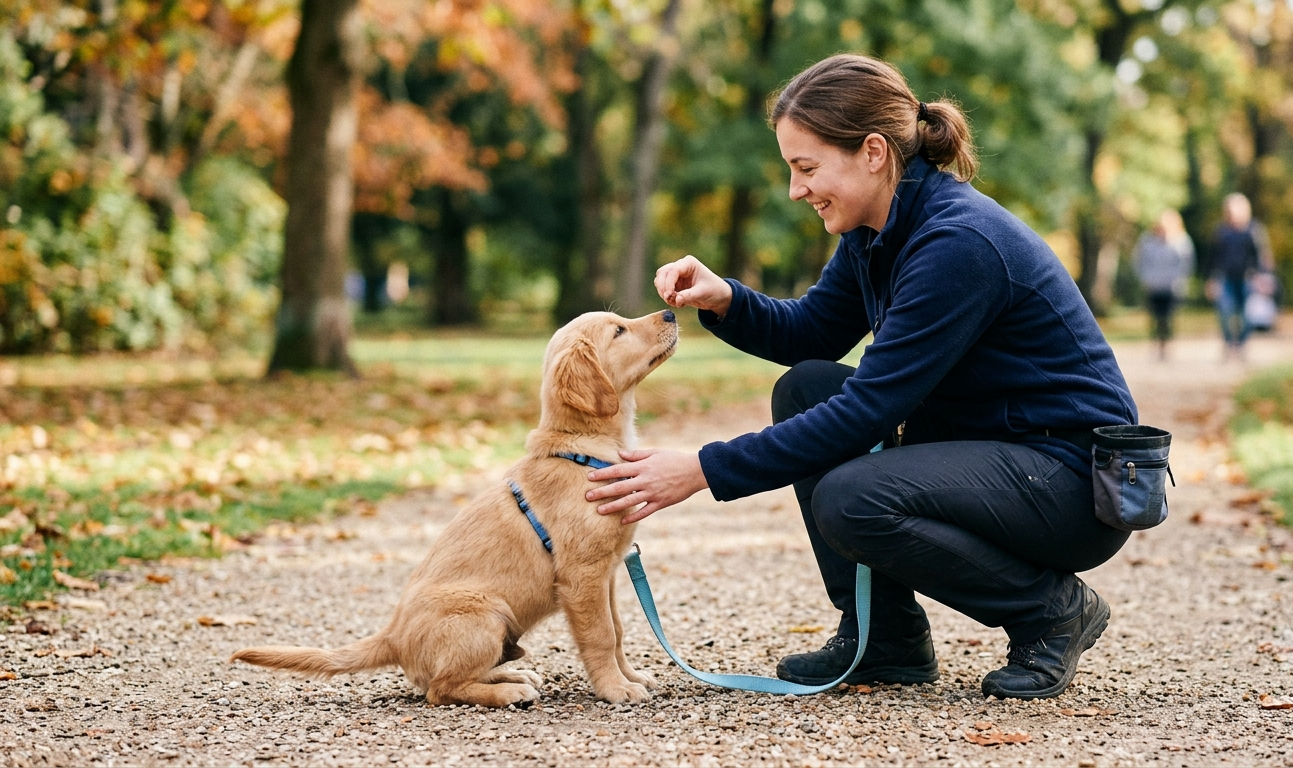
Puppy training is the process of teaching a young dog how to live safely and calmly with humans, learning boundaries, impulse control, and real-world manners that hold up beyond treats and tricks.
Good puppy training isn’t about perfection; it’s about preventing little mistakes from becoming lifetime habits. If it comes from direct teaching, socializing with humans or other animals, or their surroundings, puppies are always learning.
This will establish the necessary basis. Puppies can develop into self-assured adult canines if they receive proper socialization and basic puppy training. Follow this step-by-step puppy training guide to set you and your puppy up for success .
Puppy Training Tips
Here are some basic puppy training tips to get you started.
1. Use Positive Reinforcement
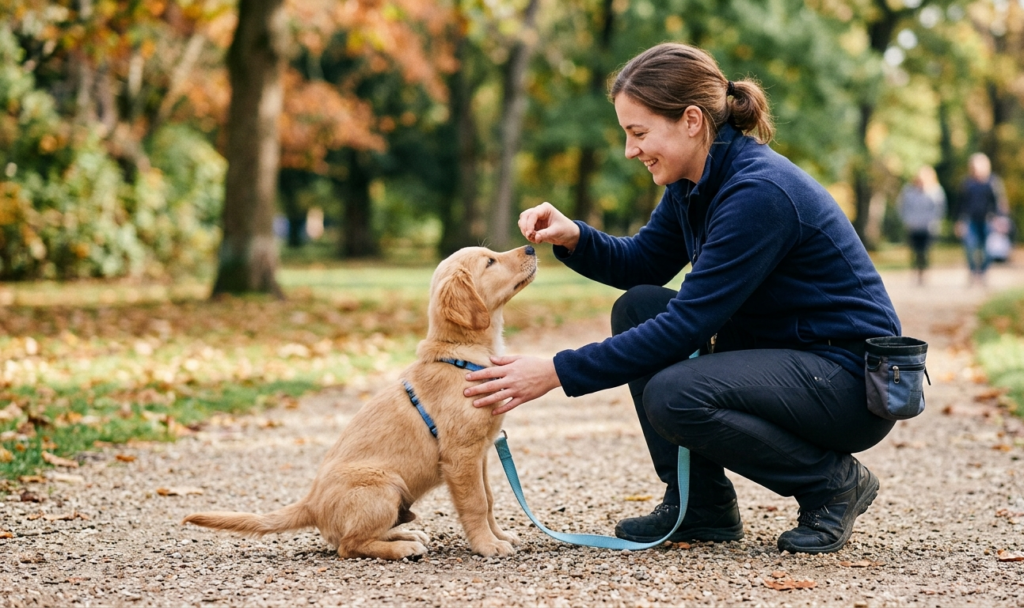
You may have heard of or perhaps seen a pet trainer in action using a variety of techniques for teaching your puppy. However, the application of positive reinforcement is the only training approach that is both legitimate and supported by science. Giving a reward to encourage a desired action is known as positive reinforcement.
The use of punishment, including harsh punishments; corrective devices like shock, choke, and prong collars; and dominance-based management techniques should be avoided. These techniques may have long-term repercussions that cause your dog to experience worry and dread as an adult.
Before using positive reinforcement in your puppy training, determine which incentives are most effective for your pet. While some puppies may want something better, such as a special training treat, others may find something as basic as a piece of their kibble interesting enough to train with.
Then there are puppies who are completely unmotivated by food! For these puppies, try giving them a toy they like to play with when they perform well. Another way to positively reinforce a puppy’s behavior is to give them praise. For basic puppy training, you might just need to pet them or show excitement and say, Good job.
2. Keep Training Sessions Short
Puppies can’t focus for very long. Set goals for an average of no more than 15 minutes per day while training a fundamental cue, and keep the sessions brief, roughly five minutes each. To get them eager for the following session, conclude your session on a good note.
3. Use Consistency When Training Your Puppy
It’s critical to address signals and training consistently. Use the same cues: when you sit, and when you come, when you come, when you come. Even when it’s inconvenient, it’s crucial to continuously reward desired actions. Therefore, if your puppy has to go outside while you are potty training them, stop what you are doing, let them out, and then give them a treat.
4. Practice in Different Environments
Training at home is very different from taking a puppy to a new place, like a park or the beach, and asking for a cue. That’s because kids won’t be able to experience the same sights and scents at home. Try to practice in various environments.
This will help your puppy become self-assured in any circumstance. However, remember that pups should wait until they have completed their puppy immunizations before going to places where there are a lot of other dogs. You may always discuss safe socialization and training methods for your young dog with your veterinarian.
5. Be Patient
Like young children, puppies are developing and learning. They might not always comprehend what you are asking, and they will make mistakes. Every puppy learns at a different pace, so persevere and don’t give up. Your puppy will feel safe if you follow a regular schedule for feeding, potty breaks, naps, and playtime. A secure puppy is prepared and capable of learning.
How to Train a Puppy
Potty Training
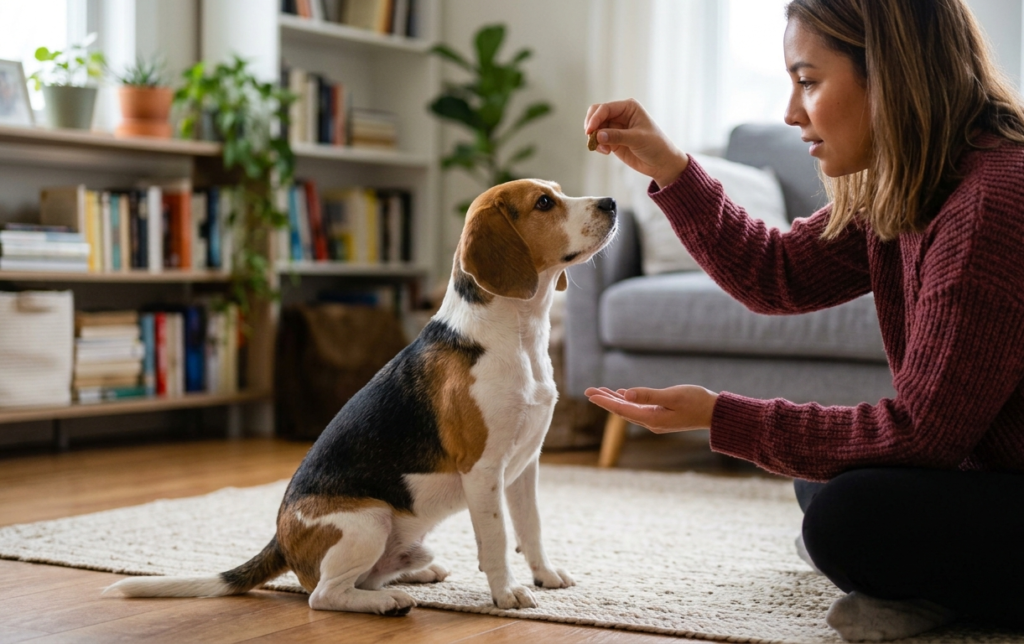
You may normally start potty training puppies between the ages of 8 and 12 weeks. This procedure usually takes a week to a month, and pet parents must supervise it because dogs cannot toilet train themselves.
To potty train a puppy, take it outdoors on a leash once a day for 30 minutes and then stand motionless in one position for five minutes. This reduces distractions and motivates them to go. When they do, be sure to praise them and give them a reward.
Crate Training
Crate training is essential for your puppy. It provides a comfortable environment for them, helps with toilet training, and can even alleviate separation anxiety. The first step is to determine the appropriate crate size and to establish a friendly environment.
Next, select a suitable location somewhere peaceful but not too isolated, such as a living room nook. From here, you may introduce the crate and let them explore inside. Practice shutting the door, and then take a small break in between repetitions.
Watch your puppy to ensure that they are always comfortable, and let them out of the crate if you notice any indications of worry. Gradually progress to lengthier stays.
Basic Cues (Sit, Stay, Come)
It’s enjoyable to see your pup listen and respond to simple training signals such as sit, stay, and come, but obedience training is also necessary for their safety.
Each order necessitates a somewhat different method, but we advocate utilizing positive reinforcement for all to foster a trusting connection. This comprises stating the cue and praising your puppy for reacting correctly.
Leash Training For Puppy Training
Your pup’s best friend is a leash, which gives you both plenty of freedom to explore, work out, and enjoy the sunshine. When a puppy is leash trained, they won’t tug or try to run away, which makes spending time outside much less unpleasant.
Start the process of leash training a puppy indoors in a calm, compact space. Show your pooch the leash and link it to their harness so they may get a feel for it in a comfortable place.
Encourage your puppy to stay by your side by walking around the area in little steps, pausing and beginning. Treat your puppy whenever they follow you or stop when you do. Continue practicing, ultimately going outside to a small area to perform it again. You’ll be able to hit the pavement together in due course.

Puppy Training For Socialization
The greatest approach to raise a puppy that is self-assured, content, and well-adjusted is to socialize it with people and other animals. Once they are weaned, you can begin socializing them at any time; the earlier in their puppyhood, the better.
Once your house has been puppy-proofed, let them explore under your watchful eye. Additionally, you may stroke their tail, wash their teeth, cut their nails, rub their tummy, and pet them to help them become accustomed to your touch.
You may begin taking your puppy on short excursions, lasting ten to fifteen minutes, after they are comfortable at home. Be mindful of their worries and be sure to reward excellent behavior with delicious goodies. Additionally, you may gradually expose them to a variety of things, people, kids, other puppies, and other animal species, as well as settings with novel sights, sounds, scents, and textures.
You may begin taking your puppy on short excursions, lasting ten to fifteen minutes, after they are comfortable at home. Be mindful of their worries and be sure to reward excellent behavior with delicious goodies.
Additionally, you may gradually expose them to a variety of things, people, kids, other puppies, and other animal species, as well as settings with novel sights, sounds, scents, and textures As your puppy gets older, keep exercising their training to help them become more adept at handling more distracting and public situations that you want an adult dog to be able to handle, like:
- Dog parks
- Beaches
- Passing a crowd of people
- Hiking on a path
- Riding in an elevator
- Car Rides
Puppy Training FAQs
How long does it take to train a puppy?
Training is a lifelong experience for most dogs. Start with training the moment you bring home your puppy, and expect them to understand what you are asking for and respond accordingly by 5–6 months of age.
But dogs need ongoing repeated, continuous teaching throughout their lives to keep them in shape mentally as well as physically.
When do I start puppy training classes?
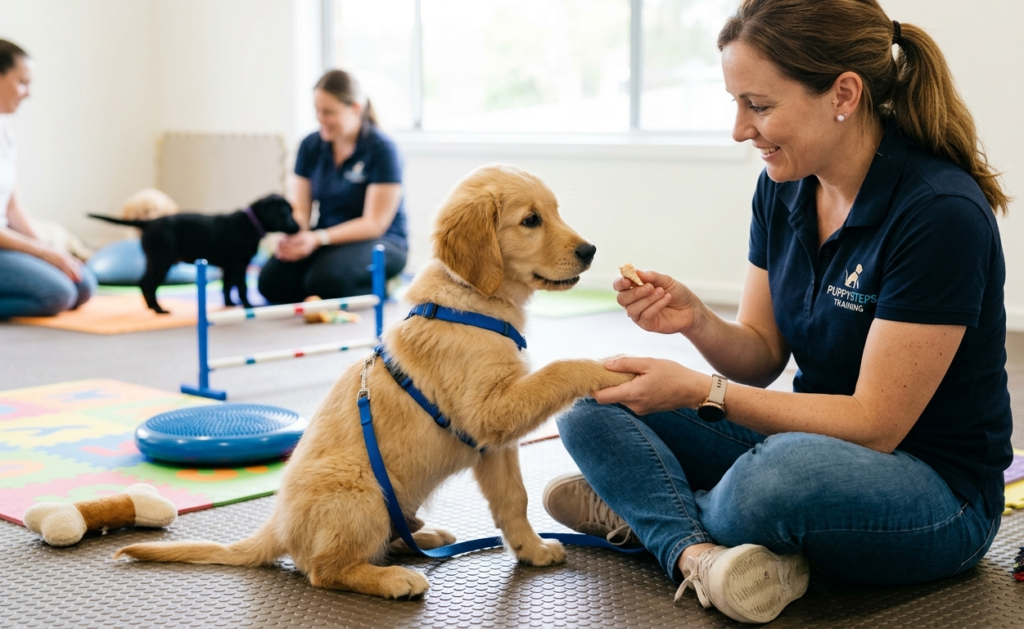
Puppy training classes depend on the goals you have for your dog and the requirements of the facility (which will ask for proof of certain vaccines before admitting your puppy to school). Most puppies can start puppy socialization by 8 weeks of age and actual training classes by 12–16 weeks. Classes typically last 4 to 6 weeks and focus on positive reinforcement.
What’s the first thing you should teach your puppy?
In the early days, there are a lot of skills that your puppy needs to learn. Often these are all taught at the same time. The first cue many people will teach their dogs is to “watch”—in other words, we want them to make eye contact with us when we say their name or use the word “watch.” That way, we know they are focusing on us and what information we are trying to convey.
Conclusion
Training a puppy takes time, consistency, and plenty of patience, but the rewards are worth every effort. By following this puppy training guide, using positive reinforcement, maintaining a regular routine, and practicing essential skills like potty training, crate training, leash walking, and socialization, you can raise a confident, well-mannered, and happy companion.
Remember that every puppy learns at its own pace. Celebrate small successes, stay consistent with your training, and avoid punishment-based methods that can damage trust. Keep training sessions fun, short, and rewarding so your puppy stays motivated to learn.

Puppy Obedience Training 101: A Beginner’s Guide to Raising a Well-Mannered Dog

Common Dog Behavior Problems and How to Fix Them

Puppy Commands for Off-Leash Safety: What Every Owner Needs

Best Age to Start Leash Training a Puppy for Calm Behavior

How to Fix Puppy Behavior Using Gentle Training

puppy-obedience-training-commands/Puppy Training Tips: A Complete Step-by-Step Guide for Beginners

Puppy Obedience Training 101: A Beginner’s Guide to Raising a Well-Mannered Dog
Common Dog Behavior Problems and How to Fix Them
Puppy Commands for Off-Leash Safety: What Every Owner Needs
Best Age to Start Leash Training a Puppy for Calm Behavior
How to Fix Puppy Behavior Using Gentle Training