
Puppy Commands
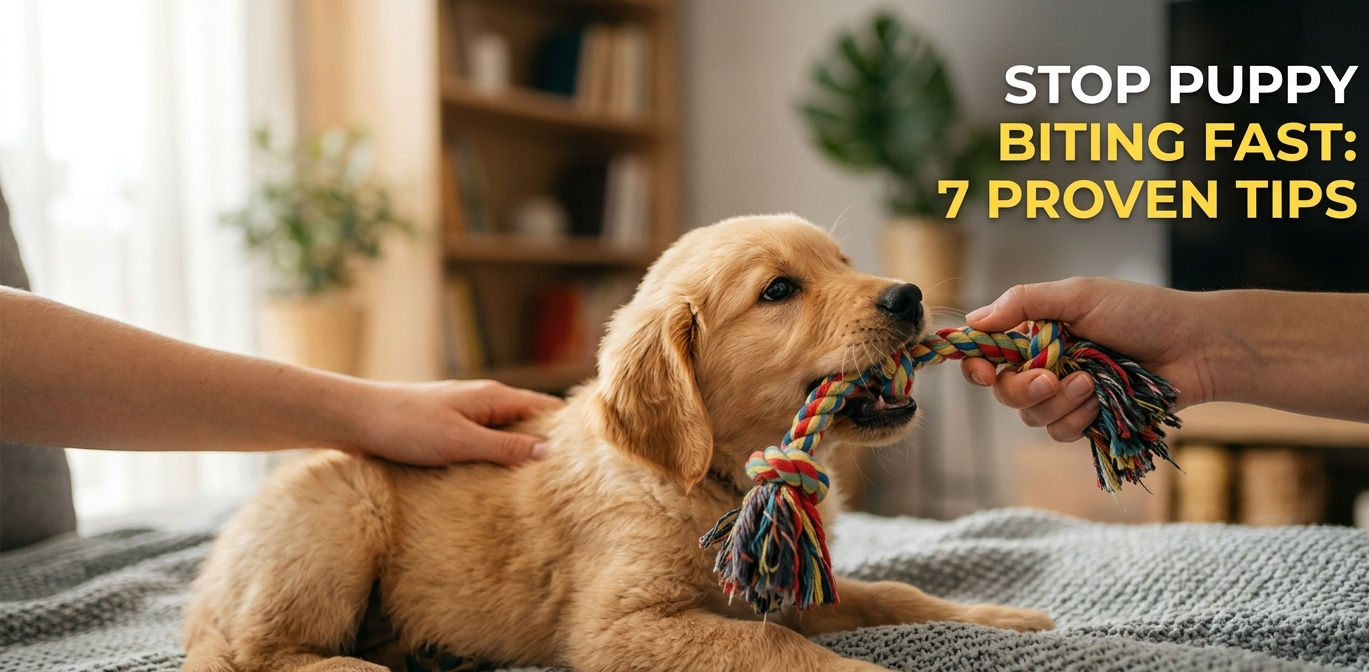
How to Stop Puppy Biting Fast: 7 Proven Tips That Really Work

Summary
Puppy biting is a natural behavior, but it needs to be corrected early. This guide covers 7 fast, proven methods to stop puppy biting, including bite inhibition training, redirection techniques, the “yelp method,” and consistent commands. These tips are vet-approved, beginner-friendly, and work for puppies of all breeds and sizes.
If you just brought home a new puppy, you already know the feeling. Those tiny teeth are sharp, and every hug or playtime turns into a little battle with your fingers. Puppy biting is one of the most common concerns for new dog owners, and the good news is that you can stop it fast with the right approach.
This guide gives you 7 proven, easy-to-follow tips that actually work. Whether your pup is 8 weeks old or already 5 months, these methods will help you correct the behavior quickly and build a stronger bond with your dog at the same time.
Why Do Puppies Bite in the First Place?
Before jumping into solutions, it helps to understand why your puppy bites. Puppies explore the world with their mouths. In the litter, they bite their siblings during play, and that is completely normal. The problem starts when they bring that same behavior into your home.
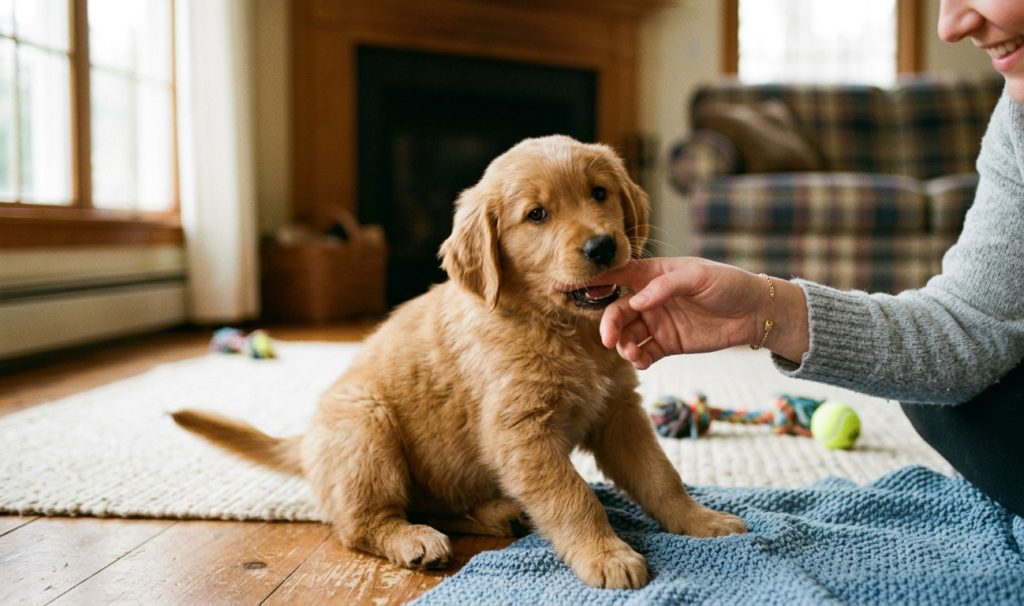
Common reasons for puppy biting include:
Teething pain: Between 3 and 6 months of age, puppies lose their baby teeth. Chewing and biting helps relieve the discomfort.
Play behavior: Puppies do not yet know that human skin is more sensitive than their littermates’ thick fur.
Attention-seeking: If biting gets a reaction, even a negative one, your puppy learns that it works.
Overstimulation: A tired or overexcited puppy is much more likely to nip and bite. Understanding the root cause helps you choose the right method and apply it consistently.
7 Proven Tips to Stop Puppy Biting Fast

Tip 1: Use the Yelp Method to Teach Bite Inhibition
This is the most natural way to teach a puppy that biting hurts. When your puppy nips you, let out a short, sharp “yelp” or say “ouch” in a high-pitched voice. Then immediately stop all play and turn away.
This mimics how a littermate would react to a painful bite. Your puppy learns that biting ends the fun. Repeat this every single time. Consistency is the key. Within a few days, most puppies begin to soften their biting pressure noticeably.
Do not pull your hand away quickly. Fast movement excites puppies and makes the behavior worse. Stay still, yelp, and pause.
Tip 2: Redirect to a Chew Toy Immediately
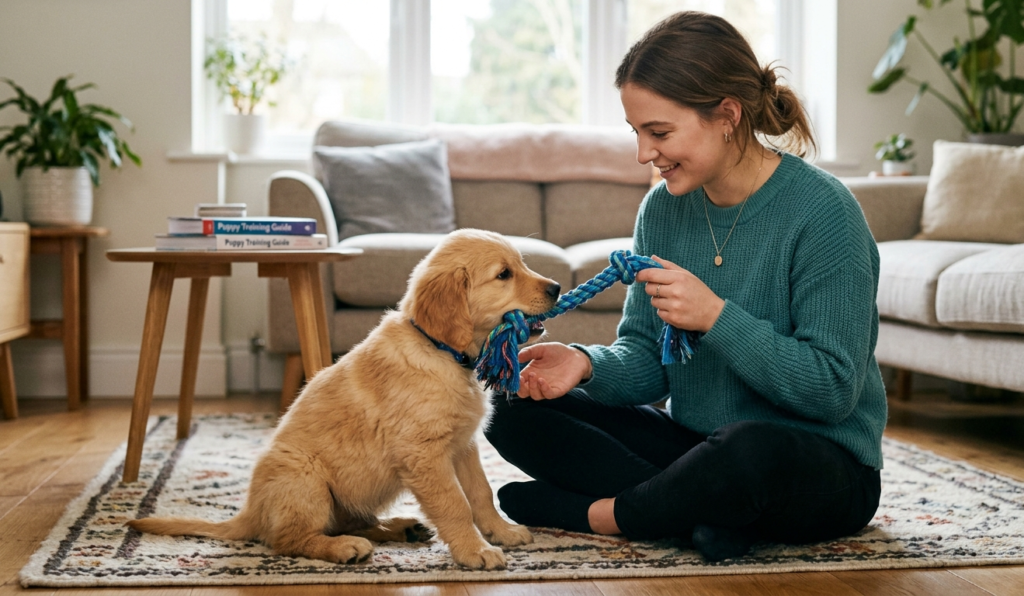
Every time your puppy bites your hand, redirect the behavior to an appropriate chew toy. Keep toys nearby during play sessions so you can swap quickly.Puppy biting often happens because puppies need something to chew on, especially during teething.
Giving them a proper outlet satisfies that urge without teaching bad habits.Rotate between 2 or 3 different toys to keep things interesting. Rope toys, rubber chew rings, and frozen toys work especially well for teething puppies.
Tip 3: Practice the “Timeout” Technique
If the yelp method alone is not working, add a timeout. The moment your puppy bites hard, calmly stand up, walk away, and ignore your puppy for 30 to 60 seconds. Do not shout, do not push, and do not make a big scene.
The message you are sending is simple: biting makes the fun stop. Puppies are social animals. Losing your attention is a real consequence for them. Over time, they connect the bite with the loss of your company and choose not to bite.
Tip 4: Teach a “No Bite” Command Early
Start using a clear, calm verbal command like “no bite” or “gentle” every time your puppy nips. Say it once, firmly but without anger, and follow it up with a timeout or redirection.Do not repeat the command over and over. One clear cue is enough. Over time, your puppy will associate the word with stopping the behavior.
Pair this command with positive reinforcement. When your puppy licks instead of biting or takes a toy instead of your hand, reward them with a small treat or enthusiastic praise. You can find more details on teaching basic commands in our beginner dog training guide.
Tip 5: Manage Overstimulation and Play Sessions
A common mistake new owners make is letting play sessions go on too long. An overtired or overstimulated puppy bites more, not less. Watch for signs like frantic movement, inability to settle, and constant mouthing.
Keep play sessions short, around 10 to 15 minutes, followed by rest. Scheduled nap times help puppies reset. A well-rested puppy is calmer, easier to train, and far less likely to bite.Avoid rough play like wrestling with your hands or letting your puppy tug on your clothes. These games teach puppies that biting humans is acceptable and fun.
Tip 6: Socialize Your Puppy with Other Dogs
Puppies that play regularly with other vaccinated, friendly dogs naturally learn bite inhibition faster. Other dogs give immediate, clear feedback when a bite is too hard. That feedback is something we as humans cannot replicate as effectively.
Look for puppy playgroups at a local training center or arrange playdates with calm, gentle adult dogs. Supervised dog-to-dog interaction is one of the best tools for stopping puppy biting because it teaches social rules in a language your puppy already understands.
Want to know what age is best to start socializing your puppy? Check out our full guide on puppy socialization and development stages.
Tip 7: Stay Consistent Across Every Family Member
This tip is often overlooked, and it is one of the biggest reasons training fails. If one person in the house lets the puppy bite during play while another tries to correct it, your puppy gets confused.Everyone in the household must follow the same rules.
No exceptions. Sit down together and agree on the commands, the reaction to biting, and the reward system. Write it on a sticky note and stick it on the fridge if you need to.Consistency is not just helpful. It is the single most important factor in how fast puppy biting stops.
What Not to Do When Your Puppy Bites
Knowing what to avoid is just as important as knowing what works. Here are common mistakes that actually make puppy biting worse:
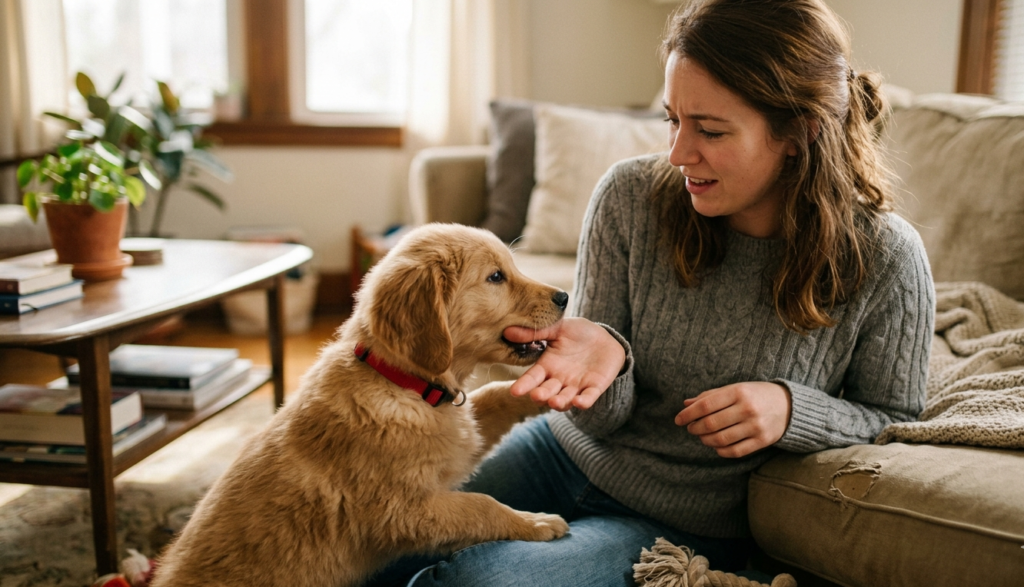
Never hit or flick your puppy’s nose.
This causes fear and can lead to defensive aggression later in life.
Do not shout or scream.
Loud reactions can excite or frighten your puppy and make the biting worse.
Avoid pulling your hand away fast.
Quick movements trigger the chasing instinct in puppies.
Do not use your hands as toys.
Playing with your hands near a puppy’s mouth sends the wrong message entirely.If biting continues past 6 months of age or becomes aggressive, it is worth speaking with a professional dog trainer. According to the American Kennel Club, persistent aggressive biting in older puppies may require professional behavioral assessment. American Kennel Club: Puppy Biting
How Long Does It Take to Stop Puppy Biting?
Most puppies show noticeable improvement within 1 to 3 weeks of consistent training. Some puppies respond in just a few days. The timeline depends on age, breed, consistency of training, and how long the behavior has been going on.
Puppies typically stop biting on their own by 6 to 7 months as their adult teeth come in and their social skills mature. Training simply speeds up that process and prevents bad habits from forming.For more on what to expect during each stage of your puppy’s growth, visit our puppy development and behavior timeline.
Frequently Asked Questions About Puppy Biting
Why does my puppy bite me and not other people?
Puppies often bite the person they are most comfortable with or the person who reacts most strongly. It is usually a sign of attachment, not aggression.
Is puppy biting normal?
Yes. Mouthing and biting is completely normal behavior for young puppies. It becomes a problem only when it is not corrected with consistent training.
What age does puppy biting stop?
Most puppies naturally reduce biting between 5 and 7 months as teething ends and they mature socially. Training helps stop it much sooner.
How do I stop my puppy from biting my ankles?
Ankle biting is herding or chasing behavior. Stop moving when it happens, say “no bite,” and redirect to a toy. Avoid running near your puppy until the habit is corrected.
Can I use a spray bottle to stop puppy biting?
It is not recommended. Spray bottles can cause anxiety and do not teach the puppy what to do instead. Positive redirection works much better.
Does neutering stop puppy biting?
No. Biting in puppies is a learned and developmental behavior, not hormonal. Training and redirection are the only effective solutions.
Why does my puppy bite harder when I say no?
Some puppies get more excited by vocal reactions. Try the silent timeout method instead, where you simply remove your attention without saying anything.
Final Thoughts
Puppy biting feels frustrating at the moment, but it is one of the most fixable behaviors in dog training. The key is starting early, staying consistent, and using the right methods every single time.
Stick to the 7 tips in this guide: yelp and pause, redirect to toys, use timeouts, teach a clear command, manage overstimulation, socialize your puppy, and make sure everyone in your home is on the same page.You and your puppy will get there. It just takes patience, consistency, and a little bit of time.

Puppy Obedience Training 101: A Beginner’s Guide to Raising a Well-Mannered Dog

Common Dog Behavior Problems and How to Fix Them

Puppy Commands for Off-Leash Safety: What Every Owner Needs

Best Age to Start Leash Training a Puppy for Calm Behavior

How to Fix Puppy Behavior Using Gentle Training

puppy-obedience-training-commands/Puppy Training Tips: A Complete Step-by-Step Guide for Beginners

Puppy Obedience Training 101: A Beginner’s Guide to Raising a Well-Mannered Dog
Common Dog Behavior Problems and How to Fix Them
Puppy Commands for Off-Leash Safety: What Every Owner Needs
Best Age to Start Leash Training a Puppy for Calm Behavior
How to Fix Puppy Behavior Using Gentle Training