
Dog Training
Dog Training for Puppies vs. Adult Dogs: Key Differences

Quick Summary:
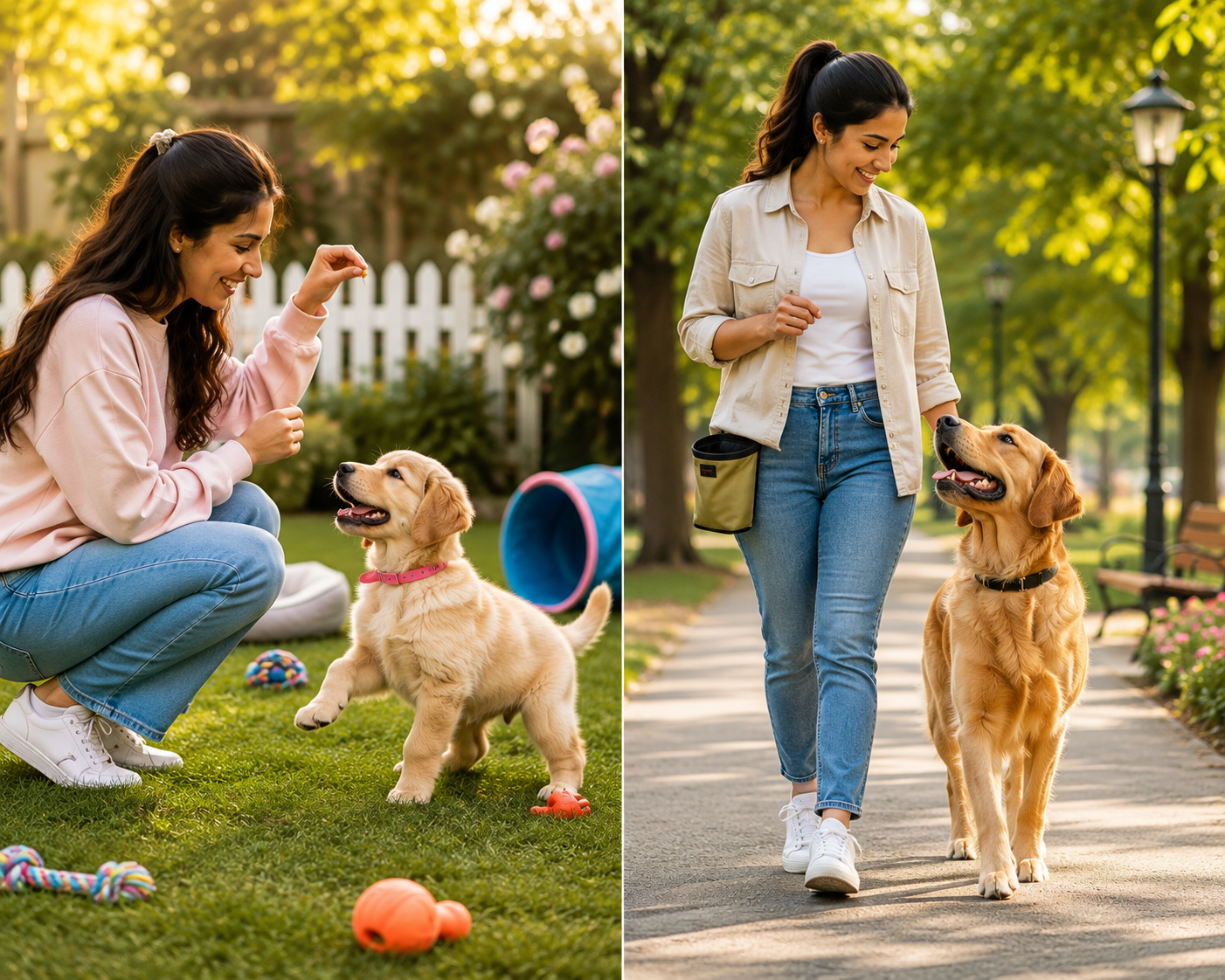
Dog training works differently for puppies and adult dogs because their brains, bodies, and past experiences differ. Puppies learn fast but have short attention spans and need many short lessons. Adult dogs learn more slowly at first but can focus longer, and some may need extra help to unlearn bad habits.
This guide explains the key differences in dog training for puppies versus adult dogs, the best methods for each age, common mistakes to avoid, and how to build a training plan that fits your dog. Whether you have a new puppy or an older rescue dog, you will find clear steps to help your dog learn good behavior at any age.
Why Age Matters in Dog Training
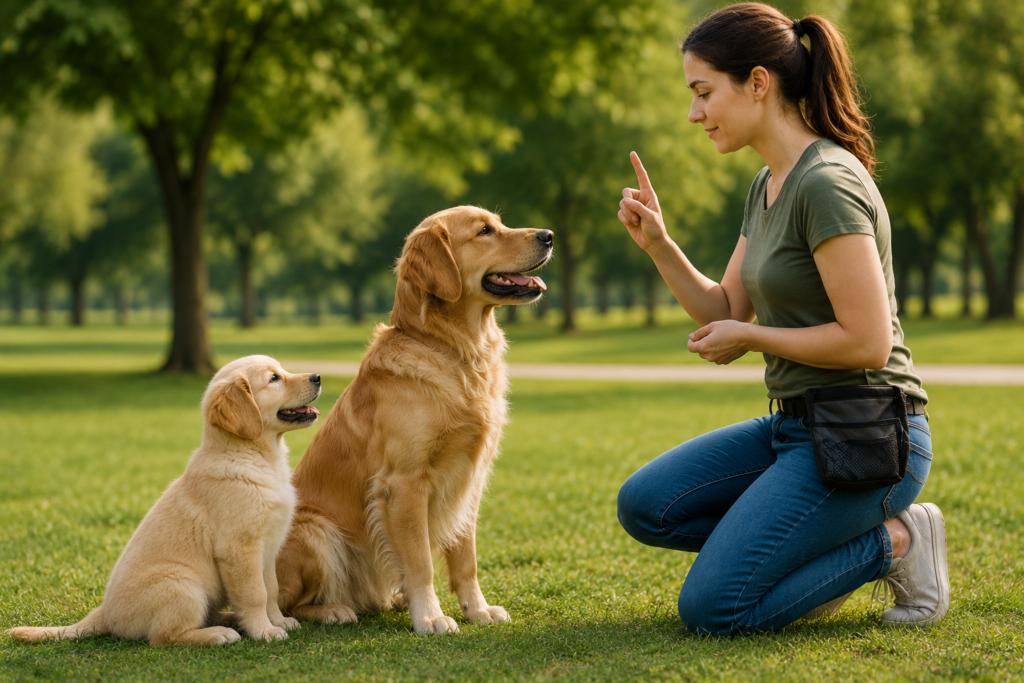
Dog training is not one size fits all. A dog’s age changes how it thinks, how it reacts to the world, and how fast it picks up new commands. Puppies are like sponges. Their brains are still growing, and they are open to new sounds, people, and places. This is why the first few months of a puppy’s life are so important for shaping good behavior.
Adult dogs are different. Their brains are fully grown, and they already have habits, good or bad. Some adult dogs came from shelters or past homes where they were not trained well. Others may have fears or triggers from things that happened before you got them. This means dog training for adult dogs often needs more patience and a slightly different approach than puppy training.
Knowing these differences helps you set the right goals, use the right tools, and avoid frustration. Let’s break down exactly how puppy training and adult dog training differ, and what works best for each.
Key Differences Between Puppy Training and Adult Dog Training
1. Attention Span and Focus
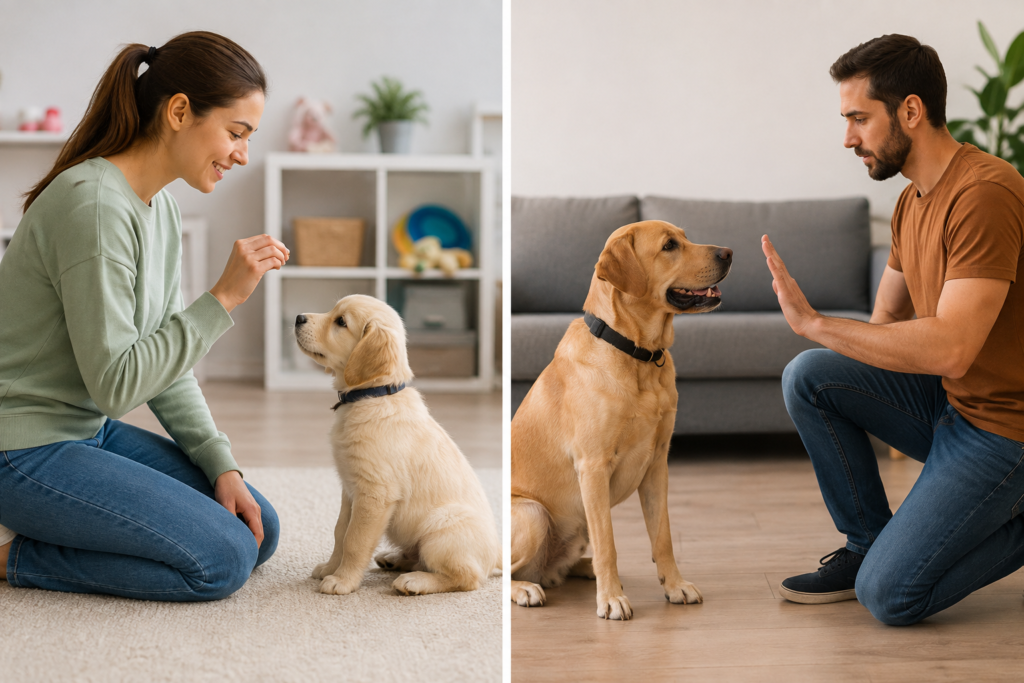
Puppies have very short attention spans. A young puppy may only focus for two to five minutes before getting distracted or tired. This is normal and not a sign of a “bad” puppy. Because of this, puppy training works best in short, frequent sessions spread across the day.
Adult dogs usually have longer attention spans. A healthy adult dog can often focus for ten to twenty minutes at a time. This means training sessions can be longer and cover more ground in one sitting, which can speed up learning once the dog understands what is being asked.
2. Speed of Learning New Commands
Puppies often pick up simple commands like “sit” or “come” fairly quickly because they have no old habits to unlearn. Their minds are open and ready to absorb new information.
Adult dogs can also learn new commands, but if they already have a habit (like jumping on guests or pulling on the leash), you must first work on breaking that old habit before building a new one. This process, called counter-conditioning, takes more time and consistency than teaching a puppy from scratch.
3. Socialization Needs
Puppy training must include socialization as a top priority. The critical socialization window for puppies is roughly between 3 and 14 weeks of age. During this time, puppies should safely meet new people, other dogs, sounds, and environments. Missing this window can lead to fear or anxiety later in life.
Adult dogs may already be socialized, poorly socialized, or somewhere in between. If an adult dog missed proper socialization as a puppy, you can still improve their comfort around new things, but progress is usually slower and needs careful, gradual exposure rather than the fast learning window puppies have.
4. Physical Limitations
Puppies have growing bones, joints, and teeth. Training exercises should avoid high-impact activities like jumping from heights or long runs until a vet confirms their growth plates have closed. Puppy teething also means chewing behaviors are common and need redirection rather than punishment.
Adult dogs are physically mature, so training can include more advanced physical tasks like agility or long-distance leash walking. However, older adult dogs or seniors may have joint pain or reduced stamina, so training sessions should be adjusted to their comfort level.
5. Motivation and Rewards
Puppies are usually easy to motivate with food, toys, or praise because everything is new and exciting to them. Small training treats work very well during this stage.
Adult dogs may have stronger preferences. Some adult dogs are less food-driven and respond better to play, praise, or a favorite toy. Understanding what truly motivates your adult dog is often the first step to successful training.
Puppy Training vs. Adult Dog Training at a Glance
| Factor | Puppy Training | Adult Dog Training |
| Attention span | 2 to 5 minutes | 10 to 20 minutes |
| Learning speed | Fast, no old habits to unlearn | Can be fast, but bad habits slow progress |
| Socialization | Critical window (3 to 14 weeks) | Slower, needs gradual, careful exposure |
| Physical limits | Growing bones and joints, avoid high-impact activity | Fully grown, but seniors may need lighter sessions |
| Motivation | Easy, almost anything excites them | Needs high-value rewards or favorite toy |
| Main challenge | House training and teething | Breaking existing bad habits |
| Best training style | Short, frequent, playful sessions | Longer, focused, consistent sessions |
Best Dog Training Methods for Puppies
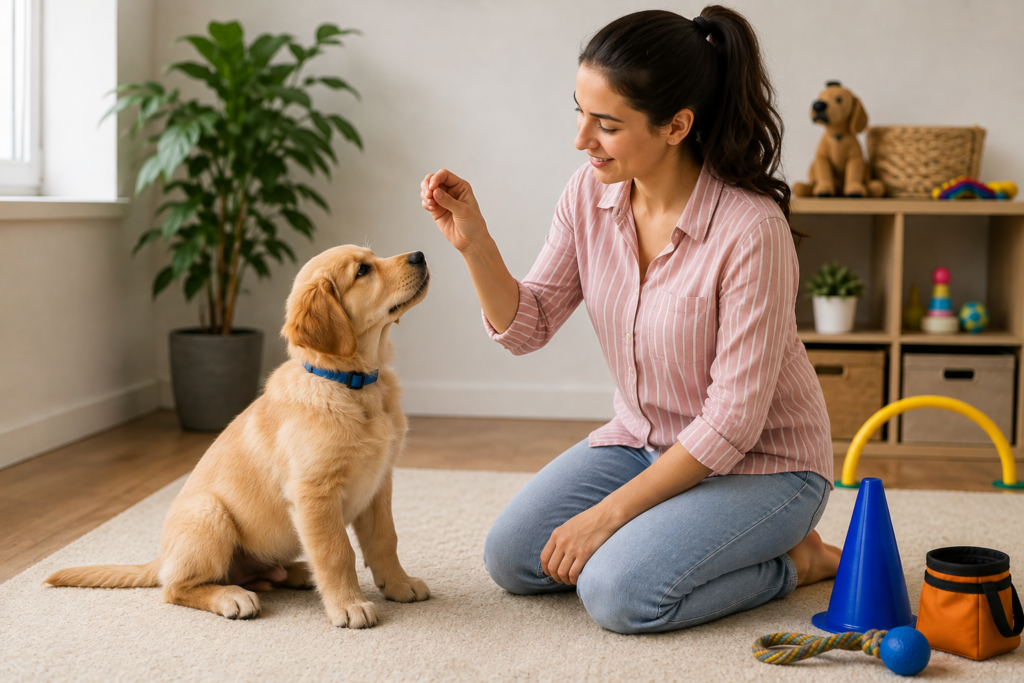
Positive reinforcement is the most recommended dog training method for puppies. This means rewarding good behavior right away with treats, praise, or play, rather than punishing bad behavior. Here are proven techniques for puppy training:
- Short, frequent sessions: Train for 5 minutes, several times a day, instead of one long session.
- Crate training: Helps with house training and gives your puppy a safe space.
- Basic commands first: Focus on sit, stay, come, and leash walking before advanced tricks.
- Bite inhibition training: Teach your puppy that biting hurts by yelping softly and stopping play when it happens.
- Consistent house training schedule: Take puppies out after meals, naps, and playtime to build a reliable potty routine.
Best Dog Training Methods for Adult Dogs
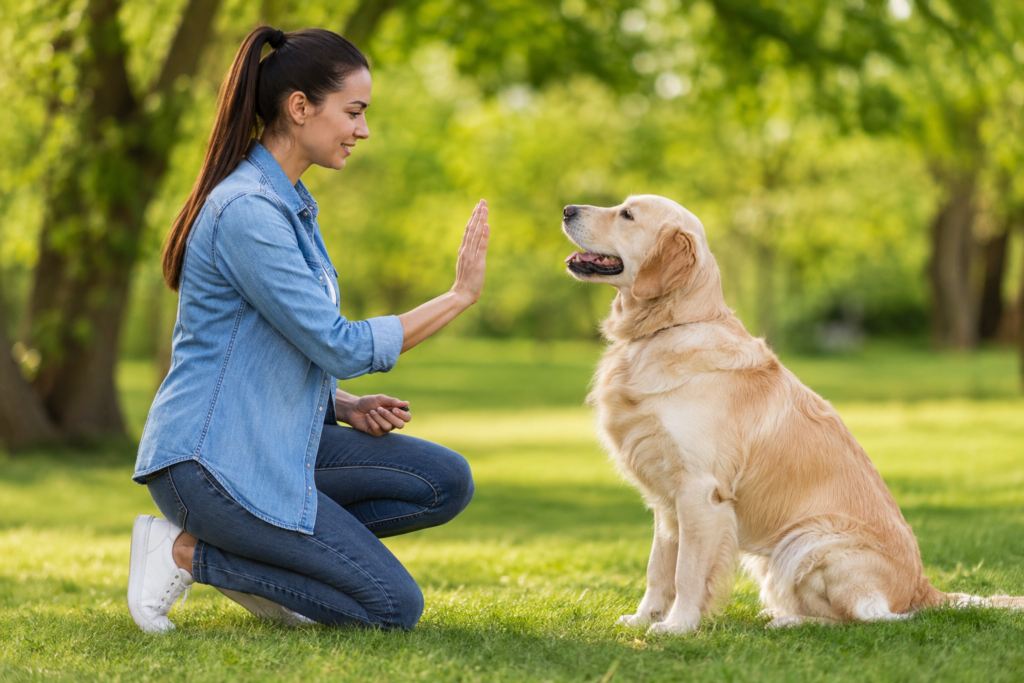
Training an adult dog is very possible, and the saying that you cannot teach an old dog new tricks is simply not true. Adult dogs often learn commands faster once they understand the training process, because they can focus longer. Effective methods include:
- Identify the root cause of behavior: Before fixing a problem like leash pulling or barking, figure out why it happens.
- Use high-value rewards: Adult dogs may need more exciting rewards, like small pieces of chicken or cheese, especially for tough behaviors.
- Be consistent with rules: Adult dogs, especially rescues, do best when household rules stay the same every day.
- Counter-conditioning for fears: Slowly and positively expose the dog to what scares them, pairing it with treats or praise.
- Professional help when needed: For serious behavior issues like aggression or severe anxiety, a certified dog trainer or behaviorist can help create a safe, structured plan.
Common Mistakes to Avoid in Dog Training
- Starting too late with puppies. Waiting until a puppy is six months old to begin training means missing the key socialization window.
- Expecting instant results with adult dogs. Old habits take longer to change, so patience is key.
- Using punishment-based methods. Yelling or physical punishment can create fear and damage trust in both puppies and adult dogs.
- Being inconsistent. Mixed signals confuse dogs of any age and slow down learning.
- Skipping mental exercise. Both puppies and adult dogs need mental stimulation, not just physical exercise, to stay well-behaved.
How Long Does Dog Training Take?
This is one of the most common questions dog owners search for. Basic obedience training for puppies usually takes 4 to 6 months of consistent practice, though full maturity in behavior can take up to two years depending on the breed.
Adult dogs can often learn basic commands in a few weeks, but changing an existing behavior problem may take several months of steady, positive training. Every dog is different, and factors like breed, past experiences, and consistency all affect how long training truly takes.
Recommended Training Minutes by Age
How much daily training your dog needs changes gradually as they grow, not just at the puppy-to-adult line. Here is a simple breakdown by life stage:
| Age Group | Recommended Daily Training | Why |
| Puppy (8 to 12 weeks) | 5 minutes | Very short focus, brain still developing |
| Puppy (3 to 6 months) | 10 minutes | Attention improving, teething and biting need redirection |
| Adolescent (6 to 12 months) | 15 minutes | Testing boundaries, needs firm and consistent structure |
| Adult (1 to 7 years) | 20 minutes | Peak focus and physical ability, best time for advanced skills |
| Senior (7+ years) | 10 minutes | Energy and joints slow down, focus on gentle mental exercise |
This shows that dog training is not just a puppy task or an adult task. It is a lifelong habit that simply changes shape as your dog moves through each life stage.
Tips for Success at Any Age
No matter how old your dog is, a few core habits will help training succeed. Keep sessions positive and end on a good note. Be patient and celebrate small wins. Stay consistent with commands and rules across your whole household.
Most importantly, remember that trust is the foundation of all good dog training, and trust takes time to build with a dog of any age. If you want expert-backed guidance on positive reinforcement techniques, the American Kennel Club’s dog training resources offer detailed, vet-reviewed tips for owners at every stage.
Frequently Asked Questions About Dog Training
Is it easier to train a puppy or an adult dog?
Puppies are often easier to shape from the start because they have no bad habits yet, but adult dogs can focus longer and sometimes learn commands faster once training begins. Each stage has its own advantages.
What age is best to start training a puppy?
You can start basic training as early as 8 weeks old, right when a puppy comes home. Early training helps with socialization, house training, and preventing bad habits before they form.
Can an adult dog still be trained if it’s never had training before?
Yes. Adult dogs of any age can learn new commands and unlearn bad habits with consistent, positive training. It simply may take more patience than training a puppy.
How many minutes a day should you train a dog?
Puppies do best with multiple short sessions of 5 minutes each, several times a day. Adult dogs can usually handle one or two sessions of 10 to 15 minutes daily.
What is the fastest way to train a dog?
Positive reinforcement, using treats, praise, and consistency, is widely considered the fastest and most reliable dog training method for both puppies and adult dogs.
Do older rescue dogs need different training than puppies?
Yes. Rescue dogs may carry fear, anxiety, or past trauma, so training often needs to focus first on building trust and safety before teaching commands.
Final Thoughts
Dog training looks different at every stage of a dog’s life, but the goal stays the same: building a well-behaved, happy, and confident companion. Puppies need short, frequent lessons focused on socialization and basic commands.
while adult dogs need patience, consistency, and sometimes a little extra work to break old habits.By understanding these key differences, you can create a training plan that truly fits your dog’s age and needs, setting both of you up for success.

Puppy Obedience Training 101: A Beginner’s Guide to Raising a Well-Mannered Dog

Common Dog Behavior Problems and How to Fix Them

Puppy Commands for Off-Leash Safety: What Every Owner Needs

Best Age to Start Leash Training a Puppy for Calm Behavior

How to Fix Puppy Behavior Using Gentle Training

puppy-obedience-training-commands/Puppy Training Tips: A Complete Step-by-Step Guide for Beginners

Puppy Obedience Training 101: A Beginner’s Guide to Raising a Well-Mannered Dog
Common Dog Behavior Problems and How to Fix Them
Puppy Commands for Off-Leash Safety: What Every Owner Needs
Best Age to Start Leash Training a Puppy for Calm Behavior
How to Fix Puppy Behavior Using Gentle Training