
Puppy Training
How to Potty Train a Puppy: Schedule, Tips & Common Mistakes

:
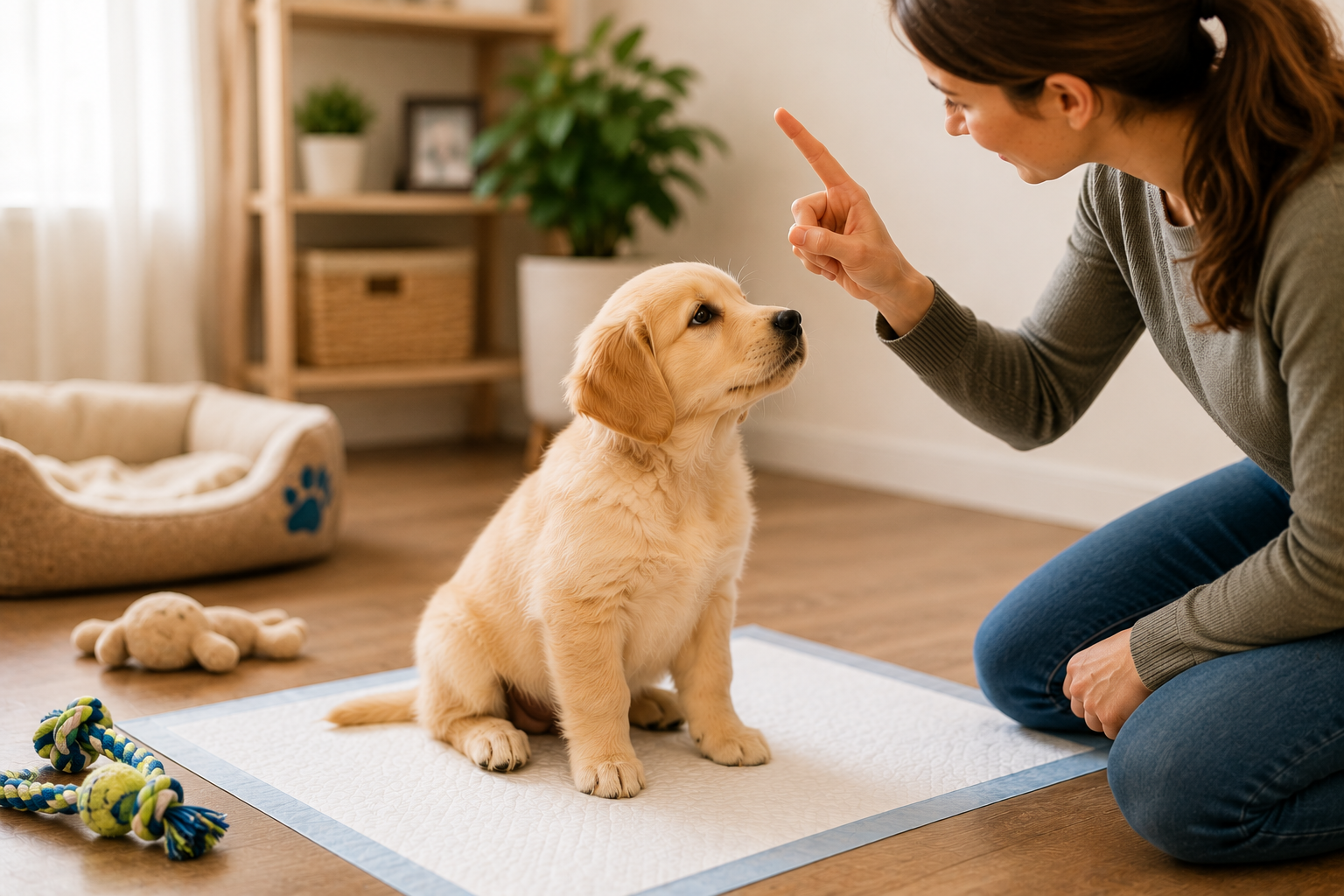
Bringing home a new puppy is one of the happiest days for any pet owner. But along with the cuddles and playtime comes one big job: potty training. If you are wondering how to potty train a puppy the right way, you are in the right place.
This guide will show you a simple schedule, easy tips, and the common mistakes to avoid, so your puppy learns fast and your home stays clean. Potty training does not have to be stressful. With patience, consistency, and the right steps, most puppies can learn good bathroom habits within a few weeks. Let’s walk through everything you need to know, step by step.
What Does Potty Training a Puppy Mean?
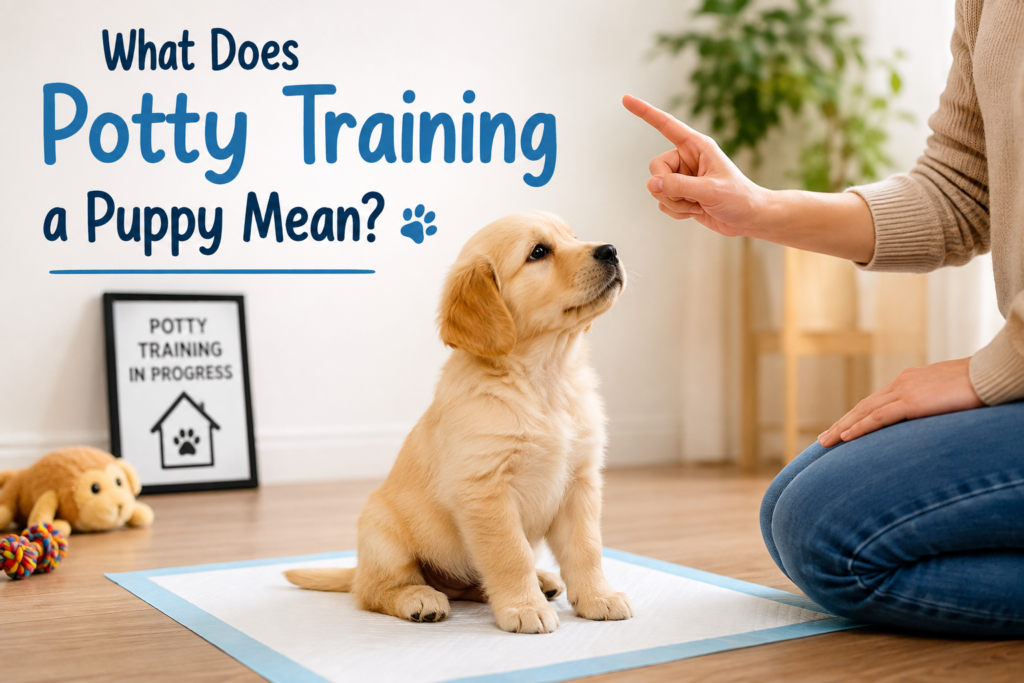
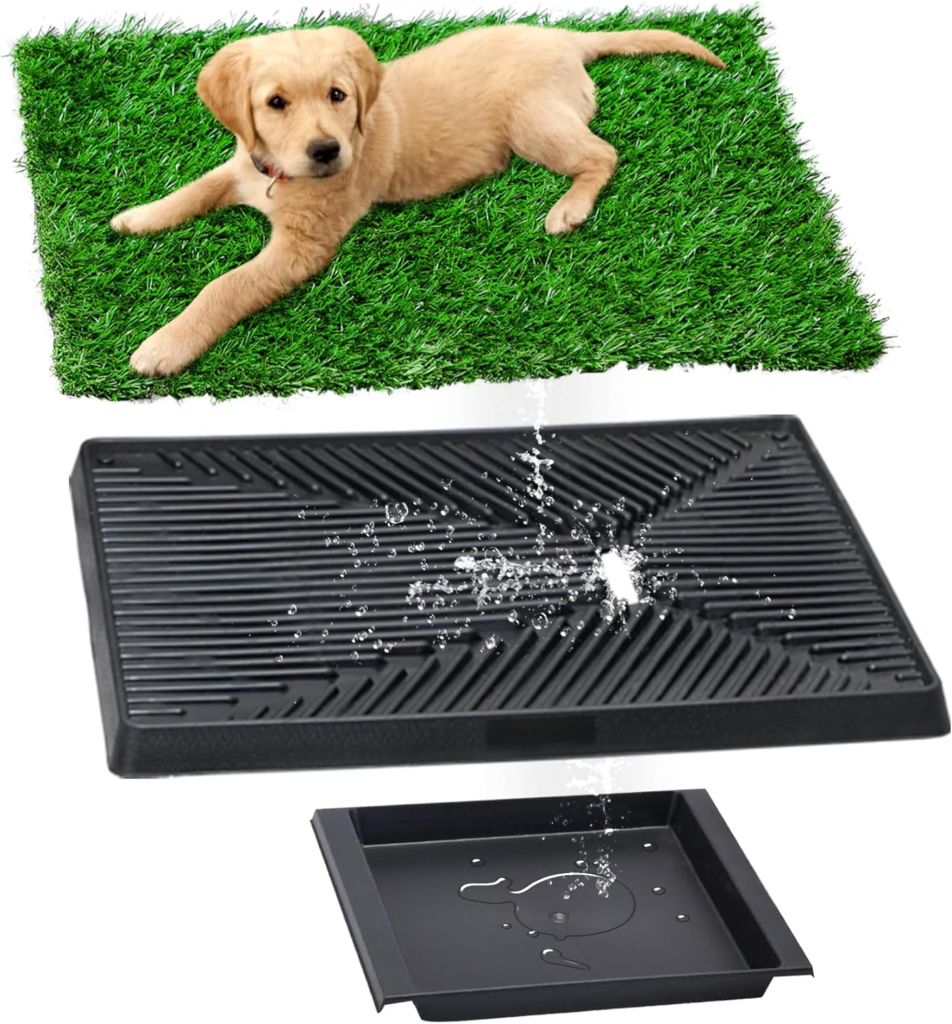
Potty training means teaching your puppy where and when to go to the bathroom at a fixed spot, like outside on grass, or on a pee pad if you’re doing indoor training. It’s not just about preventing accidents, it’s about building your puppy’s bladder control, a routine, and communication (like scratching the door or whining when they need to go).
Young puppies have weak bladder control, so they don’t naturally know where they’re supposed to go. We have to teach this through consistency, patience, and positive reinforcement.
Why Potty Training Matters
It’s not just about keeping your house clean it builds trust and communication between you and your puppy. Done right, puppies learn faster and there’s less stress for everyone.
How Long Does It Take?
Usually 4 to 6 months, but it varies by breed and consistency. Smaller breeds can take a bit longer since they have smaller bladders.
Key Elements of Potty Training
- Schedule – taking them out at fixed times (after meals, before bed, after waking up)
- Supervision – watching for signs before an accident happens
- Positive Reinforcement – rewarding them when they go in the right spot
- Patience – accidents will happen, don’t punish for them
How to Potty Train a Puppy: Step-by-Step Guide
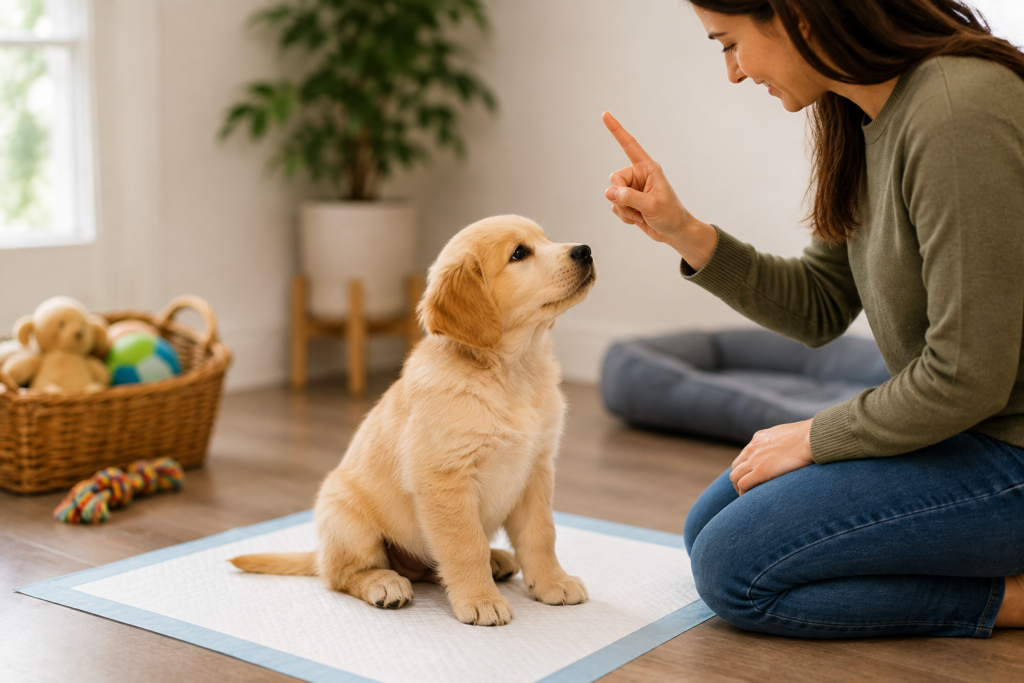
Here is a simple, proven method that works for most puppies, no matter the breed.
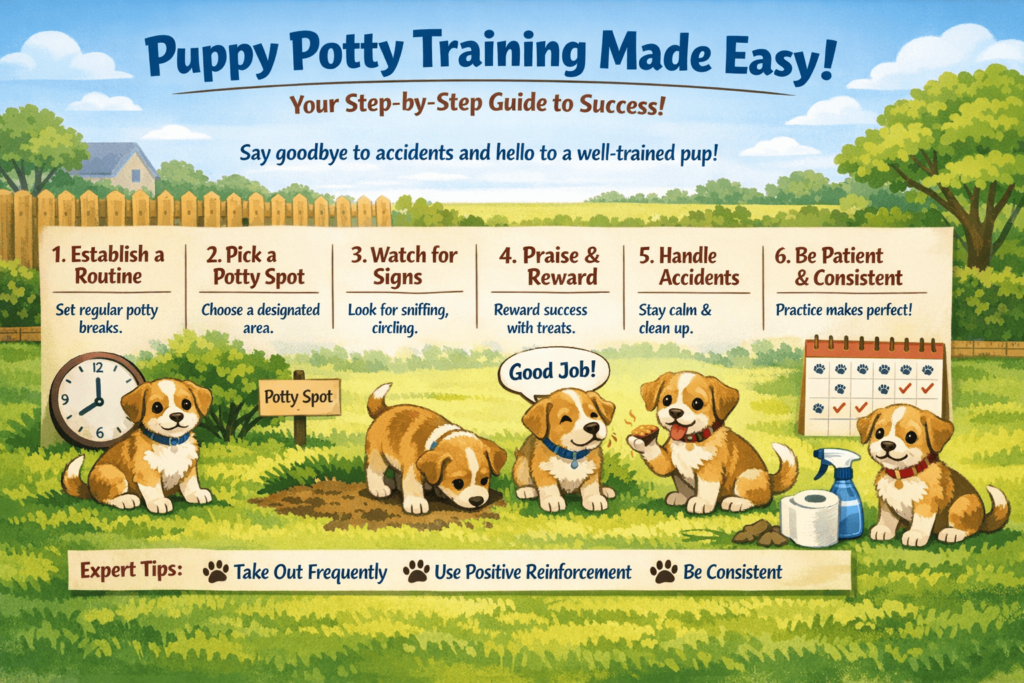
Step 1: Set a Potty Schedule
The first step in how to potty train a puppy is building a routine. Take your puppy outside at these key times:
- Right after waking up
- After every meal or drink of water
- After playtime or naps
- Every one to two hours during the day
- Right before bedtime
A steady schedule helps your puppy’s body learn when it is time to go. Puppies thrive on routine, so try to take them out at the same times each day.
Step 2: Choose One Potty Spot
Choosing one spot is a simple part of potty training that many owners skip. Pick a specific spot in your yard for potty breaks. The smell from past visits will remind your puppy why they are there. Walk your puppy to that same spot every time until the habit forms.
Step 3: Watch for Signs
Learning to read your puppy’s body language is another key part of successful potty training. Watch for:
- Sniffing the floor
- Circling in one spot
- Whining or barking
- Suddenly stopping playtime
- Heading toward the door
If you notice these signs, take your puppy outside right away.
Step 4: Reward and Praise
When your puppy goes potty in the right spot, praise them right away with happy words or a small treat. This helps them connect the action with a good reward. Timing matters a lot here. Praise within a few seconds so your puppy understands what they did right.
Step 5: Stay Calm With Accidents
Accidents will happen, especially in the first few weeks. Never yell or punish your puppy. This can create fear and actually slow down training. Instead, clean the area well so the smell does not attract your puppy back to the same spot, and simply continue the routine.
Puppy Potty Training Schedule by Age
Every puppy is different, but here is a general guide based on age. Knowing how to potty train a puppy at each stage helps you set the right expectations.
8 to 10 weeks old: Puppies at this age need potty breaks almost every hour. Their bladder control is very limited.
10 to 12 weeks old: You can start stretching potty breaks to every one and a half to two hours.
3 to 6 months old:Most puppies can hold their bladder for about one hour for every month of age. A four month old puppy can often wait around four hours.
6 months and older :Many puppies can now hold their bladder for six to eight hours, though nighttime breaks may still be needed for some dogs.
If you want more detail on building daily routines beyond potty breaks, our Puppy Training Guide: A Complete Step-by-Step Guide to Raising a Well-Behaved Puppy covers everything from basic commands to socialization.
Common Mistakes When Potty Training a Puppy
Even loving pet owners can slow down training without realizing it. Knowing what to avoid is just as important as knowing how to potty train a puppy the right way. Here are mistakes to avoid.
Punishing accidents: Scolding a puppy after an accident does not teach them anything useful. It only creates fear and can lead to hiding behavior.
Inconsistent schedule; Skipping potty breaks or changing times too often confuses your puppy and slows progress.
Not cleaning up properly:If the accident spot still smells like urine, your puppy may return to that same area again.
Giving too much freedom too soon: letting a puppy roam the whole house before they are trained often leads to more accidents. Start small and expand space as trust grows.
Missing the signs: Many owners miss the early signals a puppy gives before needing to go. Watching closely in the first weeks makes a big difference.
Skipping nighttime breaks :Very young puppies often need at least one bathroom break during the night. Skipping this can lead to accidents and slower learning.
How Long Does It Take to Potty Train a Puppy?
Most puppies take about four to six months to become fully potty trained, though some learn faster and others need more time. Breed, size, and consistency all play a role. If you follow the steps on how to potty train a puppy consistently, smaller breeds may just take a little longer because of their tiny bladders. The key is staying patient and sticking with the schedule, even when progress feels slow.
Tips for Nighttime Potty Training
Nighttime can be one of the trickiest parts of learning how to potty train a puppy. Try these tips:
- Stop water access about one to two hours before bedtime
- Take your puppy out right before you go to sleep
- Set an alarm for one middle of the night break if your puppy is very young
- Keep the nighttime bathroom trip calm and quiet, with no play, so your puppy learns nighttime is for sleeping
Sometimes a puppy who was doing well suddenly starts having accidents again. If this happens to your puppy, do not worry, it is common. Our guide on potty training regression in stubborn puppies explains why this happens and how to get back on track quickly.
Using a Crate to Help With Potty Training
Many trainers recommend crate training as part of how to potty train a puppy faster. Dogs naturally avoid soiling the space where they sleep, so a properly sized crate can reduce accidents.
Make sure the crate is just big enough for your puppy to stand, turn around, and lie down comfortably, not much bigger. According to the American Kennel Club, crate training combined with a consistent schedule is one of the most effective house training methods for puppies.
Potty accidents are often linked to other early training mistakes too. Our guide on 10 common puppy training mistakes to avoid can help you spot and fix issues before they slow down your puppy’s progress.
Frequently Asked Questions
How do I potty train a puppy fast?
The fastest way to learn how to potty train a puppy is to build a strict schedule, take your puppy out often, reward good behavior right away, and supervise closely so you can catch signs before an accident happens.
What age should a puppy be fully potty trained?
Most puppies are fully potty trained between four and six months old, though full bladder control can take up to a year for some breeds.
Should I punish my puppy for accidents?
No. Punishment can create fear and slow down training. Instead, clean the area well and stay consistent with the schedule.
How often should a puppy go outside to potty?
Young puppies usually need to go out every one to two hours, plus after meals, naps, and playtime.
Why does my puppy keep having accidents inside?
This is often caused by an inconsistent schedule, missed signs, leftover odor from past accidents, or too much freedom in the house too soon.
Is crate training helpful for potty training?
Yes. Puppies usually avoid going potty where they sleep, so a crate can support your potty training schedule when used correctly.
Final Thoughts
Learning how to potty train a puppy takes patience, consistency, and a clear routine. Stick to a regular schedule, watch for signs, reward good behavior, and stay calm through accidents. Within a few months, most puppies learn the routine and become reliable with their bathroom habits.
Want more help raising a well behaved puppy? Explore our Puppy Training Guide: A Complete Step-by-Step Guide to Raising a Well-Behaved Puppy for tips on commands, socialization, and building good habits from day one.

Puppy Obedience Training 101: A Beginner’s Guide to Raising a Well-Mannered Dog

Common Dog Behavior Problems and How to Fix Them

Puppy Commands for Off-Leash Safety: What Every Owner Needs

Best Age to Start Leash Training a Puppy for Calm Behavior

How to Fix Puppy Behavior Using Gentle Training

puppy-obedience-training-commands/Puppy Training Tips: A Complete Step-by-Step Guide for Beginners

Puppy Obedience Training 101: A Beginner’s Guide to Raising a Well-Mannered Dog
Common Dog Behavior Problems and How to Fix Them
Puppy Commands for Off-Leash Safety: What Every Owner Needs
Best Age to Start Leash Training a Puppy for Calm Behavior
How to Fix Puppy Behavior Using Gentle Training