
Dog Commands training
Training Senior Dogs: Adjusting Commands for Mobility, Hearing & Cognitive Changes

Quick Summary:
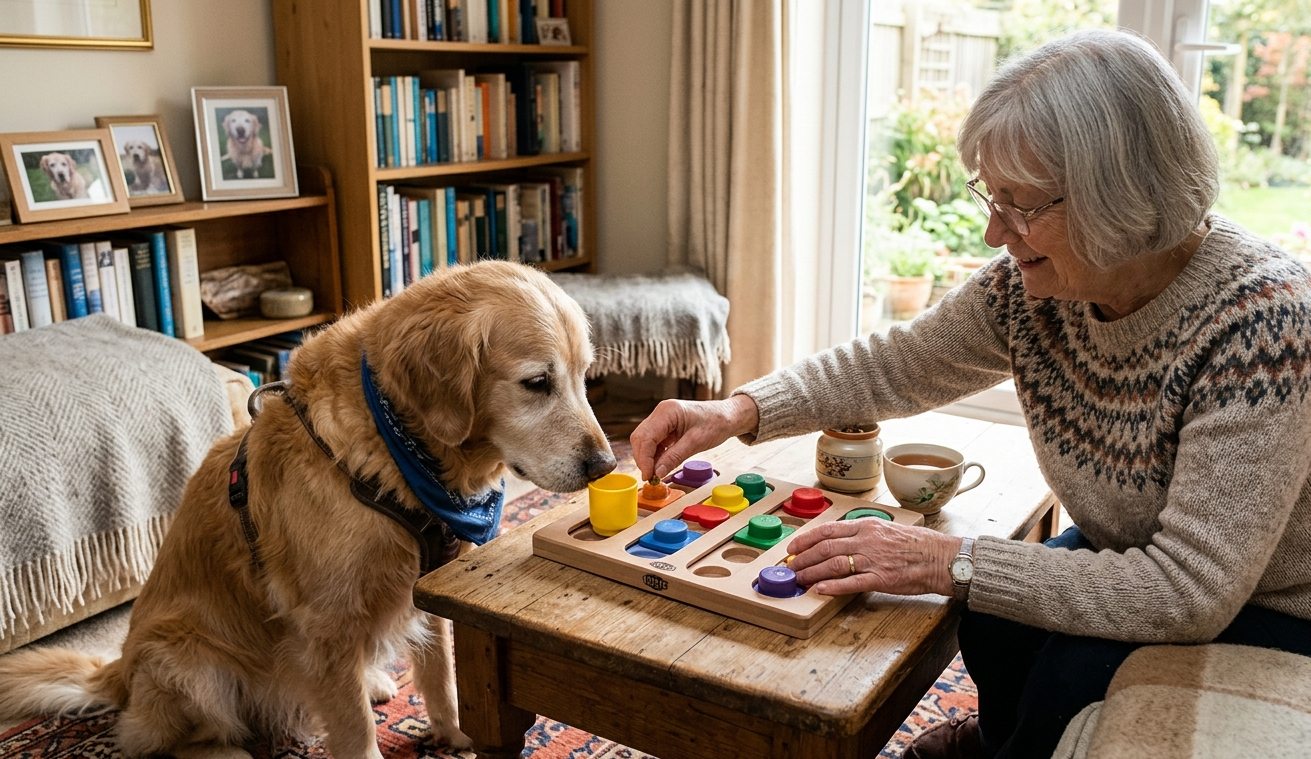
Training senior dogs requires adjusting your approach for hearing loss, joint pain, and cognitive changes rather than abandoning training altogether. This guide covers how to switch from verbal cues to hand signals, keep sessions low-impact for aching joints, support a dog with canine cognitive dysfunction, and recognize when it is time to involve your veterinarian.
With small adjustments, senior dogs can keep learning and stay mentally sharp well into their golden years.It is easy to assume training stops mattering once your dog hits their senior years. In reality, training senior dogs is one of the best ways to keep their mind sharp and their bond with you strong, even as their body changes.
Training senior dogs The trick is adjusting how you teach, not whether you teach at all.This guide breaks down exactly how aging affects learning and gives you practical, low-impact ways to keep communicating clearly with your dog as their hearing, mobility, and cognitive abilities shift.
How Aging Affects Learning and Behavior
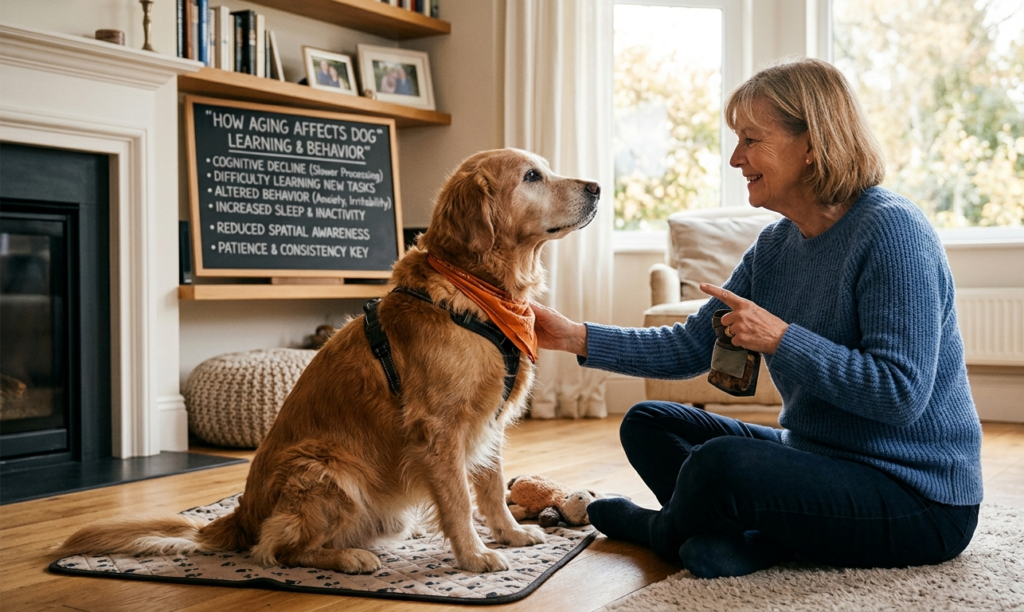
Training senior dogs Most dogs are considered seniors somewhere between 7 and 10 years old, depending on breed and size. As dogs enter their senior years, their physical capabilities may slow down, but their need for mental stimulation, routine, and bonding remains just as important as ever. Paws-tales
Vision and Hearing Loss
Sensory decline is one of the most common changes you will notice. Many senior dogs experience partial or complete hearing loss, along with cloudy eyes from conditions like lenticular sclerosis or cataracts. A dog who suddenly seems to ignore your commands may simply not be able to hear or see them clearly anymore. Paws-tales
Joint Pain and Mobility Limits
Arthritis and general joint stiffness are common in older dogs, which means physically demanding commands like jumping or quick sit-down transitions may become uncomfortable. Training senior dogs successfully means watching for signs of discomfort and adjusting accordingly, rather than pushing through.
Adapting Commands for Hearing Loss
Hearing loss does not mean your dog can no longer follow commands. It just means you need a new way to deliver them.

Switching to Hand Signals
Begin by making the hand signal at the same time you say the verbal command, then gradually phase out the verbal cue so your dog responds to the signal alone. If your dog still has partial hearing, this transition tends to happen faster since they can use both cues together while they adjust. Small Door Veterinary
Getting Your Dog’s Attention First
Hand signals only work if your dog is looking at you. Since deaf dogs can still feel vibrations, a firm stamp on the ground is often enough to get them to turn and look your way. Some owners also use a gentle flashlight flicker or a light touch on the shoulder to redirect attention before giving a signal. Small Door Veterinary
Using Vibration Collars (Humane Options)
Collars that deliver a gentle vibration rather than a shock can be a useful training tool for teaching dogs to look toward you for a hand signal. These are not punishment tools. They function more like a tap on the shoulder, simply letting your dog know it is time to check in with you. PetMD
Low-Impact Training Methods
Training senior dogs often deal with arthritis, reduced muscle mass, and slower recovery times, so training methods that worked fine in their younger years can become genuinely uncomfortable or even painful later in life. Drills involving jumping, quick direction changes, or repeated sitting and standing put real strain on aging hips, knees, and spines.
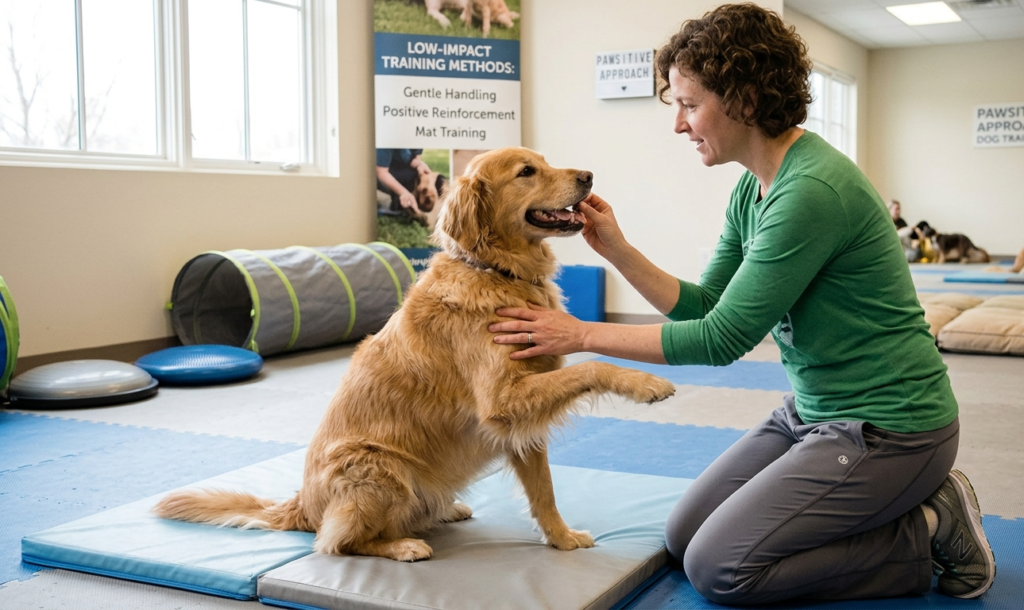
The goal of low-impact training isn’t to stop training altogether, but to redesign sessions so the dog’s body is protected while their brain still gets the stimulation it craves. This might mean trading a “sit-stay-come running” routine for slower, more deliberate exercises that don’t demand explosive movement.
In practice, this looks like favoring nose work, scent puzzles, and food-based enrichment games over physically demanding obedience drills. Teaching a new trick that involves targeting an object with the nose or paw, rather than jumping through a hoop, keeps a senior dog’s mind sharp without taxing their joints.
Shorter, more frequent sessions also tend to work better than long ones, since older dogs tire more easily and need more recovery time between bouts of activity. Using soft, non-slip surfaces during training, and avoiding hard floors or uneven ground, further reduces the risk of slips or falls that could cause injury.
Finally, paying close attention to the individual dog’s signals becomes even more important with age. A senior dog might not show discomfort the same way a younger dog would; they may simply slow down, hesitate, or disengage rather than yelp or limp.
Training senior dogs Adjusting pace, reducing repetitions, and ending sessions on a positive note before fatigue sets in helps preserve both their physical wellbeing and their enthusiasm for training. The result is a routine that keeps an older dog mentally engaged and emotionally connected to their owner, without pushing their body past what it can comfortably handle.
Avoiding Strain on Joints
Skip commands that require jumping, fast direction changes, or prolonged standing if your dog shows any signs of stiffness. Many trainers suggest practicing commands like “down” or “touch” on a soft, supportive mat to keep pressure off sore joints.
Shorter, Gentler Sessions
Older dogs tire more quickly than they used to, so five-minute sessions tend to work better than longer ones. Always end on a success, even something as simple as your dog responding to their name, so each session feels rewarding rather than draining.
Mental Stimulation for Cognitive Decline
Some senior dogs develop canine cognitive dysfunction, often described as a dog version of dementia. Training plays a real role in managing it.
Puzzle Toys and Enrichment
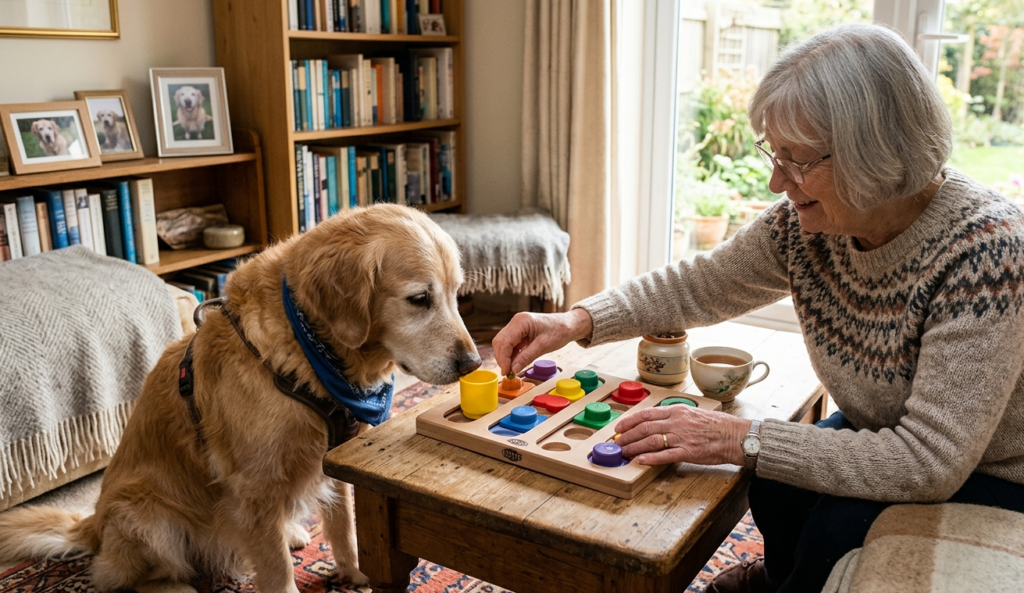
Food puzzle toys and other interactive games have been shown in scientific studies to help preserve cognitive function in dogs dealing with cognitive decline. Rotating a few simple puzzle toys throughout the week keeps your senior dog’s brain active without overwhelming them. Small Door Veterinary
Recognizing Signs of Canine Cognitive Dysfunction
Watch for disorientation, changes in how your dog interacts with the family, disrupted sleep patterns, and house-soiling accidents in a previously house-trained dog. Sticking to a consistent daily routine is especially comforting for dogs with cognitive dysfunction, since it reduces the stress that comes from other confusing aspects of the condition. Small Door Veterinary
When to Consult a Vet Before Training Changes
It’s easy to write off a senior dog’s slipping performance as just “getting old,” but sudden or rapid changes deserve a closer look before that assumption takes hold. A dog that suddenly stops responding to commands they’ve known for years, seems confused in familiar spaces, or appears to stare blankly at walls or corners may be showing early signs of canine cognitive dysfunction, a condition similar to dementia in humans.
Other times, what looks like stubbornness is actually pain the dog can’t otherwise communicate, whether from arthritis, dental disease, or an injury that makes movement uncomfortable.
Vision or hearing loss can also masquerade as disobedience, since a dog that can’t see a hand signal or hear a verbal cue clearly isn’t ignoring you, they simply never received the instruction in the first place.The reason timing matters so much is that many of these underlying issues respond far better to treatment when caught early.
Pain can often be managed with medication or lifestyle adjustments, vision and hearing changes can sometimes be worked around with adapted training cues, and cognitive decline may be slowed with diet, supplements, or medication when addressed promptly rather than left to progress.
Frequently Asked Questions
Can senior dogs still learn new commands?
Training senior dogs Yes. Senior dogs can absolutely learn new commands, though it often takes more repetition and shorter sessions compared to younger dogs. The key is adjusting your method, not giving up on training.
How do I train a deaf senior dog?
Training senior dogs Transition from verbal cues to hand signals by pairing both together at first, then phasing out the spoken word once your dog responds reliably to the visual signal alone. Getting your dog’s attention first, through a vibration or touch, is essential before giving any hand signal.
What are the signs of dementia in senior dogs?
Common signs include disorientation, changes in social interaction, disrupted sleep cycles, and house-soiling in a previously trained dog. These signs are often grouped under the acronym DISH, standing for disorientation, interaction changes, sleep changes, and house-soiling.
Is it too late to train an older dog with hearing loss?
Training senior dogs No. Many dogs successfully transition to hand-signal based communication even after hearing loss develops, especially when training starts as soon as the hearing changes are noticed.
Should I stop training my senior dog if they have arthritis?
Training senior dogs Not entirely. Simply adjust the physical demands of training, such as removing jumping or quick movements, while keeping mentally engaging exercises like scent games and simple cues in place.
Final Thoughts
Training senior dogs is less about teaching brand new tricks and more about adjusting how you communicate as your dog’s body and mind change. Whether you are switching to hand signals for hearing loss, choosing low-impact exercises for sore joints, or adding mental enrichment to manage cognitive decline, small adjustments go a long way.
Your senior dog still wants to learn and connect with you. They just need you to meet them where they are.For more detailed guidance on supporting aging dogs, the AKC’s guide to hearing loss in senior dogs is a helpful resource to read alongside this article.

Puppy Obedience Training 101: A Beginner’s Guide to Raising a Well-Mannered Dog

Common Dog Behavior Problems and How to Fix Them

Puppy Commands for Off-Leash Safety: What Every Owner Needs

Best Age to Start Leash Training a Puppy for Calm Behavior

How to Fix Puppy Behavior Using Gentle Training

puppy-obedience-training-commands/Puppy Training Tips: A Complete Step-by-Step Guide for Beginners

Puppy Obedience Training 101: A Beginner’s Guide to Raising a Well-Mannered Dog
Common Dog Behavior Problems and How to Fix Them
Puppy Commands for Off-Leash Safety: What Every Owner Needs
Best Age to Start Leash Training a Puppy for Calm Behavior
How to Fix Puppy Behavior Using Gentle Training