
Dog Training
Dog Training Tips: 25 Expert Techniques for a Well-Behaved and Happy Dog

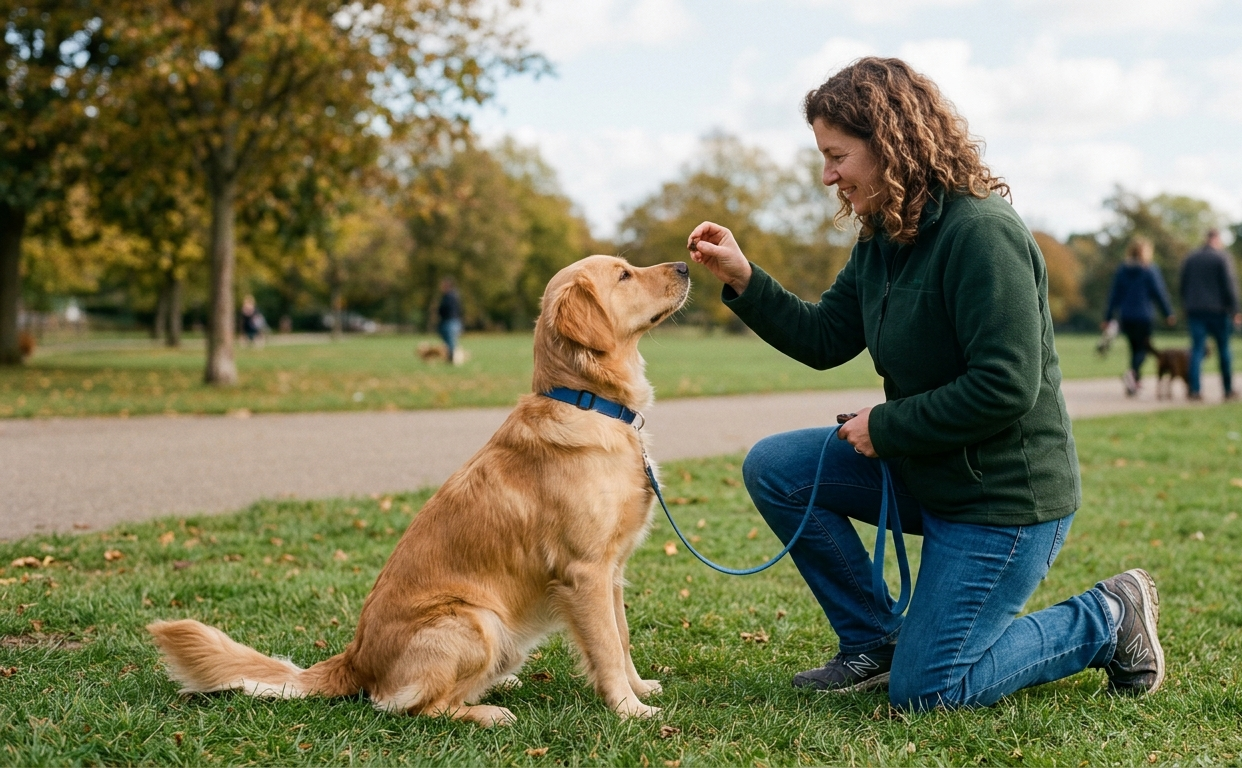
Quick Summary:
Dog training works best when it is based on positive reinforcement, consistency, and patience. This guide shares 25 expert-approved dog training tips covering puppy basics, obedience commands, leash manners, crate training, and solving common behavior problems.
Whether you are raising a new puppy or fixing bad habits in an older dog, these simple techniques will help you build a stronger bond and a calmer home.Every dog owner wants the same thing: a pet who listens, feels safe, and enjoys life with the family.
Good dog training makes that possible. It is not about punishment or forcing your dog to obey. It is about clear communication, rewards, and repetition. In this guide, you will learn 25 practical dog training tips that real trainers use every day. These tips work for puppies, adult dogs, and even rescue dogs who need extra patience.
Why Dog Training Matters for Every Dog Owner
Dog training is not just for show dogs or working dogs. It helps your pet feel confident, reduces anxiety, and prevents dangerous situations like running into traffic, jumping on strangers, or reacting aggressively toward other animals. A well-trained dog is also easier to travel with, take to the vet, and introduce to new people, since basic commands like sit and stay make everyday situations calmer and safer for everyone involved.
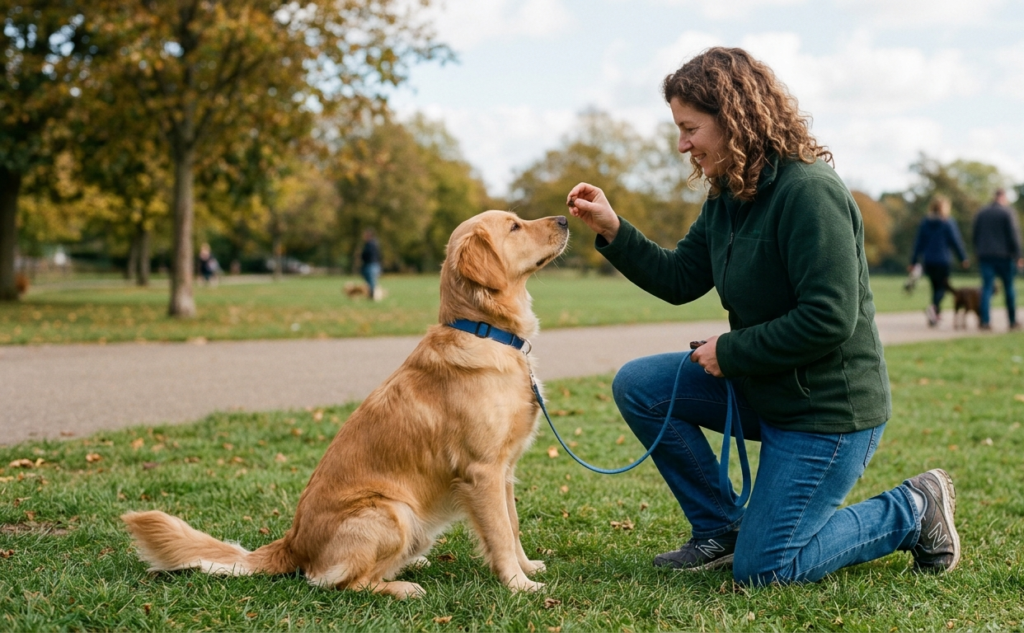
Dogs that understand what is expected of them tend to feel more secure in their environment, which often leads to fewer instances of destructive chewing, excessive barking, or restlessness. In many ways, training gives your dog a sense of structure that mirrors what they would naturally seek in a pack setting, helping them feel like a settled and confident member of the household rather than an anxious bystander.
Beyond safety and convenience, dog training plays a major role in your dog’s long-term emotional wellbeing. Studies from the American Kennel Club show that early and consistent training leads to fewer behavior problems later in life, since dogs who are taught clear boundaries early on are less likely to develop fear-based reactions or compulsive habits as they age.
Training also strengthens the emotional bond between you and your dog, since it is built on trust and communication rather than fear or punishment. Every successful training session
becomes a small conversation between you and your dog, one where your dog learns to look to you for guidance and you learn to read your dog’s signals more clearly. Over time, this ongoing exchange builds a deeper connection, turning simple obedience exercises into the foundation of a lasting, trusting relationship.
Getting Started: Basic Dog Training Tips for Beginners
If you are new to dog training, start small and stay consistent. Here are the first steps every beginner should follow.
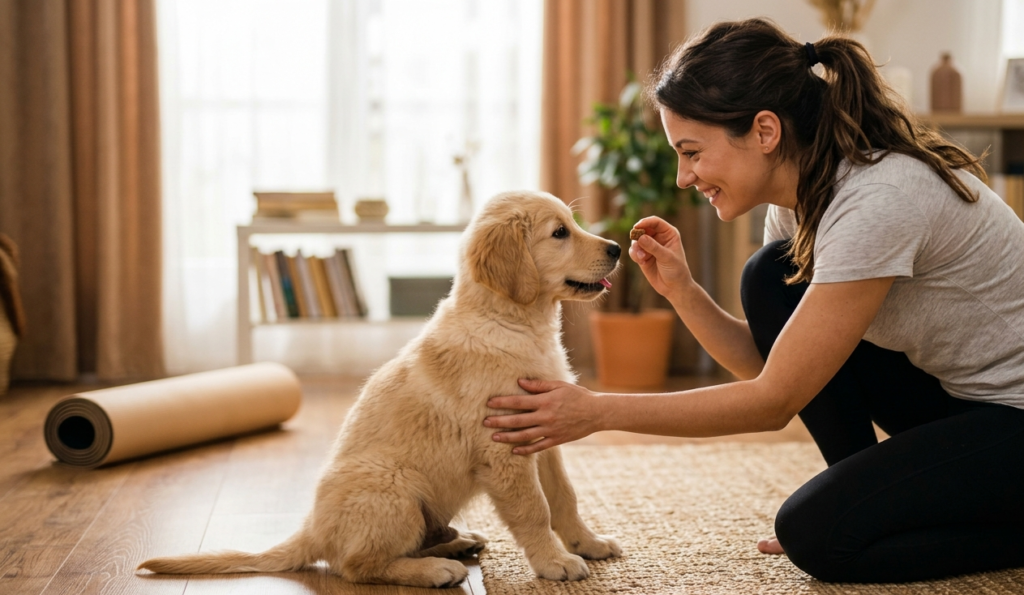
- Choose a quiet space.
Begin dog training in a room with no distractions before moving outside.
- Keep sessions short.
Five to ten minutes at a time works better than one long session.
- Use positive reinforcement.
Reward good behavior with treats, praise, or play right away.
- Pick one cue word.
Use the same word every time, like “sit” or “stay,” so your dog does not get confused.
- Be patient.
Every dog learns at a different pace, and frustration slows progress.
- Train before meals.
A slightly hungry dog is more motivated to work for treats.
- End on a good note.
Always finish a session with a command your dog knows well, so they feel successful.
Dog Training Tips Every New Owner Should Know
Dog training lays the foundation for lifelong good behavior. Start early, since puppies learn fastest between eight and sixteen weeks old.
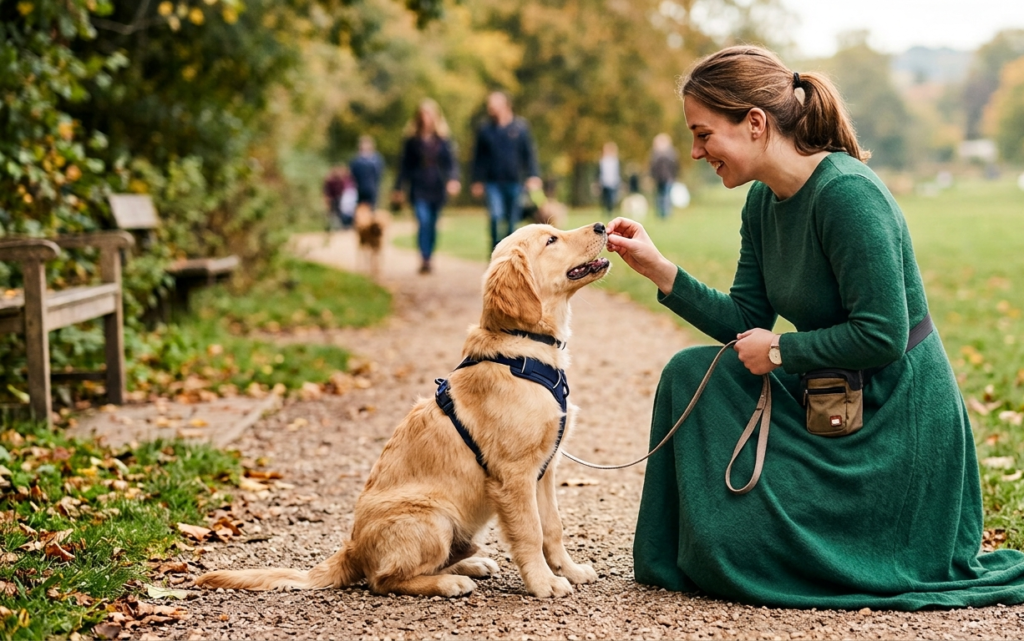
- Start socialization early.
Introduce your puppy to new people, sounds, and other dogs in a safe way.
- Begin potty training immediately.
Take your puppy outside every one to two hours and after meals.
- Use a consistent schedule.
Puppies thrive on routine for feeding, walks, and naps.
- Redirect chewing.
Offer chew toys instead of punishing your puppy for chewing shoes or furniture.
- Teach bite inhibition.
Yelp softly when your puppy nips too hard, then pause play for a few seconds.
For a deeper walkthrough, check out our complete puppy training checklist for week-by-week guidance.
Essential Obedience Commands in Dog Training
Basic obedience commands are the building blocks of good behavior. Once your dog masters these, daily life becomes much easier.
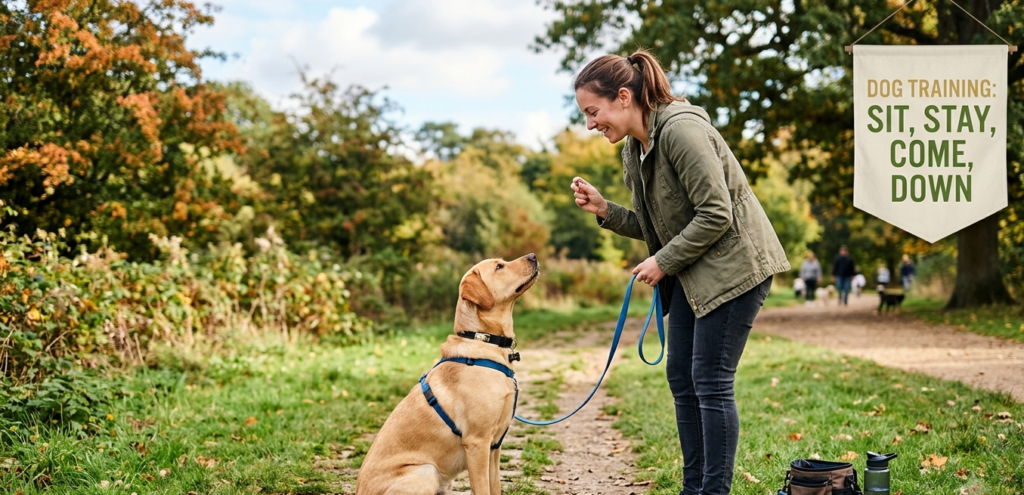
- Sit.
Hold a treat above your dog’s nose and move it back until they sit naturally.
- Stay.
Ask your dog to sit, then take one step back before rewarding them for staying.
- Come.
Practice recall in a safe, enclosed area using a happy voice and high-value treats.
- Down.
Guide your dog from a sit into a lying position using a treat near the floor.
- Leave it.
Cover a treat with your hand and reward your dog only when they stop trying to get it.
- Drop it.
Trade a toy for a treat so your dog learns to release items without a fight.
Leash Training and Walking Manners
Leash pulling is one of the most common complaints owners bring to trainers. These dog training tips can help fix it fast.
- Stop when your dog pulls.
Standing still teaches your dog that pulling gets them nowhere.
- Reward loose-leash walking.
Praise your dog often when the leash stays slack.
- Use the right equipment.
A front-clip harness can reduce pulling for strong dogs.
- Practice direction changes.
Turning unpredictably keeps your dog focused on you instead of the environment.
Crate Training and Managing Separation Anxiety
Crate training gives your dog a safe space and helps prevent destructive behavior when you are away.
- Make the crate inviting.
Add soft bedding and a favorite toy so your dog sees it as a den, not a cage.
- Introduce it gradually.
Let your dog explore the crate with the door open before closing it.
- Practice short absences.
Leave the room for a few minutes at a time, slowly increasing the duration.
If separation anxiety is a bigger issue in your home, our guide on managing separation anxiety in dogs offers step-by-step solutions.
Common Dog Training Mistakes to Avoid
Even well-meaning owners can slow down progress with a few common errors. Training for too long in one sitting is one of the most frequent mistakes, since dogs, especially puppies, have short attention spans and quickly lose focus after just a few minutes.
This often leads owners to think their dog is being stubborn or slow to learn, when in reality the dog is simply mentally tired. Another common mistake is using punishment instead of rewarding good behavior. Yelling, jerking the leash, or scolding a dog after the fact does not teach them what to do differently.
It only creates confusion and, over time, can damage trust between the dog and owner. Being inconsistent with commands or rules is equally problematic, particularly in households where different family members allow different behaviors, since dogs rely on clear and predictable patterns to understand what is expected of them.
Expecting instant results is another mistake that leads many owners to give up too soon. Real behavior change takes weeks of repetition, and dogs need time to build reliable habits, not just a single successful attempt.
Skipping socialization is perhaps one of the most overlooked errors, since dogs who are not exposed to new people, animals, and environments early on are more likely to develop fear or aggression as they mature.
Avoiding these common mistakes can make dog training smoother and far less stressful for both you and your dog. By staying patient, using positive reinforcement consistently, and giving your dog enough time and exposure to grow, you set the stage for lasting, reliable behavior rather than short-term compliance.
How Long Does Dog Training Take?
Most dogs learn basic commands within two to four weeks of consistent daily practice. However, full obedience and reliable behavior in public settings can take three to six months. Puppies often take longer since they are still developing focus and impulse control. The key to faster results is short, frequent sessions rather than occasional long ones.
When to Consider Professional Dog Training Help
Some behavior issues, like aggression, severe anxiety, or resource guarding, benefit from a certified professional trainer. If your dog is not responding to basic techniques after a few weeks, or if safety is a concern, a professional evaluation can save time and prevent the problem from getting worse. Group classes are also a great way to combine training with socialization.
Final Thoughts on Dog Training
Dog training is a journey, not a one-time event. With patience, consistency, and positive reinforcement, almost any dog can learn to be calm, obedient, and happy. Start with the basics, celebrate small wins, and remember that every dog progresses at their own pace. The time you invest in dog training today will pay off with a lifetime of trust and companionship.
Frequently Asked Questions About Dog Training
What is the best age to start dog training?
Puppies can begin basic dog training as early as eight weeks old, focusing on simple commands and socialization.
How often should I train my dog each day?
Two to three short sessions of five to ten minutes work better than one long session.
Can older dogs still be trained?
Yes, adult and senior dogs can absolutely learn new commands and habits with patience and consistent practice.
What is positive reinforcement in dog training?
It means rewarding good behavior with treats, praise, or play instead of punishing bad behavior.
Why does my dog listen at home but not outside?
Distractions outside are stronger, so dogs need extra practice generalizing commands in different environments.
Do all dog breeds train the same way?
No, some breeds are more independent or energetic, so training methods may need small adjustments based on temperament.
Is crate training cruel to dogs?
No, when done correctly, a crate becomes a safe, comfortable space that many dogs choose to rest in voluntarily.Want me to also format this as a Word doc or add meta title/description and schema markup suggestions for on-page SEO?

Puppy Obedience Training 101: A Beginner’s Guide to Raising a Well-Mannered Dog

Common Dog Behavior Problems and How to Fix Them

Puppy Commands for Off-Leash Safety: What Every Owner Needs

Best Age to Start Leash Training a Puppy for Calm Behavior

How to Fix Puppy Behavior Using Gentle Training

puppy-obedience-training-commands/Puppy Training Tips: A Complete Step-by-Step Guide for Beginners

Puppy Obedience Training 101: A Beginner’s Guide to Raising a Well-Mannered Dog
Common Dog Behavior Problems and How to Fix Them
Puppy Commands for Off-Leash Safety: What Every Owner Needs
Best Age to Start Leash Training a Puppy for Calm Behavior
How to Fix Puppy Behavior Using Gentle Training