
Puppy Commands
How Long Should I Walk My Puppy? A Vet-Backed Guide by Age


Quick Summary:
The general rule to walk my puppy is 5 minutes per month of age, twice a day, until your puppy is fully grown. A 3-month-old puppy needs about 15 minutes per walk, while a 6-month-old can handle 30 minutes.
This guide breaks down exact walk times by age, breed size, and growth stage, backed by vet guidance, so you never over-walk or under-walk your growing dog.Bringing home a new puppy is exciting, but one question trips up almost every new owner:
How long should I walk my puppy without hurting their growing joints? Walk too little and your puppy gets bored and restless. Walk too much and you risk damaging bones and joints that are still developing. This guide gives you clear, age-by-age answers so you can walk my puppy the right way, every single day.
Why Walk Duration Matters So Much for Puppies
Puppies are not small adult dogs. Their bones, joints, and growth plates are still soft and forming, sometimes until they are 18 months old in larger breeds. When you walk my puppy too far or too fast, you put pressure on those growth plates before they are ready. This can lead to joint problems, hip issues, or early arthritis later in life.
On the other hand, puppies need movement. Walking helps with:
- Healthy muscle and bone development
- Mental stimulation and reduced anxiety
- House training success
- Early socialization with people, dogs, and new places
- Burning off puppy energy in a safe, controlled way
The goal is balance. Enough activity to support growth and behavior, but not so much that it causes harm.
How Over-Walking Harms a Growing Puppy
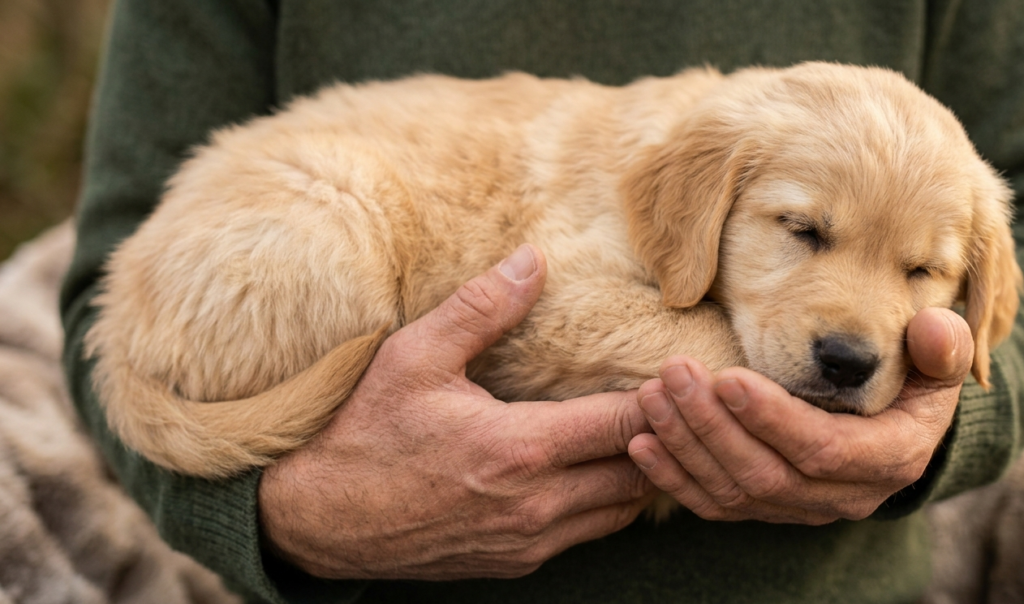
Growth plates are soft areas of cartilage near the ends of a puppy’s bones. They slowly harden into solid bone as the puppy matures. Until that happens, these areas are the weakest point in the skeleton, even weaker than the bone around them.
When you walk my puppy for too long or too fast, especially on hard surfaces or during high-impact activities like jumping, repeated stress on these soft plates can cause:
- Uneven or delayed bone growth
- Joint pain that shows up later in life
- Higher risk of hip or elbow dysplasia in medium and large breeds
- Long-term mobility issues that no amount of adult care can fully reverse
This is exactly why the 5-minute rule exists. It keeps activity within a safe range while those plates are still closing.
The Real Benefits of Daily Walks
While over-walking causes harm, the right amount of walking gives your puppy real, lasting benefits:
- Healthy muscle and bone development: Controlled movement strengthens muscles around the joints, which actually protects those growth plates rather than stressing them.
- Mental stimulation and reduced anxiety: New sights, sounds, and smells tire out a puppy’s brain as much as their body, which means fewer behavior problems at home.
- House training success: Regular walks build a predictable bathroom routine, which speeds up potty training significantly.
- Early socialization with people, dogs, and new places: Puppies have a critical socialization window, usually before 16 weeks, where positive exposure shapes their confidence as adults.
- Burning off puppy energy in a safe, controlled way: A structured walk uses up energy that would otherwise turn into chewing, barking, or restlessness indoors.
The 5-Minute Rule: The Simple Way to Walk My Puppy
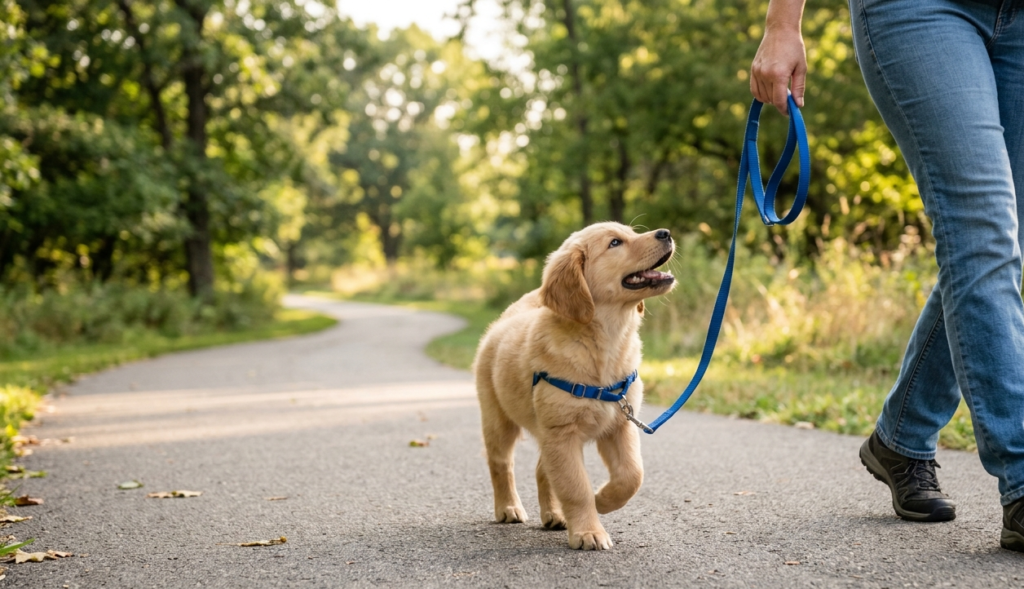
Most veterinarians recommend a simple formula for how long to walk a puppy: five minutes of walking per month of age, done up to twice a day, until the puppy reaches full adult size.
Here is what that looks like in practice:
| Puppy Age | Walk Time Per Session | Walks Per Day |
| 2 months | 10 minutes | 2 |
| 3 months | 15 minutes | 2 |
| 4 months | 20 minutes | 2 |
| 5 months | 25 minutes | 2 |
| 6 months | 30 minutes | 2 |
| 8 months | 30 to 40 minutes | 2 |
| 12 months | 45 to 60 minutes | 1 to 2 |
This rule gives you a safe starting point, but it is not the whole picture. Breed size and energy level also change how long you should walk my puppy each day.
Puppy Walk Times by Age: A Closer Look
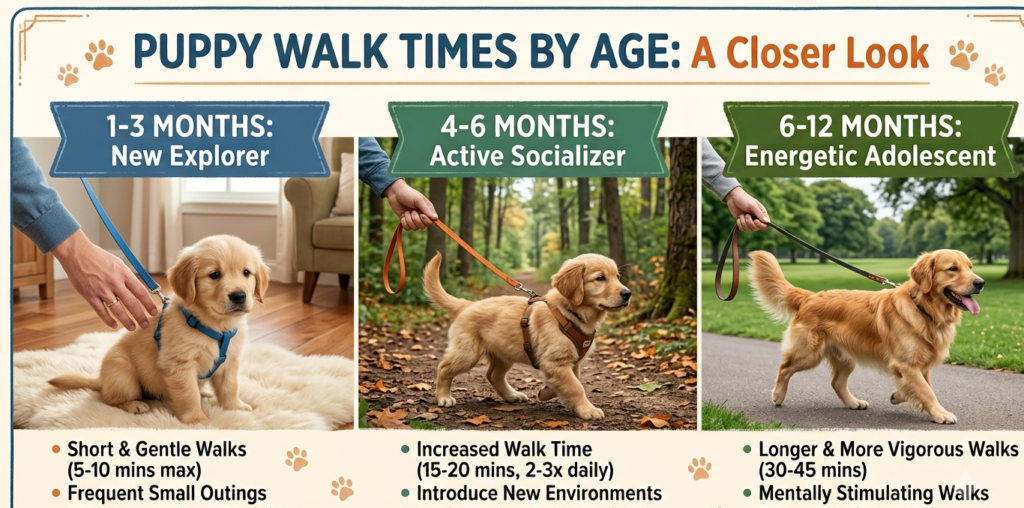
8 to 12 Weeks Old (2 to 3 Months)
At this age short and frequent walks work best. Aim for 5 to 15 minutes two to three times a day. Puppies this young tire quickly so watch for signs like lagging behind, sitting down mid-walk, or heavy panting. These are cues to head home.
This is also the ideal window for gentle socialization. Let your puppy sniff, meet calm dogs, and hear everyday sounds like traffic or children playing. Short walks now build confidence for later.
3 to 4 Months Old
Walks can stretch to 15 to 20 minutes, twice daily. Your puppy has more stamina now, but joints are still fragile. Stick to flat, soft surfaces like grass instead of hard pavement or long stairs.
5 to 6 Months Old
By now, most puppies can handle 20 to 30 minute walks. This is a good age to start light leash training drills and add in some structured play, like fetch on soft ground, alongside your regular walk my puppy routine.
7 to 12 Months Old
Larger breed puppies are still growing at this stage, even though they may look nearly full-sized. Keep walks around 30 to 45 minutes and avoid high-impact activities like jumping from heights or running long distances on hard ground until growth plates close.
Smaller breeds often mature faster and can usually handle adult-length walks of 45 to 60 minutes by 10 to 12 months.
Does Breed Size Change How Long You Should Walk a Puppy?
Yes, and this is one of the most overlooked parts of puppy exercise. Breed size directly affects both walk duration and growth timeline.
- Small breeds (Chihuahuas, Pomeranians, Yorkies): Reach full growth by 9 to 12 months. Shorter, more frequent walks suit their tiny legs.
- Medium breeds (Beagles, Cocker Spaniels): Reach full growth around 12 months. Follow the standard 5-minute rule closely.
- Large breeds (Labradors, German Shepherds): Reach full growth between 12 and 18 months. Growth plates take longer to close, so avoid long or intense walks even past 6 months.
- Giant breeds (Great Danes, Mastiffs): Can take up to 24 months to fully mature. Keep walks gentle and short well into their first year to protect developing joints.
If you are unsure where your puppy’s breed falls, our puppy breed size and growth guide can help you map out a safer walking schedule.
Signs Your Puppy Has Had Enough
Numbers and charts help, but your puppy’s behavior is the real signal. Stop or shorten the walk if you notice:
- Lagging behind or refusing to move
- Excessive panting or drooling
- Limping or favoring one leg
- Flopping down mid-walk
- Slower response to your voice or leash cues
Puppies often push through tiredness because they want to keep exploring, so it is your job to read the early signs and end the walk before exhaustion sets in.
Common Mistakes When You Walk My Puppy
Even well-meaning owners make these errors:
- Matching walks to their own fitness level instead of the puppy’s age and breed.
- Skipping rest days between more active walks.
- Walking on hard concrete too often, which adds extra joint stress.
- Ignoring the leash training stage and letting pulling become a habit.
- Overdoing it after vaccinations, before the puppy has full protection against illness.
Avoiding these mistakes keeps your walk my puppy routine safe and enjoyable for both of you. For step-by-step leash training tips, check out our puppy leash training guide.
When Can Puppies Go on Full Walks Outside?
Most vets recommend waiting until your puppy has completed their full vaccination series, usually around 14 to 16 weeks old, before walking in public spaces where unknown dogs have been. Before that, you can carry your puppy outside or walk them in a secure, private yard to start early socialization safely.
According to the American Veterinary Medical Association, vaccination schedules can vary by puppy, so it is always best to confirm timing with your own vet before starting regular outdoor walks.

Building a Daily Walk Routine for Your Puppy
A predictable routine helps puppies feel secure and supports house training too. Try this simple structure:
- Morning walk: Shorter session to start the day and encourage a bathroom break
- Midday break: Optional short potty walk or backyard playtime
- Evening walk: Slightly longer session once energy has settled
Consistency matters more than intensity. Walking my puppy at the same times each day builds a rhythm your puppy learns to expect and enjoy.
If your puppy still seems to have extra energy after walks, pair the routine with mentally stimulating games. Our puppy enrichment and mental stimulation ideas are a great next step once your walking schedule is set.
Frequently Asked Questions
How long should I walk my puppy each day?
walk my puppy Follow the 5-minute rule: five minutes of walking per month of age, up to twice a day. A 4-month-old puppy, for example, should walk around 20 minutes per session.
Can I walk my puppy too much?
walk my puppy Yes. Over-walking a puppy can strain growth plates and joints that are still developing, sometimes leading to long-term issues like hip or elbow problems. Stick to age-appropriate durations.
Is it okay to skip a walk if my puppy seems tired?
Yes. Puppies do not need to hit an exact time goal every day. Following their energy level is more important than sticking rigidly to a schedule.
How often should I walk a puppy per day?
Most puppies do well with two structured walks a day, along with several short bathroom breaks in between.
Do puppies need walks before their vaccinations are complete?
Puppies can go outside for supervised, private walks before vaccinations are finished, but should avoid public parks or unknown dogs until fully vaccinated, usually around 14 to 16 weeks.
When can I start walking my puppy longer distances?
Once your puppy reaches full adult size, which varies from 9 months for small breeds to 24 months for giant breeds, you can gradually increase walk length toward normal adult exercise levels.
Final Thoughts
Learning how to walk my puppy the right way comes down to matching activity to age, breed, and energy level. Start slow, follow the 5-minute rule, watch your puppy’s body language, and increase walk time gradually as they grow.
walk my puppy This simple approach protects their developing joints now and sets them up for a healthy, active life later. Want more tips on raising a happy, well-behaved puppy? Explore our full library of puppy care guides at DogsGuide.info and start building better habits today.

Puppy Obedience Training 101: A Beginner’s Guide to Raising a Well-Mannered Dog

Common Dog Behavior Problems and How to Fix Them

Puppy Commands for Off-Leash Safety: What Every Owner Needs

Best Age to Start Leash Training a Puppy for Calm Behavior

How to Fix Puppy Behavior Using Gentle Training

puppy-obedience-training-commands/Puppy Training Tips: A Complete Step-by-Step Guide for Beginners

Puppy Obedience Training 101: A Beginner’s Guide to Raising a Well-Mannered Dog
Common Dog Behavior Problems and How to Fix Them
Puppy Commands for Off-Leash Safety: What Every Owner Needs
Best Age to Start Leash Training a Puppy for Calm Behavior
How to Fix Puppy Behavior Using Gentle Training