
Puppy Training
How to Stop Leash Biting: Leash Training a Puppy That Bites the Leash Made Easy

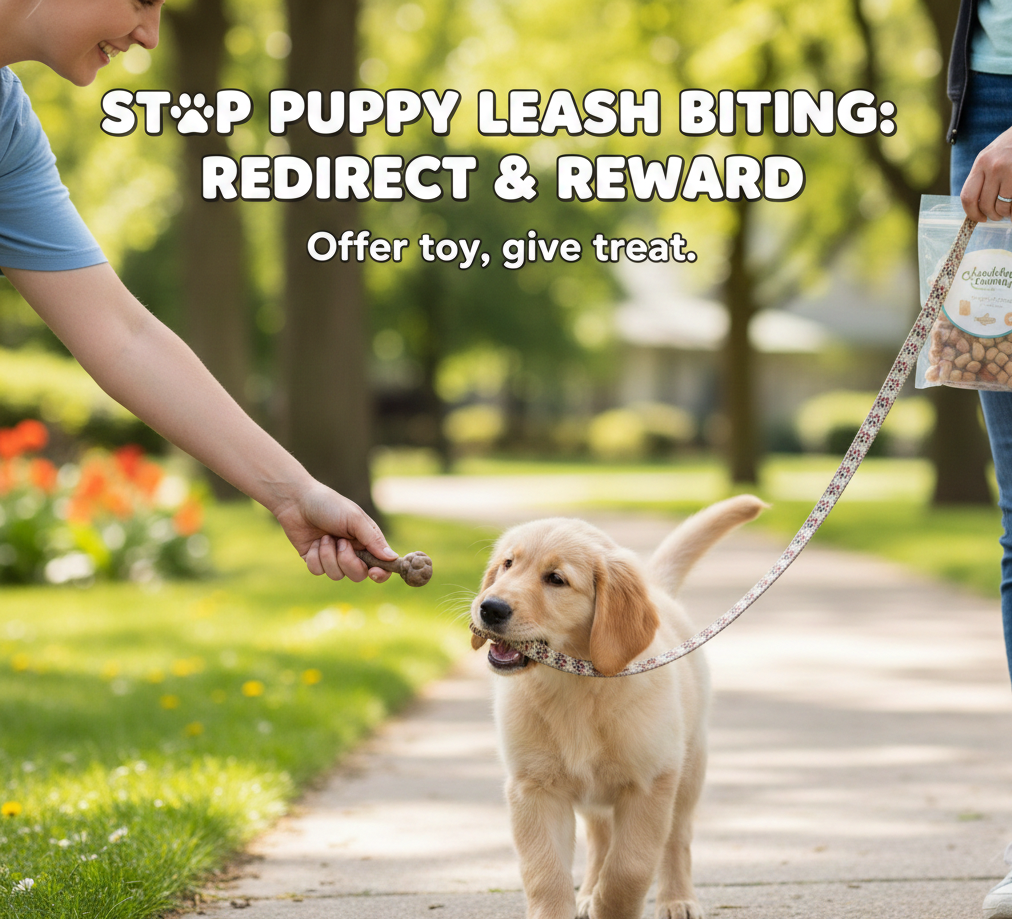
Leash biting is typically a combination of excitement, irritation, teething discomfort, or uncertainty during early training rather than stubborn behavior. Unknowingly reinforcing this behavior by pulling back, yelling loudly, or making it into an aggressive tug-of-war game is something that many puppy owners do. The good news
Leash biting can be stopped more quickly than most people realize if the proper approach is used. Learn why puppies bite the leash, how overstimulation causes the behavior, and the thorough, positive training approach that prevents it without using punishment in this tutorial.
We’ll also go over preventative advice that most blogs overlook, such as managing energy before a walk, selecting the right leash material, and making the right timing adjustments. By the time it’s over, you’ll know exactly how to transform stressful walks into concentrated, peaceful training sessions.
HOW TO STOP PUPPY BITING ON THE LEASH?
Controlling your puppy’s behavior right away is the simplest and most efficient method to prevent them from biting their leash. During leash training, puppies may experience increased teething as they adjust to the strange feeling of having their body confined.
Puppies frequently run around and cause trouble until they’ve used all of their energy, at which point they suddenly decide to take a nap. This natural tendency is restricted by a leash, which may at first make your puppy appear more rebellious.
As we’ll see, one of the most crucial parts of puppy training is redirection. Although it can be applied to a variety of training sessions, leash training is where it’s most helpful.
DON’T PULL ON THE LEASH
As we previously mentioned, pulling on your puppy’s leash can make them want to bite and pull it more because it feels enjoyable and satisfying. Despite the temptation, avoid your urge to do this.
PROVIDE YOUR PUPPY WITH A TOY
Redirecting is a crucial training technique, as we discussed. This is the time to use your puppy’s favorite toy. Replace the leash with your puppy’s favorite toy to divert their attention after you’ve managed to stop them from biting it. By doing this, you’ll divert their biting and chewing habits to something more useful.
WHY DO PUPPYS BITE THE LEASH?
It’s important to comprehend why puppies bite their leashes before delving into the training material. Your dog may be biting the leash for a number of reasons, such as boredom, nervousness, or overall excitement when they see another puppy.
You can effectively modify your strategy to stop biting the leash by understanding the underlying cause of this undesirable behavior. You might want to read this article on teaching your dog to walk calmly on a leash if your puppy is getting too enthusiastic.
Leash biting can also be a more serious problem, including nervousness or aggression. It’s important to take care of any further symptoms of your pooch’s suffering. Easy modifications to routine or surroundings can occasionally have a profound impact.
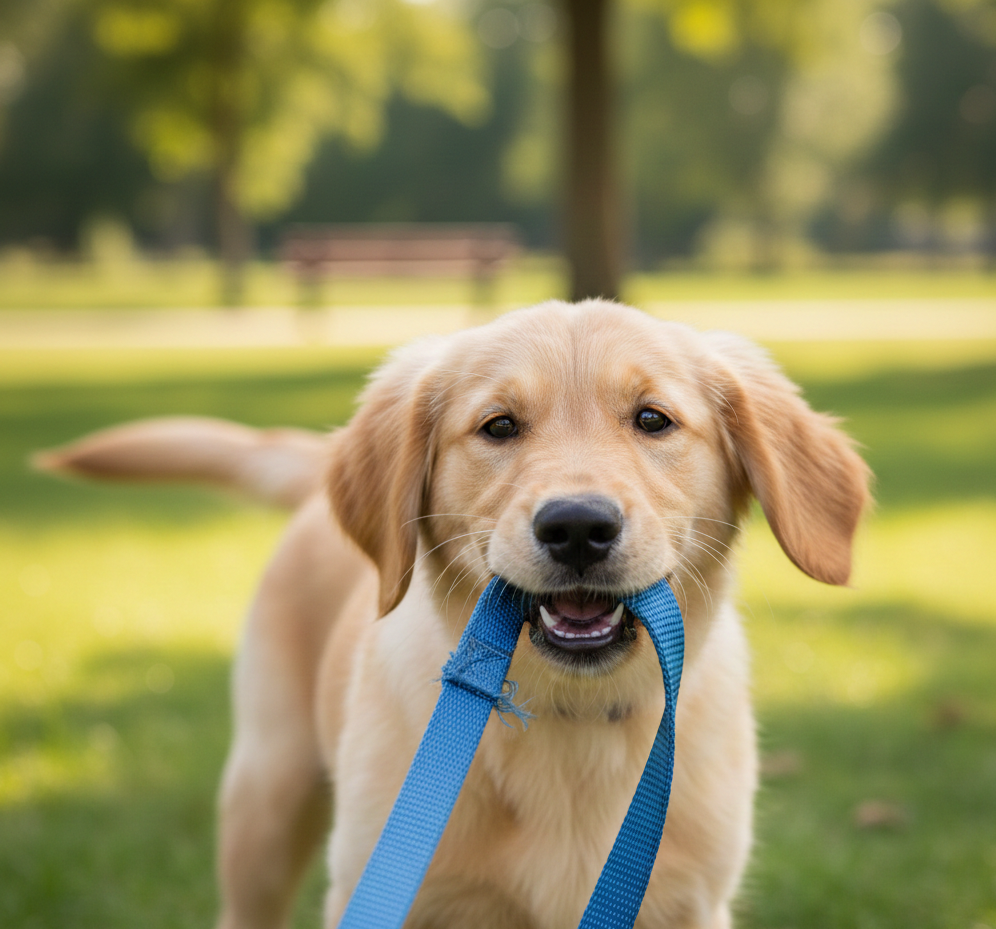
PUPPY ACTING AGGRESSIVELY WHEN ON THE LEASH
Even though leash aggression is more frequently linked to older pets, it’s crucial to teach puppies to be calm from the start to stop this behavior from ever starting. Dogs on leashes frequently behave aggressively because they feel confined, irritated, and uneasy in social settings.
When on a leash, a puppy may behave violently if it feels exposed and defenseless. It’s necessary to realize that a puppy who is aggressive on a leash is neither “bad” nor “mean.” Rather, they are probably afraid, which means that punishing them could make the behavior worse.
If you have concerns about leash aggression, you might want to talk to your veterinarian, a veterinary behaviorist, or a trainer that your veterinarian has recommended. Avoid the stressful circumstance and refrain from providing negative reinforcement in the interim.
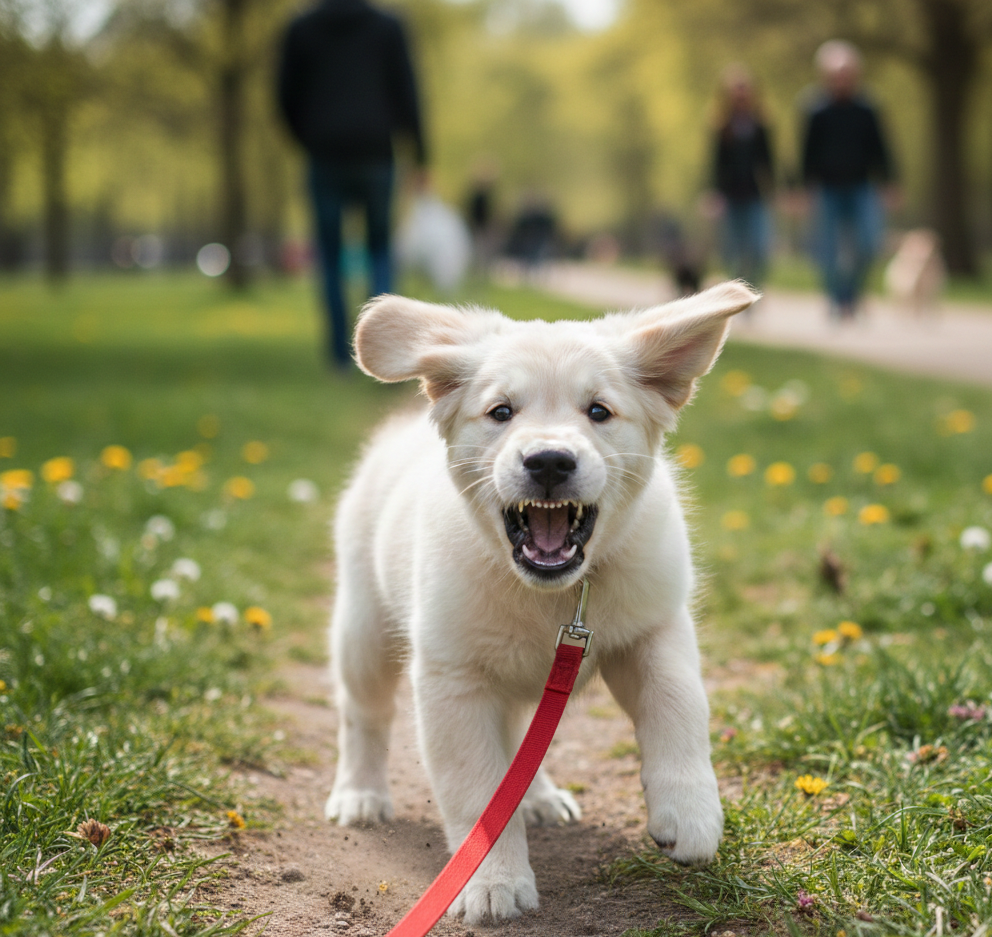
COMMON SIGNS OF FEAR AGGRESSION
- Lunging
- Posturing
- Direct eye contact
- Pricked ears
- Teeth exposed
How to Stop Leash Biting: A Step-by-Step Guide
Here’s a detailed tutorial with practical leash biting methods of avoidance to assist you in doing just that.

Consistency is key.
Make sure you use these suggestions each time you take a stroll. Regularity is essential for canines, and the more consistent you are, the faster your pooch will pick up the desired behavior. Involving all family members or anybody else who walks the pet in the training process is essential to highlighting the significance of consistency.
To keep your dog from becoming confused, everyone must agree. Ineffective training and slowed advancement can result from mixed messages.
Choose the Right Leash
Selecting a strong, chew-resistant leash is the first step in helping your puppy or dog quit biting the leash. In addition to deterring biting, a sturdy leash like the DF Co Bungee Dog Leash guarantees your dog’s safety.
Additionally, this leash will assist in controlling a dog that pulls on the leash. Biting and hugging are frequently normal behaviors.
Gradual Exposure to Leash Walking
Gradually extend the length of your brief, loose-leash walks. This keeps your dog from becoming unduly enthusiastic or irritated as they become adjusted to the leash. This article may shed some light on whether you’re giving your dog enough walks.
Give your dog some time to explore and smell around. By letting them smell, you can also lessen the likelihood that they will bite the leash out of frustration or boredom.
How to stop a puppy biting the leash?
1. Stay Calm and Stop Moving
The moment your puppy grabs the leash, stop walking. Don’t pull or shout. Stay still like a tree. When they release the leash, calmly praise them and continue walking. This teaches them that biting stops the fun.
2. Redirect Immediately
Carry a small chew toy during walks. If your puppy starts biting the leash, gently swap it for the toy. Reward them when they chew the toy instead.
3. Teach the Leave It Command
Practice leaving it at home first, using treats. Once they understand it indoors, use it during walks when they are on a leash.
4. Reward Loose Leash Walking
Praise and treat your puppy when they walk nicely without biting. Positive reinforcement works faster than punishment.
5. Avoid Tug of War
Never pull the leash back aggressively. This can make your puppy think it’s a game.
Consistency is the secret. With patience and daily practice, your puppy will learn that walking calmly brings rewards while leash biting brings nothing.
How to punish a puppy for biting?
When it comes to how to punish a puppy for biting, the most important thing to understand is this: puppies should not be punished harshly for biting. Biting is normal behavior, especially during teething and play. The goal is to teach, not scare.
Here’s the right way to handle it:
1. Use Immediate Consequences (Not Physical Punishment)
If your puppy bites your hand during play, say a firm but calm no and immediately stop playing. Stand up and ignore them for 20/30 seconds. This teaches them that biting makes the fun stop.
2. Time Out Method
If biting continues, calmly place your puppy in a quiet, safe area (like a playpen) for 1/2 minutes. This isn’t about anger; it’s about helping them calm down.
3. Redirect to a Chew Toy
Puppies bite because they need to chew. Keep toys nearby and immediately redirect their mouth to an appropriate toy. Praise them when they chew the toy instead.
4. Reward Gentle Behavior
The fastest way to stop biting is to reward calm, gentle play. Give treats and praise when they lick or play softly.
Why is leash biting bad?
Leash biting might look cute at first, but it can create real training and safety problems if it becomes a habit. Here’s why leash biting is bad and why you should correct it early:
1. It Disrupts Training
Leash biting teaches your puppy that walks are playtime instead of structured learning time. This makes loose-leash training harder and slows obedience progress.
2. It Can Become a Habit
If you allow it, leash biting can turn into a long-term behavior. What’s playful at 3 months old can become frustrating and difficult to manage as your puppy grows stronger.
3. It’s a Safety Risk
A puppy pulling and chewing on the leash can suddenly dart into traffic, bump into other dogs, or cause you to lose control. This increases the risk of injury.
4. It Damages Equipment
Constant chewing weakens the leash. A damaged leash can snap unexpectedly during a walk.
5. It Encourages Overexcitement
Leash biting often happens when puppies are overstimulated. If not corrected, it can lead to jumping, pulling, and poor impulse control.
How to stop leash pulling in 5 minutes for a puppy?
1. Stop Immediately
The second your puppy pulls, stop walking. Don’t jerk the leash or scold. Just stand still and stay quiet. When your puppy turns back or loosens the leash, praise and move forward again.
They learn: Pulling stops the walk. A loose leash makes it continue.
2. Turn Around
If pulling continues, calmly turn and walk in the opposite direction.
When your puppy follows, and the leash loosens, reward with praise or a small treat.
This quickly teaches them to pay attention to you.
3. Reward the Right Position
Keep treats ready and reward your puppy for walking beside you, even for just a few steps. Small wins build good habits fast.
4. Practice in Low Distractions
Start indoors or in a quiet area. Puppies focus better when there are fewer distractions. With consistency, you’ll see improvement within days. The secret isn’t forced by its timing, patience, and rewarding loose leash behavior.
Conclusion
Leash biting is a common puppy behavior, but it doesn’t have to become a long-term habit. With the right leash, calm handling, proper redirection, and consistent training, you can teach your puppy that the leash is not a toy. Avoid pulling back, provide a chew toy when needed, and focus on rewarding loose, calm walking instead of punishing mistakes.
Understanding why puppies bite the leash, excitement, teething, frustration, or overstimulation helps you respond correctly rather than reacting with anger. Harsh punishment can create fear or leash aggression, while positive reinforcement builds trust and better behavior.
If your puppy pulls or bites during walks, stop moving, redirect their attention, and reward good choices immediately. Short, focused practice sessions can make a big difference in just a few days.

Puppy Obedience Training 101: A Beginner’s Guide to Raising a Well-Mannered Dog

Common Dog Behavior Problems and How to Fix Them

Puppy Commands for Off-Leash Safety: What Every Owner Needs

Best Age to Start Leash Training a Puppy for Calm Behavior

How to Fix Puppy Behavior Using Gentle Training

puppy-obedience-training-commands/Puppy Training Tips: A Complete Step-by-Step Guide for Beginners

Puppy Obedience Training 101: A Beginner’s Guide to Raising a Well-Mannered Dog
Common Dog Behavior Problems and How to Fix Them
Puppy Commands for Off-Leash Safety: What Every Owner Needs
Best Age to Start Leash Training a Puppy for Calm Behavior
How to Fix Puppy Behavior Using Gentle Training