
Dog Commands training
How to Train a Dog Indoors: 10 Easy Steps for Obedient Dogs

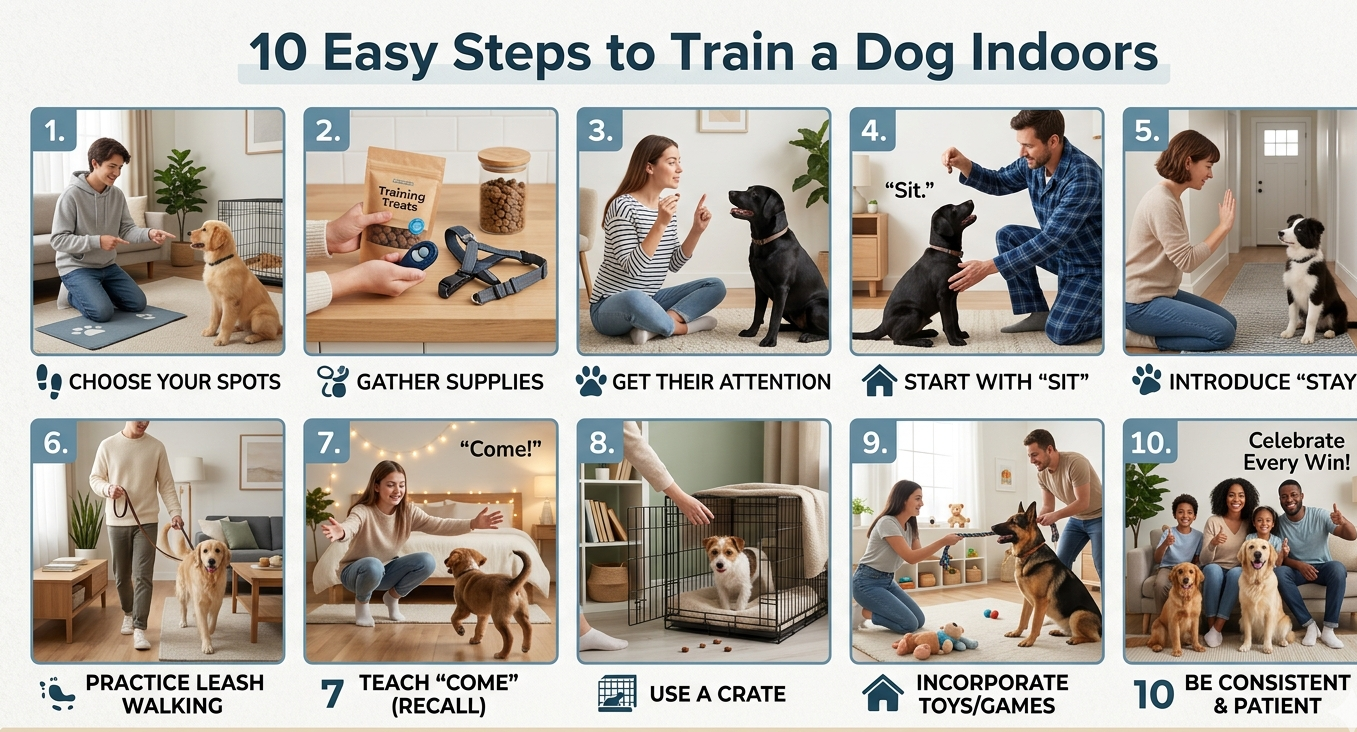
Training your dog indoors might seem challenging at first, but it’s actually one of the most effective ways to build obedience and good behavior. Whether you live in a small apartment or simply prefer training at home, indoor training allows you to create a controlled environment where your dog can learn without distractions.
Train a dog indoors if you’re searching for how to train a dog indoors, you’re likely looking for simple, practical steps that actually work, and that’s exactly what this guide delivers. With the right techniques, consistency, and patience, you can turn your dog into a well-behaved and obedient companion without ever stepping outside.
This guide is designed for both beginners and experienced dog owners, combining proven training methods with real-life practicality. Let’s dive into the 10 easy steps that will help you train your dog indoors successfully.
Why Indoor Dog Training Works So Well
Train a dog Indoors training is effective because it reduces distractions like other animals, noises, and unfamiliar settings. This helps your dog focus fully on learning. Consistency is a major advantage as well. Indoor training facilitates everyday practice, which is crucial for developing habits.
Dogs pick up new skills through repetition, and a set indoor schedule speeds up the reinforcement of good behavior.
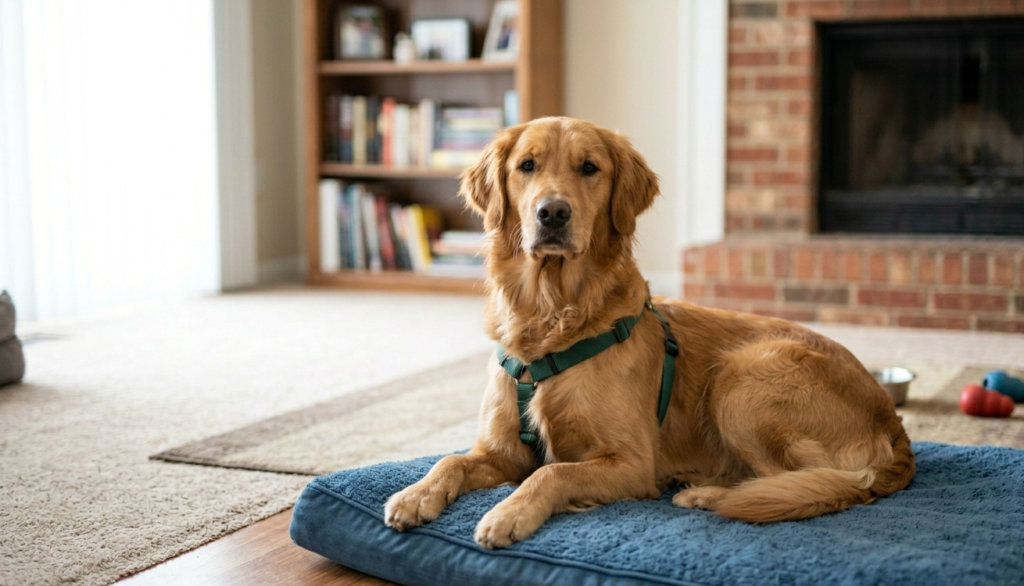
Above all, indoor training improves the relationship between you and your dog. It fosters better communication, increases trust, and establishes a peaceful, orderly family.
10 Easy Steps to Train a Dog Indoors
1. Create a Dedicated Training Space
Setting up the proper space is the first step in learning how to train a dog indoors. Pick a peaceful spot in your house with few distractions, such as TV noise, people moving around, or other animals.
When they can concentrate, dogs learn best. Your dog could become confused if your training area is constantly changing. Your dog will learn that this is a place for discipline and education if there is a designated area. Make sure there are no objects in the vicinity that your dog could play with or chew. Your dog will eventually start paying closer attention whenever they arrive in this area.
2. Use Positive Reinforcement the Right Way
The most effective and scientifically supported training technique is positive reinforcement. Reward your dog for good conduct rather than punishing them when they make mistakes. However, time is essential. In order for your dog to grasp exactly what behavior earned the prize, you must give it to them right away, within 1-2 seconds.
During early training, use high-value prizes like little pieces of chicken or dog treats together with verbal compliments like “Good dog!” As a result, a strong, favorable relationship is formed.You can gradually cut back on goodies and rely more on affection and praise as your dog gets well.
3. Start with Basic Commands (Build a Strong Foundation)
Your dog has to learn basic instructions before progressing to advanced training. All obedience instruction starts with these directives.
Start with:
- Sit
- Stay
- Come
- Down
Divide each command into small portions. When teaching your dog to “sit,” for instance, hold a treat over their head and gradually move it back. Their body will automatically sit as their head follows the treat. Be patient and repeat every day. Learning the fundamentals makes training much simpler in the future.
4. Keep Training Sessions Short but Consistent
Training a dog for too long is one of the most common mistakes made by dog owners. Dogs can become distracted easily, especially pups. Five to ten minutes is the recommended duration for a session. Your dog will remain motivated, interested, and ready to learn during brief sessions. Aim for two to three brief sessions during the day rather than one lengthy one. Repetition enhances memory and improves learning.
5. Be Consistent with Commands, Tone, and Rules
The key to effective indoor dog training is consistency. Your dog will find it difficult to understand what you want if your rules or commands are constantly changing.
For instance:
Use the same word every time: “Sit,” not “Sit down.
Maintain the same voice tone
Adhere to the same schedule every day.
Additionally, ensure that everyone in your household abides by the same regulations. Your dog will get confused if one person permits leaping on the couch while another does not.
6. Introduce Clicker or Marker Training
Clicker training makes it easier for your dog to recognize when they’ve done something correctly. You click the device to reward your dog right away when they do the right thing. This establishes a direct link between reward and conduct.
You can use a marker word like “Yes!” in a steady tone if you don’t have a clicker. This approach greatly accelerates the learning process, improves timing, and lessens confusion.
7. Practice Training in Daily Life Situations
You must incorporate training into everyday activities in addition to official training sessions if you want to become a true indoor dog trainer.
For examples:
- Before feeding your dog, ask them to sit.
- Before opening doors, use “stay.”
- Use “come” to summon your dog from a different room.
These practical uses teach your dog that orders are applicable all the time and are not only for training. This stage is what distinguishes professional-level outcomes from mediocre training.
8. Train in Different Rooms for Better Results
Many canines pick up commands in one location but don’t react in another. Dogs don’t naturally generalize behavior, which is why this occurs. Training should begin in one room and gradually go to other spaces, such as the kitchen, hallway, or bedroom.
This shows your dog that commands are applicable everywhere, not just in one place. Additionally, shifting surroundings encourages compliance and enhances focus.
9. Teach Calm Behavior and Self-Control
Indoor training focuses on behavior control rather than just commands.
Numerous typical issues include:
Jumping on visitors
Overbearing barking
Chewing on furniture
Teach your dog what to do instead of responding negatively. For instance:
When guests arrive, reward them with peaceful seating.
Disregard attention-seeking actions
Chewing should be redirected to toys.
For a home to be peaceful, calmness must be taught.
10. Always End Training on a Positive Note
A training session’s conclusion is very important. Always give your dog a reward after finishing with a command they are familiar with. This boosts confidence and fosters a sense of accomplishment. Instead of being anxious or perplexed, your dog will eagerly anticipate the next training session. A happy conclusion also keeps training fun for both of you and deepens your relationship.
Common Indoor Dog Training Mistakes to Avoid
Many dog owners make mistakes that restrict progress, even when they have the best of intentions. Inconsistency is one of the most common errors. Your dog gets confused if you let a behavior one day, then correct it the next.
Using punishment in place of guidance is another error. This may erode trust and lead to fear-based actions. Overly lengthy training sessions can also cause dissatisfaction for both you and your dog. Finally, it is a lost chance not to reward positive behavior. When positive behavior is repeatedly rewarded, dogs learn best.
train a dog indoor with 10 step . dog sitting commonds learm consistency .indoor dog train flow with 10 ste
How to Train a Dog Indoors in Small Spaces
You can successfully train your dog even if you live in a small house or apartment. Call your dog from one end of the corridor to the other to practice recall. To develop consistency, practice commands in several rooms.
In small spaces, mental stimulation is particularly crucial. To keep your dog interested, use training activities, games of hide-and-seek, and puzzle toys. Recall that mental workouts can be just as exhausting as physical ones.
How Long Does Indoor Dog Training Take?
It takes time to train a dog indoors. The amount of time needed is determined by your dog’s age, disposition, and level of training consistency. Most dogs start to show signs of improvement in two to four weeks. However, it can require several months of consistent effort to achieve complete obedience.

Patience is the key. Over time, consistency always produces results.
Daily Indoor Training Routine (Simple Plan)
Here’s an easy routine you can follow:
Morning:
Practice basic commands (5–10 minutes)
Afternoon:
Play + short training session
Evening:
Calm behavior and relaxation training
Following a routine helps your dog learn faster and develop discipline.
What is “I love you” in dog language?
In dog language, “I love you” isn’t spoken, it’s shown through behavior and body signals.
Dogs express love by:
- Wagging their tail (especially relaxed, full-body wag)
- Making soft eye contact
- Following you around everywhere
- Licking your face or hands
- Sleeping close to you
- Leaning or cuddling against you
How to train your dog at home step by step?
Train a dog indoors here’s a short step-by-step guide to train your dog at home:
- Choose a quiet place : Start training in a distraction-free area.
- Use treats & praise ; Reward good behavior immediately.
- Start with basic commands: Teach sit, stay, come, and down.
- Keep sessions short: 5–10 minutes is enough.
- Be consistent :Use the same words and routine daily.
- Practice daily ;Repeat training 2–3 times a day.
- Avoid punishment ; Guide and reward instead.
- End on a positive note ;Always finish with success.
What are the 7 basic dog commands?
Train a dog indoor the 7 basic dog commands every dog should learn are:
- Sit: Helps control your dog and keep them calm.
- Stay: Teaches your dog to remain in one place.
- Come ; call your dog back to you (very important for safety)
- Down: Make your dog lie down and relax.
- Heel: Trains your dog to walk beside you
- Leave It: Stops your dog from picking up harmful things.
- No, tell your dog to stop unwanted behavior.
How to train a dog in 5 steps?
Here’s a simple 5-step method to train your dog:
Choose one command
Start with a basic command like sit or stay.
Use a reward
Hold a treat and guide your dog into the position.
- Give the command clearly.
- Say the word once (e.g., “Sit”) while guiding them.
- Reward immediately
- As soon as your dog follows, give a treat and praise.
- Repeat daily
- Practice 5–10 minutes, 2–3 times a day for best results.
conclusion
When you use the proper method, learning how to train a dog indoors: 10 simple steps for obedient dogs is not difficult. You can educate your dog to behave nicely in any indoor setting with perseverance, consistency, and positive reinforcement.
Building a solid rapport with your dog via communication and trust is the goal of indoor training, which goes beyond simply teaching commands. Your current efforts will result in a future mate that is happier, calmer, and more obedient. Enjoy the process of teaching your dog at home by starting with these ten easy steps and remaining consistent.

Puppy Obedience Training 101: A Beginner’s Guide to Raising a Well-Mannered Dog

Common Dog Behavior Problems and How to Fix Them

Puppy Commands for Off-Leash Safety: What Every Owner Needs

Best Age to Start Leash Training a Puppy for Calm Behavior

How to Fix Puppy Behavior Using Gentle Training

puppy-obedience-training-commands/Puppy Training Tips: A Complete Step-by-Step Guide for Beginners

Puppy Obedience Training 101: A Beginner’s Guide to Raising a Well-Mannered Dog
Common Dog Behavior Problems and How to Fix Them
Puppy Commands for Off-Leash Safety: What Every Owner Needs
Best Age to Start Leash Training a Puppy for Calm Behavior
How to Fix Puppy Behavior Using Gentle Training