
Dog Training
Dog Training Guide: How to Train an Adult Dog at Any Age

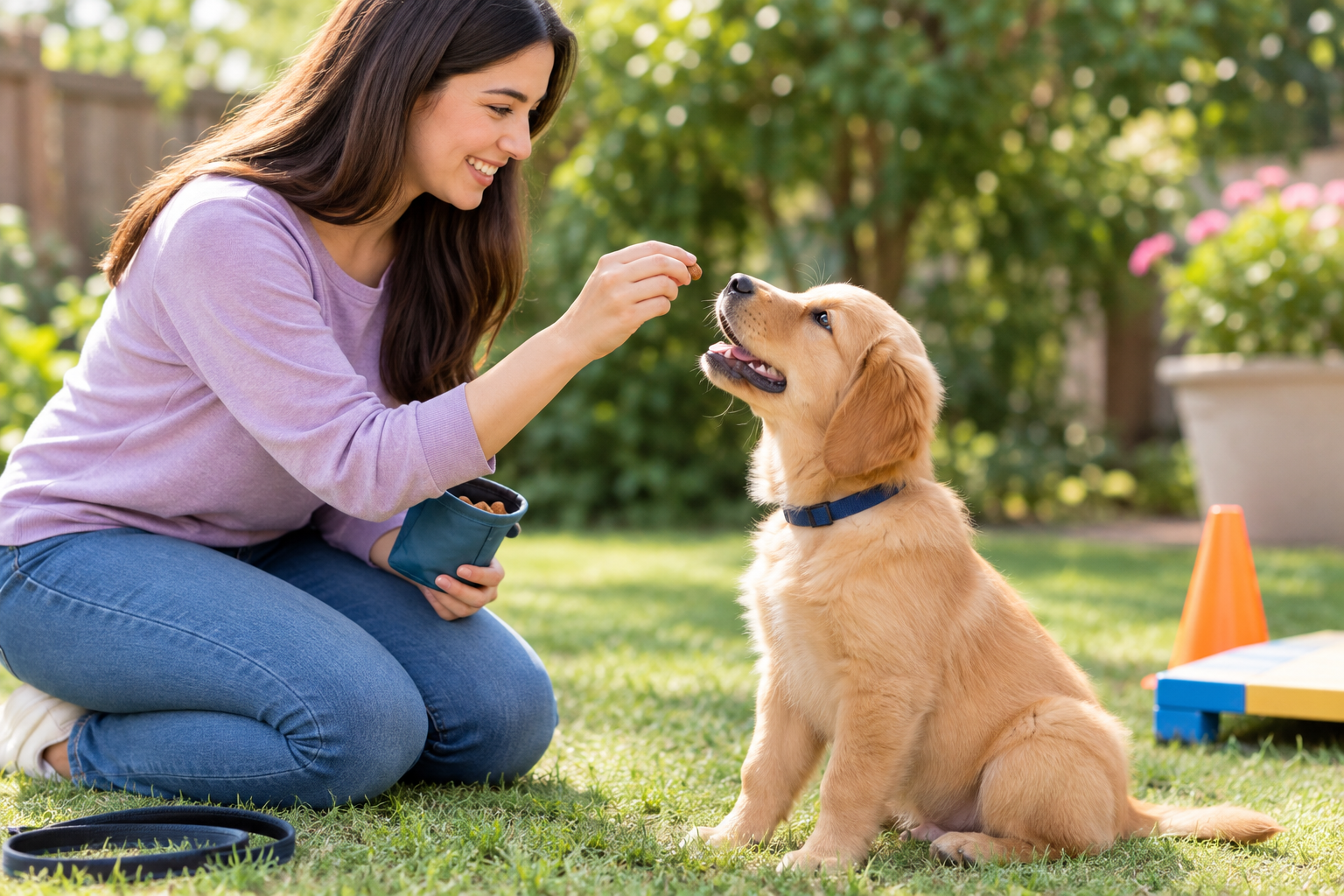
dog training advice online is written for eight-week-old puppies but a huge number of dog owners are starting with a one-year-old rescue, a three-year-old adopted dog, or a family pet that simply never got proper training as a puppy.
If that’s you, there’s good news: dogs are capable of learning at any age. It just takes a slightly different approach than puppy training, and a bit more patience along the way. Owners in this situation often feel like they’re behind, or that they missed some critical window that can never be recovered.
dog training that’s simply not true. Dogs keep learning and adapting throughout their lives, and many adult dogs train faster than puppies in certain areas because they already have better focus, longer attention spans, and more physical self-control.
This guide covers how to train a dog of any age, from the fundamentals to fixing habits that are already established, with a realistic plan you can actually stick to whether you’re starting completely from scratch or trying to undo years of inconsistent handling.
Myth: “You Can’t Teach an Old Dog New Tricks”
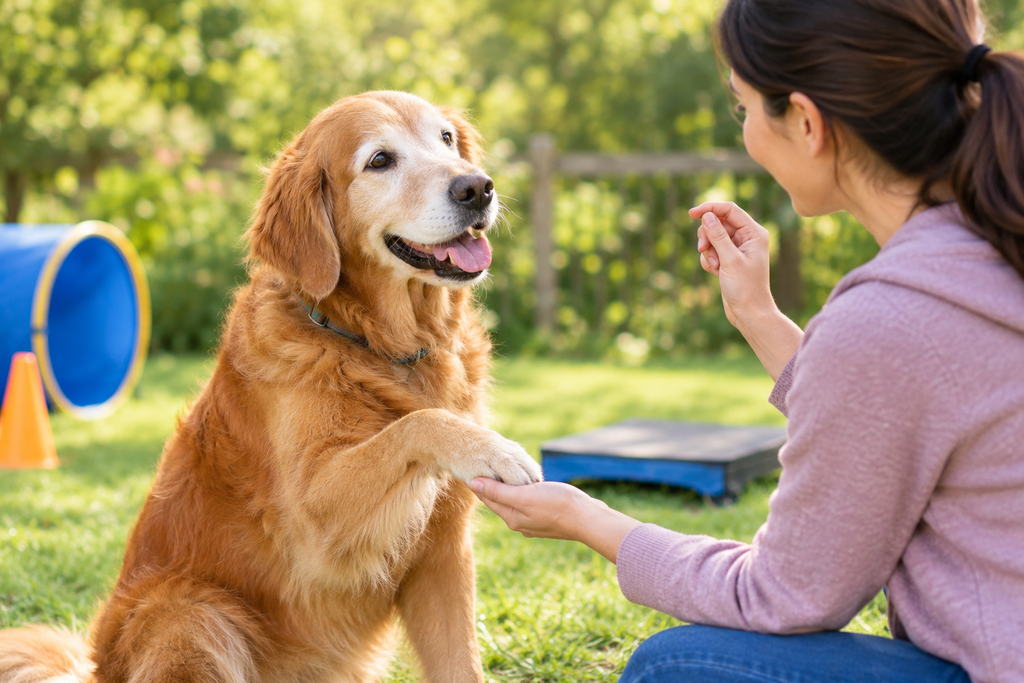
dog training This saying is simply false, and it may be one of the most damaging myths in dog ownership because it discourages owners from even trying. Adult and even senior dogs learn new behaviors constantly;
The difference is that an adult dog may already have an established habit (like jumping on guests or pulling on the leash) that needs to be replaced rather than prevented from forming in the first place. That takes a bit more patience and consistency, but the training methods themselves work the same way regardless of age.
In fact, some trainers argue that adult dogs are easier to train in certain respects: they have longer attention spans than puppies, are less prone to random bursts of chaotic energy, and are often more food or toy motivated once they understand what’s being asked of them.
The main hurdle isn’t the dog’s ability to learn, it’s the owner’s belief that training “should have happened already” and isn’t worth starting now.
If your dog is still a puppy, our complete puppy training guide walks through age-specific milestones. This guide instead focuses on training principles that apply to dogs of any age, including adults with existing habits and rescues with unknown training histories.
Step 1: Start With the Right Mindset
dog Training an adult dog works best when you think of it as building a new default response, not “correcting” a bad dog. Every dog repeats behaviors that get rewarded, even accidentally a dog that jumps and gets attention (even negative attention, like being pushed away or scolded) will keep jumping, because from the dog’s perspective, it worked.
dog training The goal isn’t to punish what you don’t want. It’s to make the behavior you do want the easiest, most rewarding option available to your dog. This shift in mindset from correction to redirection tends to produce faster, more lasting results and avoids the fear or anxiety that punishment-based approaches can create, especially in dogs with an unknown or difficult history.
dog training It also helps to set realistic expectations from the start. Adult dog training isn’t usually a dramatic overnight transformation, it’s a series of small, consistent wins that compound over weeks. Owners who expect instant results often give up right before real progress would have shown up.
Step 2: Master the Core Commands First
Before working on any specific behavior problem, your dog needs a small set of reliable commands to build everything else on top of. These are covered in depth in our dog commands training guide, but at minimum, focus on:
- Sit :the default “polite” position for greetings, mealtimes, and waiting
- Stay :builds impulse control and patience
- Come :a reliable recall, essential for safety
- Leave it :stops your dog from grabbing something dangerous or unwanted
Keep sessions short five to ten minutes, two or three times a day works far better than one long session. Adult dogs, especially those with a history of neglect or minimal training, can lose focus quickly if sessions run too long, and frustration on either end tends to undo more progress than a short session ever could.
Step 3: Use Consistent, Positive Reinforcement

dog training Reward-based training is the most effective and longest-lasting method for dogs of any age. Use small, high-value treats (soft and easy to eat quickly, so your dog doesn’t lose momentum chewing), a marker word or clicker to mark the exact right moment, and consistent timing the reward needs to come within a second or two of the correct behavior to make the connection clear.
Consistency also means using the same word and the same hand signal every time, and making sure everyone in the household does the same. If one person says “down” to mean lie down, and another uses it to mean get off the couch, your dog receives conflicting information and progress slows dramatically.
Avoid punishment-based corrections, especially with adult dogs who may already carry anxiety or fear from past experiences. Punishment can suppress a behavior temporarily while making the underlying issue of fear, anxiety, poor socialization worse, and it can damage the trust you’re trying to build, which is often the real foundation adult dog training depends on.
Special Considerations for Rescue Dogs
dog training If your adult dog is a rescue with an unknown or difficult history, training may need to move a bit slower at first, and that’s completely normal. Some rescue dogs arrive with existing fears, poor socialization, or learned distrust of certain triggers: a raised hand, a leash, loud noises, or specific types of people.
Give your rescue dog a few weeks of decompression before pushing hard on training goals, focusing instead on building trust through calm, predictable routines. Once your dog seems settled and comfortable in your home, begin with the same core commands outlined above, but pay closer attention to body language, and back off if you notice signs of stress like lip licking, yawning, or avoidance.
dog Training a rescue dog is often as much about rebuilding confidence as it is about teaching specific commands.
Step 4: Fix Existing Bad Habits
This is where adult dog training differs most from puppy training. A habit that’s been reinforced for months or years takes longer to change than one that’s just forming. The process is the same for almost any bad habit:
- Identify the trigger. What happens right before the behavior? A knock at the door, another dog on a walk, being left alone?
- Remove or manage the trigger while you train, so the behavior isn’t being repeated and reinforced in the meantime.
- Teach and reward an incompatible behavior. A dog can’t jump and sit at the same time teaching a rock-solid “sit for greetings” replaces jumping naturally.
- Practice in low-distraction settings first, then gradually reintroduce the real-world trigger once the new behavior is solid.
If your dog’s issue involves barking, chewing, or aggression specifically, our guide on common dog behavior problems breaks down causes and fixes for each in detail.
Step 5: Build Toward Formal Obedience
Once your dog has the basics down, structured obedience training builds reliability in real-world situations around distractions, in public, and off-leash. This is a natural next step after the core commands are solid, and our dog obedience training guide walks through the full progression.
The American Kennel Club notes that obedience training benefits dogs of every age and background, not just competition dogs; it improves communication between dog and owner and often resolves minor behavior issues along the way.
How Long Does It Take to Train an Adult Dog?
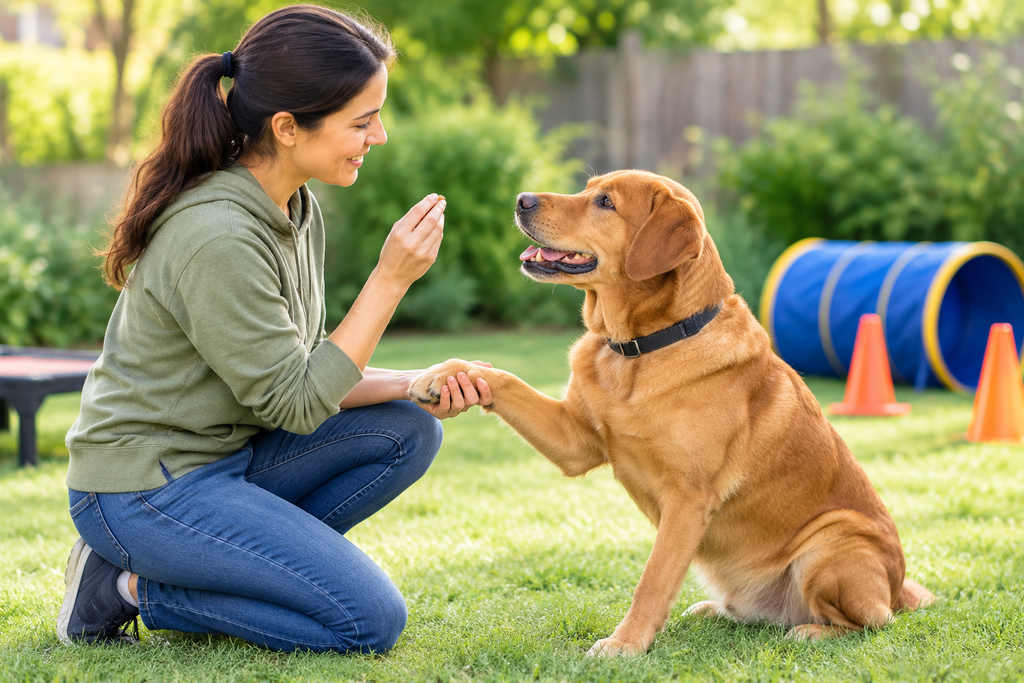
There’s no universal timeline, but a few general patterns hold:
- New commands (sit, down, come) can often be learned within a few days to a couple of weeks of short daily sessions.
- Reliable responses around distractions typically take four to eight weeks of consistent practice.
- Replacing an established bad habit can take anywhere from a few weeks to several months, depending on how long the habit has been reinforced and how consistent the training is.
Consistency matters more than intensity. A dog trained for ten minutes daily for two months will almost always outperform a dog trained in occasional, hour-long sessions.
Common Mistakes to Avoid

- Inconsistency between family members. If one person allows a behavior and another corrects it, your dog gets mixed signals and progress stalls.
- Training only in one location. A dog that sits perfectly in the kitchen may not generalize that to the park practice in multiple environments.
- Giving up too early. Adult dogs with long-standing habits often show slow initial progress before things click. This is normal, not a sign that training isn’t working.
- Skipping the fundamentals. Trying to fix advanced behavior problems before basic commands are solid usually leads to frustration for both of you.
Final Thoughts
Whether you’re working with a rescue dog with an unknown history, an adult dog that missed out on training as a puppy, or simply want to sharpen the manners of a dog you’ve had for years, the path forward looks the same: consistent, reward-based training built on a small set of solid commands.
Age isn’t the obstacle, it’s often made out to be patience and consistency matter far more than how many years your dog has been around.
Frequently Asked Questions
Is it harder to train an older dog than a puppy?
dog training Not inherently older dogs often have better focus and impulse control than puppies. The main challenge is replacing existing habits rather than preventing them from forming, which can take more repetition.
How often should I train my dog each day?
Short sessions of five to ten minutes, two or three times daily, tend to work better than one long session, especially for dogs with a shorter attention span or a history of minimal training.
Can I train my dog without treats?
Treats speed up the process significantly, especially early on, but praise, play, and access to things your dog wants (like going outside) can also work as rewards once a behavior is well established.
Should I hire a professional trainer?
For basic commands and mild habit issues, most owners can succeed on their own with consistency. For aggression, severe anxiety, or if progress has completely stalled, a certified professional trainer is worth the investment.
Ready to go deeper?
Check out our guides on essential dog commands and dog obedience training 101.

German Dog Commands: 25 Essential Commands Every Dog Owner Should Know

Training an Aggressive Dog: 10 Safe Steps to Improve Behavior

Puppy Exercise Needs: How Much Exercise Does Your Puppy Really Need?

Best Age to Start Leash Training a Puppy for Calm Behavior

puppy-obedience-training-commands/Puppy Training Tips: A Complete Step-by-Step Guide for Beginners

How to Fix Puppy Behavior Using Gentle Training

German Dog Commands: 25 Essential Commands Every Dog Owner Should Know
Training an Aggressive Dog: 10 Safe Steps to Improve Behavior
Puppy Exercise Needs: How Much Exercise Does Your Puppy Really Need?
Best Age to Start Leash Training a Puppy for Calm Behavior
puppy-obedience-training-commands/Puppy Training Tips: A Complete Step-by-Step Guide for Beginners