
Puppy Commands
How to Train a Puppy to Stop Barking Naturally and Calmly at Home

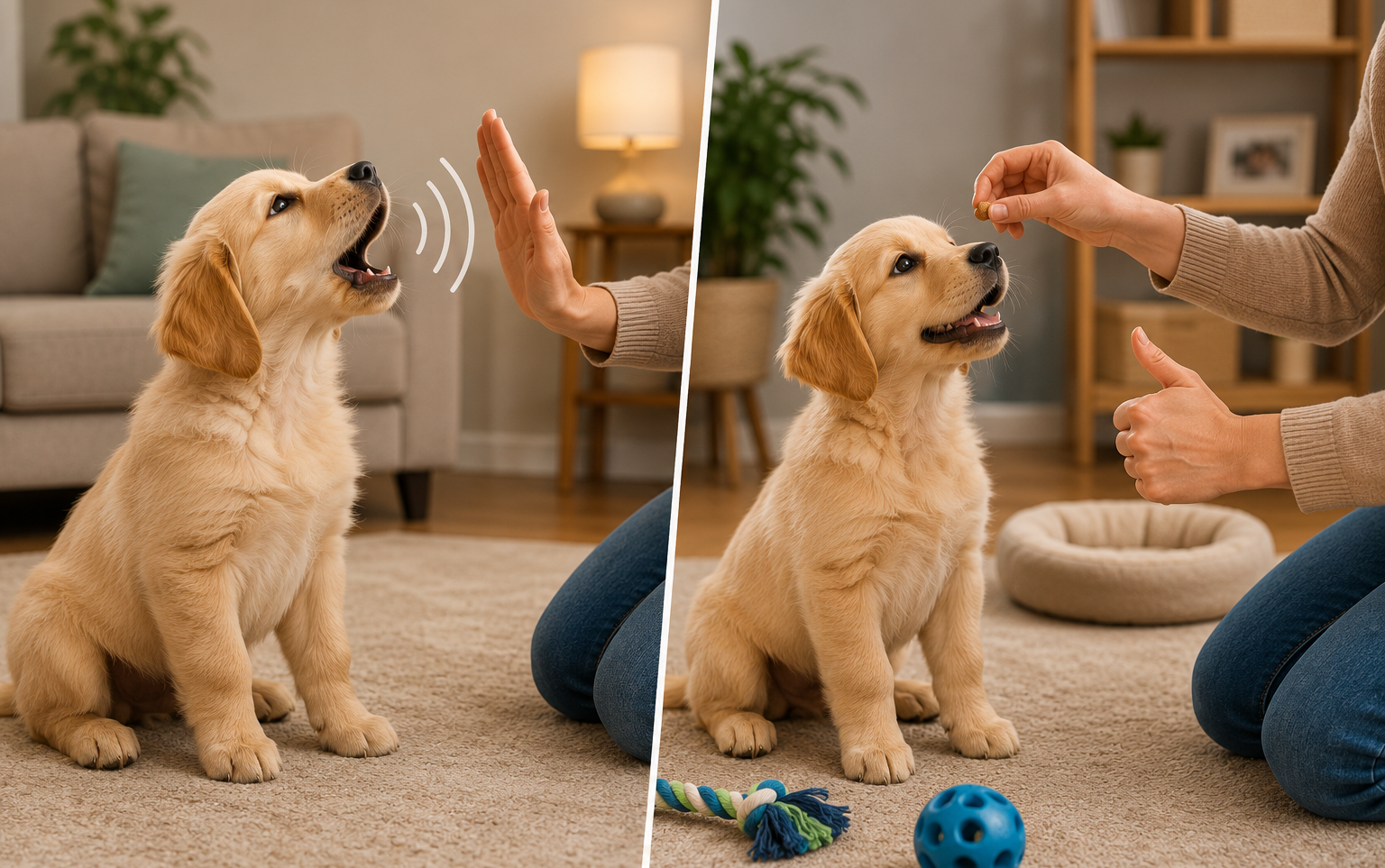
Training a puppy to stop barking naturally and calmly at home is one of the biggest challenges many dog owners face. Puppies bark to communicate excitement, fear, boredom, loneliness, or even a need for attention. While barking is completely normal behavior, excessive barking can quickly become stressful for both owners and neighbors.
The good news is that with patience, consistency, and positive training methods, you can teach your puppy to stay calm without using harsh punishment. Many new pet owners make the mistake of yelling or scolding their puppy when barking starts. Unfortunately, this often increases anxiety and makes the barking even worse.
Natural puppy training focuses on understanding why your puppy is barking and using gentle techniques to encourage quiet behavior. Reward-based training, daily exercise, mental stimulation, and a calm home environment all play a major role in reducing unnecessary barking naturally.
In this guide, you will learn effective and easy methods to train your puppy to stop barking at home without fear or stress. From identifying barking triggers to teaching quiet commands and creating healthy routines, these expert tips will help you build a peaceful relationship with your puppy while improving their behavior step by step.
Understanding Why Your Puppy Barks at Everything
Understanding that barking is a communication issue rather than a behavioral one is crucial before you can deal with your puppy’s persistent barking. The pooch uses its speech to communicate needs, feelings, and world observations.
This distinction is really important because it affects how you approach training. There are a number of acceptable reasons why puppies bark, and the first step in finding a remedy is figuring out what kind of barking you’re dealing with. Consider barking as your puppy’s main means of communicating with you about their thoughts and surroundings.
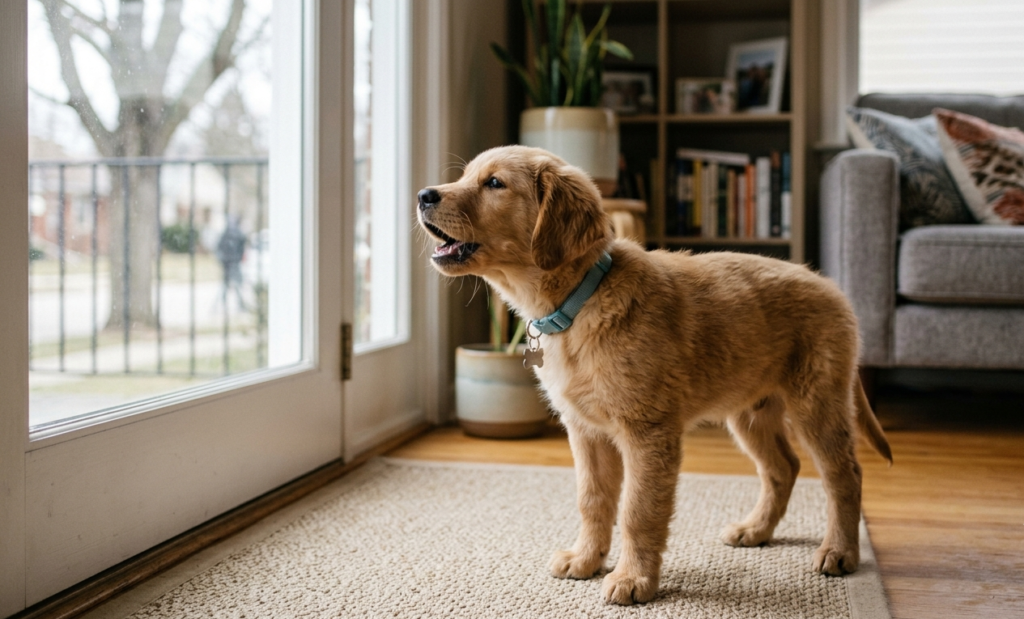
The Seven Main Reasons Puppies Bark Excessively
Your training efforts will be far more successful if you understand the underlying cause of barking. The main triggers are as follows:
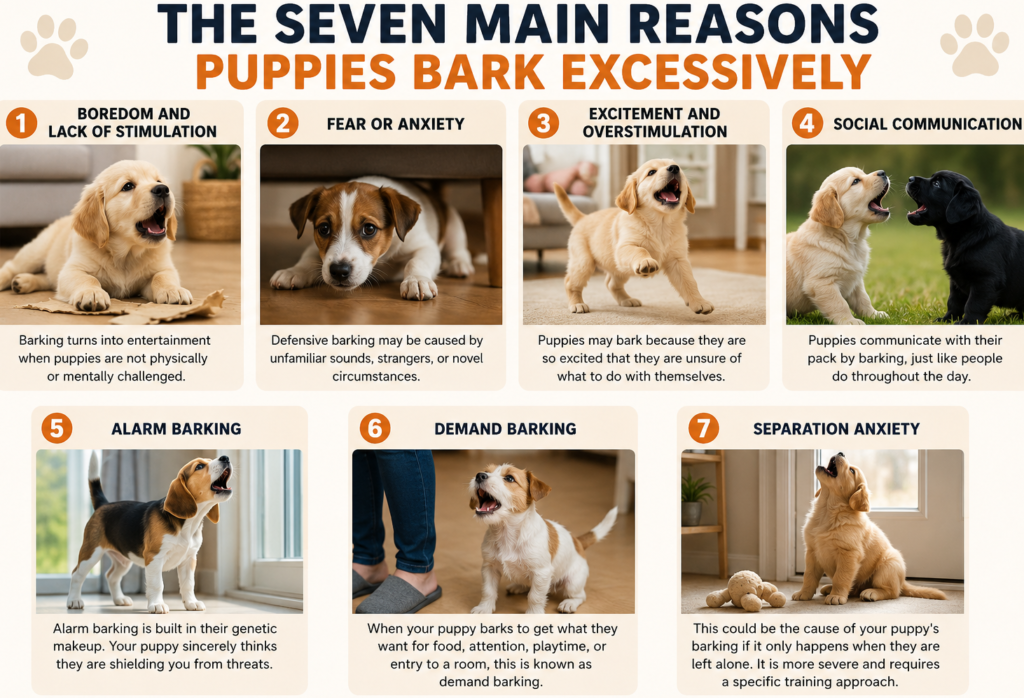
1.Boredom and Lack of Stimulation
Barking turns into entertainment when puppies are not physically or mentally challenged. This is frequently accompanied by undesirable activities such as destructive chewing. A puppy who is bored is basically saying, “I need something to do!”
2.Fear or Anxiety
Defensive barking may be caused by unfamiliar sounds, strangers, or novel circumstances. [1] In addition to the barking, keep an eye out for warning indicators such as a tucked tail, pinned-back ears, or a depressed body position.
3.Excitement and Overstimulation
Puppies may bark because they are so excited that they are unsure of what to do with themselves. [1] You may tell by their swinging tail and loose, wiggly body language.
4.Social Communication:
Puppies communicate with their pack by barking, just like people do throughout the day. This could be a request for space or a kind greeting.
5.Alarm Barking:
Because puppies have been carefully developed to be vigilant protectors, alarm barking is built into their genetic makeup. Your puppy sincerely thinks they are shielding you from the “threat” of passing cars or the mailman.
6.Demand Barking
When your puppy barks to acquire what they want for food, attention, playtime, or entry to a room, this is known as demand barking. The issue? If you have ever given in to your puppy’s barking, they will continue to do so since they have learnt that it is effective.
7.Separation Anxiety: This could be the cause of your puppy’s barking if it only happens when they are left alone. Compared to casual barking, this is more severe and calls for a particular training strategy.
The Two-Pronged Approach to Stopping Puppy Barking
The majority of well-meaning puppy parents make the mistake of trying to eliminate barking with just one tactic. According to research, this strategy fails roughly 90% of the time. Two consecutive factors must cooperate in order to effectively reduce barking.
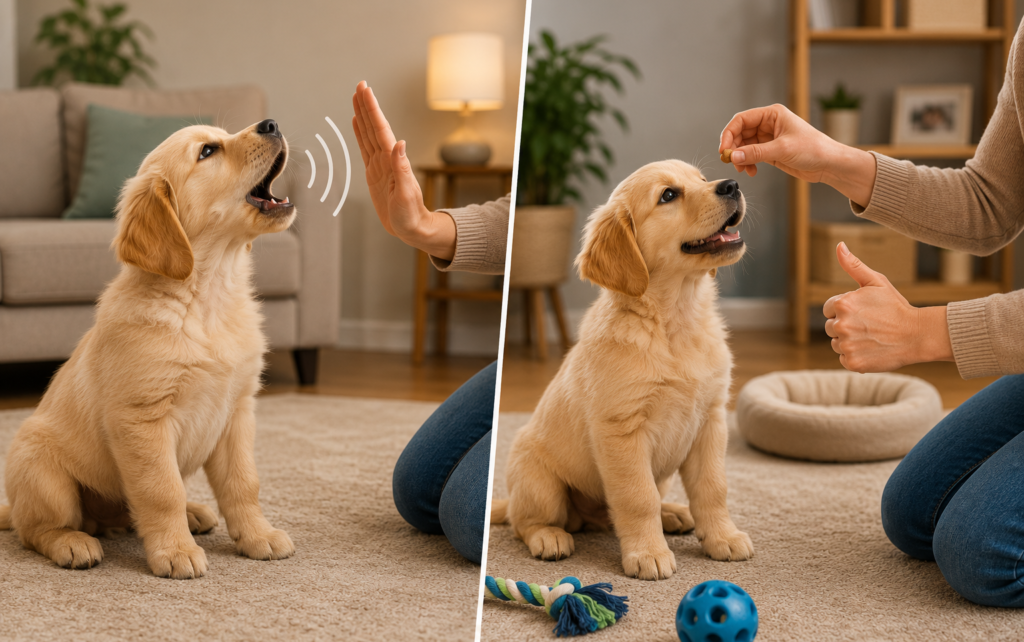
Prong 1: Providing for Your Puppy’s Basic Needs
Make sure your puppy’s basic requirements are being satisfied before addressing the barking directly. Once these fundamental components are in place, many excessive barking problems just go away.
Mental Stimulation: Offer daily training activities, puzzle toys, and food-dispensing toys. Consider providing your puppy with a crossword puzzle to solve as an example of brain enrichment. Puppies can be entertained for long periods of time with inventive food-dispensing toys that have intriguing odors, such as fish oil or coconut oil.
Physical Activity: Puppies require daily exercise that is suitable for their breed and age. Playing fetch, chase, and tug-of-war games, as well as taking gentle walks, are ideal activities for developing puppies. Puppies can play indoors even if they are not immunized.
Appropriate Nutrition: Give your puppy the right amounts of high-quality, age-appropriate food. An unhappy and talkative puppy is one that is hungry.
Suitable Chewing Locations: As part of their growth, puppies chew continuously. To satisfy this normal desire and lessen barking motivated by frustration, provide sturdy toys and delicious chews.
Prong Two: Preventing and Reducing Barking Behavior
After attending to your puppy’s basic requirements, use these particular techniques to stop barking and introduce substitute behaviors.
Training Techniques That Actually Work
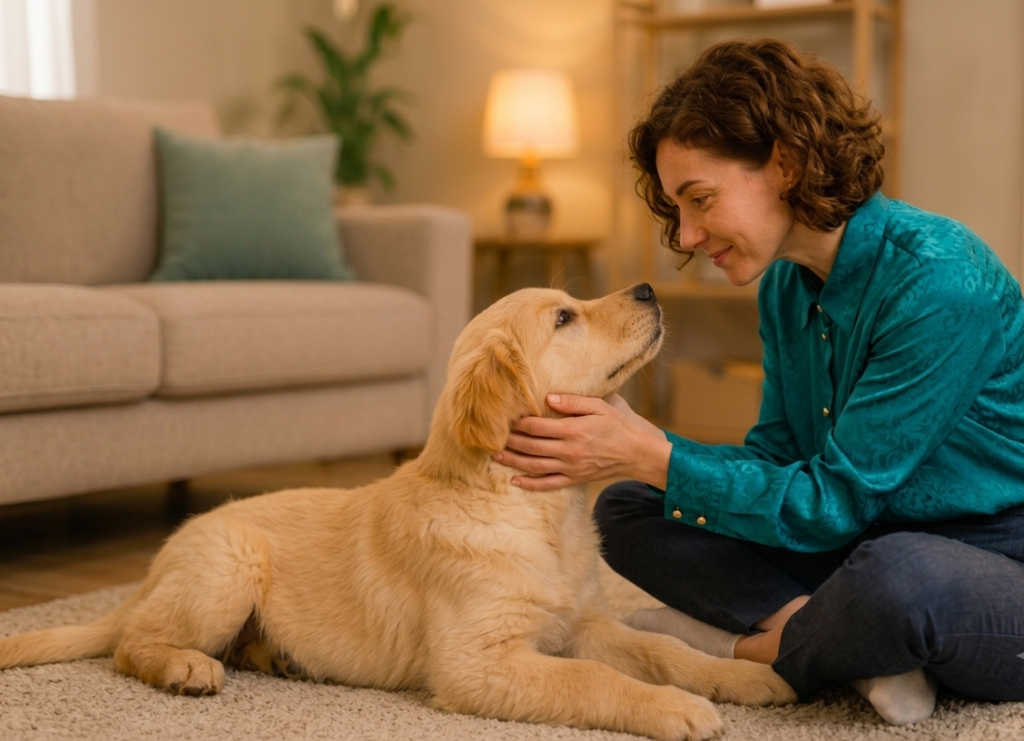
The Method of Quiet Reward
Reward the desired behavior, quietness, instead of penalizing barking, which is unproductive and may lead to new behavioral issues.
When your pooch is calm, reward them right away with play, treats, or praise.
When your puppy stops barking in the middle of a series, reward them.
Practice in circumstances where barking is common, such as when a squirrel passes or someone walks by.
Be consistent; each time you remain silent in a barking situation, you should be rewarded.
Training Alternative Behaviors
You can’t just take away your puppy’s communication skills. Teach them different strategies to capture your interest instead.
“Sit to Say Please”: Teach your puppy to stop barking when they want anything. Give the seat a large reward. Your puppy eventually learns that sitting is more effective than barking.
Teaching your pooch to touch your hand on cue is known as hand targeting. This diverts their focus and provides them with a different means of interacting with you.
Auto-Behaviors: Teach your puppy to do things like sit or lie down on their own, without being asked. They start using these as their go-to method of asking for help.
What NOT to Do When Training a Barking Puppy
Avoid aware of these common mistakes that might aggravate barking or lead to other behavioral issues:

Avoid Using Punishment-Based Techniques: Yelling, shock collars, and penny cans are examples of devices that teach fear rather than compliance. They can temporarily stop barking, but they also cause anxiety, hostility, and other major problems.
Don’t yell “Quiet!” When you yell at a barking puppy, they tend to think you’re barking too, which makes the habit worse.
Don’t ignore the Root Cause: If the underlying cause (boredom, anxiety, unfulfilled needs) is not addressed, the symptom (barking) will likely persist.
Refuse to Comply with Demand Barking: Your puppy will bark harder the next time if you give them what they want after they bark.
Don’t Expect Overnight Results:Change in behavior requires patience and perseverance. After two to four weeks of regular training, the majority of puppies show progress; some require longer.
When to Seek Professional Help
If your puppy’s barking is accompanied by other behavioral difficulties or if you suspect separation anxiety or fear-based concerns. A veterinarian examination is also beneficial because excessive barking may be caused by some underlying medical conditions.
How can I calm a barking puppy quickly?
Stop Barking To calm a barking puppy quickly, first identify what is causing the barking. Puppies often bark because they are excited, scared, lonely, bored, or seeking attention. Stay calm and avoid shouting, because yelling can make your puppy think you are barking too.
Instead, use a soft voice and redirect their attention with a favorite toy, treat, or simple command like “sit” or “quiet.” Creating a calm environment and removing triggers such as loud noises or too many visitors can also help your puppy relax faster. Regular exercise and mental stimulation are also important for reducing barking behavior.
A tired puppy is usually a calmer puppy. Short walks, play sessions, puzzle toys, and basic obedience training help release extra energy and prevent frustration. Reward your puppy immediately when they stop barking so they learn that quiet behavior brings positive attention and treats.
What is the 7 7 7 rule for puppies?
The 7 7 7 rule for puppies is a simple socialization method that helps puppies become more confident and comfortable in different environments. It encourages owners to introduce their puppy to 7 new people, 7 new places, and 7 new experiences within a certain period of time.
These experiences can include meeting friendly strangers, hearing household sounds, walking on different surfaces, or visiting safe outdoor locations. This rule is designed to reduce fear and anxiety as puppies grow older.
Proper socialization during the early months helps prevent future behavior problems such as excessive barking, nervousness, or aggression. By slowly exposing your puppy to new situations in a positive and calm way, they learn to adapt more easily and become well-behaved adult dogs.
What is the 3 bark rule?
The 3 bark rule is a training technique used to control excessive barking without completely stopping a dog’s natural communication. According to this method, owners allow their puppy to bark up to three times when they notice something unusual, such as a visitor or noise outside. After the third bark, the owner gives a calm command like “quiet” and redirects the puppy’s attention.
Stop Barking this method teaches puppies that a few alert barks are acceptable, but continuous barking is not. Consistency is very important when using the 3 bark rule. Puppies learn faster when owners reward quiet behavior with praise or treats immediately after they stop barking. Over time, this helps develop better self-control and calmer behavior at home.
What is the 10 10 10 rule for puppies?
The 10 10 10 rule for puppies is commonly used to create a healthy daily routine for young dogs. It usually refers to 10 minutes of training, 10 minutes of exercise, and 10 minutes of mental stimulation each day. This balanced approach helps puppies burn energy, stay mentally active, and learn basic obedience skills in a fun and manageable way.
Following the 10 10 10 rule can help reduce common puppy problems such as barking, chewing, jumping, and restlessness. Short and consistent activities are more effective for puppies because they have limited attention spans. By combining physical activity, learning, and interactive play, owners can help their puppies become calmer, happier, and easier to train at home.
Conclusion
Training a puppy to stop barking naturally and calmly at home takes patience, consistency, and understanding. By using positive reinforcement, creating healthy routines, and identifying barking triggers, you can help your puppy feel safe, relaxed, and well-behaved.
With daily practice and gentle training methods, your puppy will gradually learn when to stay calm and quiet, making your home happier and more peaceful for everyone.

Puppy Obedience Training 101: A Beginner’s Guide to Raising a Well-Mannered Dog

Common Dog Behavior Problems and How to Fix Them

Puppy Commands for Off-Leash Safety: What Every Owner Needs

Best Age to Start Leash Training a Puppy for Calm Behavior

How to Fix Puppy Behavior Using Gentle Training

puppy-obedience-training-commands/Puppy Training Tips: A Complete Step-by-Step Guide for Beginners

Puppy Obedience Training 101: A Beginner’s Guide to Raising a Well-Mannered Dog
Common Dog Behavior Problems and How to Fix Them
Puppy Commands for Off-Leash Safety: What Every Owner Needs
Best Age to Start Leash Training a Puppy for Calm Behavior
How to Fix Puppy Behavior Using Gentle Training