
Puppy Commands
Puppy House Training Schedule: Train Your Puppy Quickly & Easily


Puppy house training is one of the most important steps when bringing a new puppy into your home. While it may seem simple at first, many pet owners quickly realize how challenging it can be without the right approach. Accidents on the floor, confusion about routines, and lack of consistency can make the process stressful for both you and your puppy.
The key to success lies in following a structured and consistent routine. Puppies learn best when they have a clear schedule, and a well-planned system helps them understand when and where they should go. Instead of reacting to accidents, a proper training schedule allows you to guide your puppy in the right direction from the very beginning.
The good news is that puppy house training doesn’t have to be difficult or time-consuming. With patience, positive reinforcement, and a simple daily routine, you can train your puppy quickly and effectively. The earlier you start and the more consistent you are, the faster your puppy will learn.
In this guide, you’ll discover an easy and practical puppy house training schedule, along with expert tips to help you avoid common mistakes and achieve faster results. Whether you’re a first-time puppy owner or looking to improve your training method, this step-by-step approach will make the process much easier.
Why a Puppy House Training Schedule Matters
Puppies don’t naturally know where to use the bathroom. They depend on instruction, repetition, and regularity. Your puppy benefits from a regular schedule:
Learn more quickly by being consistent.
Avoid mistakes within the home.
Develop control of bladder function.
Develop confidence and trust.
Your puppy will become confused during training if there is no schedule. With one, everything becomes predictable, which is precisely what pups require.
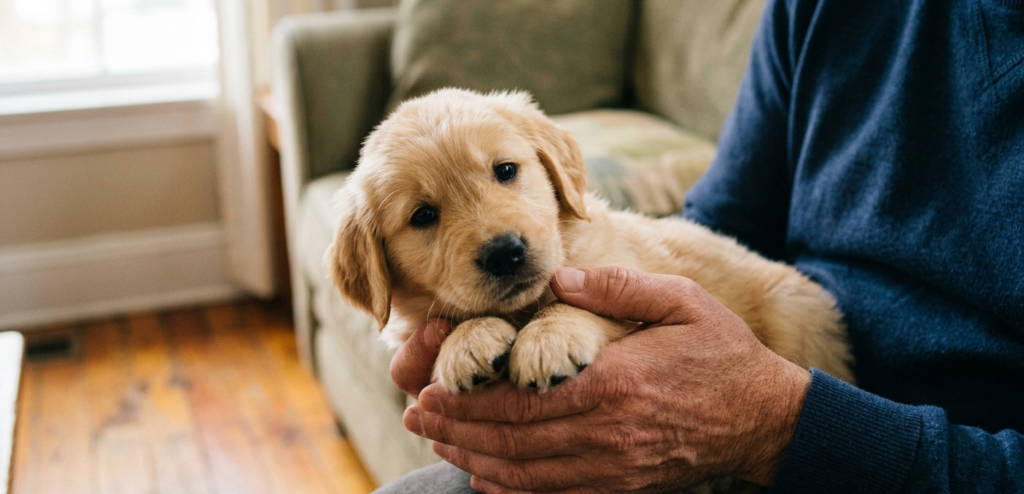
Understanding Your Puppy’s Needs
Before creating a schedule, it’s important to understand how your puppy’s body works. Young puppies have very limited bladder control. A general rule is:
8–10 weeks old: every 30–60 minutes
10–12 weeks old: every 1–2 hours
3–6 months old: every 2–4 hours
Puppies also need to go:
After waking up
After eating or drinking
After playing
Before bedtime
The Perfect Puppy House Training Schedule
Young puppies’ bodies are still developing; accordingly, their ability to manage their bladders is relatively limited. No matter how well-behaved they are, they just cannot “hold it” for extended periods of time. Because of biology rather than intransigence, accidents are common in the first several weeks.
You can avoid needless annoyance and set reasonable expectations by being aware of your puppy’s age and the frequency of their toilet breaks. Your puppy’s ability to manage their bladder gradually gets better as they get older. While adult puppies can wait several hours, younger puppies might need to go every 30 to 60 minutes.
Daily activities are just as important as age. Puppies’ digestive systems are stimulated when they eat, drink, play, or wake up, so they almost always need to go straight away.
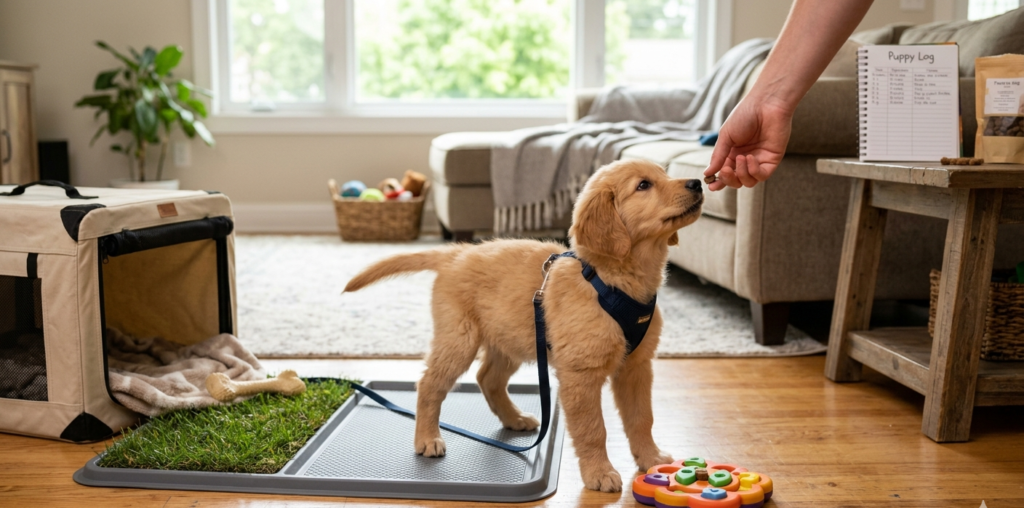
Puppy Bladder Control & Potty Schedule
| Puppy Age | Bladder Control Level | Recommended Potty Break Timing |
| 8–10 weeks old | Very limited control | Every 30–60 minutes |
| 10–12 weeks old | Slightly improved control | Every 1–2 hours |
| 3–6 months old | Developing bladder strength | Every 2–4 hours |
Important Potty Times for Puppies
| Trigger Event | Reason | What You Should Do |
| After waking up | Bladder fills during sleep | Take outside immediately |
| After eating/drinking | Digestion stimulates bowel movement | Take out within 5–15 minutes |
| After playing | Physical activity activates bladder | Give a quick potty break |
| Before bedtime | Reduces chances of overnight accidents | Final potty trip before sleep |
Step-by-Step House Training Method
Puppy house training to help your puppy understand what is expected of them, you need to use the proper training method in addition to a routine. You can develop solid and reliable home training habits by following these straightforward but efficient procedures.
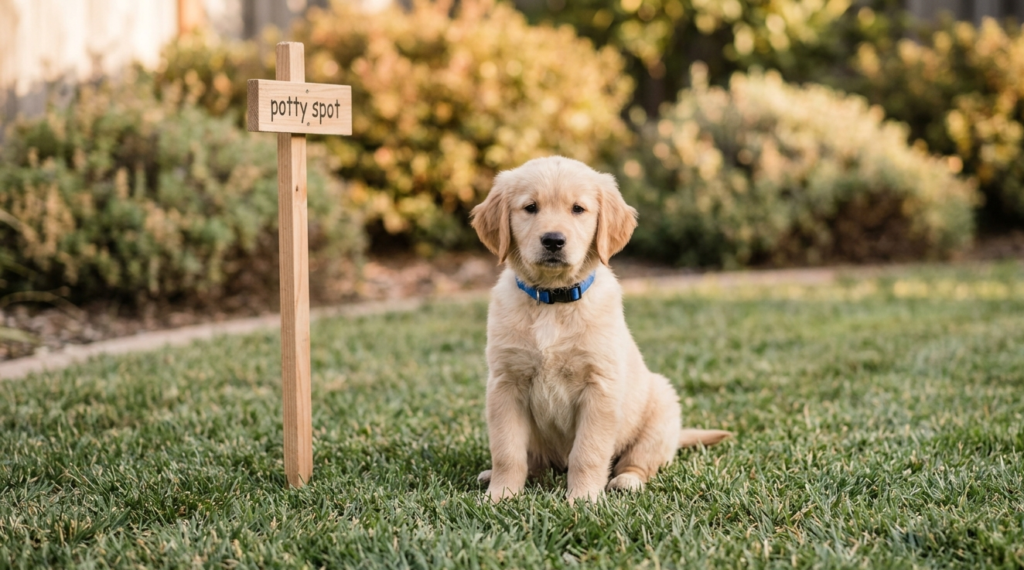
1. Select a Toilet
One of the most crucial stages in house training is choosing a certain potty location. To help your puppy identify the odor and link it to potty behavior, always take them to the same spot outside. Dogs learn more quickly because they rely so heavily on smell. Your dog will eventually
go there instinctively and without difficulty, which will make training easier and more dependable.
2. Make Use of a Cue Word
Every time your puppy is ready to urinate, use a cue phrase like “go potty” to assist in establishing a strong mental link between the command and the behavior. Every time you use the toilet, say the words calmly and consistently. Repetition can assist your puppy in learning the meaning of the cue and react to it, which is especially useful when you need them to move quickly, like during travel or bad weather.
3. Reward Right Away
The secret to effective house training is positive reinforcement. Give your puppy praise, food, or affection as soon as they’re done. Rewards encourage your puppy to repeat the right behavior by reinforcing it.
4. Maintain Constant Supervision
Supervision is essential, particularly during the initial phases of training. Accidents are likely to occur if you let your puppy travel around. Use items like a playpen or crate to restrict their space, or keep a watchful watch on their behavior. In addition to avoiding errors, this makes training quicker and more efficient by enabling you to react promptly when your puppy exhibits symptoms of needing to go outdoors.
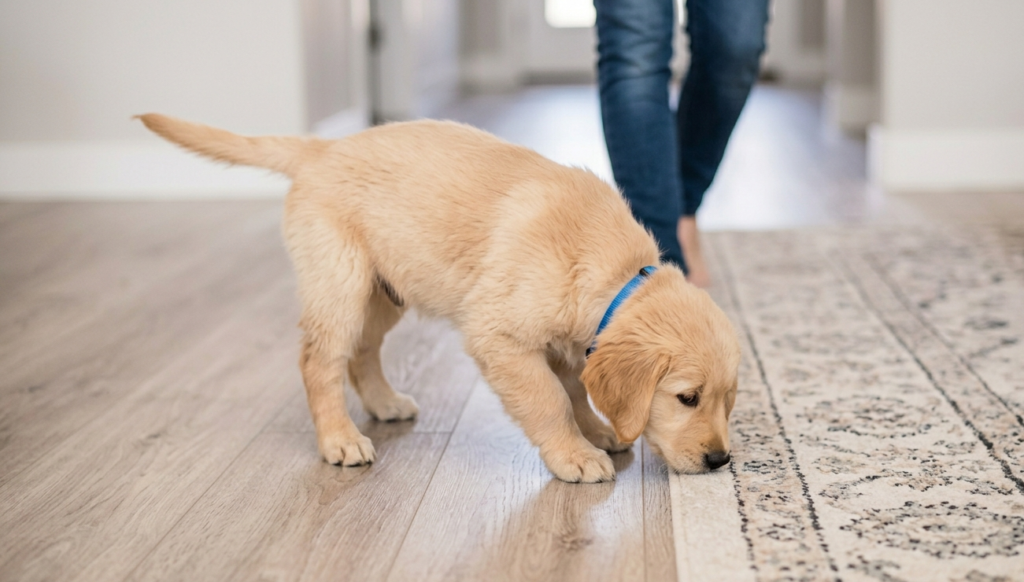
Tips to Speed Up House Training
If you want faster results, focus on these proven tips:
Stick to a Routine
Feed, walk, and potty your puppy at the same times daily.
Use Positive Reinforcement
Reward good behavior every single time in the early stages.
Limit Indoor Accidents
The fewer accidents your puppy has, the faster they learn.
Clean Accidents Properly
Use enzyme cleaners to remove odors completely. If your puppy smells it, they’ll go there again.
Be Patient but Firm
Training takes time. Stay consistent, even when progress feels slow.
1. Why is my puppy suddenly having potty accidents again?
This is called potty training regression, and it is very common in young puppies. Even if your puppy was doing well before, changes in routine, environment, or stress can cause them to forget their training temporarily. Growth stages and distractions also play a big role in this behavior.
In many cases, regression happens when supervision becomes less strict, or the puppy gains more freedom too quickly. To fix this, go back to basics: take your puppy out more frequently, especially after eating, sleeping, or playing. Consistency is the key to rebuilding good habits.
2. How long does it take to fully potty train a puppy?
Most puppies take around 4 to 6 months to become fully potty trained, but some may take up to a year, depending on their breed, age, and learning speed. Small breeds often take longer because they have smaller bladders and need more frequent breaks.
The training process is not just about time; it is about consistency and routine. Puppies learn best when they are taken outside regularly and rewarded immediately after exhibiting the right behavior. With patience and a structured schedule, your puppy will eventually develop strong habits.
3. What should I do if my puppy refuses to go outside?
If your puppy refuses to go outside, it could be due to fear, distractions, or a lack of understanding. Some puppies feel uncomfortable with weather conditions like rain, cold, or loud outdoor sounds, which can stop them from focusing on potty time.
To solve this, make the outdoor area more comfortable and always use the same spot. Stay calm, avoid rushing your puppy, and use a cue word like “go potty.” Once they succeed, reward them immediately so they understand that going outside is a positive experience.
4. Can punishment help fix potty training problems?
Punishment does not help in fixing potty training issues and can actually make the situation worse. When a puppy has an accident and is scolded or punished afterward, they do not understand the reason for the reaction. Instead, they may start to feel scared or anxious, which can slow down the learning process and create more behavioral problems over time.
Puppies live in the present moment, so they cannot connect past accidents with current punishment. This means that correcting them after the fact is ineffective and confusing. In some cases, punishment may even cause a puppy to hide when they need to go potty, making training harder and accidents harder to manage.
A much better approach is to focus on positive reinforcement and consistency. Reward your puppy immediately when they go to the correct place, so they learn the right behavior through encouragement. If accidents happen, clean the area thoroughly to remove any scent and adjust the potty schedule to prevent future mistakes. This kind of gentle, structured training builds trust and helps puppies learn faster and more confidently.
Conclusion
Puppy house training is not something that happens overnight; it requires patience, consistency, and the right routine. When you follow a structured puppy house training schedule, your puppy quickly learns when and where to go, making the entire process smoother and less stressful for both of you. Small, consistent actions every day create strong, long-term habits.
Remember, your puppy is still learning and depends on you for guidance. By using a fixed potty spot, a clear cue word, immediate rewards, and proper supervision, you can speed up the training process and reduce accidents significantly. Every successful potty break is a step closer to a fully trained puppy.

Puppy Obedience Training 101: A Beginner’s Guide to Raising a Well-Mannered Dog

Common Dog Behavior Problems and How to Fix Them

Puppy Commands for Off-Leash Safety: What Every Owner Needs

Best Age to Start Leash Training a Puppy for Calm Behavior

How to Fix Puppy Behavior Using Gentle Training

puppy-obedience-training-commands/Puppy Training Tips: A Complete Step-by-Step Guide for Beginners

Puppy Obedience Training 101: A Beginner’s Guide to Raising a Well-Mannered Dog
Common Dog Behavior Problems and How to Fix Them
Puppy Commands for Off-Leash Safety: What Every Owner Needs
Best Age to Start Leash Training a Puppy for Calm Behavior
How to Fix Puppy Behavior Using Gentle Training