
Puppy Training
How to Train a Puppy Using Positive Reinforcement Without Punishment


In positive reinforcement training, desired behaviors are rewarded. Positive reinforcement is one of your most effective methods for molding or altering your puppy’s behavior since the incentive increases the likelihood that they will repeat the behavior.
It sounds easy to reward your dog for good behavior, and it really is! However, you must adhere to a few fundamental rules in order to practice the technique successfully. Puppies react best to food, toys, and praise.
For pups, positive reinforcement is very important. Their bond with you and their point of view on the world are shaped by their early experiences. You may prevent anxiety, boost confidence, and lay a solid basis for future learning by using reward-based strategies.
What Is Positive Reinforcement Puppy Training?
It functions as follows:
Reward your dog with expensive puppy treats when they successfully do something good.
They repeat the activity because it leads to positive outcomes.
Because it feels nice, they continue to repeat the behavior even if they don’t always receive a reward.
People frequently compliment you on your puppy’s good behavior and inquire about your secret.
Additionally, your dog might or might not become well-known on Instagram.
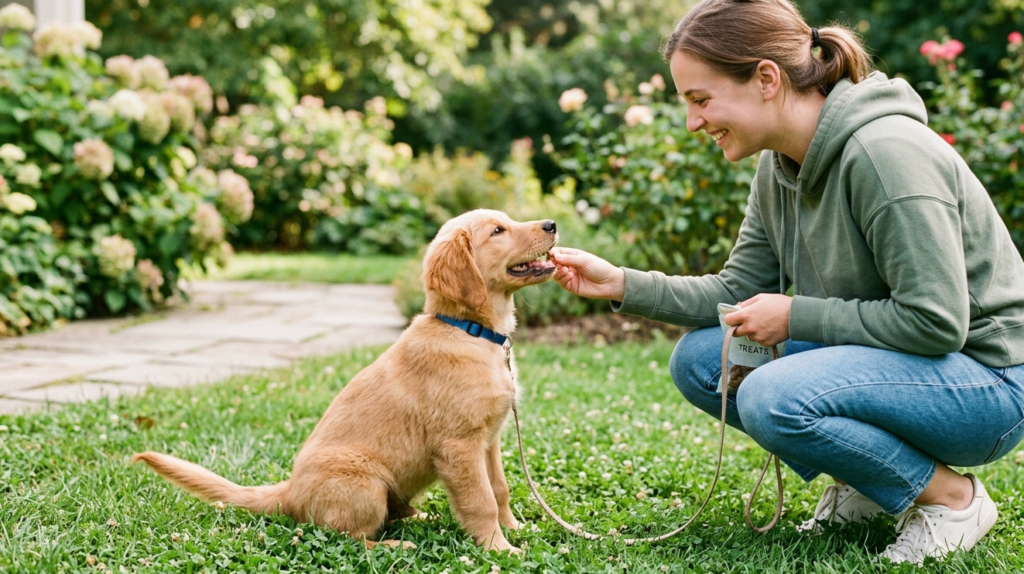
Why Positive Reinforcement Works?
In actual life, both humans and puppies learn through positive reinforcement. We want to repeat an activity when we feel rewarded by it. It eventually turns into a habit. Dopamine is a neurotransmitter, sometimes referred to as a hormone.
It is a feel-good molecule that facilitates the brain’s creation of a pathway between an action.
like a canine trick and a trigger (like a puppy command). Using this innate process of habit formation, positive reinforcement training teaches puppies good habits. As an example, instead of pulling you down the sidewalk, you can train your pup to enjoy strolling beside you.
In puppy training, we utilize clicks, belly rubs, pets, praise, and attractive rewards to let dogs know they’re doing well. In this way, puppies can pick up some extremely sophisticated skills. Eventually, you won’t even need to offer them a treat each time. These abilities develop into habits. Additionally, you have one well-mannered puppy.
You might be surprised at how simple this is. However, it does require perseverance, consistency, and, of course, the optimum training foods.
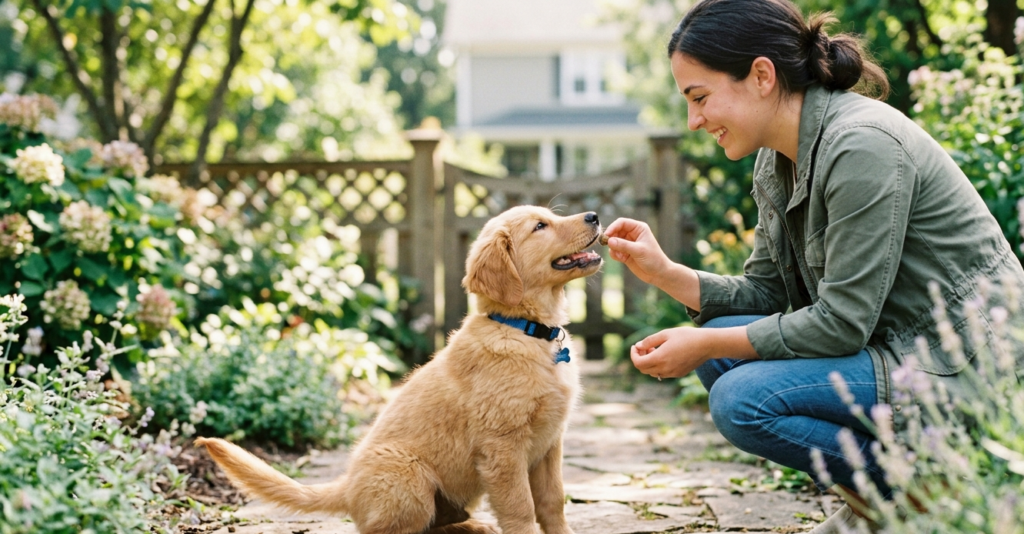
How to Use Positive Reinforcement the Right Way
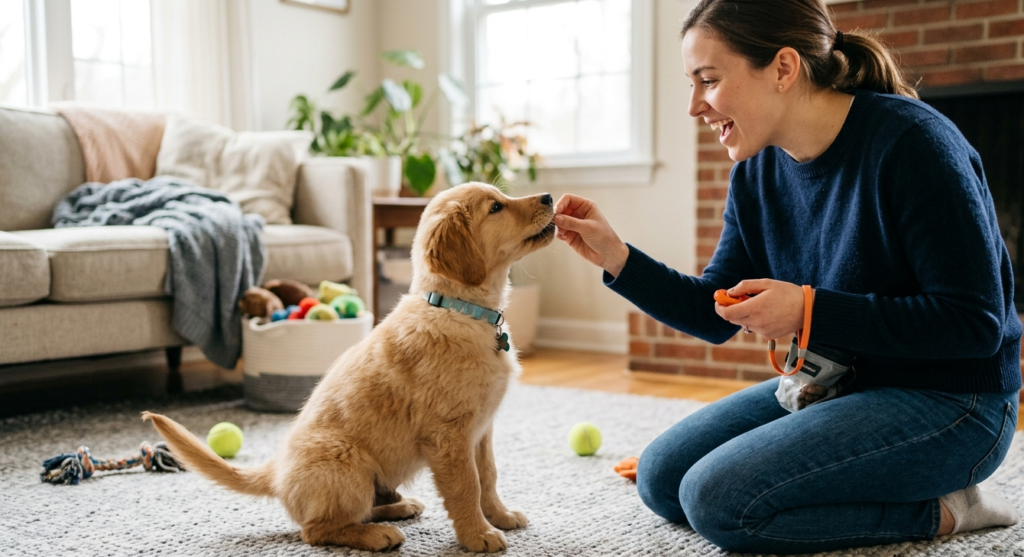
1. Reward at the Right Time
Timing is important because puppies must learn what the treat rewards are. When they act, give them the treat as quickly as you can. To help them identify the praise with the treat and the action, give them praise at the same time or somewhat earlier.
A clicker is useful for more complex commands. A clicker is an inexpensive dog training equipment that lets you accurately indicate (with a click sound) the exact time a dog follows an instruction.
2. Use the Best Training Treats for a puppy
Puppies put in more effort to earn better rewards. It won’t do to pretend that a grain is a treat. Yes, I did try it as well. My puppy was staring at me as if I had performed a trick!
The top puppy training treats are:
You can reward frequently because they are small and bite-sized.
Rich in protein: Promotes muscular health and energy.
Overall, they are nutritious, so you can give them with confidence.
- Irresistible: They won’t be motivated by a dull treat.
3. Reinforce the Right Behaviors
- Sitting politely instead of jumping
- Lying calmly while you work? Praise!
- Coming when called? Jackpot reward!
When to use positive reinforcement?
THE GOOD
In addition to teaching your pooch instructions, positive reinforcement training is an excellent method of rewarding good behavior. Your dog could sit with you:
- before feeding them (which teaches proper mealtime manners), before putting them outside (which helps avoid door-darting), and before stroking them (which helps prevent jumping on humans)
- When they lie calmly by your feet, give them a pat or call them a “good dog.” If they chew on a Kong-style toy instead of your shoe, give them a treat.
THE BAD
Take care to avoid unintentionally rewarding undesirable actions with positive reinforcement training. For example, you are rewarding (providing your pet access to the yard) behavior that you wish to discourage if you let them out every time they bark at a noise in the neighborhood.
The Benefits of Reward-Based Training
- It may be used to teach everything from fundamental life skills to advanced actions and tricks, and it should be started as soon as your puppy returns home with you.
- It strengthens your bond and fosters trust.
- Your relationship with your dog is strengthened by all you teach them, utilizing reward-based techniques.
- Your dog learns exactly what you want them to perform in specific circumstances through reward-based training, and each accomplishment serves to further reinforce that.
How to train a puppy with positive reinforcement?
Positive reinforcement is one of the most effective and humane ways to train a puppy. This method focuses on rewarding good behavior so your puppy learns to repeat it. Instead of punishing mistakes, you encourage the behaviors you want by giving treats, praise, or toys. Puppies learn quickly when they associate good actions with positive rewards.
1. Reward Good Behavior Immediately
When your puppy does something right, like sitting, coming when called, or staying calm, reward them immediately. Give a small treat, gentle praise, or a favorite toy. Quick rewards help your puppy clearly understand which behavior is correct.
2. Use Clear and Simple Commands
Keep commands short and consistent, such as “sit,” “stay,” “come,” and “down.” Say the command in a calm voice and reward your puppy when they follow it. Consistency helps puppies learn faster.
3. Be Consistent with Training
Practice training every day for 5–10 minutes. Short, regular sessions are better because puppies have short attention spans. Consistent routines help them remember commands and improve their behavior.
4. Avoid Punishment
Punishment can make puppies scared or confused. If your puppy makes a mistake, simply redirect them to the correct behavior and reward them when they do it right.
5. Be Patient and Encouraging
Puppies are still learning about the world. Stay patient and celebrate small successes. Over time, your puppy will build confidence and develop good habits.
How do you say “I love you” in dog language?
Dogs do not understand the words “I love you” the same way humans do, but they easily understand love through actions, tone, and body language. When you show care, attention, and kindness, your dog feels safe and loved.
1. Gentle Eye Contact
Soft eye contact with your dog can express affection. When your dog looks at you calmly, and you respond with a relaxed gaze, it creates trust and bonding.
2. Calm and Loving Voice
Dogs respond strongly to tone. Speaking in a soft and happy voice helps them understand that you are showing affection and approval.
3. Physical Touch
Petting, gentle belly rubs, or scratching behind the ears are ways dogs feel loved. Many dogs enjoy being close to their owners, which strengthens the emotional connection.
4. Spend Quality Time
Playing, walking, or training together shows your dog that they are important to you. Dogs often see shared activities as a sign of affection and companionship.
5. Positive Reinforcement
Rewarding good behavior with treats, praise, or toys tells your dog that you appreciate them. This builds trust and strengthens your relationship.
6. Respect Your Dog’s Comfort
Every dog has its own personality. Some love cuddles, while others prefer space. Understanding your dog’s comfort level is another way of saying “I love you.”
What is the 7 7 7 rule for puppies?
1. Meet 7 Different People
Your puppy should interact with at least seven different people. This helps them feel comfortable around strangers and prevents fear or shyness later in life.
2. Walk on 7 Different Surfaces
Expose your puppy to seven types of surfaces, such as grass, carpet, wood floors, sand, concrete, gravel, or tiles. This builds confidence and reduces fear of new environments.
3. Explore 7 Different Locations
Take your puppy to seven safe places, like a park, backyard, quiet street, pet-friendly store, or a friend’s house. New environments help puppies become adaptable.
4. Meet 7 Friendly Dogs
Allow your puppy to interact with well-behaved and vaccinated dogs. This helps them learn proper social behavior and improves their confidence around other dogs.
5. Experience 7 Different Sounds
Let your puppy hear different everyday sounds such as doorbells, vacuum cleaners, traffic, or household noises. Early exposure prevents fear of common sounds.
6. Play with 7 Different Toys
Give your puppy different types of toys like chew toys, balls, rope toys, and puzzle toys. This supports mental stimulation and healthy play habits.
7. Practice 7 Basic Training Exercises
Teach simple commands like sit, stay, come, down, leave it, heel, and wait. Early training builds good behavior and strengthens your bond.
Can you train a dog with only positive reinforcement?
1. Reward Desired Behavior
When your dog performs the correct action, such as sitting, coming when called, or walking calmly, immediately give a reward. This reward can be treats, praise, toys, or playtime. Dogs quickly learn that good behavior leads to something positive.
2. Ignore or Redirect Unwanted Behavior
Instead of punishment, trainers using positive reinforcement usually ignore minor bad behaviors or redirect the dog to a better action. For example, if a puppy is chewing furniture, give them a chew toy and reward them for using it.
3. Consistency Is Important
Training works best when the same rules are followed every day. Use the same commands, rewards, and timing so your dog clearly understands what is expected.
4. Builds Trust and Confidence
Positive reinforcement strengthens the bond between the dog and the owner. Dogs trained this way often feel more confident and are less likely to develop fear or anxiety.
5. Works for All Types of Training
This method can be used for many behaviors, such as house training, obedience commands, leash training, and learning tricks.
Conclusion
Positive reinforcement is one of the most effective and kind ways to train a puppy without punishment. By rewarding good behavior with treats, praise, toys, and attention, your puppy quickly learns what actions are expected. This training method builds trust, confidence, and a strong bond between you and your dog.
Using positive reinforcement at the right time, practicing simple commands, and following helpful guidelines like the 7-7-7 rule for puppies can make training easier and more successful. Dogs also understand love through gentle touch, calm voices, and quality time, which strengthens your relationship during training.

Puppy Obedience Training 101: A Beginner’s Guide to Raising a Well-Mannered Dog

Common Dog Behavior Problems and How to Fix Them

Puppy Commands for Off-Leash Safety: What Every Owner Needs

Best Age to Start Leash Training a Puppy for Calm Behavior

How to Fix Puppy Behavior Using Gentle Training

puppy-obedience-training-commands/Puppy Training Tips: A Complete Step-by-Step Guide for Beginners

Puppy Obedience Training 101: A Beginner’s Guide to Raising a Well-Mannered Dog
Common Dog Behavior Problems and How to Fix Them
Puppy Commands for Off-Leash Safety: What Every Owner Needs
Best Age to Start Leash Training a Puppy for Calm Behavior
How to Fix Puppy Behavior Using Gentle Training