
Dog Training
Mental Stimulation for Dogs: 15 Easy Ways to Keep Your Dog Happy and Healthy

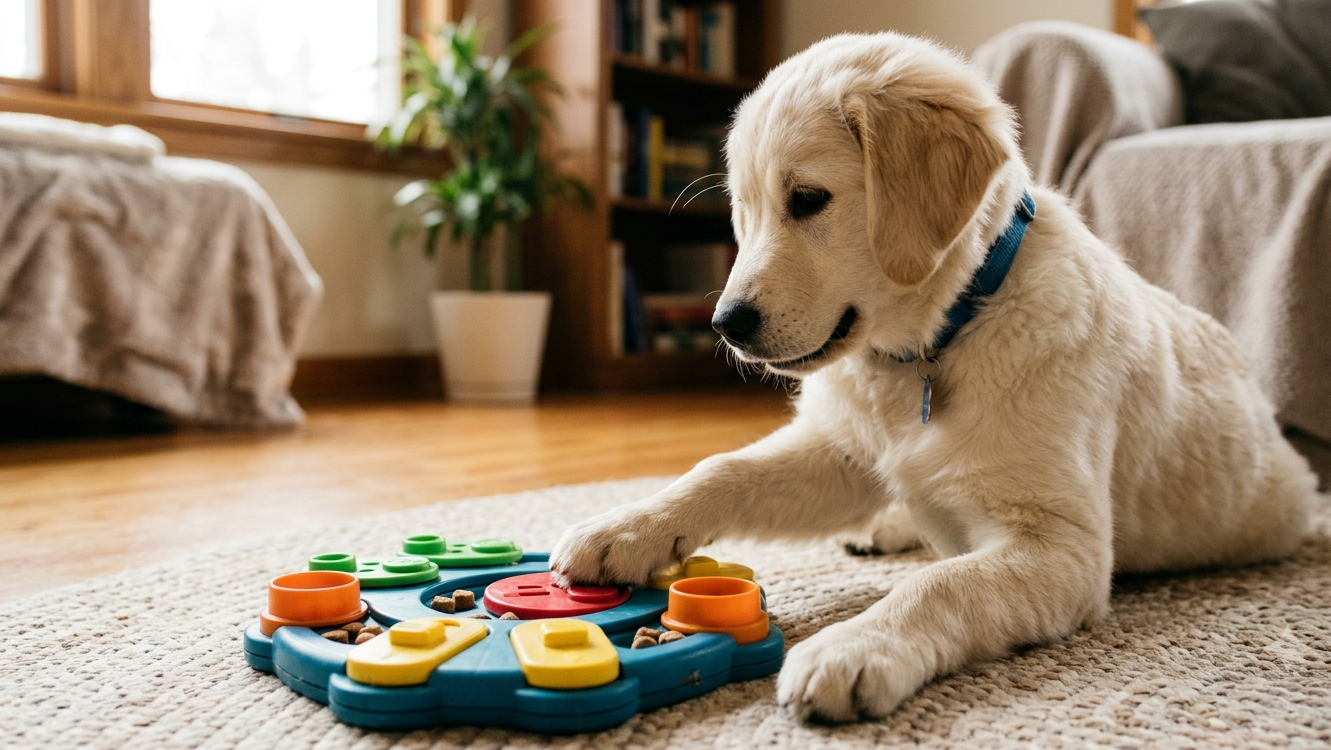
Dogs are intelligent, curious, and emotional animals that need more than food, water, and physical exercise to live a healthy life. Many dog owners focus only on daily walks and playtime, but a dog’s brain also needs regular exercise. This is why mental stimulation for dogs is an important part of complete pet care.
A dog that receives enough mental enrichment is usually calmer, more confident, and better behaved. On the other hand, a dog that feels bored may develop unwanted habits such as excessive barking, chewing furniture, digging, restlessness, or attention-seeking behavior.
Just like humans need learning, challenges, and new experiences, dogs need activities that encourage them to think and use their natural abilities. Mental exercises allow dogs to solve problems, explore their environment, and stay emotionally balanced.
mental stimulation for dogs The best part is that providing mental stimulation for dogs does not have to be expensive or complicated. Simple games, training sessions, scent activities, and interactive toys can make a huge difference in your dog’s happiness.
In this guide, we will discuss 15 easy ways to challenge your dog’s mind and keep them happy, healthy, and mentally active.
Why Is Mental Stimulation Important for Dogs?
mental stimulation for dogs Dogs were naturally designed to search, explore, learn, and complete tasks. In the past, dogs used their brains every day while hunting, protecting, and working alongside humans. Modern pets often live comfortable lives where they do not need to use these natural instincts as much.
Without enough mental exercise, dogs may become bored or frustrated. This boredom can lead to behavioral problems.
Regular mental stimulation for dogs helps to:
- Reduce boredom and destructive habits.
- Improve focus and obedience.
- Build confidence
- Reduce stress and anxiety.
- Encourage natural behaviors
- Strengthen the bond between dogs and owners.
- Support healthy aging in senior dogs.
A tired dog is not only physically tired; a mentally satisfied dog is usually more relaxed and easier to manage.
15 Best Mental Stimulation Activities for Dogs
1. Use Puzzle Toys
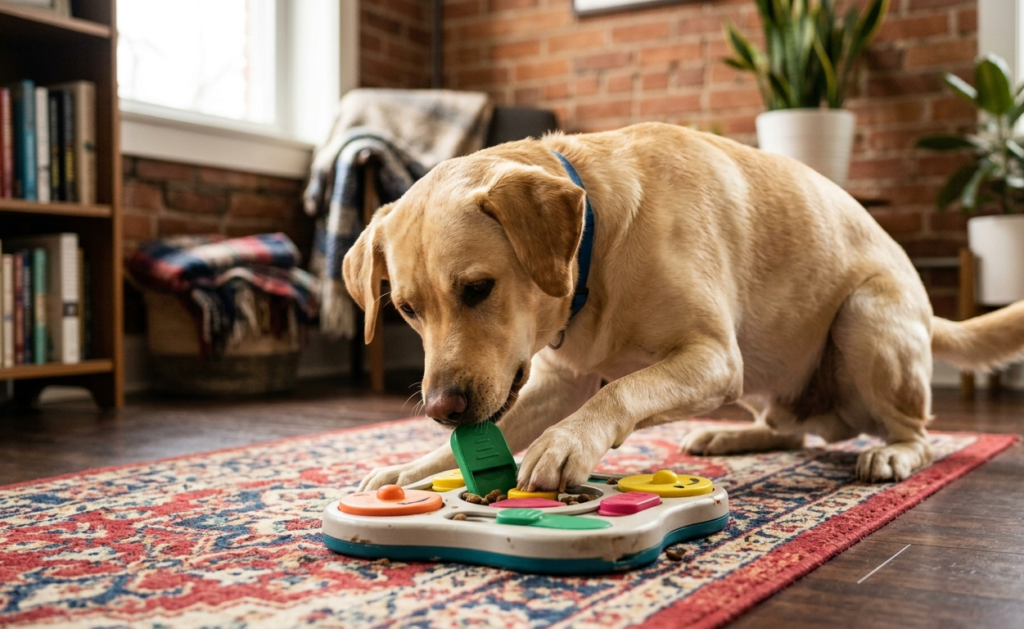
mental stimulation for dogs Puzzle toys are one of the easiest ways to provide brain exercise for your dog. These toys are designed to make dogs think and work to receive a reward.
Instead of eating food instantly from a regular bowl, your dog must move parts, push objects, or solve the puzzle to get treats.

Puzzle toys help improve:
- Problem-solving skills
- Concentration
- Patience
- Confidence
Start with simple puzzles and slowly introduce harder challenges as your dog becomes better at solving them.
2. Try Food-Based Enrichment
Dogs naturally enjoy searching for food. In the wild, they spend time finding and working for meals.
You can make feeding more exciting with:
- Slow feeders
- Treat balls
- Food puzzles
- Frozen enrichment toys
- Snuffle mats
These activities turn normal mealtime into a mental workout.
Food-based enrichment is especially useful for dogs that eat too quickly or become bored when left alone.
3. Play the “Find It” Game
Scent games are excellent examples of mental stimulation for dogs because they use a dog’s strongest natural ability: their sense of smell. Start by hiding treats in easy places around your home. Encourage your dog by saying, “Find it!”
As your dog improves, make the game harder by hiding treats:
- Behind furniture
- Under safe objects
- Inside boxes
- In different rooms
This game keeps your dog focused and mentally engaged.
4. Go on Sniff Walks
A walk is not only about physical exercise. For dogs, walking is also a way to collect information about the world. Dogs experience their environment through smell. Allowing your dog to stop and sniff during walks provides valuable mental enrichment.
Sniff walks can:
- Reduce stress
- Improve relaxation
- Increase confidence
- Provide natural exploration
A slower walk with sniffing can sometimes be more mentally tiring than a fast walk.
5. Teach New Commands and Tricks
mental stimulation for dogs Training is one of the best forms of brain exercise. Learning new skills keeps your dog’s mind active and improves communication.
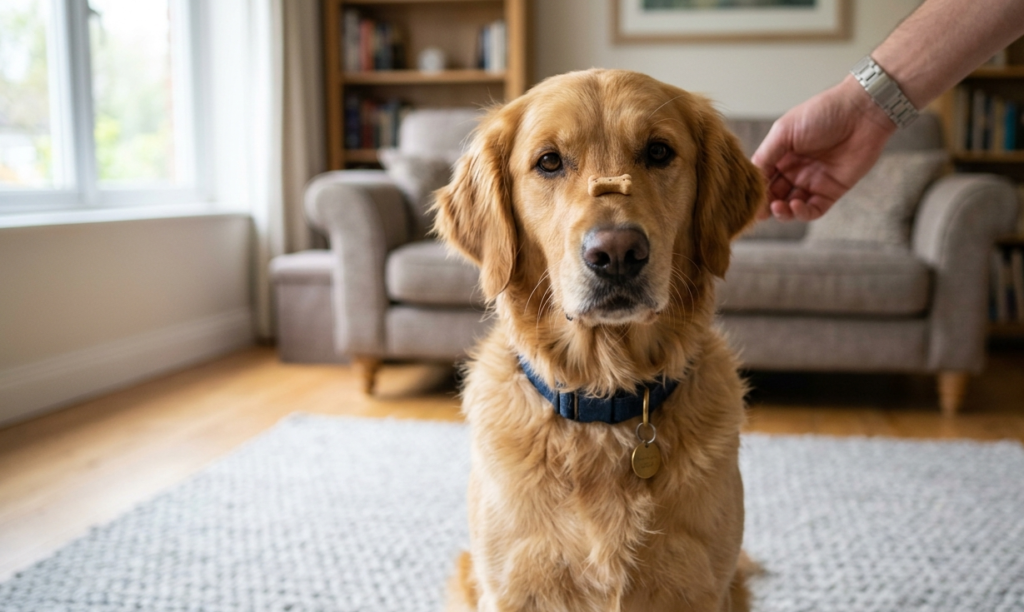
You can teach:
- Sit
- Stay
- Come
- Leave it
- Place
- Spin
- Shake hands
- Roll over
Short training sessions of 5–15 minutes can provide excellent mental exercise.
Training also strengthens trust between you and your dog.
6. Play Hide and Seek
mental stimulation for dogs Hide and seek is a fun game that challenges your dog’s senses and memory. Ask your dog to wait while you hide somewhere nearby. Call their name and reward them when they find you.
This activity improves:
- Recall skills
- Listening ability
- Confidence
- Relationship with the owner
Dogs enjoy searching because it connects with their natural instincts.
7. Rotate Your Dog’s Toys
- Many dogs lose interest when they see the same toys every day.
- Instead of leaving all toys available, keep a few toys out and rotate them regularly.
- When an old toy comes back after several days, it feels exciting again.
- Toy rotation is a simple way to create new experiences without buying new products.
8. Create DIY Brain Games
You do not need expensive equipment to challenge your dog.
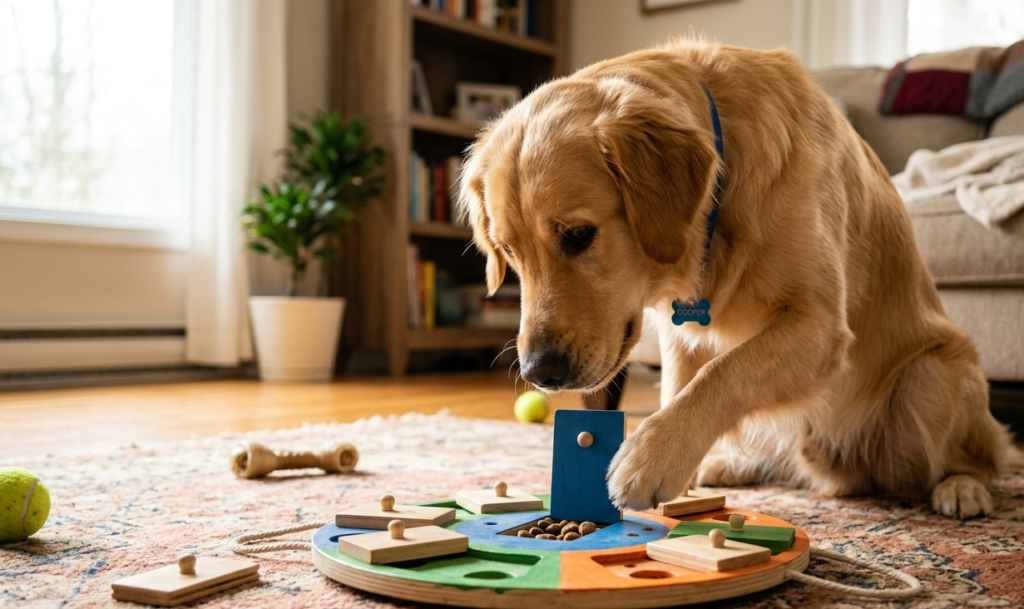
Simple homemade games include:
- Hiding treats in cardboard boxes
- Using cups to hide rewards
- Creating a treat trail
- Making a simple obstacle path
DIY activities encourage curiosity and problem-solving.
9. Practice Impulse Control Training
Impulse control teaches dogs patience and emotional control.
Examples include:
- Waiting before eating
- Sitting before opening doors
- Staying calm before playing
- Waiting for permission
These exercises improve manners and help dogs make better choices.
10. Build an Indoor Obstacle Course
Obstacle courses combine physical movement with mental focus.
You can use safe household items such as:
- Pillows
- Chairs
- Boxes
- Blankets
Your dog can learn to move around, jump over, or go through obstacles.
This improves:
- Coordination
- Confidence
- Body awareness
- Problem-solving
11. Use Chewing Activities
Chewing is a natural behavior for dogs. Providing safe chewing options can keep them busy and relaxed.
Chewing activities help:
- Reduce stress
- Prevent boredom
- Encourage healthy habits
Chew toys are especially useful for puppies who are learning about their environment.
12. Introduce New Experiences
Dogs need safe exposure to new things. New experiences provide important mental enrichment.
You can introduce:
- New walking routes
- Different sounds
- New environments
- Safe objects
Always introduce new experiences slowly so your dog feels comfortable.
13. Play Memory Games
Memory games challenge your dog’s ability to remember and make decisions.
Try hiding a favorite toy and asking your dog to find it.
These activities improve:
- Focus
- Memory
- Attention skills
Mental challenges like these keep the brain active.
14. Provide Social Enrichment
Dogs are social animals. Positive interactions with other dogs and people can provide valuable mental stimulation.
Safe social activities help dogs learn:
- Communication skills
- Confidence
- Appropriate behavior
Social enrichment should always happen in safe and controlled environments.
15. Give Your Dog a Job
Many dog breeds were created to perform tasks. Giving your dog a purpose can make them feel satisfied.
Simple jobs include:
- Carrying toys
- Finding objects
- Helping with small tasks
- Learning routines
A dog with a purpose is often more focused and content.
Signs Your Dog Needs More Mental Stimulation
Your dog may need more brain exercise if you notice:
- Excessive barking
- Chewing furniture
- Digging
- Restlessness
- Whining
- Attention-seeking behavior
- Difficulty relaxing
Adding daily enrichment activities can improve these behaviors.
Mental Stimulation Based on Dog Age
Puppies
Puppies need gentle activities that build confidence and learning skills.
Good choices include:
- Basic training
- Simple puzzles
- Scent games
Adult Dogs
Adult dogs often enjoy more challenging activities.
Try:
- Advanced puzzles
- Trick training
- Interactive games
Senior Dogs
Older dogs still need mental exercise.
Helpful activities include:
- Easy scent games
- Gentle training
- Slow puzzle activities
Simple Daily Mental Stimulation Routine
A balanced routine may look like this:
| Time | Activity |
| Morning | Sniff walk and commands |
| Afternoon | Puzzle toy or food game |
| Evening | Training and interactive play |
Even 15–20 minutes of daily brain exercise can improve your dog’s mood and behavior.
Frequently Asked Questions (FAQ)
What is mental stimulation for dogs?
Mental stimulation for dogs means activities that challenge the brain, improve learning, and encourage natural behaviors.
How much mental stimulation does a dog need?
Most dogs benefit from daily mental activities. The amount depends on age, breed, energy level, and health.
Can mental stimulation reduce bad behavior?
Yes. Brain games help reduce boredom-related behaviors such as barking, chewing, and digging.
Are puzzle toys safe for dogs?
Yes, puzzle toys are generally safe when they match your dog’s size and ability level. Always supervise new toys.
What is the best brain exercise for dogs?
Scent games, training, puzzle toys, and interactive play are some of the most effective mental exercises.
Do older dogs need mental stimulation?
Yes. Mental activities help senior dogs stay engaged and support healthy brain function.
Can training count as mental exercise?
Yes. Learning commands and tricks is one of the best ways to challenge your dog’s mind.
Final Thoughts
Mental stimulation for dogs is essential for raising a happy, healthy, and well-behaved pet. Dogs need opportunities to think, explore, and solve problems just as much as they need physical exercise. By adding puzzle toys, scent games, training sessions, and enrichment activities into your dog’s daily routine, you can prevent boredom and improve their overall quality of life.
A mentally active dog is usually calmer, more confident, and more connected with their owner. Small daily activities can create a big difference in your dog’s happiness and well-being.

Puppy Obedience Training 101: A Beginner’s Guide to Raising a Well-Mannered Dog

Common Dog Behavior Problems and How to Fix Them

Puppy Commands for Off-Leash Safety: What Every Owner Needs

Best Age to Start Leash Training a Puppy for Calm Behavior

How to Fix Puppy Behavior Using Gentle Training

puppy-obedience-training-commands/Puppy Training Tips: A Complete Step-by-Step Guide for Beginners

Puppy Obedience Training 101: A Beginner’s Guide to Raising a Well-Mannered Dog
Common Dog Behavior Problems and How to Fix Them
Puppy Commands for Off-Leash Safety: What Every Owner Needs
Best Age to Start Leash Training a Puppy for Calm Behavior
How to Fix Puppy Behavior Using Gentle Training