
Dog Training
Dog Breathing Fast While Sleeping? 7 Reasons to Know

Quick Overview:
Dog breathing that speeds up during sleep is often normal and linked to dreaming or the REM sleep cycle. But fast dog breathing can also point to overheating, anxiety, excess weight, or, in some cases, a heart or lung problem.
A healthy dog breathing rate at rest is usually between 10 and 35 breaths per minute. If your dog breathes faster than this while resting calmly, or shows other signs like coughing, gum color changes, or trouble waking up, it is time to call your vet.
This guide explains the 7 most common reasons behind fast dog breathing during sleep, when it is safe to relax, and when you need to act. If you have ever watched your dog breathing quickly while curled up on the couch, you know how worrying it can feel.
Your dog’s chest rises and falls fast, sometimes with little twitches or soft sounds, and your mind jumps straight to the worst case. The good news is that in most healthy dogs, this kind of dog breathing pattern is completely normal. Dogs, like people, go through sleep cycles, and one of those stages naturally speeds up the heart and lungs.
Still, fast dog breathing is not always harmless. Some causes need a closer look, especially if your dog is older, overweight, or has an existing health condition. This article walks you through the 7 main reasons for fast dog breathing while sleeping, how to tell normal from concerning, and simple steps you can take at home.
What Is a Normal Dog Breathing Rate While Sleeping?
Before we look at the causes, it helps to know what normal dog breathing actually looks like. A clear baseline makes it much easier to spot the difference between a harmless dream and a real problem.
Normal Breathing Range for Healthy Dogs
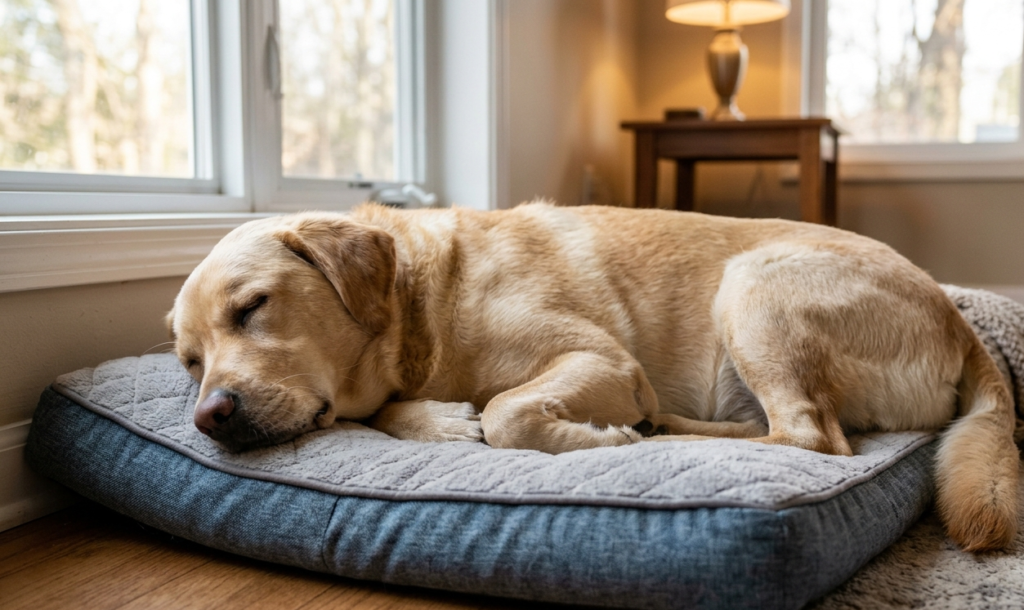
Most healthy adult dogs take between 10 and 35 breaths per minute while resting or sleeping. This range is wide because dog breathing naturally varies with age, size, and breed. Puppies tend to breathe faster than adult dogs since their metabolism runs quicker. Small breed dogs also often breathe a little faster than large, older dogs, whose bigger lungs move more air with each breath.
Senior dogs may sit on the lower end of this range, especially during deep, restful sleep. As long as the number stays under 35 and your dog looks comfortable, this is considered a normal dog breathing pattern.
How to Count Your Dog’s Breathing Rate
Checking your dog’s breathing rate at home is simple and takes less than a minute. Here is how to do it correctly:
- Wait until your dog is calm, resting, or asleep, not panting from heat, play, or a recent walk.
- Watch the chest closely, or rest a hand gently on it.
- Count how many times the chest rises in 15 seconds.
- Multiply that number by 4 to get the breaths per minute.
Try to check at the same time of day, such as right before bedtime, so you get a consistent and reliable reading. If the number sits comfortably under 35, your dog’s breathing pattern is likely within a healthy range.
Why This Baseline Number Matters
Knowing this baseline number matters because it gives you something real to compare against, rather than guessing based on how fast your dog’s breathing feels. A dog breathing at 20 breaths per minute during a dream is very different from a dog breathing at 60 breaths per minute while lying still and awake.
The first is a normal, passing part of sleep. The second is a sign that something may need medical attention. This is also why it helps to check your dog’s breathing rate every few weeks, even when nothing seems wrong. Over time, you build a clear picture of what is normal for your specific dog, which makes it much easier to notice a real change early.
Why Is My Dog Breathing Fast While Sleeping? 7 Reasons
1. Your Dog Is Dreaming (REM Sleep)
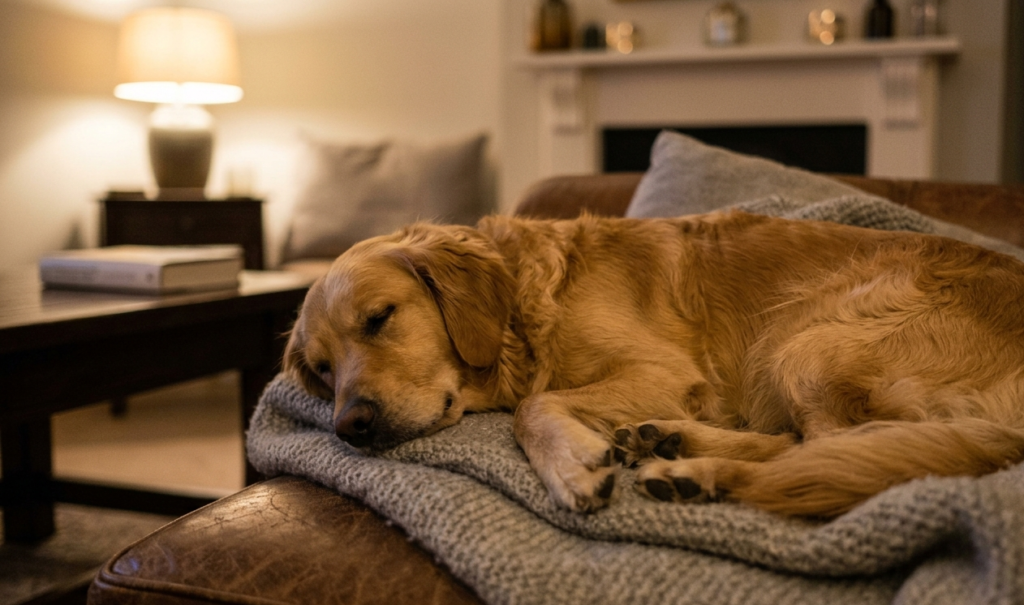
The most common reason for fast dog breathing during sleep is simple: your dog is dreaming. Dogs cycle through light sleep and deep REM sleep, just like humans. During REM sleep, the brain becomes very active, and this often causes quick, shallow breaths, twitching paws, soft whimpers, or moving eyes under closed lids.
This type of fast dog breathing usually lasts only a few minutes and stops on its own once your dog moves into a calmer sleep stage. There is no need to wake your dog during this time, since interrupting REM sleep can actually leave them groggy or startled.
2. Overheating or a Warm Room
Dogs cool down mainly through panting, and this can carry over into light sleep. If the room is warm, if your dog is sleeping under a blanket, or if they have a thick winter coat, their body may speed up breathing to release heat.
This kind of dog breathing pattern often settles once the room cools or the blanket comes off. Flat faced breeds such as Pugs, Bulldogs, and Boxers are especially prone to this, since their shorter airways make it harder to release heat efficiently even during rest.
3. Stress, Anxiety, or a Bad Dream
Just like people, dogs can experience anxious or unsettled dreams. A stressful day, a loud noise before bedtime, or separation anxiety can carry into sleep and show up as fast dog breathing along with restlessness, whining, or sudden waking. If this pattern repeats often, it may be worth looking into your dog’s daytime stress levels and sleep environment.
4. Excitement or Recent Activity
If your dog falls asleep shortly after playtime, a walk, or an exciting event, their breathing and heart rate may still be settling down. This kind of dog breathing is temporary and should return to a normal, steady pace within 20 to 30 minutes of rest.
5. Extra Weight or Poor Fitness
Dogs carrying extra weight often work harder to breathe, even while resting. Fat around the chest and abdomen can press against the lungs, making normal dog breathing feel more labored. Overweight dogs may also snore more, overheat faster, and show fast breathing that does not fully settle during sleep. A vet-guided weight plan can make a real difference here.
6. Underlying Heart or Lung Conditions
This is the reason that deserves the most attention. Conditions such as congestive heart failure, tracheal collapse, pneumonia, or fluid around the lungs can all cause a dog to breathe fast even while resting or sleeping.
Unlike dream-related breathing, this type of fast dog breathing usually does not stop, may get worse over time, and often comes with other warning signs like coughing, pale or bluish gums, or a reluctance to lie down flat.
Older dogs and certain breeds prone to heart disease, such as Cavalier King Charles Spaniels and Doberman Pinschers, should be watched closely for this pattern.
7. Pain or Discomfort
Dogs cannot tell you when something hurts, so fast breathing can sometimes be their way of showing discomfort. Joint pain, an upset stomach, or an injury can all raise breathing rate during rest. Look for other clues such as limping, reduced appetite, or reluctance to jump or climb stairs alongside the fast dog breathing.
When Should You Worry About Fast Dog Breathing?
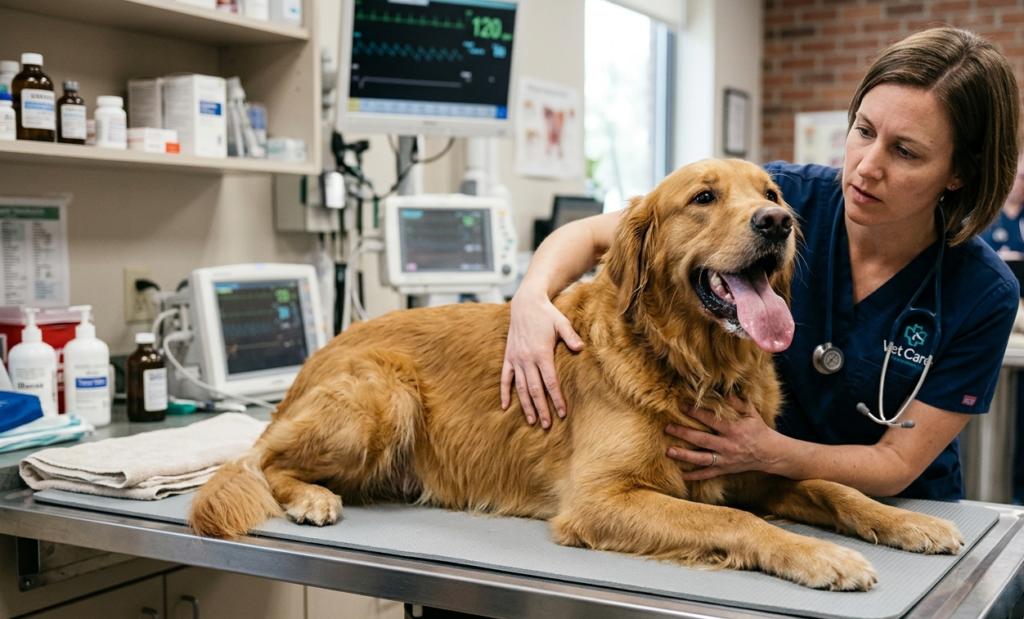
Occasional fast breathing during sleep is normal. You should contact your vet if you notice any of the following alongside fast dog breathing:
- Breathing rate stays above 35 to 40 breaths per minute while fully at rest.
- Gums or tongue look pale, blue, or grey instead of pink.
- Your dog struggles to wake up or seems confused after waking.
- Breathing sounds wheezy, rattly, or is paired with coughing.
- Your dog stretches its neck out or breathes with an open mouth while lying down.
- The fast breathing lasts longer than a few minutes and does not settle.
These signs can point to a heart or lung problem that needs prompt medical attention. Trust your instincts. You know your dog’s normal patterns better than anyone else.
How to Check Your Dog’s Breathing Rate at Home
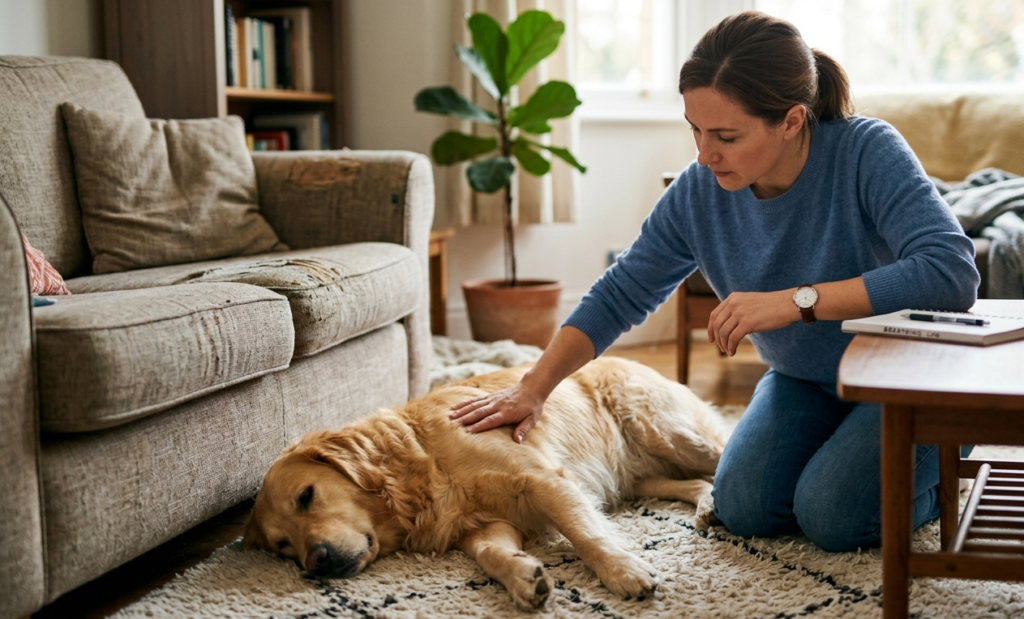
Learning to check a dog’s breathing rate takes less than a minute and can give you real peace of mind. Here is a simple method:
- Wait until your dog is fully asleep or resting calmly, not panting from heat or activity.
- Watch or place a hand gently on the chest.
- Count each full rise and fall of the chest for 15 seconds.
- Multiply that number by 4 to get breaths per minute.
- Repeat this every few weeks, so you know what is normal for your dog specifically.
Keeping a simple log on your phone can help you and your vet spot patterns over time, especially if your dog has a known heart or lung condition.
Tips to Help Your Dog Breathe Easier at Night
- Keep the sleeping area cool and well ventilated.
- Choose a breathable bed instead of thick, heavy blankets.
- Maintain a healthy weight through diet and regular movement.
- Avoid heavy exercise or exciting play right before bedtime.
- Schedule regular vet checkups, especially for senior dogs or flat-faced breeds.
- Reduce stress with a calm, consistent bedtime routine.
For dogs with existing snoring or breathing concerns, our guide on common dog sleep problems offers more detailed, breed-specific advice. If you are not sure whether your dog’s symptoms need a vet visit, our dog health warning signs article can help you decide. And if your dog snores loudly along with fast breathing, take a look at our piece on why dogs snore for extra context.
According to the <cite index=”0-1″>American College of Veterinary Internal Medicine, a normal resting respiratory rate in dogs and cats falls between 15 and 30 breaths per minute</cite>, which lines up closely with the ranges vets use in everyday practice.
Frequently Asked Questions
Why does my dog breathe fast while sleeping but seems fine?
This is usually caused by REM sleep and dreaming. Fast dog breathing during this stage is short, comes with twitching or soft sounds, and stops naturally within a few minutes.
Is it normal for a dog to breathe fast every time they sleep?
Occasional fast breathing tied to dreams is normal. If it happens every single time your dog sleeps and does not settle, or if it is paired with coughing or weakness, a vet visit is a good idea.
How many breaths per minute is too fast for a sleeping dog?
Most vets consider anything consistently above 35 to 40 breaths per minute while fully at rest to be worth checking, especially in older dogs or those with known heart conditions.
Can anxiety cause fast breathing in dogs while sleeping?
Yes. Stress and anxious dreams can raise breathing rate during sleep. Dogs dealing with separation anxiety or recent stressful events may show this pattern more often.
Should I wake my dog if they are breathing fast in their sleep?
Generally, no. If your dog is simply dreaming, waking them can cause confusion or startled behavior. Only intervene if they seem to be in distress, cannot be roused, or show signs like blue gums.
What breeds are more likely to have fast breathing during sleep?
Flat faced breeds such as Pugs, French Bulldogs, and Boxers often breathe faster due to their shorter airways. Senior dogs and breeds prone to heart disease also need closer monitoring.
When is a fast dog breathing an emergency?
It becomes an emergency if your dog cannot wake up normally, gums turn pale or blue, breathing is paired with visible distress, or the fast rate does not stop after several minutes of full rest. Seek emergency vet care right away in these cases.
Final Thoughts
Fast dog breathing during sleep is often nothing more than a dream in progress. Dogs move through sleep cycles just like we do, and quick breaths, twitches, and soft sounds are usually a sign of a healthy, active mind at rest. Still, it pays to know your dog’s normal breathing rate, watch for warning signs, and act quickly if something feels off.
If you are ever unsure whether your dog’s breathing pattern is normal, do not wait it out. A quick call to your vet can bring peace of mind and catch a problem early, when it is easiest to treat.

Puppy Obedience Training 101: A Beginner’s Guide to Raising a Well-Mannered Dog

Common Dog Behavior Problems and How to Fix Them

Puppy Commands for Off-Leash Safety: What Every Owner Needs

Best Age to Start Leash Training a Puppy for Calm Behavior

How to Fix Puppy Behavior Using Gentle Training

puppy-obedience-training-commands/Puppy Training Tips: A Complete Step-by-Step Guide for Beginners

Puppy Obedience Training 101: A Beginner’s Guide to Raising a Well-Mannered Dog
Common Dog Behavior Problems and How to Fix Them
Puppy Commands for Off-Leash Safety: What Every Owner Needs
Best Age to Start Leash Training a Puppy for Calm Behavior
How to Fix Puppy Behavior Using Gentle Training