
Dog Training
Best Way to Teach a Dog to Stay Calm Around Strangers

Quick Summary:
The best way to teach a dog to stay calm around strangers is through slow, positive exposure paired with rewards for calm behavior. Start at a distance where your dog feels safe, reward relaxed body language, and slowly move closer over several sessions.
teach a dog With patience and consistency, most dogs learn to stay calm around new people within a few weeks. If your dog barks, jumps, hides, or gets overly excited every time someone new walks up, you are not doing anything wrong as an owner.
Many dogs simply were not taught how to handle new people calmly. The good news is that you can teach a dog to stay calm around strangers at almost any age, whether you have a young puppy or an older rescue dog.
In this guide, we will walk through simple, proven steps that really work, along with common mistakes to avoid.
Why Some Dogs Struggle to Stay Calm Around Strangers

Before jumping into training, it helps to understand why this happens in the first place. Common reasons include:
- Limited exposure to new people as a puppy
- A past scary experience with a stranger
- Naturally shy or nervous temperament
- Too much excitement instead of fear (overly friendly dogs can struggle too)
- Not enough practice in calm, controlled settings
Knowing the root cause helps you choose the right approach. A fearful dog needs a very different pace than an overly excited one, even though the end goal is the same.
Signs Your Dog Is Not Comfortable Around Strangers
Watch for these signals before and during a greeting:
- Stiff body or freezing in place
- Tail tucked low or tucked between the legs.
- Excessive barking or lunging on the leash
- Turning away or trying to hide behind you
- Jumping, spinning, or whining from over-excitement
Reading these signs early lets you step in before your dog becomes too worked up to listen.
Best Way to Teach a Dog to Stay Calm Around Strangers
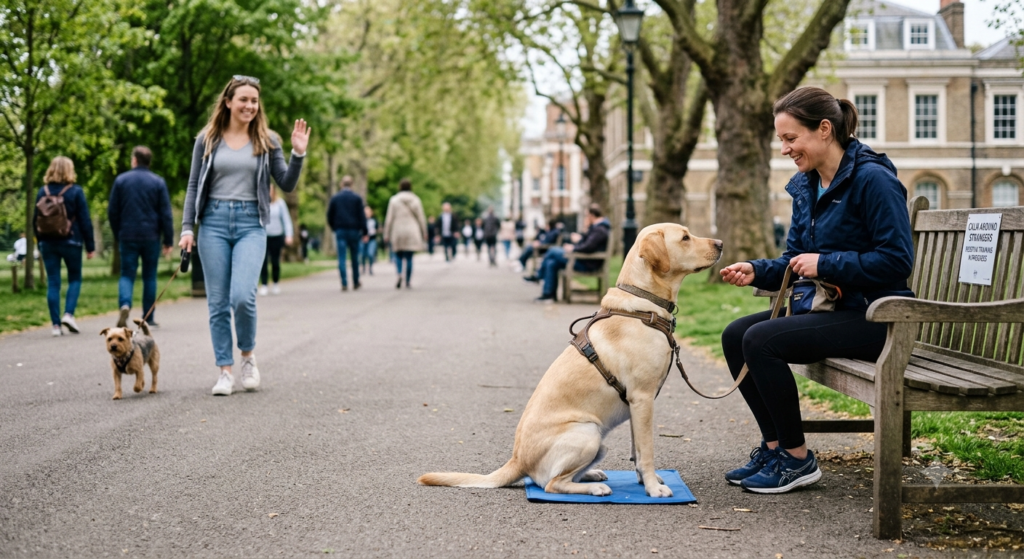
teach a dog Here is a simple, step-by-step method that works for most dogs, whether they are fearful or overly excited.
Step 1: Start at a Safe Distance
teach a dog Begin training somewhere your dog can see a stranger without reacting. This might be across a parking lot or from inside your car. The goal is for your dog to notice the person and stay relaxed.
Step 2: Reward Calm Behavior Immediately
teach a dog The moment your dog notices a stranger and stays quiet or relaxed, mark it with a word like “yes” and give a treat right away. This teaches your dog that calm behavior around new people leads to good things.
Step 3: Slowly Decrease the Distance
teach a dog Over several short sessions, move a little closer to strangers while continuing to reward calm behavior. If your dog starts to bark, whine, or tense up, you have moved too fast. Simply add more distance and try again.
Step 4: Practice Controlled Greetings
teach a dog Once your dog can stay calm at a closer distance, practice short, structured greetings with one calm adult at a time. Keep the greeting brief and end it before your dog gets too excited or nervous.
Step 5: Add Real-World Practice
teach a dog Slowly introduce new settings, such as a quiet park, a friend’s porch, or a pet-friendly store. This is where you fully teach a dog to stay calm around strangers in situations they will actually face day to day.
If your dog struggles to follow basic cues during this process, going back to the basics can help. Our guide on obedience training for dogs covers simple commands that make every step of this training much easier.
Best Age to Start This Training
You can begin teaching a dog to stay calm around strangers at almost any age, but timing does matter.
Puppies (8 to 16 weeks):
This is the ideal window for socialization. Puppies are naturally more open to new people during this stage, so calm, positive exposure now builds lifelong confidence.
Adolescent dogs (6 months to 2 years):
Many dogs go through a fear period during adolescence, so extra patience and slower steps are often needed here.
Adult and senior dogs:
It is never too late to start. Adult dogs may need more repetition, but consistent training still works well.
For a deeper look at how age affects training success, check out our full guide on the best age to start dog training.
Common Mistakes That Make Stranger Anxiety Worse
Avoid these common training mistakes:
- Forcing interactions. Never force your dog to approach or be touched by a stranger before they are ready.
- Punishing fear or barking. This often increases anxiety instead of reducing it.
- Moving too fast. Rushing the process is one of the biggest reasons for training stalls.
- Skipping daily practice. Short, consistent sessions work far better than one long session per week.
- Ignoring body language. Missing early stress signals can lead to a bigger reaction later.
If you notice your dog struggling with commands during this process, our article on expert dog training tips and techniques offers additional strategies for building focus and consistency.
Does Breed or Temperament Affect Training Progress
Every dog is different, and some breeds naturally take a bit longer to warm up to new people. Guardian breeds and naturally reserved breeds may need more repetitions before they feel at ease. Highly social breeds may struggle instead with excitement rather than fear, which means the training goal shifts from building confidence to teaching impulse control.
Regardless of breed, the core method to teach a dog to stay calm around strangers stays the same. What changes is the pace. A naturally cautious dog may need weeks of distance work before any greetings happen, while a bold, friendly dog might be ready for greetings much sooner but need more work on staying seated and calm instead of jumping.
Personality also plays a role. A dog that had a rough start in life, such as a rescue with an unknown history, may need extra patience and a slower plan built around trust first, training second.
Indoor Training Exercises That Help Too
Not all practice needs to happen outside. Some of the most useful training happens right inside your home.
Doorbell training.
Practice having your dog sit calmly when the doorbell rings, using treats to reward quiet, settled behavior instead of barking or rushing the door.
Delivery drop-offs.
Use real delivery visits as free training opportunities. Toss a treat away from the door when someone approaches, then reward your dog for staying calm.
Invite one calm friend at a time.
Practicing with a single relaxed visitor is much easier than a group, and it lets your dog build confidence step by step.
Use a leash indoors during visits.
This gives you gentle control without needing to grab or restrain your dog, which can create more stress.
These small, everyday moments add up quickly and often speed up outdoor progress as well, since your dog gets more total reps of calm behavior around new people.
What to Do If Your Dog Regresses
It is normal for progress to slow down or even backslide sometimes, especially after a stressful event like a bad encounter or a long break from practice. If this happens:
- Go back to an easier distance or setting for a few sessions.
- Avoid pushing through a bad reaction, since this can add stress.
- Keep sessions short and end on a successful note.
- Stay consistent, since irregular practice often causes setbacks.
Regression does not mean training failed. It usually just means your dog needs a bit more time at an easier step before moving forward again.
How Long Does It Take to Teach a Dog to Stay Calm Around Strangers
Most dogs show noticeable improvement within two to four weeks of consistent, short training sessions. Dogs with deeper fear or past trauma may take a few months. The key is steady, gentle progress rather than rushing toward a finish line.
Extra Tips to Speed Up Progress
- Ask visitors to ignore your dog at first and let your dog approach on their own terms.
- Keep a few high-value treats on hand for surprise stranger encounters.
- Use a calm, confident tone of voice, since dogs pick up on your energy.
- Practice in different locations so your dog learns the skill generalizes everywhere, not just at home.
- Consider a certified trainer if progress stalls after several weeks.
According to the American Kennel Club, dogs that are fearful of strangers respond best to gradual desensitization paired with positive reinforcement, rather than being pushed into direct contact too soon. You can read their full expert guide on helping a dog be less fearful of strangers for additional science-backed tips.
Frequently Asked Questions
What is the best way to teach a dog to stay calm around strangers?
The best way is gradual exposure combined with rewards. Start at a distance where your dog feels safe, reward calm behavior, and slowly reduce the distance over multiple sessions.
Why is my dog suddenly scared of strangers?
This can happen due to a lack of early socialization, a scary experience, or simply reaching an adolescent fear period. A vet visit can also help rule out pain as a hidden cause.
Can an older dog still learn to be calm around strangers?
Yes. While puppies learn socialization skills faster, adult and senior dogs can absolutely learn to stay calmer with consistent, positive training.
How do I stop my dog from jumping on strangers out of excitement?
Teach an alternative behavior, like sitting for greetings, and only allow attention from strangers once your dog is calm. Reward the calm behavior every time.
Should I let strangers pet my dog while training?
Only once your dog shows relaxed body language and chooses to approach. Never force contact, since this can undo progress and increase fear.
Does socialization class help with stranger anxiety?
Yes, a well-run puppy or dog socialization class can help, especially when it is structured, calm, and supervised by an experienced trainer.
What treats work best for stranger training?
Small, soft, high-value treats work best since they can be given quickly without breaking focus. Cooked chicken, cheese cubes, or training treats are popular choices because dogs tend to find them more motivating than regular kibble.
Final Thoughts
Learning how to teach a dog to stay calm around strangers takes patience, but it is very achievable with the right approach. Start slow, reward calm behavior, and avoid rushing the process. Whether your dog is fearful or simply overexcited, consistent practice will help them feel more confident around new people over time.
Remember that every dog progresses at their own pace, and small daily wins matter far more than one big breakthrough session. Celebrate the small moments, like a calm glance at a stranger instead of a bark, since these are the building blocks of lasting change.
If this guide helped you, explore more of our training resources to keep building a calm, confident, and well-behaved dog.

Puppy Obedience Training 101: A Beginner’s Guide to Raising a Well-Mannered Dog

Common Dog Behavior Problems and How to Fix Them

Puppy Commands for Off-Leash Safety: What Every Owner Needs

Best Age to Start Leash Training a Puppy for Calm Behavior

How to Fix Puppy Behavior Using Gentle Training

puppy-obedience-training-commands/Puppy Training Tips: A Complete Step-by-Step Guide for Beginners

Puppy Obedience Training 101: A Beginner’s Guide to Raising a Well-Mannered Dog
Common Dog Behavior Problems and How to Fix Them
Puppy Commands for Off-Leash Safety: What Every Owner Needs
Best Age to Start Leash Training a Puppy for Calm Behavior
How to Fix Puppy Behavior Using Gentle Training