
Dog Training
Common Dog Behavior Problems and How to Fix Them


Dog Behavior Problems Every dog owner hits a point where their dog does something that drives them crazy nonstop barking at the window, a chewed-up couch cushion, or a growl that comes out of nowhere. These moments can feel frustrating and even a little scary, especially when you don’t understand why they’re happening.
The truth is, almost every dog behavior problem has a clear, identifiable cause. Dogs don’t misbehave out of spite; they act out because a need isn’t being met, they haven’t been taught what’s expected, or something in their environment is triggering a reaction they don’t know how to handle. Once you understand what’s actually driving the behavior, fixing it becomes far more manageable.
This guide covers the three most common dog behavior problems: excessive barking, destructive chewing, and aggression along with the real reasons behind them and practical, step-by-step ways to address each one.
Why Understanding the “Why” Matters

Dog Behavior Problems Before jumping into solutions, it’s worth pausing on one important idea: punishment alone rarely fixes behavior problems, because it doesn’t address the underlying cause. A dog that barks out of separation anxiety won’t stop just because you yell “quiet” the anxiety is still there.
A dog that chews out of boredom will find something else to destroy if the boredom isn’t solved.This is the same principle behind good obedience training: teaching a dog what to do and making that the easiest and most rewarding choice works far better than only punishing what you don’t want. Keep this in mind as you work through each behavior below.
Problem #1: Excessive Barking
Dog Behavior Problems Barking is a normal, healthy way for dogs to communicate when it becomes constant, disruptive, or seemingly impossible to interrupt.
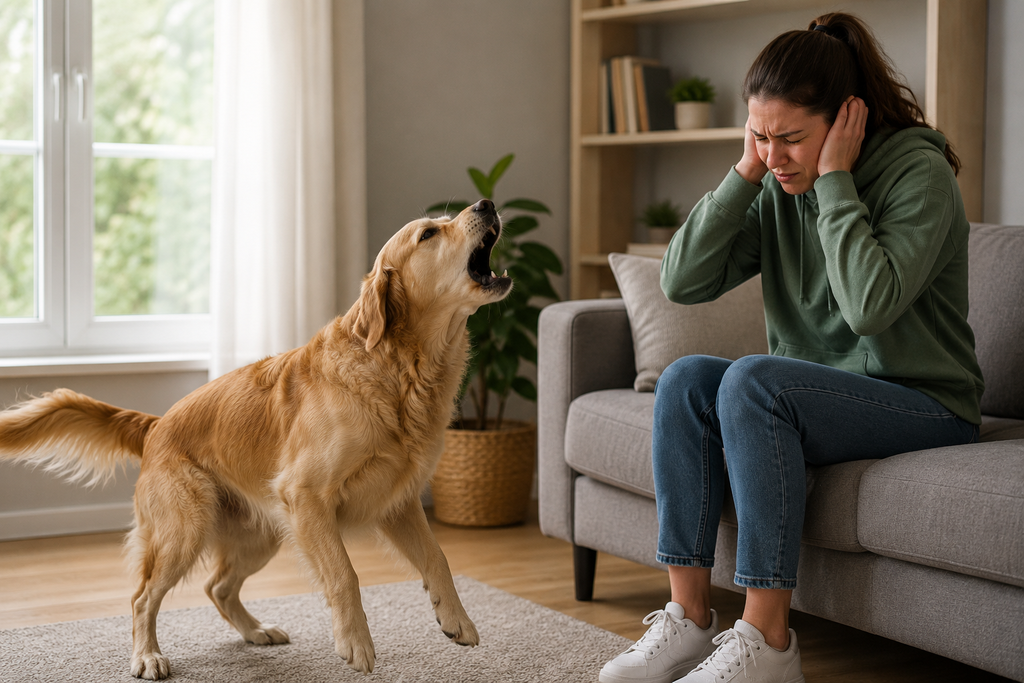
Common Causes of Excessive Barking
- Boredom or lack of exercise. A dog with pent-up energy and nothing to do often turns to barking for stimulation.
- Attention-seeking. If barking has ever gotten a reaction even a scolding your dog may have learned that barking works.
- Territorial or alert barking. Dogs bark at people, animals, or vehicles passing by their home or yard, especially if they can see the trigger clearly.
- Separation anxiety. Some dogs bark excessively only when left alone, often paired with pacing, whining, or destructive behavior.
How to Fix It
- Rule out unmet needs first. Make sure your dog is getting enough physical exercise and mental stimulation daily. A tired dog barks far less. Our guide on how long to walk your puppy is a useful starting point even for adult dogs.
- Remove visual triggers. If your dog barks at everything passing the window, closing blinds or using frosted window film can cut down on alert barking significantly.
- Teach a “quiet” cue. Let your dog bark two or three times, then say “quiet” and reward the moment they stop, even briefly. Repeat consistently, gradually waiting longer before rewarding.
- Never reward barking, even accidentally. Responding to barking even to tell your dog “no” can reinforce it if your dog is seeking attention. Reward silence instead.
According to the AKC, identifying and reducing your dog’s exposure to specific barking triggers, combined with reward-based training for quiet behavior, is one of the most effective long-term approaches to reducing excessive barking.
Problem #2: Destructive Chewing

Dog Behavior Problems Chewing is one of the most common complaints among dog owners, and it’s often mistaken for “bad behavior” when it’s usually a completely natural instinct that hasn’t been redirected properly.
Common Causes of Destructive Chewing
- Teething, in puppies under six months old, causes a strong physical need to chew.
- Boredom or excess energy, especially in dogs left alone for long stretches without enrichment.
- Anxiety, particularly separation anxiety, which often shows up as chewing on doors, windowsills, or furniture near exits.
- Lack of appropriate chew options, which leaves your dog to choose whatever’s available shoes, furniture, or cables.
How to Fix It
- Puppy-proof key areas. Keep shoes, cords, and valuable items out of reach while your dog is still learning what’s okay to chew.
- Provide the right chew toys. Offer a variety of textures rubber, rope, and edible chews and rotate them regularly to keep your dog interested.
- Redirect, don’t just scold. If you catch your dog chewing something inappropriate, calmly swap it for an acceptable chew toy and praise them once they take it.
- Increase exercise and mental stimulation. Puzzle feeders, short training sessions, and daily walks reduce the excess energy that often fuels destructive chewing.
- Crate train for unsupervised time. A properly introduced crate gives your dog a safe space where they can’t access destructive temptations when you’re not watching.
If your dog is still a puppy, chewing is often closely tied to the same developmental stage covered in our complete puppy training guide, which walks through what’s normal at each age and what to do about it.
Problem #3: Aggression
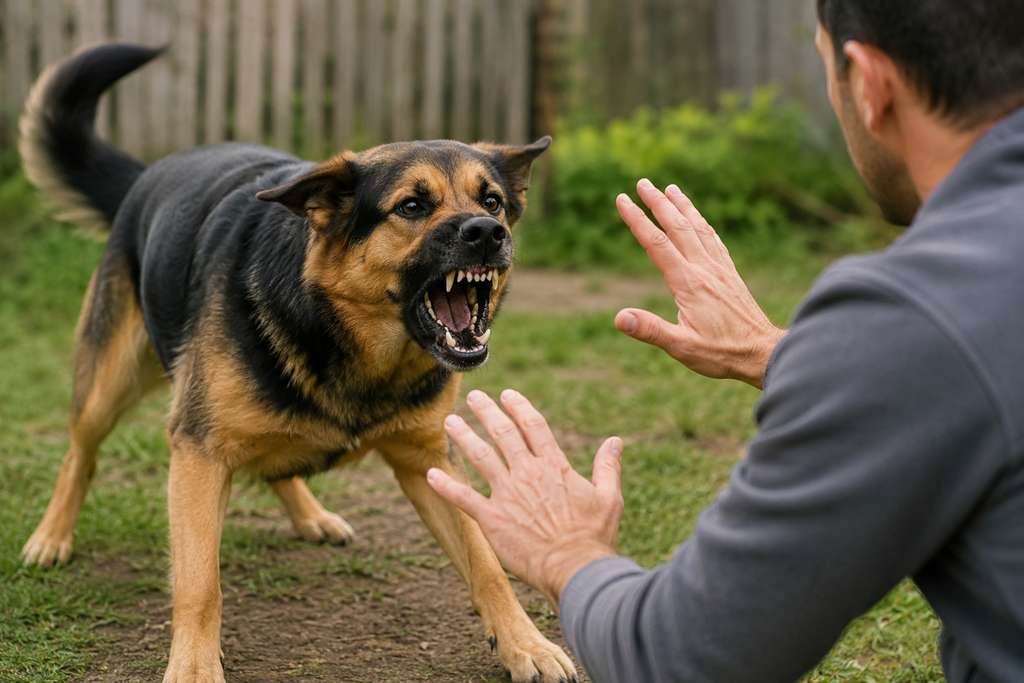
Dog Behavior Problems Aggression is the most serious behavior problem dogs display, and it’s also the one owners most often misread. Aggression isn’t a single behavior, it’s a spectrum that includes growling, snapping, lunging, showing teeth, and biting, and it almost always starts with a warning before escalating.
Common Causes of Aggression
- Fear. Most aggression toward people or other dogs comes from fear, not dominance a dog that feels cornered or threatened may react defensively.
- Resource guarding. Some dogs become aggressive when they feel their food, toys, or space is at risk of being taken.
- Pain or discomfort. A dog that suddenly becomes snappy, especially when touched in a specific area, may be dealing with an underlying medical issue.
- Poor or limited socialization. Dogs who weren’t exposed to a variety of people, animals, and environments as puppies are more likely to react fearfully to unfamiliar situations.
- Territorial behavior. Dogs may act aggressively to protect their home, yard, or family from perceived intruders.
How to Fix It
Learn to recognize early warning signs.
Stiffening, a fixed stare, lip curling, and low growls are all warnings that come before a bite. Respecting these signals instead of punishing them by punishing a growl often teaches a dog to skip the warning and go straight to biting.
Avoid forcing interactions.
Dog Behavior Problems Never force your dog to approach a person, another dog, or a situation that makes them visibly uncomfortable.
Work on socialization early
. Gradual, positive exposure to new people, animals, and environments especially during puppyhood significantly reduces fear-based aggression later in life. Our guide on how to socialize a puppy covers this in detail.
Address resource guarding directly.
Teach a solid “leave it” and practice trading a low-value item for a high-value treat, so your dog learns that giving something up leads to something better, not loss.
Rule out medical causes.
Any sudden change in aggression, especially in a previously calm dog, deserves a veterinary checkup before assuming it’s purely behavioral.
Get professional help for anything beyond mild cases.
Aggression involving bites, or aggression toward children, should always involve a certified professional dog trainer or veterinary behaviorist rather than being handled through general advice alone.
The ASPCA notes that aggression is the number-one reason pet parents seek professional behavioral help, and that recognizing the warning sequence from stillness and staring at growling and snapping is key to intervening before a bite occurs.
When to Call in a Professional
Most barking and chewing problems can be improved with consistency at home, but some situations call for outside help:
- Aggression involving an actual bite or repeated snapping
- Anxiety severe enough to cause self-injury or property destruction
- Behavior that hasn’t improved after several weeks of consistent training
- Any behavior change that seems sudden or out of character
A certified trainer or veterinary behaviorist can identify patterns that are difficult to spot from the inside, and rule out medical causes that mimic behavioral ones.
Prevention Starts Early
Dog behavior problems in adult dogs trace back to gaps in early training and socialization. Starting with solid foundations like teaching basic commands and consistent obedience training techniques makes it far less likely that barking, chewing, or fear-based reactions will turn into long-term habits.
Even if your dog is already an adult, it’s never too late to reinforce these fundamentals; older dogs are just as capable of learning as puppies, provided you’re patient and consistent.
Final Thoughts
Barking, chewing, and aggression can all feel overwhelming in the moment, but none of them mean your dog is “bad” or beyond help. Every one of these behaviors is your dog communicating an unmet need, an untrained habit, or a fear that hasn’t been addressed yet and every one of them can improve with patience, consistency, and the right approach.
The fastest progress usually comes from combining three things: identifying the real cause instead of just reacting to the behavior, meeting your dog’s basic needs for exercise and mental stimulation, and reinforcing the behavior you do want rather than only punishing what you don’t.
Dog Behavior Problems Start small, stay consistent, and don’t hesitate to bring in a professional if progress stalls. Most dogs, regardless of age or history, can learn to be calmer, more confident companions with the right support.
Frequently Asked Questions
Can dog behavior problems be fixed without professional help?
Many mild to moderate issues, like occasional barking or chewing, can improve significantly with consistent training at home. More serious issues, especially aggression involving bites, are best handled with a certified trainer or veterinary behaviorist.
Is punishment effective for stopping bad behavior?
Dog Behavior Problems Punishment often suppresses a behavior temporarily without addressing why it’s happening, and it can worsen fear-based issues like aggression. Reward-based training that addresses the root cause tends to produce longer-lasting results.
How long does it take to fix a behavior problem?
Dog Behavior Problems This varies widely depending on the issue and how long it’s been reinforced. Simple attention-seeking barking might improve within a couple of weeks, while anxiety-based or aggression-related issues can take months of consistent work.
Can older dogs still be trained out of bad habits?
Yes. While puppies tend to learn new habits faster, adult and senior dogs are fully capable of learning it just may take more patience and repetition to override an established pattern.
Want to build a stronger training foundation?
Start with our complete puppy training guide or learn how to teach essential commands.

Puppy Obedience Training 101: A Beginner’s Guide to Raising a Well-Mannered Dog

Common Dog Behavior Problems and How to Fix Them

Puppy Commands for Off-Leash Safety: What Every Owner Needs

Best Age to Start Leash Training a Puppy for Calm Behavior

How to Fix Puppy Behavior Using Gentle Training

puppy-obedience-training-commands/Puppy Training Tips: A Complete Step-by-Step Guide for Beginners

Puppy Obedience Training 101: A Beginner’s Guide to Raising a Well-Mannered Dog
Common Dog Behavior Problems and How to Fix Them
Puppy Commands for Off-Leash Safety: What Every Owner Needs
Best Age to Start Leash Training a Puppy for Calm Behavior
How to Fix Puppy Behavior Using Gentle Training