
Dog Training
Tips for Training an Older Dog to Learn New Skills at Any Age


Training your dog promotes excellent behavior and strengthens your relationship, whether you recently got an adult dog or your dog needs a refresher on fundamental commands.
According to common opinion, mature dogs can be trained. Older dogs often exhibit greater self-control and can concentrate for longer periods, even though they may be less impressionable than puppies. When you first obtained your dog, you probably spent a lot of time teaching them new behaviors and household rules.
Training the older dog may not seem essential, but there are many benefits to maintaining or extending your senior dog’s training program.
Tips for Training an Older Dog
older dogs may experience health issues, including joint pain, eyesight or hearing loss, or a deterioration in cognitive function that restricts their capacity to learn. The good news is that older dogs may still learn and appreciate new things, but this may imply that you should refrain from attempting to teach them more strenuous exercises or feats.
Is it possible to teach an elderly dog new skills? Yes, training an older dog only requires more patience and time.
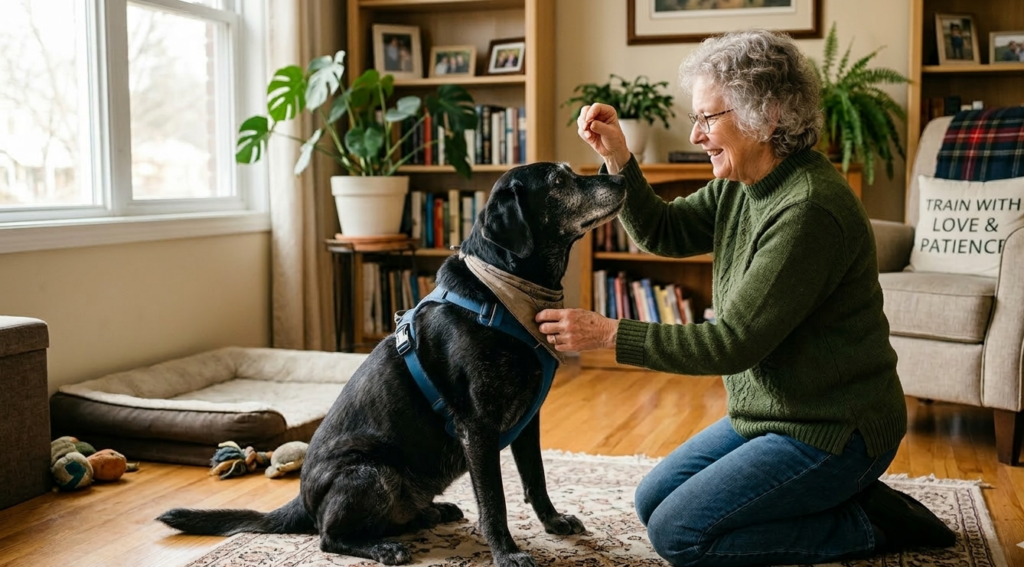
Prepare Older Dog For Training
It’s just as important to begin training with the correct mindset as it is to the training itself. Be ready to take your time and savor the bond of friendship that comes with training an older adult dog.
Be Patient
older dog training is Keep in mind that while learning a new habit or trick, older dogs may require twice as much time and exposure as younger dogs.
Time and Place Matter In Older Dog Training
Set up short training sessions around the same time every day. Try staying in the same training area for ten to twenty minutes each time so your dog learns to link the area with training and knows what you expect. Before children return from school, pick a location with minimal distractions, such as the backyard.
Exercise First
A walk or a game of fetch before the training session will help dogs that struggle to focus and are easily distracted release pent-up energy.
Tricks For Older Dog Training
While learning new tricks is fun for dogs of all ages, there are certain unique factors to take into account while working with older dogs. Making the most of your training time is possible with the following advice.
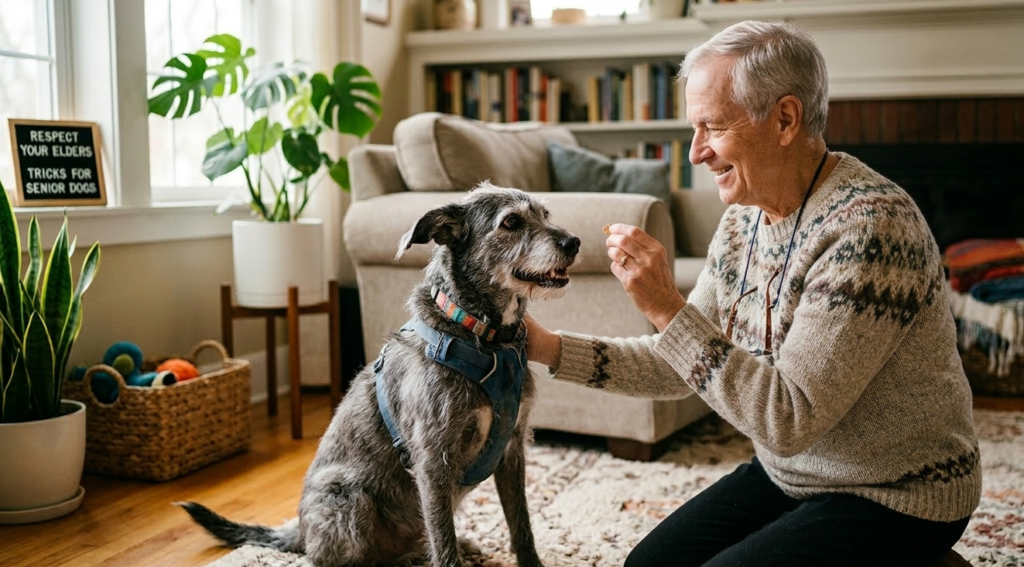
1. Comfort Comes First
Older dogs may require certain environmental concessions to ensure they’re giving it their all, but young, energetic puppies can train almost anyplace. Choose an area that is well-lit and free of distractions because an elderly dog may have diminished hearing or vision.
Additionally, if you’re working on cues that call for intricate footwork or getting up and down from the ground, bear in mind that those old bones might need some extra traction.
2. Consider What’s Possible In Older Dog Training
The older dog may not have the same energy in her step because of aches and pains, even though their spirit may be willing. When preparing your lesson plan, keep in mind that your
older people may not feel comfortable performing energetic stunts or dancing on their hind legs.
Try to concentrate on low-impact, non-physically taxing activities like a leisurely spin, shake, or wave.
3. Watch the Time
Due to their attention spans, pups require brief training sessions, but older dogs may also benefit from brief instruction. Even if you’re teaching your dog a simple skill, it will still challenge their brain in the greatest way possible because learning new abilities requires mental energy.
Give your dog time to relax and recharge after training, then schedule another session for later in the day.
4. Choose Treats Wisely
Puppies burn calories quickly, but older, less physically active dogs are more likely to gain weight if they consume too many goodies. Choose rewards that are enticing but not overly calorie-dense for senior dog training.
Does Your Adult Dog Need Obedience Training?
Think about the severity of your dog’s issue when determining whether or not they require obedience training. For instance, you may or may not want to invest time and effort in resolving a problem if your dog is typically well-behaved but occasionally refuses to sit still when you ask them to.
However, it is advised that you explore dog obedience training for mature dogs that exhibit harmful or destructive behavior.
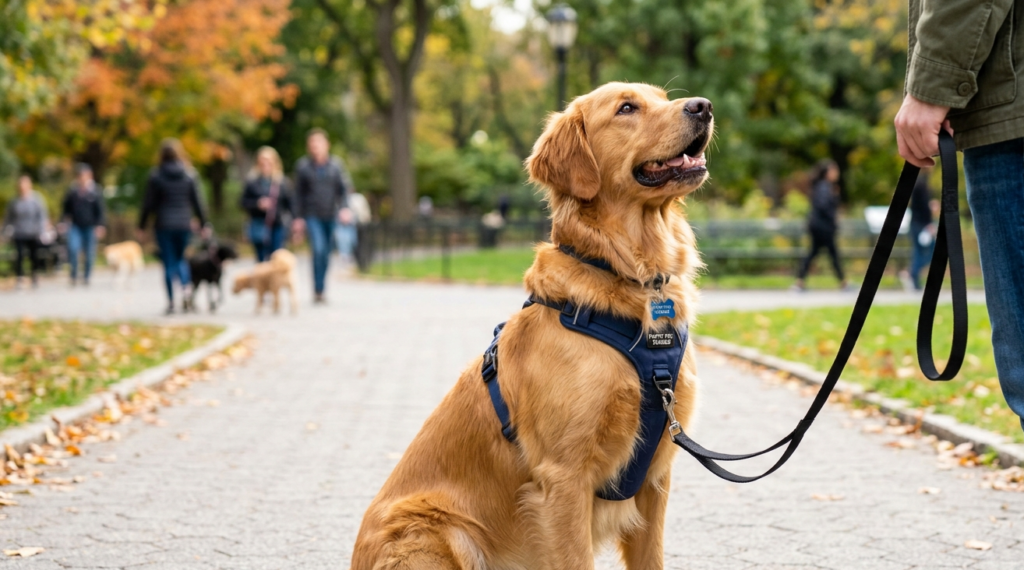
Here are common examples of troublesome behaviors that can be improved through training:
Leash-pulling. Most dogs don’t naturally walk gently on a leash at your side (especially if your adult dog never learned how to do it). However, they can learn to walk without pulling with the right instruction.
Digging. A dog that enjoys digging may cause damage to your yard. You might be able to stop the habit by making sure they get adequate exercise and mental stimulation.
Aggression. When it comes to other animals, family members, or strangers, an aggressive dog may act in a threatening manner. If your pet exhibits aggression, they probably require both training and assistance from an animal behaviorist. To rule out any underlying medical conditions, get in touch with your veterinarian.
How do you say “I love you” in dog language?
Dogs don’t speak human words, but they show love through body language, behavior, and trust. If you want to say “I love you” in dog language, you do it in ways dogs naturally understand. Here are the main ways dogs communicate love and how you can respond in their language.
1. Soft Eye Contact
Dogs show affection through gentle eye contact. When a dog looks at you with relaxed eyes and a calm body, it means they trust and love you.
You can slowly blink or look at your dog softly to return the feeling.
2. Calm Physical Touch
Dogs understand love through gentle petting. Petting their chest, shoulders, or behind the ears tells them they are safe and cared for.
3. Spending Quality Time
Dogs value time together more than anything. Walking, playing, or simply sitting with your dog is a powerful way to say “I love you.”
4. Positive Voice Tone
Even though dogs don’t understand every word, they recognize the tone of voice. A soft, happy tone communicates affection and comfort.
5. Training and Clear Communication
Training your dog with patience and rewards shows respect and care. Consistent commands and praise help dogs feel secure and loved.
6. Leaning or Cuddling
When a dog leans on you or cuddles, it is their way of saying, “I trust you and love you.” Responding with calm affection strengthens your bond.
7. Providing Safety and Care
Feeding, grooming, protecting, and taking care of your dog’s needs is the deepest way to express love in dog language.
How to teach a dog a new skill?
Teaching a dog a new skill requires patience, consistency, and positive reinforcement. Dogs learn best when training is simple, rewarding, and enjoyable. Here are the key steps to teach your dog a new skill effectively.
1. Start with a Clear Goal
First, decide what skill you want your dog to learn, such as sit, stay, shake hands, or fetch. Focus on one command at a time so your dog does not get confused.
2. Use Positive Reinforcement
Reward your dog with treats, praise, or toys whenever they perform the correct behavior. Dogs quickly learn that doing the right action brings a reward.
3. Break the Skill into Small Steps
Complex skills should be taught step-by-step. For example, if you are teaching “roll over,” start by teaching your dog to lie down first.
4. Use Short Training Sessions
Dogs learn better in short sessions of 5–10 minutes. Training too long can make them bored or distracted.
5. Be Consistent with Commands
Always use the same word and hand signal for a command. Consistency helps your dog understand exactly what you want.
6. Practice in a Quiet Environment
Start training in a place without distractions. Once your dog understands the skill, practice in different environments.
7. Be Patient and Encourage Your Dog
Every dog learns at a different speed. Stay calm, encourage your dog, and celebrate little progress.
What are the 7 most important dog commands?
1. Sit
Sit is usually the first command dogs learn. It helps calm an excited dog and makes it easier to control their behavior in many situations, such as greeting people or waiting for food.
2. Stay
The Stay command teaches your dog to remain in one place until you give another signal. This command is important for safety, especially in busy areas or near roads.
3. Come
Come ” (also called recall) tells your dog to return to you immediately. This command is essential if your dog runs too far away or gets into a dangerous situation.
4. Down
The Down command asks your dog to lie down. It helps calm your dog and is useful when you want them to relax or settle.
5. Heel
Heel teaches your dog to walk calmly beside you without pulling on the leash. This makes daily walks safer and more enjoyable.
6. Leave It
The Leave it command stops your dog from picking up dangerous or unwanted items like trash or harmful food.
7. No
The No command tells your dog to stop unwanted behavior, such as jumping, biting, or chewing on furniture.
What are the 4 stages of dog learning?
1. Acquisition Stage
This is the first stage where the dog learns a new command or behavior. The trainer shows the dog what to do using treats, praise, or toys as rewards. At this stage, the dog may make mistakes because the skill is still new.
2. Fluency Stage
n this stage, the dog begins to perform the command more smoothly and quickly. With regular practice, the dog understands what the command means and responds more reliably.
3. Generalization Stage
Here, the dog learns that the command applies in different places and environments, not just in the training area. For example, a dog that can sit at home should also be able to sit in the park or around other people.
4. Maintenance Stage (Keeping the Skill Strong)
This is the final stage where the dog remembers and consistently performs the command over time. Occasional practice and rewards help maintain the behavior so the dog does not forget it.
Conclusion
Training an older dog may require a little more patience, but it is absolutely possible for dogs to learn new skills at any age. By choosing the right time and place for training, using positive reinforcement, and focusing on what your older dog can comfortably do, you can make the learning process enjoyable and successful. Consistent practice, clear commands, and short training sessions help adult dogs understand new behaviors more easily.

Puppy Obedience Training 101: A Beginner’s Guide to Raising a Well-Mannered Dog

Common Dog Behavior Problems and How to Fix Them

Puppy Commands for Off-Leash Safety: What Every Owner Needs

Best Age to Start Leash Training a Puppy for Calm Behavior

How to Fix Puppy Behavior Using Gentle Training

puppy-obedience-training-commands/Puppy Training Tips: A Complete Step-by-Step Guide for Beginners

Puppy Obedience Training 101: A Beginner’s Guide to Raising a Well-Mannered Dog
Common Dog Behavior Problems and How to Fix Them
Puppy Commands for Off-Leash Safety: What Every Owner Needs
Best Age to Start Leash Training a Puppy for Calm Behavior
How to Fix Puppy Behavior Using Gentle Training