
Puppy Commands
Puppy Clicker Training Step-by-Step: Build a Strong Bond With Your Puppy


Puppy clicker training step-by-step is one of the most effective and science-based ways to teach your puppy while building a strong, lasting bond. This positive reinforcement method uses a small clicking sound to mark the exact moment your puppy performs the desired behavior, followed by a reward.
By starting with clear communication, your puppy quickly understands what you want, making training faster, more enjoyable, and stress-free for both of you. Puppy clicker training is especially helpful for beginners because it removes confusion and replaces it with consistency.
Instead of relying on punishment or repeated commands, you guide your puppy with clear signals and rewards. This approach not only helps teach basic commands like “sit,” “stay,” and come,” but also improves your puppy’s focus, confidence, and willingness to learn.
Over time, your puppy begins to offer good behaviors naturally because they associate training with positive experiences. Another important benefit of puppy clicker training is how it strengthens your relationship. Each training session becomes a moment of trust, where your puppy learns to rely on you for guidance and rewards.
What is puppy Clicker Training?
Puppy Clicker training is a reward-based technique that helps your puppy understand which actions are desired, using a clicking sound to signal correct behavior, followed by a treat. This clear method makes learning new behaviors more successful.
Studies show animals repeat actions that lead to rewards. Using a clicker highlights specific behaviors to reward, instead of correcting unwanted ones. This clear communication can boost your puppy’s enjoyment and training success.
A clicker is a little, movable gadget that lets you click when your puppy performs an action correctly, giving them a better understanding of the behavior you’re praising. When teaching a puppy to lie down, for instance, you would click the puppy clicker precisely when the dog’s stomach touched the floor.
How to Train Your Puppy With a Clicker ?
Puppy Clicker training can be useful for more than just teaching your puppy tricks because it stimulates positive actions. You can try clicker crate training or think about using a clicker to toilet train a puppy once you and your puppy have learned the fundamentals of clicker training.
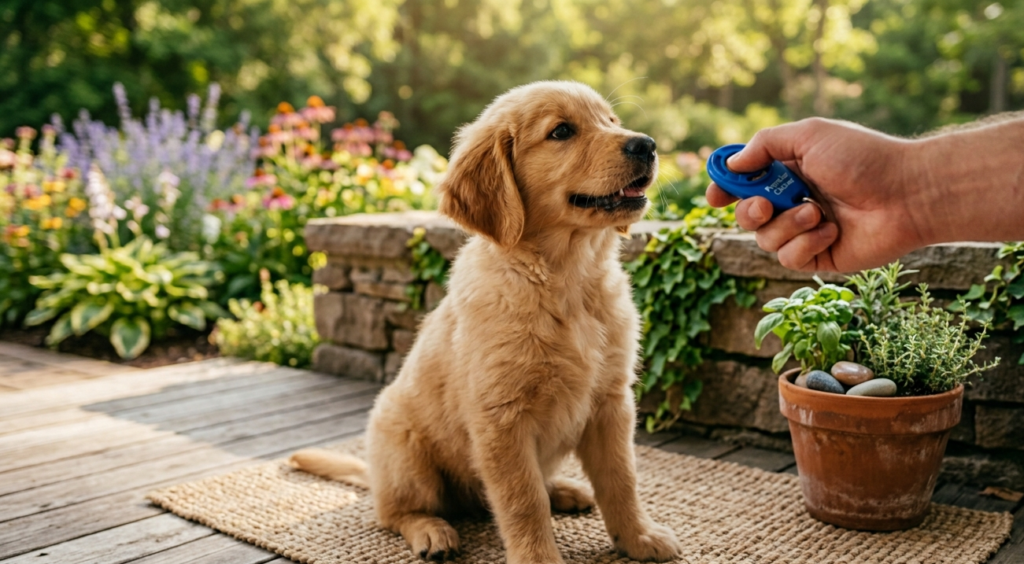
Here’s how to begin clicker training a puppy step-by-step:
Introducing the clicker.
Take your clicker and some of your puppy’s favorite little treats or food. Give your puppy a treat right away after clicking the clicker while holding it by your side. After a few repetitions of this procedure, observe your puppy’s response for indications that they are connecting the clicker with the treat. The intention is for them to anticipate this reward upon hearing the clicker.
Start using the clicker for basic commands.
Start with basic commands like “sit” or “down.” Give the clicker a treat three seconds after you click it at the precise moment they carry out the behavior. They must make the connection between obtaining the click and getting the reward.
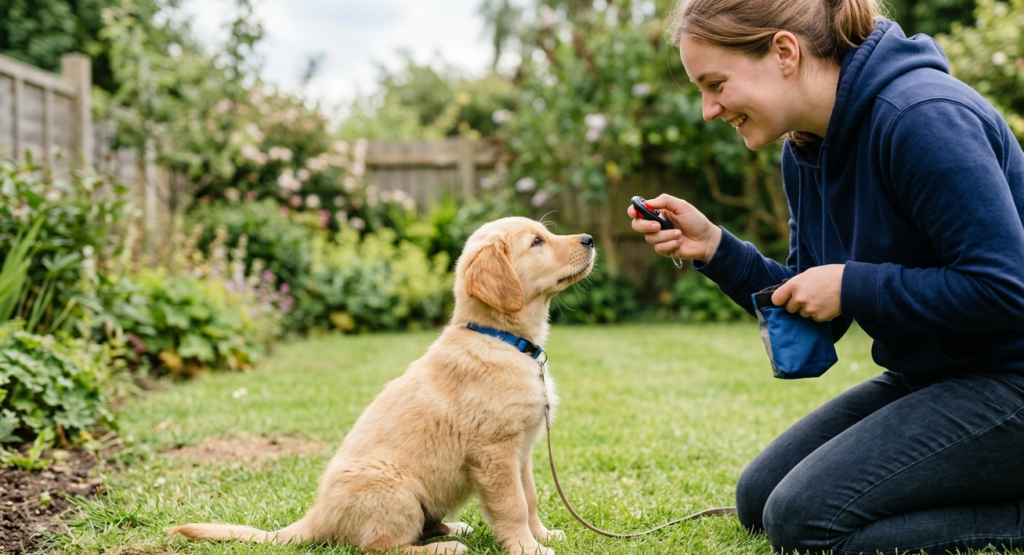
Practice on a consistent basis
Regular and consistent practice is necessary for clicker training. This will improve your puppy’s understanding and speed up its learning.
Keep training sessions short.
Limit your training sessions to between ten and fifteen minutes to prevent overstressing your pooch and to maintain enjoyment. You can teach your pup more than once a day if they are truly loving it.
Puppy Clicker Training Tips
After learning basic principles of puppy clicker training, here are some more guidelines on using a clicker with a puppy:
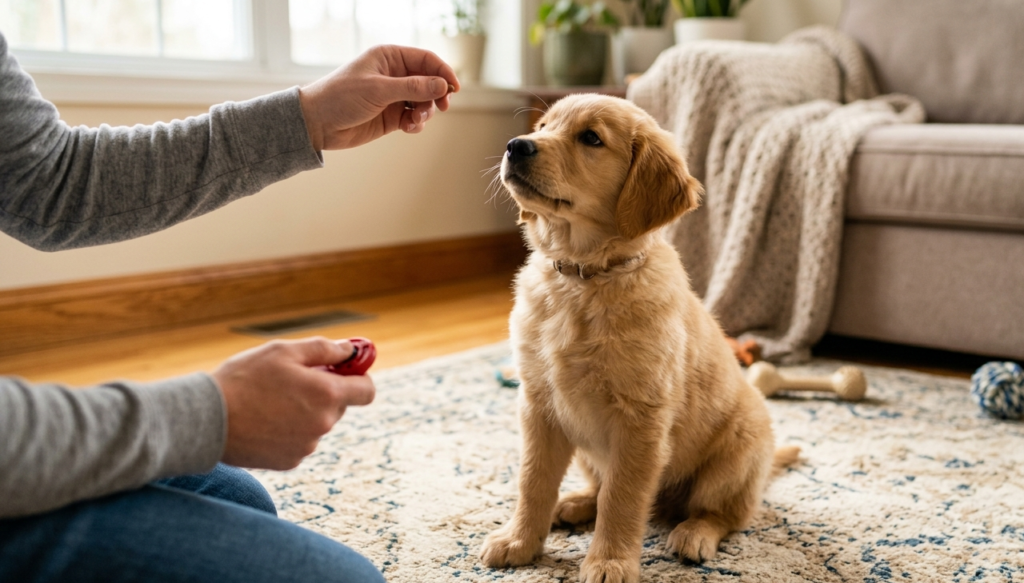
To make the two-part clicker sound
Press and let go of the clicker’s springy end. Then immediately give your puppy a reward. Make sure your puppy enjoys the snacks and keep them tiny.
Click immediately
When, instead of after, your pooch performs the desired behavior. After three seconds, give them the goodie.
Only click once
You can raise the quantity of treats, but not the quantity of clicks, if you’re particularly pleased with the behavior.
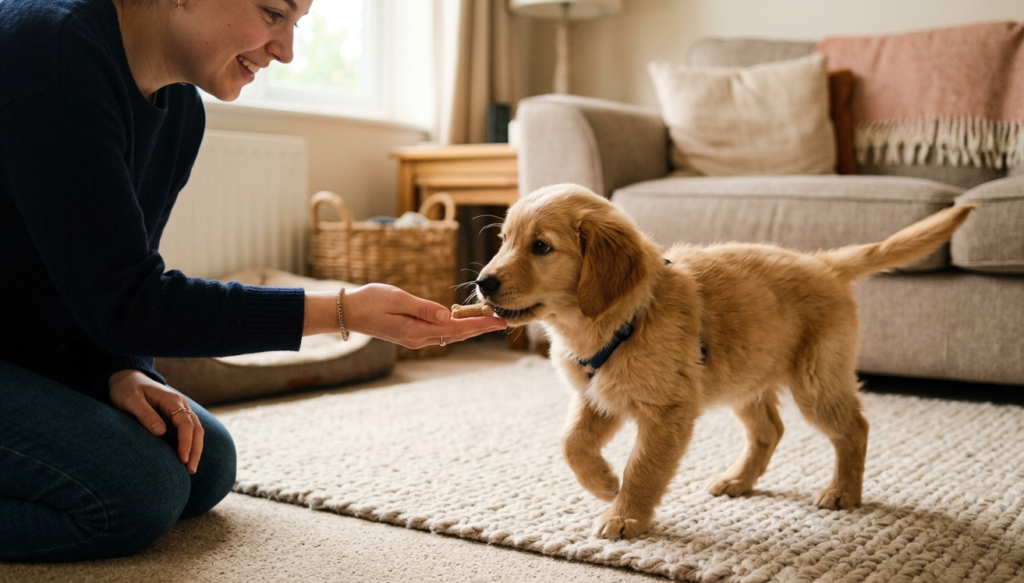
How to clicker train a dog step by step?
Clicker training is one of the easiest and most effective ways to teach your dog good behavior using positive reinforcement. Here’s a simple step-by-step guide you can follow:
Step 1: Get Your Tools Ready
You need:
A clicker
Small, tasty treats your dog loves
The clicker makes a quick “click” sound to mark the exact moment your dog does something right.
Step 2: Charge the Clicke
Before training, your dog must understand what the click means.
Click once
Immediately give a treat.
Repeat 10–15 times
Step 3: Start with a Simple Command
Begin with something easy like “sit.”
Say “sit”
When your dog sits → click immediately.
Give a treat
Step 4: Repeat and Practice
Practice the same command several times:
- Keep sessions short (5–10 minutes)
- Train 2–3 times a day
Step 5: Add a Cue (Command Word)
Once your dog starts doing the behavior regularly:
Say the command (“sit”) before they do it.
Click and reward when they follow it.
Step 6: Gradually Reduce Treats
After your dog understands:
- Keep clicking for correct behavior.
- Give treats less often.
- Add praise like “Good dog!”
Step 7: Practice in Different Places
Train in new environments:
Inside the house
Outside
Around distractions
How to build a strong bond with a puppy?
Building a strong bond with your puppy is the foundation of trust, obedience, and a lifelong friendship. It doesn’t happen overnight but with the right approach, your puppy will see you as a safe, loving leader.
1. Spend Quality Time Together
Your puppy needs your attention to feel secure.
Play daily fetch, tug, gentle gamesSit near them while they relax.
Talk to them in a calm, friendly voice.
2. Use Positive Reinforcement
Reward good behavior with:
- Treats
- Praise
- Gentle petting
3. Start Basic Training Early
Training isn’t just about commands it builds communication.
Teach simple cues like sit, stay, and come.
Keep sessions short and fun.
Be consistent
4. Be Gentle and Patient
Puppies are still learning.
Avoid shouting or punishment.
Stay calm if they make mistakes.
Guide them instead of scolding.
5. Establish a Routine
Dogs love structure.
Feed at the same time daily.
Regular walks and playtime
Set sleep schedules
6. Practice Physical Affection
Gentle petting
Belly rubs (if your puppy enjoys it)
Grooming sessions
7. Socialize Your Puppy
Introduce your puppy to:
- New people
- Other dogs
- Different environments
8. Understand Your Puppy’s Body Language
Learn what your puppy is telling you:
Wagging tail = happy
Whining = needs attention or discomfort.
Hiding = fear or stress
What is “I love you” in puppy language?
Dogs don’t use words like humans, but your puppy shows “I love you” through body language, actions, and behavior. Once you understand these signs, you’ll realize your puppy is expressing love all the time .
Here’s how puppies say “I love you” in their own language:
1. Tail Wagging (Especially Whole Body)
A relaxed, happy wag sometimes with their whole body wiggling means your puppy is excited and happy to see you.
2. Soft Eye Contact
When your puppy looks at you with relaxed eyes (not staring aggressively), it shows trust and love.
- Slow blinking
- Calm, gentle gaze
3. Following You Everywhere
If your puppy follows you from room to room, it means:
- They feel safe with you.
- They want to stay close.
4. Licking You (Puppy Kisses)
Licking is a natural way dogs show affection.
- Hand, face, or foot licking.
- Gentle and repeated
5. Sleeping Near You
When your puppy chooses to sleep beside you or near your feet:
- It shows trust and comfort.
- They feel protected around you.
6. Bringing You Toys
If your puppy brings you their favorite toy:
- They want to share happiness.
- They’re inviting you to play.
7. Leaning on You
When your puppy leans against your legs or sits close:
- They’re seeking comfort.
- They feel secure
8. Getting Excited When You Return
Even if you’re gone for a short time:
- Jumping
- Wagging tail
- Running toward you
What is the 7 7 7 rule for puppies?
The 7-7-7 rule for puppies is a simple guideline to help you raise a well-socialized, confident, and happy dog. It focuses on giving your puppy enough variety of experiences during early development.
Here’s what it means:
1. Meet 7 Different People
Let your puppy interact with:
- Men, women, kids
- People with hats, glasses, etc.
2. Visit 7 Different Places
Take your puppy to safe environments like:
- Your yard
- Quiet streets
- A friend’s house
3. Walk on 7 Different Surfaces
Examples:
- Grass
- Tiles
- Carpet
- Sand
- Concrete
4. Hear 7 Different Sounds
Expose your puppy to:
- Doorbells
- Traffic noise
- Thunder sounds (low volume)
5. Take 7 Car Rides
Short, positive trips:
- Keep them calm and safe.
- Reward with treats
6. Explore 7 Different Objects
Introduce items like:
- Umbrellas
- Vacuum cleaner (off at first)
- Toys of different shapes
7. Practice 7 Handling Experiences
Get your puppy used to:
- Touching paws
- Checking ears
- Brushing fur
This makes grooming and vet visits much easier.
Conclusion
Training your puppy with a clicker is a powerful and positive way to teach good behavior while strengthening your relationship. By following step-by-step clicker training, staying consistent, and using rewards, your puppy learns quickly and happily. At the same time, building a strong bond through love, patience, and daily interaction helps your puppy feel safe and connected to you.
Understanding your puppy’s language, like tail wagging, eye contact, and playful behavior, shows how they express “I love you.” Combining this with the 7-7-7 rule ensures your puppy grows into a confident, social, and well-adjusted dog.

Puppy Obedience Training 101: A Beginner’s Guide to Raising a Well-Mannered Dog

Common Dog Behavior Problems and How to Fix Them

Puppy Commands for Off-Leash Safety: What Every Owner Needs

Best Age to Start Leash Training a Puppy for Calm Behavior

puppy-obedience-training-commands/Puppy Training Tips: A Complete Step-by-Step Guide for Beginners

How to Fix Puppy Behavior Using Gentle Training

Puppy Obedience Training 101: A Beginner’s Guide to Raising a Well-Mannered Dog
Common Dog Behavior Problems and How to Fix Them
Puppy Commands for Off-Leash Safety: What Every Owner Needs
Best Age to Start Leash Training a Puppy for Calm Behavior
puppy-obedience-training-commands/Puppy Training Tips: A Complete Step-by-Step Guide for Beginners