
Puppy Commands
Best Ways to Fix Potty Training Regression in Stubborn Puppies


Potty training regression in puppies can be incredibly frustrating, especially when progress suddenly disappears, and accidents start happening again. Many owners assume something has gone wrong, but in reality, regression is a common phase during early development. It can happen due to changes in routine, new environments, or simply because a young puppy is still learning and adjusting.
Instead of seeing it as a failure, it’s better to view it as a temporary setback that can be corrected with the right approach. Stubborn puppies often make this phase feel more difficult because they tend to resist routines and test limits. They may ignore cues or seem uninterested in following the training they once understood.
This doesn’t mean they can’t be trained; it just means they require more consistency and clearer structure. Reinforcing a fixed schedule, closely monitoring behavior, and guiding them calmly can help rebuild the habits that may have slipped. Another important factor to understand is how your response affects the situation.
Reacting with frustration or punishment can make the problem worse by creating confusion or anxiety. Puppies learn best through positive reinforcement, so rewarding correct behavior immediately is far more effective.
Small improvements should be acknowledged, as they gradually rebuild confidence and consistency in their routine.With the right mindset and techniques, potty-training regression can be managed successfully, even in stubborn puppies.
What to Do If Your Puppy Is Regressing in Potty Training
Regression in potty training is annoying, but it’s very normal, particularly in puppies. Even a well-trained puppy may start having mishaps all of a sudden. Usually, this isn’t terrible conduct but rather a breakdown in routine, issues with puppy behavior, stress, or just plain uncertainty. Regression can be swiftly corrected with consistency, structure, and the appropriate toilet training advice.
Regression is frequently resolved more quickly by returning to a clear schedule based on potty training with pee pads and positive reward than by beginning over. Here’s how to get your pooch back on track, regardless of whether you’re dealing with problems with potty training, preventing puppy accidents, or regression in previously housebroken canines
Potty Training Regression by Age: What to Expect
The majority of potty training regressions are transient and have a variety of causes, most of which are simple to correct. These include puppy brain farts and routine modification.Medical problems can be ruled out with a visit to the vet, especially for mature dogs.
Here’s what to anticipate by age if you’re concerned about your own young dog’s setback in potty training.
4-5 Month Regression (The “Puppy Brain Fart” Phase)
The brain of your puppy is expanding more quickly than you can say “go potty.” They are genuinely forgetting things from the previous week. Recall that they are brand-new to the globe! What if we attempted to potty train human infants practically right away after birth?
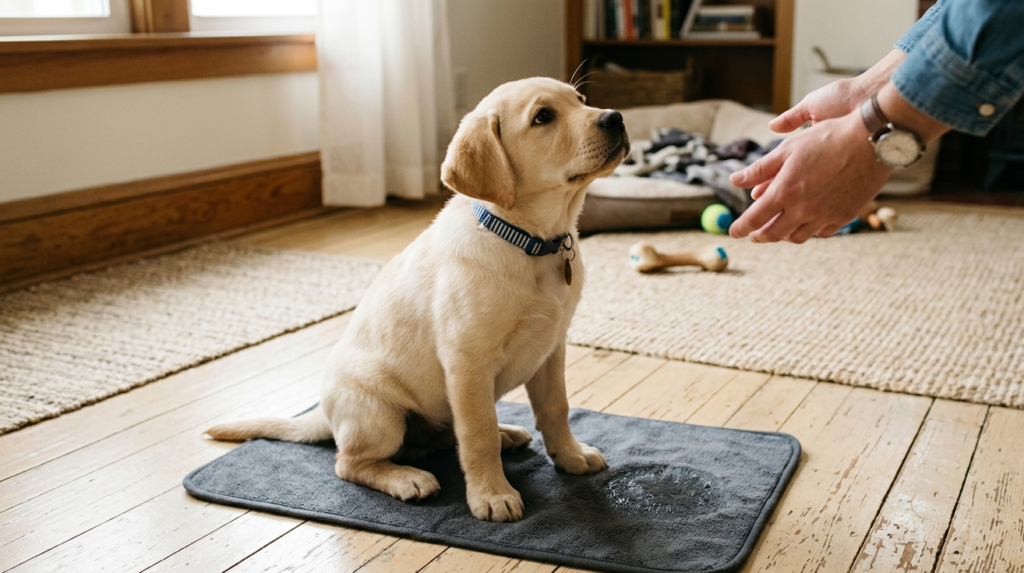
What’s happening:Their brains focus on growth above remembering the location of the potty due to their rapid physical and mental development.
Teething connection: When puppies lose their baby teeth, many owners observe an increase in accidents. They find it more difficult to hold it because of the discomfort.
Quick fix: Even if it feels like a step backward, return to two-hour toilet breaks for a week.
How to Potty Train Even a Stubborn Puppy
Training a stubborn puppy requires consistency more than anything else. Start by creating a fixed routine to take your puppy to the same spot at the same time every day, especially after meals, naps, and playtime. Repetition helps build understanding, even in puppies that seem resistant.
Keep a close eye on their behavior, and as soon as you notice signs like sniffing or circling, guide them calmly to the designated area. The goal is to make the process predictable so your puppy begins to associate the right place with the right action.
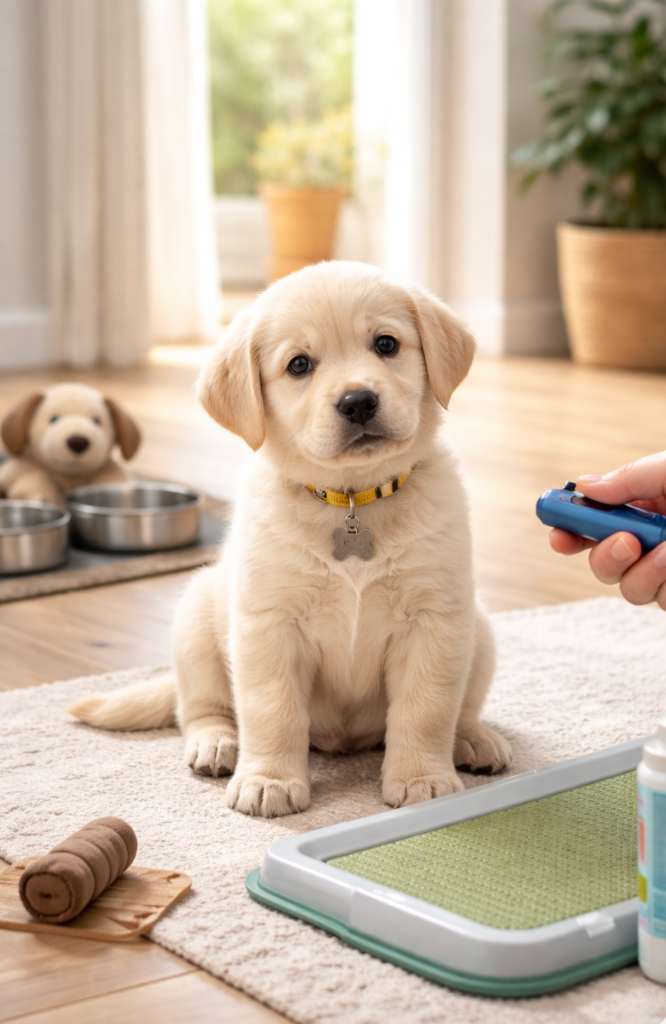
Equally important is how you respond to success and mistakes. Reward your puppy immediately after they get it right using praise or small treats, so they clearly connect the behavior with a positive outcome.
Avoid punishment when accidents happen, as this can create confusion and slow down progress. Instead, stay patient and redirect them gently. With time, structure, and positive reinforcement, even the most stubborn puppy can develop reliable potty habits.
These five strategies are my SECRET methods for teaching any puppy, even the most stubborn ones, to potty in the ideal place. Let’s go through each in detail.
Tip #1 – Crate Training
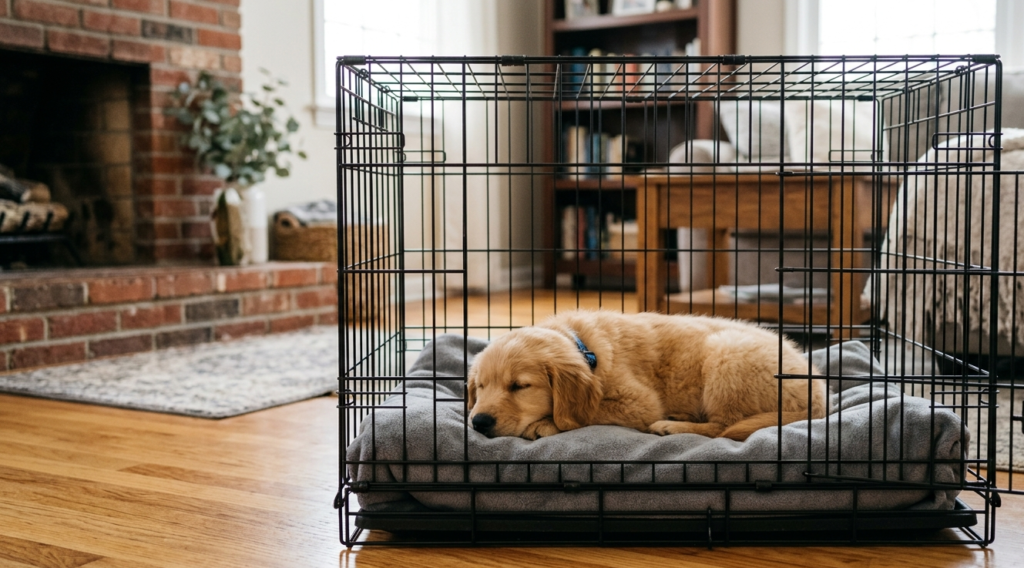
The ideal method for training your pooch is actually crate training. It’s the most effective and least messy method I’ve found for teaching your puppy to retain their bladder for extended periods of time at night and to leave the house.
Tip #2 – Confined Space
Make sure your best friend can fit in your box. Your puppy should not be able to go to one end of the crate to do his business and then to the other to sleep or eat.
Nobody enjoys eating and sleeping in the same area as the bathroom because so make the most of that knowledge! Your puppy will have to alert you when he has to or has already urinated due to the small space.
Tip #3 – Make a Choice
Make a decision about how you want your pooch toilet, and don’t change! When mishaps occur, going back and forth can be frustrating for pet parents and puzzling for a young puppy. You’ll quickly potty train even a resistant puppy if you do yourself a favor and only use one training technique at a time.
Tip #4 – No Free Range Training
Until your pooch is adequately toilet-trained, do not leave them alone in your home. On this one, I assure you. Restricting your pet to only hard surfaces until they show you that you can trust them will save you a lot of stress and damaged rugs.
Tip #5 – Positive Reinforcement
Puppies admire praise, attention, and positive reinforcement for doing the right thing, so celebrate when your puppy finally succeeds in getting where you want him to go.
You can also encourage your pooch to potty in the proper location by giving them special goodies. Even if you use incentives to reinforce the lesson, always give your puppy praise.
How do I fix my puppies’ regressed potty training?
Potty training regression in puppies is frustrating, but it’s actually very common, especially during growth phases, changes in routine, or stress. The key is not to assume your puppy “forgot” everything, but to treat it as a temporary setback and go back to basics with consistency and patience.
First, tighten your routine again. Take your puppy outside more frequently than before, especially after waking up, eating, drinking, and playtime. Puppies thrive on structure, so feeding at the same time daily and scheduling potty breaks helps their body adjust. When they go to the right place, immediately reward them with praise or treats.
This reinforces the behavior much faster than punishment ever could. Second, supervise closely and limit freedom indoors. If your puppy is having accidents, it usually means they have too much unsupervised space. Use crate training or keep them in a small, controlled area when you can’t watch them.
Puppy naturally avoid soiling their sleeping space, so a crate can help rebuild good habits. Also, clean accidents thoroughly with enzyme-based cleaners to remove odor—otherwise, your puppy may keep returning to the same spot.
How to potty train a very stubborn puppy?
Potty training a very stubborn puppy works best with a strict routine and consistency. Take your puppy outside at the same times every day, especially after waking up, meals, and play, and always use the same potty spot. The moment they go in the right place, reward them immediately with treats and praise so they clearly understand what you expect.
Stubborn puppies respond much better to positive reinforcement than punishment. Also, limit their freedom indoors and supervise closely to prevent accidents. If you can’t watch them, use a crate or small area to build good habits. Stay calm, avoid scolding, and be patient. Repetition and consistency will eventually help even the most stubborn puppy learn the right behavior.
What is the 7 7 7 rule for puppies?
The “7-7-7 rule” for puppies is a simple guideline used to describe early adjustment and development stages, especially when bringing a new puppy home. It suggests that within the first 7 days, your puppy is mainly trying to settle in; they may feel nervous, quiet, or overwhelmed as they get used to a new environment, people, and routine.
During this time, it’s important to give them space, keep things calm, and start building trust rather than expecting perfect behavior. In the next 7 weeks, your puppy becomes more comfortable and starts showing their real personality. This is the ideal time to focus on basic training like potty habits, simple commands, and socialization.
With consistent routines and positive reinforcement, your puppy begins to understand expectations. By around 7 months, most puppies are more confident and adapted to their home, though they may enter a teenage phase with some stubborn behavior. At this stage, continued training, patience, and consistency are key to shaping long-term good habits.
How to solve potty training regression?
Potty training regression happens when a puppy that was doing well suddenly starts having accidents again, and the best way to fix it is to go back to basics. Re-establish a strict routine by taking your puppy outside frequently, especially after waking up, eating, drinking, and playtime.
Stick to the same potty spot and reward them immediately with treats and praise when they go in the right place. Consistency is key because it helps your puppy rebuild the habit quickly.It’s also important to increase supervision and limit indoor freedom.
If your puppy is roaming too much, accidents are more likely, so use a crate or keep them in a small area when you can’t watch them.Avoid punishment, as it can create fear and confusion. Instead, calmly clean accidents with proper cleaners to remove odor and prevent repeat behavior.
Lastly, try to identify what caused the regression in the first place. Changes in routine, environment, stress, or even minor health issues can trigger setbacks. Once you address the cause and stay consistent with training, most puppies regain their potty habits within a short time.
Conclusion
Potty training a stubborn puppy may take extra time and patience, but it is completely achievable with the right approach. Consistency, a clear routine, and positive reinforcement are the foundation of success. Instead of getting frustrated by setbacks, focus on guiding your puppy calmly and reinforcing the behaviors you want to see. Every small step forward plays an important role in building long-term habits.
Remember, stubbornness doesn’t mean your puppy can’t learn; it simply means they need more structure and understanding. By staying patient, avoiding punishment, and celebrating progress, you can turn regression into success. With time and dedication, your puppy will develop reliable potty habits, leading to a cleaner home and a stronger bond between you both.

Puppy Obedience Training 101: A Beginner’s Guide to Raising a Well-Mannered Dog

Common Dog Behavior Problems and How to Fix Them

Puppy Commands for Off-Leash Safety: What Every Owner Needs

Best Age to Start Leash Training a Puppy for Calm Behavior

How to Fix Puppy Behavior Using Gentle Training

puppy-obedience-training-commands/Puppy Training Tips: A Complete Step-by-Step Guide for Beginners

Puppy Obedience Training 101: A Beginner’s Guide to Raising a Well-Mannered Dog
Common Dog Behavior Problems and How to Fix Them
Puppy Commands for Off-Leash Safety: What Every Owner Needs
Best Age to Start Leash Training a Puppy for Calm Behavior
How to Fix Puppy Behavior Using Gentle Training