Uncategorized
Aggressive Dog Training: How to Safely Manage and Stop Dog Aggression

Aggressive dog training requires patience, consistency, good management strategies, and professional expertise. Many dog owners deal with the behavioral issue of aggression in their pets. The fact is that no dog was aggressive from birth. There are very few dog breeds that bite without a reason, even though some have a lower sensitivity threshold and a stronger protective instinct than others.
Aggressive dog training specialists now concur that all dogs, regardless of breed, are capable of learning acceptable behavior. For example, Golden Retrievers and Labradors are not inherently more hazardous than Pitbulls, Rottweilers, and Dobermans. Therefore, the individuals who train these dogs have a greater impact on aggressive behavior than genetic characteristics.
In the end, it is reassuring to acknowledge that human behavior is the root cause of a dog’s aggressive behavior. Just as inadequate or careless training encourages aggressive behavior, the proper training can guarantee that your dog eliminates this unwanted behavior and develops into a friendly companion. However, what needs to be changed going forward.
How to Manage Aggression Dog Training?
We are discuss how to manage aggressive dog and also aggressive dog behaviour.

Aggression dog training with leash
Keep your dog on a leash and think about teaching him to wear a muzzle when you are outside or in public if he acts aggressively toward people or other dogs when you are out on walks. Dogs that are challenging to manage on a leash should play in a fenced-in yard and receive some exercise.
Improve your reward-based training while providing him with games and enrichment activities that will stimulate his mind. Until a behaviorist can assist you, this will let you let off steam and strengthen your relationship in a secure setting.
Aggression Toward Visitors
Before opening the door or welcoming guests, place your dog in the yard or a safe room if he acts aggressively toward them. Some dogs only become aggressive when someone enters what they consider to be their area. Therefore, use extra caution near gates, doorways, and even automobile doors.
Aggression Toward Other Dogs Training
If two dogs start fighting, don’t try to break them up with your hands since you could get seriously hurt. Keeping a reasonable distance and avoiding any chance that your dog can reroute his aggression at you should be your top priorities.
Aggressive dog fights can appear and sound worse than they actually are. Without human assistance, the dogs will frequently part ways. It’s critical to act quickly if a brawl breaks out. Start by shouting or loudly clapping your hands to divert their attention. If that doesn’t work, try covering them with water or a cloth or creating an unexpected.

What Are the Signs of Aggression in Dogs?
The term aggression is used to describe a wide range of canine communication that people often misunderstand and don’t fully comprehend. Although there is a range of canine aggression, it is easy to assume that terrifying actions like snapping and barking are the main instances. Some aggressive behaviors are so subtle that many pet owners overlook them and fail to see the cues our dogs are sending us until they become more overt.
The following actions can be categorized as aggressive reactions, including early actions meant to prevent a full-fledged angry display:
- Yawning
- Freezing
- Hard staring
- Lip curling
- Lip licking
- Baring teeth

Why do dogs become aggressive?
Dogs don’t act aggressively out of the sudden. Permanent or recurrent unpleasant emotions, particularly fear or anger, are always the cause of aggression. But pain from an illness can also exhaust a dog and make them act aggressively. Dogs don’t turn into bite-happy animals because they are aggressive or like frightening and hurting people or other animals.
Dogs who are aggressive are almost always anxious or uncomfortable in particular circumstances.

Aggressive Dog Causes and forms of aggression
As previously established the human connection with the dog is the primary cause of this confusion and incapacity to perform effectively. Canine aggression is primarily caused by being raised in seclusion, lacking socialization and training, and not being housed in settings suitable for their species.
Chronic pain, traumatic events, or bad past experiences can also cause fear or anger which can lead to physical abuse.However it’s not always as simple to pinpoint the exact causes as it might seem. Therefore, it’s important to first notice when a dog responds violently. When does it start to snarl and show its teeth?
Is it afraid that someone else could want to challenge its personal domain, or is it anxious when another dog is nearby, believing it must defend its charges.
Depending on the cause, canine hostility can take many various forms, including:
- Self-defense: When a dog encounters another dog, it feels uneasy or constrained.
- Protective aggression: family members require defense against adversaries.
- Competitive aggression: for example, a toy or food bowl that is highly attached has to be protected from other people or to establish or maintain its own position within the pack.
How might conflict-induced aggression begin?
The type of assertive and demanding behavior may eventually escalate into increasingly pushy and even aggressive behavior as the puppy learns that this is a successful way to gain control of resources. Another concern is the conflict of competing motivations that arise when dogs interact with owners who have inconsistent and unpredictable use of rewards and punishment.
Unfortunately, dogs that control owner interactions through play biting, barking, or attention soliciting will quickly learn that these behaviors are effective to achieve what they want.Conflict frequently arises when family members criticize the dog for the same behaviors while occasionally caving in to the dog’s demands.
Pet owners frequently employ inconsistent training methods, rewarding good behavior with positive r einforcement and punishing noncompliant pets with varied degrees of severity. Any kind of physical punishment has the potential to cause conflict or defensive aggressiveness, either at the moment of the punishment’s subsequent retreat that resulted in a satisfactory outcome.

Even though it’s wise to flee when a dog threatens you, some dogs may eventually discover that aggressive behavior is effective and repeat it. Only confrontation, punishment, threats, or owner’s worry and anxiety are likely to increase the dog’s defensiveness and anxiety over similar encounters in the future. Instead of dominance, conflict, fear, possessiveness, or learning are the root causes of the hostility in each of these, or when you try to manage your dog later on.
Certain dogs may confront their owners forcefully in order to keep a preferred resource such as a sleeping space, a toy, or a family member’s attention. Aggression, Possessive Food Bowl and Aggression, Possessive Objects and Toys, as well as the owner’ instances. But a dog’s potential for assertiveness, pushiness, and persistence can also be significantly influenced by hereditary variables.
When a dog is sleeping or not interested, not in the mood for social connection, the owner may try to approach or pet it. During these moments, even seemingly harmless challenges from family members, including attempting to walk by, move, sit next to lie down next to a pet or embrace the dog, may result in threats and hostility.
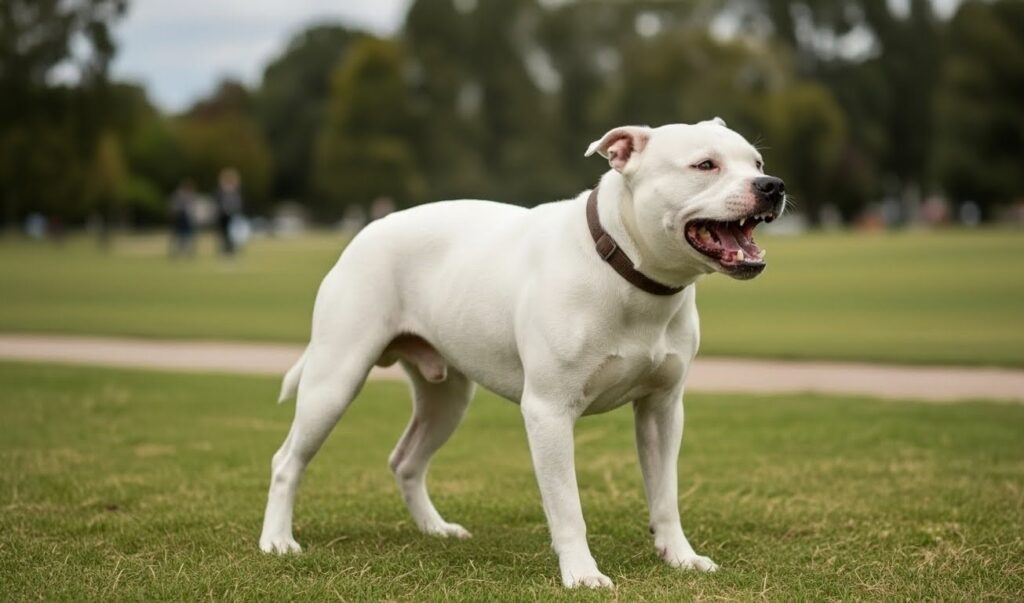
Why Do Dogs Show Aggression?
Aggressive dogs are generally show aggression as part of their species-specific behavioral repertoire. However, when it is displayed in a way that endangers people’s safety or the welfare of other animals, it may become problematic.

Fear or anxiety
An underlying fear or anxiety brought on by a human, another animal, or a circumstance may manifest as aggression. In this instance, the aggressive dog uses antagonism to put more distance between itself and a perceived threat.
Pain or illness
Aggressive dogs generally have a lower tolerance to things that wouldn’t normally bother them when they’re sick or in pain. Aggression may become more likely as a result.
Resource guarding
Some canines react to violence in order to get or hold onto valuable resources. When a dog had to fight for resources (such food) as a puppy or had her resources taken away from her on a regular basis, this behavior frequently developed.
What is the best training method for aggressive dogs?
The best training method for aggressive dogs combines positive reinforcement, desensitization and counterconditioning focusing on rewarding calm behavior, gradually exposing them to triggers at a safe distance, and changing their negative associations with positive ones, all while strictly avoiding punishment which escalates fear and aggression; professional help from a certified trainer is crucial.
- Positive Reinforcement: Reward desired calm behaviors (like sitting or looking away from a trigger) with high-value treats, praise, or toys to build positive associations.
- Desensitization: Slowly and safely expose your dog to their triggers (other dogs, strangers) from a distance where they don’t react, gradually decreasing the distance over time.
- Counterconditioning: Pair the trigger with something amazing (like chicken or cheese) so the dog learns to feel good, not threatened, in its presence.
- Teach incompatible behaviour;Train commands like “sit” or “go to your mat” that physically prevent the dog from lunging or biting, reinforcing polite actions.
How to teach a dog to stop being aggressive?
- Identify triggers: Figure out why your dog is aggressive (fear, territoriality, resource guarding, past trauma) by observing their body language and situations.
- Professional Help: Consult a vet to rule out medical issues, then hire a certified professional dog trainer or behaviorist (not someone using aversive methods).
- Avoid triggers &manage Environment: Prevent situations that cause aggression; increase distance from triggers (like other dogs) in open spaces.
- Positive Reinforcement: Reward calm, desired behaviors with high-value treats (chicken, cheese) to build positive associations.
- Counter conditioning: Change your dog’s emotional response by pairing a trigger (seen from far away) with a great treat, creating a new positive feeling.
- Obedience training: Teach commands like “sit,” “stay,” and a reliable recall to build confidence and control.
- No punishment: Never punish fear or anxiety-based aggression; it worsens fear and trust issues.
- Calm leadership: Walk calmly and assertively (not aggressively) so your dog feels safe and looks to you for cues.
What’s the best way to deal with an aggressive dog?
Regular physical exercise and mental stimulation are vital for a dog’s overall well-being and can help alleviate stress and anxiety, which can contribute to aggression. Trainers may recommend specific activities, such as obedience training, interactive games, or puzzle toys, to keep dogs engaged and mentally stimulated.
By providing outlets for physical and mental energy, owners can help prevent boredom and frustration, reducing the likelihood of aggressive behavior. Additionally, exercise and mental stimulation strengthen the bond between dogs and their owners, fostering a positive relationship built on trust and companionship.
Trainers emphasize the importance of incorporating a variety of physical activities, such as walks, runs, and play sessions, into the dog’s daily routine to keep them physically fit and mentally stimulated. Mental stimulation, such as obedience training and interactive games, helps keep dogs engaged and prevents boredom, fostering a healthy and balanced lifestyle.
Trainers work closely with owners to develop personalized exercise and enrichment plans tailored to their dog’s specific needs and preferences, ensuring they receive adequate physical and mental stimulation to thrive.
What tools are used in aggression training?
- Management & Safety Gear: Martingale collars, head halters (like the gentle Leader), harnesses , leashes (often two), and sometimes muzzles for safety during training.
- Positive Reinforcement Tools: Treats, clickers, and toys to reward calm behavior.
- Behavior Modification: Techniques like desensitization and counterconditioning (changing emotional response to triggers).
- Physical Barriers: Indoor gates or crates to manage the environment and prevent triggers.
- Considered Tools: E-collars (shock collar ) are controversial; they can be used for anxiety-based aggression if used correctly by experts to build confidence, but improper use can worsen aggression.
Conclusion
Aggressive dog behavior can be challenging but it is manageable with the right understanding approach and commitment. By recognizing the early signs of aggression such as growling, snapping stiff body posture, or intense staring owners can intervene before behavior escalates. Understanding why dogs become aggressive, whether due to fear, territorial instincts, lack of socialization, past trauma, or conflict induced situations, is the foundation of effective behavior modification.
Aggressive dogs different forms of aggression such as leash aggression, aggression toward visitors, and aggression toward other dogs require tailored strategies rather than a one-size-fits-all solution. Safe management techniques like controlled exposure, proper leash handling, and environmental management help prevent triggers while training is underway.

German Dog Commands: 25 Essential Commands Every Dog Owner Should Know

Training an Aggressive Dog: 10 Safe Steps to Improve Behavior

Puppy Exercise Needs: How Much Exercise Does Your Puppy Really Need?

Best Age to Start Leash Training a Puppy for Calm Behavior

puppy-obedience-training-commands/Puppy Training Tips: A Complete Step-by-Step Guide for Beginners

How to Fix Puppy Behavior Using Gentle Training

German Dog Commands: 25 Essential Commands Every Dog Owner Should Know
Training an Aggressive Dog: 10 Safe Steps to Improve Behavior
Puppy Exercise Needs: How Much Exercise Does Your Puppy Really Need?
Best Age to Start Leash Training a Puppy for Calm Behavior
puppy-obedience-training-commands/Puppy Training Tips: A Complete Step-by-Step Guide for Beginners