
Puppy Training
Puppy Training Timeline: What to Teach Your Dog From 8 Weeks to 6 Months

Quick Summary:
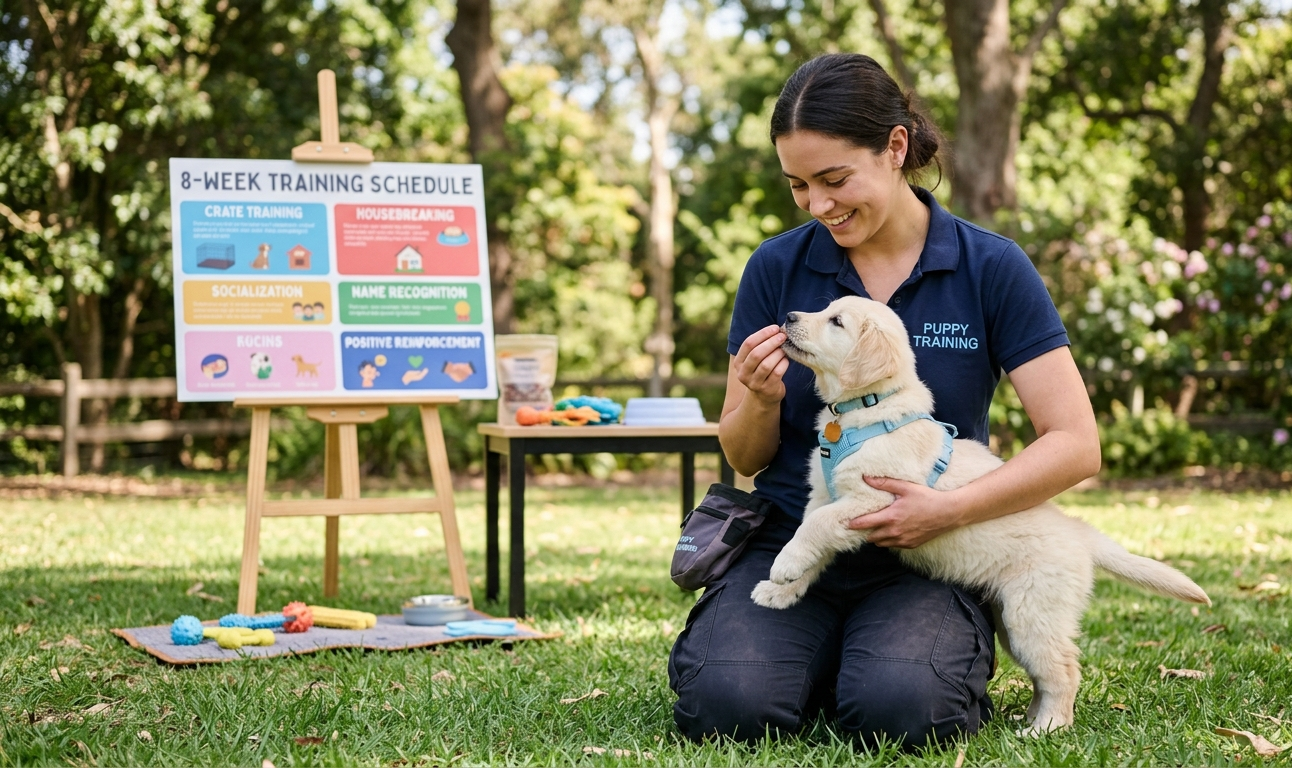
This puppy training schedule by age breaks down exactly what to teach your puppy from 8 weeks to 6 months old. You’ll learn crate training, potty training steps, the critical socialization window, basic commands like sit and come, and how to handle puppy biting. Each stage builds on the last, so following this order helps your puppy grow into a calm, well-behaved adult dog.
Bringing home a new puppy is exciting, but it can also feel like a lot. You may be asking yourself: what should I be teaching right now? When should training actually start? A clear puppy training schedule by age takes the guesswork out of it.
Instead of feeling lost, you’ll know exactly what your puppy is ready to learn at each stage, from the moment they come home at 8 weeks old through their sixth month.This guide breaks puppyhood into five stages. Each one builds on the last, so by 6 months your puppy will have a solid foundation in manners, commands, and confidence.
Why a Puppy Training Schedule by Age Matters
Puppies don’t learn everything at once. Their brains and bodies develop in stages, and trying to teach an 8-week-old puppy the same things you’d teach a 5-month-old usually backfires. A good puppy training schedule by age matches your training goals to what your puppy is actually capable of at that point.
This matters most during what experts call the socialization window. The American Veterinary Society of Animal Behavior considers the first three months of a puppy’s life the most important time for socialization, since puppies should be exposed to as many new people, animals, and environments as can be safely managed during this period.
Miss this window, and you’re doing repair work later instead of building good habits early. Dog Gone Problems
8 to 10 Weeks: Settling In and Crate Training
puppy training the first couple of weeks at home are about comfort, not commands. Your puppy just left their mother and littermates, so the goal right now is helping them feel safe.
Crate Training Basics
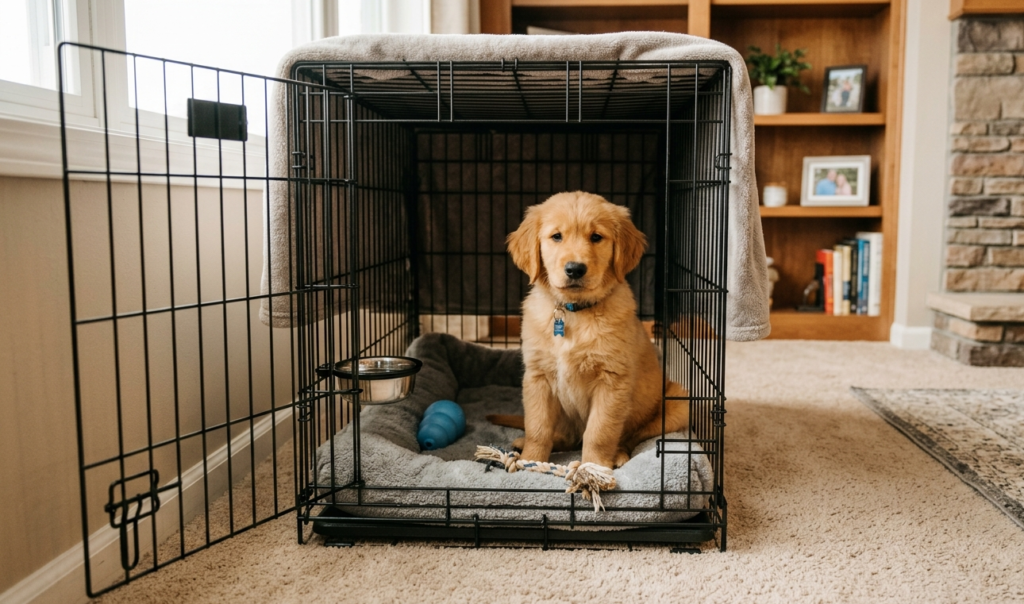
puppy training Introduce the crate as a cozy den, not a punishment. Place soft bedding inside, toss in treats, and let your puppy explore on their own terms. Feed meals near or inside the crate so it builds a positive association from day one.
Building the Bond
Spend time simply being together. Use your puppy’s name often, paired with something good like a treat or gentle praise, so they start to associate their name with positive attention. This bond is the foundation everything else gets built on.
10 to 12 Weeks: Potty Training Foundations
puppy training Once your puppy is settling in, it’s time to get serious about potty training. This stage is all about routine. Between 10 and 12 weeks, your puppy’s bladder control is still limited, so consistency matters more than anything else.
Take them out at the same times every day: right after waking up, after meals, after play sessions, and right before bed, since these moments are when accidents are most likely. Pick one spot in the yard and use it every time, along with a simple cue word like “go potty,” so your puppy starts to associate the location and phrase with the behavior you want.
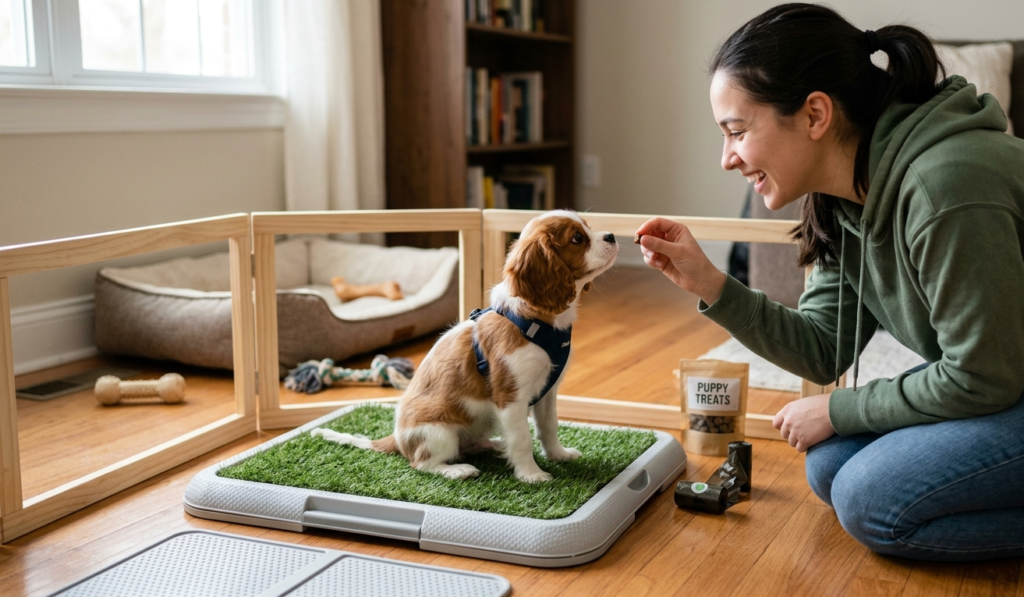
When they go in the right spot, reward them immediately with praise or a treat, within seconds, so the connection sticks. Indoors, watch for early signs like sniffing, circling, or whining, and interrupt with a quick trip outside rather than waiting for a mistake to happen.
Accidents will still occur at this age, and that’s normal; clean them up without scolding, since punishment tends to create anxiety rather than understanding. By the end of this stage, most puppies start to show a pattern, even if they’re not fully reliable yet.
Setting a Bathroom Schedule
puppy training Take your puppy out first thing in the morning, after every meal, after naps, and after play sessions. Puppies have small bladders, so frequent trips outside prevent accidents before they happen.
Handling Accidents Without Punishment
Accidents will happen, and that’s normal puppy development, not defiance. If you catch one mid-act, calmly interrupt and head outside. If you find one after the fact, simply clean it up. Punishing a puppy for an accident they don’t remember having only creates fear, not faster learning.
3 to 4 Months: The Critical Socialization Window
puppy training This stage is the most important window in your entire puppy training schedule by age, and it’s easy to miss if you don’t know about it.
Why Socialization Can’t Wait
Between roughly 3 and 16 weeks of age, a puppy’s brain is uniquely open to new experiences, since the fear-processing part of their brain is less reactive at this stage, meaning sounds, surfaces, people, and other animals tend to register as normal rather than threatening. After this window starts closing, new experiences become harder for your puppy to accept calmly. The Dog Wizard
Introducing New People, Animals, and Environments
Expose your puppy to as many safe, positive experiences as possible. This means meeting calm dogs, walking on different surfaces like grass and tile, hearing household noises like vacuums, and meeting people of different ages and appearances. Keep every experience upbeat. If your puppy seems scared, slow down rather than pushing through.
Vaccination Safety Considerations
A common myth is that puppies must be fully vaccinated before any socializing starts. Puppies can typically begin socializing and puppy classes around 7 to 8 weeks of age, shortly after their first distemper and parvovirus vaccine. Talk to your vet about safe ways to socialize during this period, such as puppy classes held on sanitized surfaces, rather than waiting until the window has already closed. Petful
4 to 6 Months: Basic Obedience Commands
By now your puppy has more focus and is ready for structured training. This is where the real obedience work in your puppy training schedule by age begins.begins. Between 4 and 6 months, your puppy has longer attention spans and better impulse control, making this the ideal window to lock in foundational commands like sit, stay, come, down, and leave it.
Keep sessions short, around 5 to 10 minutes, several times a day, since puppies this age still lose focus quickly even though they’re more capable than before. Use positive reinforcement consistently, rewarding with treats, praise, or play the instant your puppy gets it right, so they clearly connect the command with the correct behavior.
Practice in different rooms and eventually outdoors with mild distractions, gradually increasing difficulty so the commands generalize beyond just your kitchen floor. This is also a good time to work on leash manners and start phasing out constant treat rewards in favor of intermittent reinforcement.
so your puppy learns to respond reliably rather than only when a treat is visible. By 6 months, most puppies can reliably perform basic commands in low-distraction settings, setting the stage for more advanced training and socialization ahead.
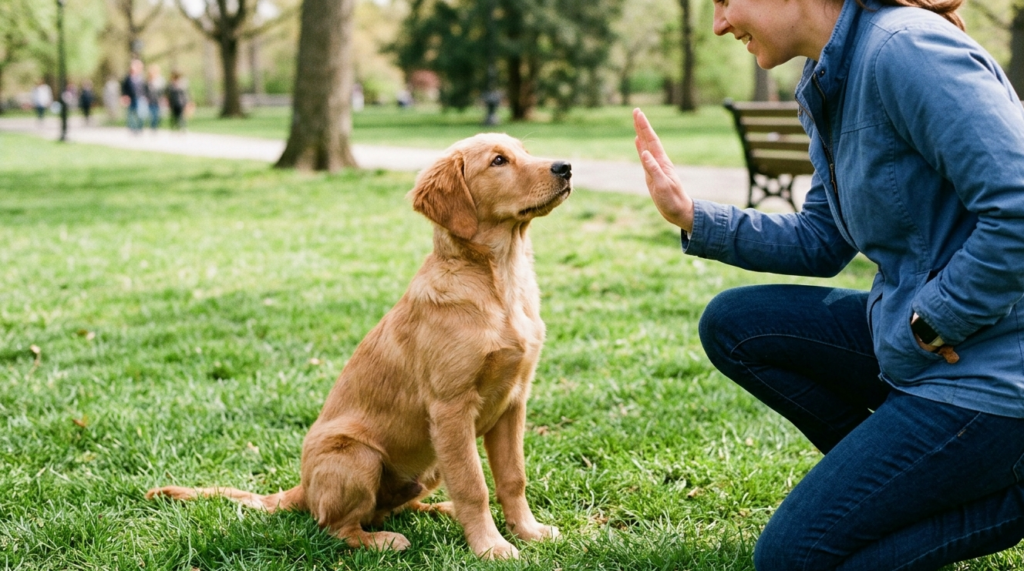
Sit, Stay, Come, and Down
Teach one command at a time, using short five-minute sessions a few times a day. Always reward with treats and praise the moment your puppy gets it right. Keep sessions fun. A puppy that’s bored or frustrated learns slower than one that’s having a good time.
Leash Walking Introduction
Start indoors or in your backyard before heading out into the world. Let your puppy get used to the feel of a leash and collar or harness without pressure. Reward calm walking next to you, and pause if they pull, rather than yanking them back.
Bite Inhibition and Chewing
Puppy biting is one of the most common concerns new owners face, and it deserves its own section in any puppy training schedule by age.
Why Puppies Bite
Puppies explore the world with their mouths the same way human babies do. Biting and chewing are also how teething puppies relieve sore gums. This is normal behavior, not aggression.
How to Redirect It
When your puppy nips, calmly redirect them to an appropriate chew toy. If the bite is too hard, a short yelp followed by briefly ending playtime teaches them that hard bites stop the fun. Stay consistent, and most puppies grow out of hard biting within a few months as their bite inhibition improves.
Frequently Asked Questions
What is the best age to start training a puppy?
You can start basic training as early as 8 weeks old, right when your puppy comes home. Early training should focus on name recognition, crate comfort, and gentle socialization rather than formal commands.
At what age should puppy socialization be complete?
The core socialization window runs through roughly 16 weeks of age. After this point, puppies become naturally more cautious of new experiences, so it’s harder, though not impossible, to socialize them later.
How many times a day should I train my puppy?
Short sessions of 5 to 10 minutes, repeated 3 to 4 times a day, work better than one long session. Puppies have short attention spans, so frequent, brief practice builds skills faster.
Is it normal for my puppy to forget commands they already learned?
Yes. Puppies often “forget” commands in new environments or when distracted. This is called generalization, and it means they need practice in different settings, not that the training failed.
When should my puppy stop biting?
Most puppies significantly reduce hard biting by 5 to 6 months as their adult teeth come in and bite inhibition develops, especially with consistent redirection.
Final Thoughts
A clear puppy training schedule by age takes the stress out of those first six months. Start with comfort and crate training, build a potty routine, prioritize socialization while the window is open, then layer in commands and leash skills as your puppy matures.
Stay patient and consistent, and by 6 months you’ll have a puppy who’s well on their way to becoming a confident, well-mannered dog.For more science-backed guidance on early puppy development, the American Kennel Club’s puppy growth timeline is a helpful resource to explore alongside this schedule.

Puppy Obedience Training 101: A Beginner’s Guide to Raising a Well-Mannered Dog

Common Dog Behavior Problems and How to Fix Them

Puppy Commands for Off-Leash Safety: What Every Owner Needs

Best Age to Start Leash Training a Puppy for Calm Behavior

How to Fix Puppy Behavior Using Gentle Training

puppy-obedience-training-commands/Puppy Training Tips: A Complete Step-by-Step Guide for Beginners

Puppy Obedience Training 101: A Beginner’s Guide to Raising a Well-Mannered Dog
Common Dog Behavior Problems and How to Fix Them
Puppy Commands for Off-Leash Safety: What Every Owner Needs
Best Age to Start Leash Training a Puppy for Calm Behavior
How to Fix Puppy Behavior Using Gentle Training