
Dog Obedience Training
Top Best Techniques for Dog Obedience Training for Faster Learning

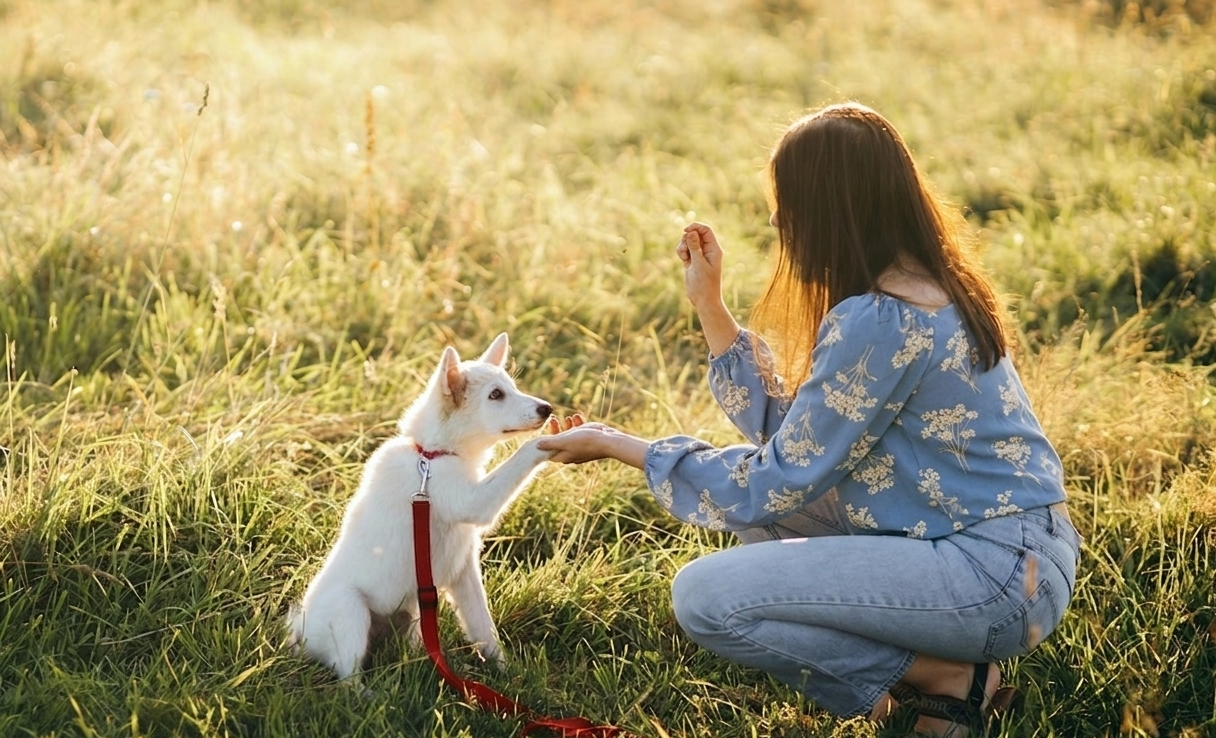
Dog obedience training is one of the most important steps in raising a well-behaved and disciplined dog. Dogs may quickly pick up important commands and form beneficial habits that make life easier for both the owner and the pet with the correct training.
To support dogs in understanding what conduct is required of them, the most effective dog obedience training methods for quicker learning involve clear communication, consistency, and positive reinforcement. While fostering a closer relationship between the dog and its owner is effective.
Dog obedience training techniques encourage canines to obey orders like sit, stay, come, and heel. Dogs can learn more quickly and maintain focus throughout training when brief, interesting training sessions are paired with rewards like playtime, praise, or food.
Understanding dog obedience training
Dog obedience training refers to teaching your dog basic commands and behavioral expectations. Maintaining a well-mannered pet and guaranteeing your dog’s safety as well as the protection of people around you depend on this training.
Dog owners are discovering more humane and efficient methods of training their pets thanks to the growth of positive reinforcement techniques. Trainers can cultivate a loving and respectful relationship with their dogs by substituting rewards for punishment.
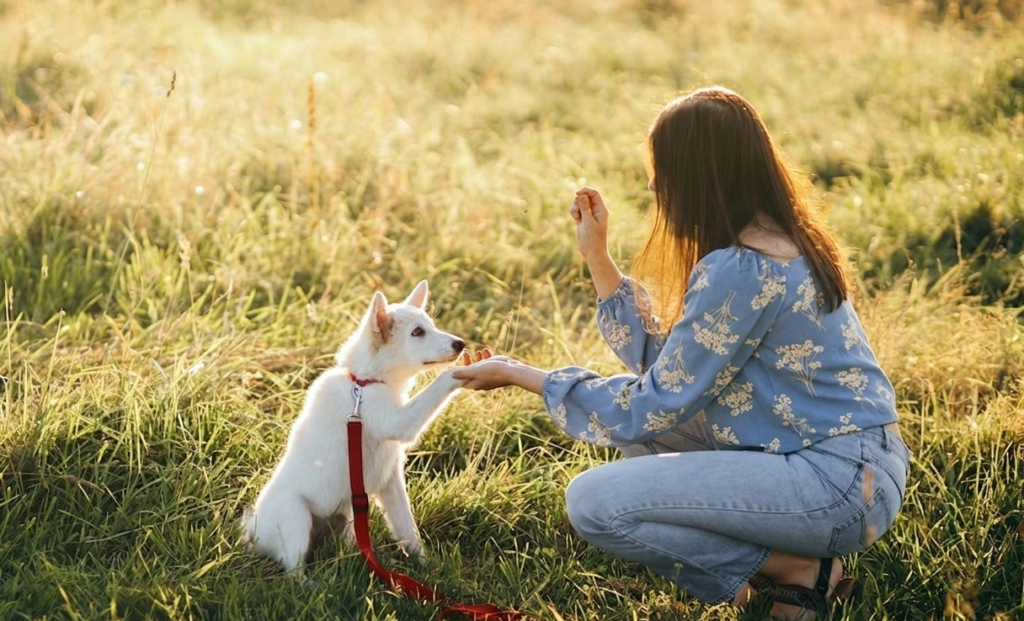
Key techniques for obedience training your dog
Dog obedience Training your dog fosters positive behavior and strengthens your relationship with them. Learning is enjoyable and productive for both you and your pet when the proper methods are used and a safe session is maintained.

Start with basic commands.
Obedience training starts by teaching basic commands such as “down,” “sit,” “stay,” and “come.” These commands assist your dog learn how to behave and serve as the foundation for all further training. Your dog will find it easier to interact with people and other animals once they have mastered these fundamentals.
Use positive reinforcement
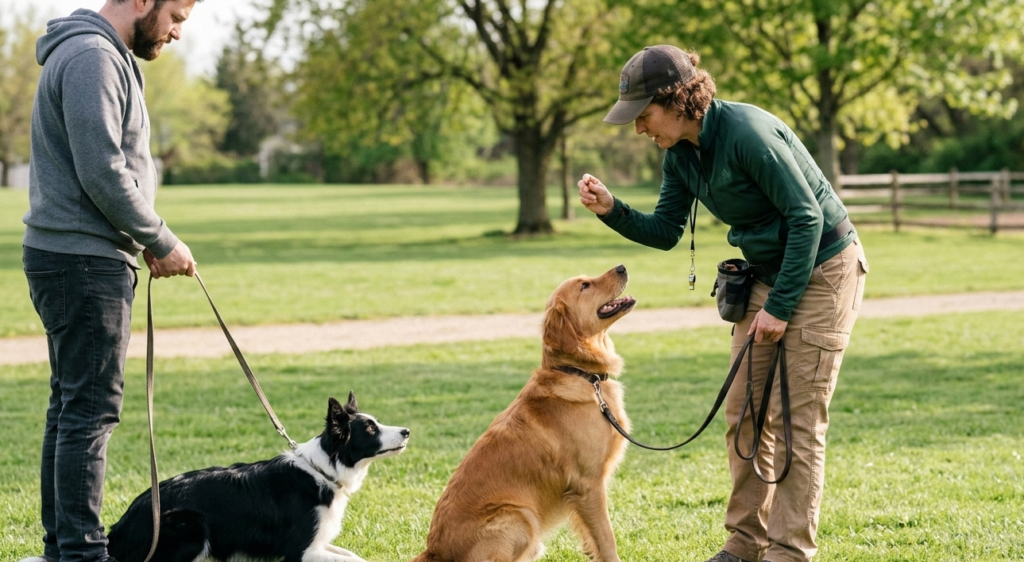
When your dog does something well, reward them with play, praise, or treats. More than punishment, positive reinforcement encourages your dog to learn and pay attention to you. This type of instruction improves your relationship and makes learning enjoyable.
Be Consistent
To avoid confusing your dog, give commands using the same words and gestures every time. Your dog could not comprehend your wishes if you alter your rules or orders. Your dog will learn more quickly and behave better if you keep training consistently.
Basic obedience training for therapy dogs
Dog obedience training forms the foundation for a successful therapy dog. All dogs must initially learn basic obedience commands like sit, stay, come, and heel before beginning specialized therapy training.
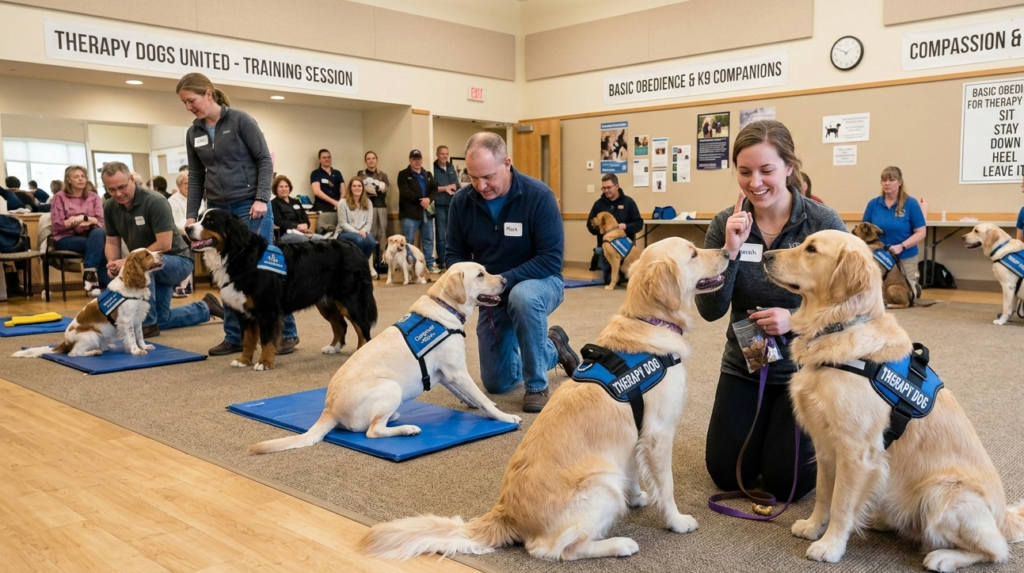
These commands give handlers the foundation for efficient control and communication, allowing them to confidently and dependably lead their dogs through a range of circumstances. For the objective of training a therapy dog’s behavior, consistent and positive reinforcement training techniques are essential.
Through the use of rewards like play, praise, and treats, handlers can foster positive behaviors and establish a strong connection of cooperation and trust with their dog companions. Short, interesting training sessions that emphasize understanding, patience, and clear communication are ideal.
Dogs may internalize commands and respond consistently in a variety of settings and situations through repetition and consistency.
Understanding why obedience training matters helps motivate your commitment to training your dog.
Training serves several important purposes that benefit both of you.
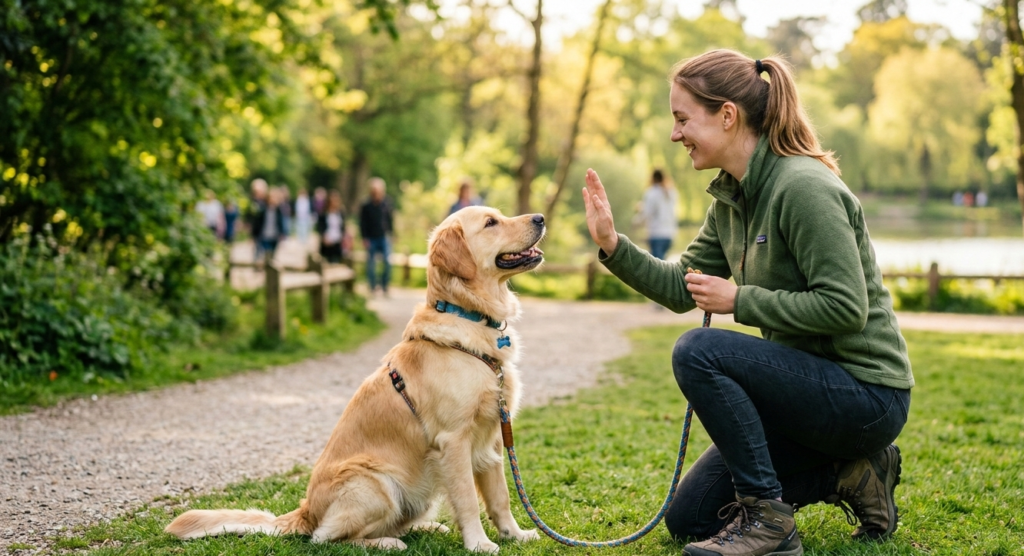
Builds a stronger bond:We spend precious time together throughout training sessions. You’re developing mutual understanding and communication skills, which improve your bond and foster trust.
Protect your dog: Simple indications like “come,” “stay,” and “leave it” can help avoid risky situations. Reliable responders can steer clear of hazards like traffic and hostile animals.
Boosts confidence: Dogs that are aware of what is expected of them feel safer. Training helps nervous dogs feel at ease in unfamiliar circumstances and stimulates their minds.
improves daily activities: it is simpler to share space with a trained dog. When your dog doesn’t pull, walking becomes enjoyable. When your dog meets guests calmly rather than jumping, they feel at home.
Obedience dog training and techniques
The fundamental orders are sit, stay, come, lie down, and leave it. Many other commands and tricks follow from these after your dog understands them.
ObedienceTraining for Crate Training
When crates remind one of peaceful, dark dens, many dogs might easily grow to adore them. Crates will seem like a secure and comforting place to be to them.3 In fact, dogs that struggle with separation anxiety may find that crate training is really beneficial.
Try these steps to train in a crate:4
Place a cozy bed, a chew toy, and other tempting objects in your dog’s crate.
After that, give your dog a treat to entice them inside.
Feed your dog inside and shut the door while they eat, after they’re comfortable with it. Once she’s finished, open the door.
Increase the duration while keeping the door closed.
Next, begin taking longer steps away.
Obedience Training for Socializing Dogs
Dogs must be socialized at a young age. Socialization is usually far more successful when they are dogs, and their brains are still developing, though they can occasionally still learn it when they are younger. When training your dog, you should not neglect this. A secure and well-adjusted dog is well-socialized.
What are the most effective dog training techniques?
1. Positive Reinforcement
Positive reinforcement is one of the most effective dog training techniques. It means rewarding your dog when they perform the correct behavior.
- Give treats, praise, or toys when your dog follows a command.
- For example, when your dog sits on command, immediately reward them.
- This encourages the dog to repeat the behavior in the future.
2. Clicker Training
Clicker training is a technique that uses a small device that makes a clicking sound to mark the exact moment your dog does something right.
- Click the device the second your dog performs the desired action.
- Immediately follow it with a treat.
- Over time, your dog understands that the click means they did something correctly.
3. Consistency in Commands
Consistency is very important in dog training.
- Always use the same command words like “sit,” “stay,” or “come.”
- Everyone in the family should use the same commands.
- Consistent rules help the dog understand what behavior is expected.
4. Short and Regular Training Sessions
Dogs learn best through short but frequent training sessions.
- Keep sessions between 5 and 15 minutes.
- Train your dog several times a day.
- End training on a positive note so your dog stays motivated.
5. Leash Training
Leash training teaches dogs to walk calmly without pulling.
- Start training in a quiet environment.
- Reward your dog when they walk beside you
- Stop walking if your dog pulls and continue only when the leash is loose.
What is the 7 7 7 rule for dogs?
1. First 7 Days – Adjustment Period
During the first 7 days, a dog is usually confused, nervous, and unsure about their new surroundings.
- The dog may hide, sleep a lot, or seem quiet.
- They are learning about their new home, smells, and people.
- Some dogs may refuse food or act shy.
2. Next 7 Weeks Learning and Bonding
After the first week, the dog begins to feel more comfortable and curious.
- They start exploring the house and surroundings.
- Their real personality begins to appear.
- This is a good time to start basic training and routines.
What you should do:
- Begin simple commands like sit, stay, and come.
- Use positive reinforcement such as treats and praise.
- Establish regular feeding, walking, and sleeping schedules.
3. Next 7 Months – Full Integration
In the next 7 months, the dog will become fully adjusted to the new home.
- They understand household rules and routines.
- Training becomes easier because they trust their owner.
- The dog feels like a real member of the family.
What are the 7 most important dog commands?
The 7 most important dog commands are basic instructions that help keep your dog safe, well-behaved, and easy to manage in everyday situations. Teaching these commands also strengthens communication and trust between you and your dog.
1. Sit
Sit is usually the first command dogs learn.
- It helps calm an excited dog.
- Useful before feeding, greeting people, or crossing roads.
- It also teaches your dog self-control.
2. Stay
The stay command teaches your dog to remain in one place until you release them.
- Prevents dogs from running into dangerous situations.
- Useful when opening doors or during complicated situations.
3. Come
Come is one of the most important safety commands.
- It ensures your dog returns to you when called.
- Helps prevent accidents or getting lost.
4. Down
The down command tells your dog to lie down.
- Helps relax overly excited dogs.
- Useful in public places or when guests arrive.
5. Leave It
Leaving it teaches your dog not to touch something.
- Prevents them from eating harmful objects or food.
- Helps control unwanted behavior.
What are the 4 stages of learning dog training?
1. Acquisition (Learning the Command)
The first stage is acquisition, where the dog is introduced to a new command or behavior for the first time.
- The dog is just beginning to understand what you want
- They may perform the command correctly only a few times.
- Training requires clear guidance and rewards.
2. Fluency (Practicing the Behavior)
In the fluency stage, the dog begins to perform the command more consistently.
- The dog responds most of the time correctly.
- Training focuses on repeating the behavior until it becomes reliable.
- Rewards and encouragement continue during this stage.
3. Generalization (Learning in Different Situations)
During generalization, the dog learns to perform the command in different environments.
- The command works not only at home but also in parks or busy places.
- Dogs understand that the command means the same thing everywhere.
- Training includes practicing in new locations with distractions.
4. Maintenance (Long-Term Habit)
The final stage is maintenance, where the behavior becomes a long-term habit.
- The dog remembers the command for months or years.
- Only occasional practice and rewards are needed.
- The behavior becomes natural and reliable.
Conclusion
Dog obedience training is essential for building a strong and healthy relationship between you and your dog. By understanding the basics of dog obedience training, using effective techniques, and teaching important commands, you can help your dog learn faster and behave better in everyday situations.
Methods such as positive reinforcement, consistency, and patience make training more successful and enjoyable for both you and your dog. Following helpful guidelines like the 7-7-7 rule, practicing the 7 most important dog commands, and understanding the four stages of learning in dog training can make the training process easier and more effective.

Puppy Obedience Training 101: A Beginner’s Guide to Raising a Well-Mannered Dog

Common Dog Behavior Problems and How to Fix Them

Puppy Commands for Off-Leash Safety: What Every Owner Needs

Best Age to Start Leash Training a Puppy for Calm Behavior

How to Fix Puppy Behavior Using Gentle Training

puppy-obedience-training-commands/Puppy Training Tips: A Complete Step-by-Step Guide for Beginners

Puppy Obedience Training 101: A Beginner’s Guide to Raising a Well-Mannered Dog
Common Dog Behavior Problems and How to Fix Them
Puppy Commands for Off-Leash Safety: What Every Owner Needs
Best Age to Start Leash Training a Puppy for Calm Behavior
How to Fix Puppy Behavior Using Gentle Training