
Dog Training
Effective Aggressive Dog Training Strategies for a Safer, Happier Pet

Summary
Aggressive dog training requires patience, consistency, and positive reinforcement to address the root causes of aggression rather than simply suppressing unwanted behavior. Common causes include fear, anxiety, pain, territorial instincts, poor socialization, and resource guarding. Effective training methods such as desensitization, counterconditioning, and teaching alternative behaviors help dogs develop healthier responses to triggers.
Proper management, including avoiding known triggers and using safety measures when necessary, is also essential. Understanding concepts like the 3-3-3 rule, 7-7-7 rule, and the 5 D’s of dog training can further support behavior improvement.
With structured training, professional guidance, and a compassionate approach, even highly reactive dogs can become calmer, safer, and more confident companions. The goal is to create a stronger bond between the dog and owner while ensuring a happier and more secure environment for everyone.
Aggressive dog training modification combines evidence-based training, consistent routines, and preventive safety protocols. Prioritize treating the underlying emotional condition and fears that contribute to aggressive conduct rather than using punishment to suppress symptoms. Teach better impulse control and reward good conduct at the same time.
Aggressively reactive dogs can become well-adjusted companions with the help of professional coaching, stimulus regulation, and structured situations. It takes perseverance, dedication, and a well-thought-out training regimen to get desired results.
However, the majority of aggressive dogs, including those deemed severely aggressive, can have their behavior changed with time, effort, and knowledge. As a result, the dog grows happier, calmer, and more self-assured.
Additionally, from a human standpoint, the dog becomes safer and better suited to the requirements, preferences, and way of life of neighbors, family, and the larger community.
Understanding the Root Causes of Dog Aggression
No breed is intrinsically aggressive, despite the fact that some breeds are more likely to display out-of-context aggressive behavior. Aggression typically results from a confluence of environmental, genetic, and epigenetic variables. The likelihood of a dog displaying abnormal fear, anxiety, territoriality, or resource guarding is increased by the previously described factors.
The emergence of aggressive conduct as a coping strategy for stress, fear, or anxiety can be significantly influenced by past trauma. Compared to dogs that receive sufficient care throughout their lives, rescue dogs that have been abandoned, abused, or neglected are more likely to display inappropriate aggressive behavior.
Similarly, a dog’s likelihood of becoming aggressive might be increased by traumatic or limited socialization at crucial developmental stages, particularly 3–4 weeks. Aggressive conduct can also be triggered by medical conditions. Inflammation, illness, or injury can all lead to pain-induced aggression.
Therefore, we advise seeing a veterinarian for a diagnosis and treatment of the underlying illness if your dog suddenly becomes violent or gets more aggressive without a recognized connection to an incident that produced psychological trauma. The primary line of treatment for the dog’s aggressive behavior in such a situation is to address the illness, injury, or inflammation.

There are two types of aggression: natural and taught. For instance, the majority of German Shepherds will instinctively protect their owners’ possessions. But if the adult German Shepherd and the Golden Retriever puppy in the family both bark, it is a learned behavior.
Resource guarding, in which a dog growls or snaps when a human or domestic animal approaches food or a toy that the growling or snapping animal prefers, is another example of learned behavior. The aggressive animal learns that growling or snapping is a useful coping strategy for preserving control of resources if the receiving party, whether human or animal, retreats.
Knowing the aforementioned differences makes it easier to choose the best training strategy for a given dog’s personality and situation. Understanding sheds light on the intricate dog psychology that drives an aggressive dog’s behavior.
Why Do Dogs Show Aggression?
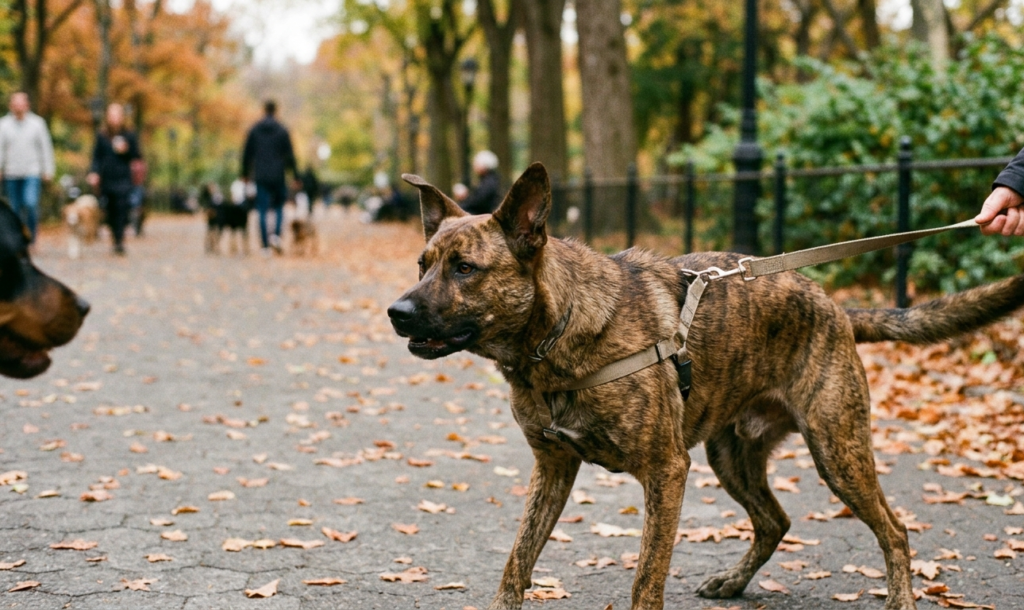
Dogs naturally exhibit aggression as part of their species-specific behavioral repertoire. However, when it is displayed in a way that jeopardizes the security and welfare of humans or other animals, it can become problematic. Dogs often exhibit hostility for the following reasons:
Fear or anxiety:
Anxiety or fear brought on by a human, another animal, or a circumstance may manifest as aggression. In this instance, the aggressive dog uses antagonism to put more space between itself and a perceived threat.
Pain or illness:
Dogs that are ill or in pain frequently have a lower threshold for things that they wouldn’t normally be bothered by. Aggression may become more likely as a result of this.
Territorial instincts:
Despite being domesticated, dogs still share some instincts with their wild relatives, such as the need to defend their home. This may show up as aggressive behavior (such as barking, growling, and lunging) at other animals, people, or guests.
Resource guarding:
In order to obtain or keep access to valuable resources, some dogs resort to violence. When a dog had to fight for resources (such as food) as a puppy or had her resources taken away from her on a regular basis, this behavior frequently developed.
How To Train an Aggressive Dog
To safely and successfully educate an aggressive dog, you must understand the underlying cause of the aggression. Take the following actions before starting to train your aggressive dog:

Desensitization and counterconditioning
Involves exposing the dog to the trigger gradually at a level that does not cause an angry reaction and that the dog can tolerate. In order to shift the dog’s emotional response from a negative to a positive association, counterconditioning is used concurrently, which requires pairing the trigger with happy experiences (high-value food works best).
Teaching an alternate behavior:
During this training, once the dog begins to anticipate the rewards, you can ask for a behavior, such as sitting or looking, and reward it with the treats when the trigger is present.
Patience, repetition, and consistency:
It takes time to train an aggressive dog, and the process is usually nonlinear. This implies that there will be both good and bad days. The secret is to work at your dog’s pace while remaining patient and consistent.
Frequent observation and modification as necessary:
It’s critical to track your dog’s development and stay in contact with your behaviorist or trainer so they may modify the training regimen as necessary. Celebrate any progress you and your dog make.
How To Manage and Handle an Aggressive Dog
Aggressive dog training People and other animals may avoid bite injuries if an aggressive dog is handled and managed well. The goal is to handle the dog in a way that protects you, other people, and other animals while avoiding, or at the very least limiting, situations that cause hostility.
Aggressive dog training This could involve tactics like using a muzzle, walking the dog in places where they are less likely to come across aggressive triggers, and always walking the dog on a lead when they are outside the house. Dogs who exhibit hostility toward guests should always be kept physically apart from them.
When it comes to handling, don’t try to physically move your dog by pulling them by the collar, for example, as this would probably result in an aggressive reaction. Instead, if you need to move them from point A to point B, use positive reinforcement, like their food or expensive goodies, to get them to follow you.
Time, consistency, repetition, competent management, and a gentle, positive reinforcement-based training method are all necessary for training an aggressive dog. Because aggressive dogs are dangerous to other people, it is strongly advised to train them with an expert.
When to Seek Professional Help
Aggressive dog training When reactive or aggressive events occur, professional help is essential:
- An increase in frequency
- Increase in intensity, spread to more situations,
- happen at lower trigger thresholds, or cause your dog to bite someone,
- another dog, or a cat.
CPT Head Trainers are skilled, informed, educated, and experienced dog behaviorists. We advise making an appointment prior to a disastrous event that hurts a friend or neighbor, damages a local dog or cat, results in animal control fines, places your dog under quarantine, or requires you to defend a lawsuit.
What is the best method for training aggressive dogs?
Aggressive dog training The best method for training aggressive dogs is positive reinforcement combined with behavior modification. Instead of punishing unwanted behavior, reward your dog for remaining calm and responding appropriately to commands.
Identify the triggers that cause aggression, such as strangers, other dogs, or loud noises, and gradually expose your dog to them in a controlled environment while rewarding calm behavior. Consistency, patience, and professional guidance can help create lasting improvements and build trust between you and your dog.
What is the 3-3-3 rule for dog training?
Aggressive dog training The 3-3-3 rule helps owners understand how dogs adjust to a new home. During the first 3 days, dogs may feel overwhelmed, nervous, or withdrawn. After 3 weeks, they begin to settle in, learn routines, and feel more comfortable with their surroundings.
Aggressive dog training By 3 months, most dogs have built trust, adapted to their new environment, and started to show their true personality. Following this rule can help owners set realistic expectations and support their dog’s transition.
What is the 7-7-7 rule for dogs?
Aggressive dog training The 7-7-7 rule encourages dogs to experience seven different people, seven new environments, and seven positive challenges within a safe and controlled period. This approach helps improve socialization, confidence, and adaptability.
Aggressive dog training By gradually exposing dogs to new experiences, owners can reduce fear-based behaviors and create a well-rounded, confident companion that is comfortable in a variety of situations and settings.
What are the 5 D’s of dog training?
Aggressive dog training The 5 D’s of dog training are Distance, Duration, Distraction, Difficulty, and Diversity. Distance refers to how far you are from your dog while giving commands, while Duration measures how long your dog can maintain a behavior. Distraction focuses on training around tempting or exciting situations.
Aggressive dog training Difficulty involves gradually increasing the complexity of tasks, and Diversity means practicing commands in different locations and environments. Together, these principles help dogs reliably obey commands in real-world situations.
Conclusion
Aggressive dog training A planned, evidence-based approach that puts safety, emotional healing, and long-term behavioral change first is necessary when working with an aggressive dog. Even highly reactive dogs can learn self-assurance, stability, emotional control, and healthy coping mechanisms with
regular routines, tailored behavior-modification techniques, and preemptive environmental stimulation reduction.

Puppy Obedience Training 101: A Beginner’s Guide to Raising a Well-Mannered Dog

Common Dog Behavior Problems and How to Fix Them

Puppy Commands for Off-Leash Safety: What Every Owner Needs

Best Age to Start Leash Training a Puppy for Calm Behavior

How to Fix Puppy Behavior Using Gentle Training

puppy-obedience-training-commands/Puppy Training Tips: A Complete Step-by-Step Guide for Beginners

Puppy Obedience Training 101: A Beginner’s Guide to Raising a Well-Mannered Dog
Common Dog Behavior Problems and How to Fix Them
Puppy Commands for Off-Leash Safety: What Every Owner Needs
Best Age to Start Leash Training a Puppy for Calm Behavior
How to Fix Puppy Behavior Using Gentle Training