
Puppy Training
How 777 Roles of Puppy Training Can Transform Your Dog’s Behavior

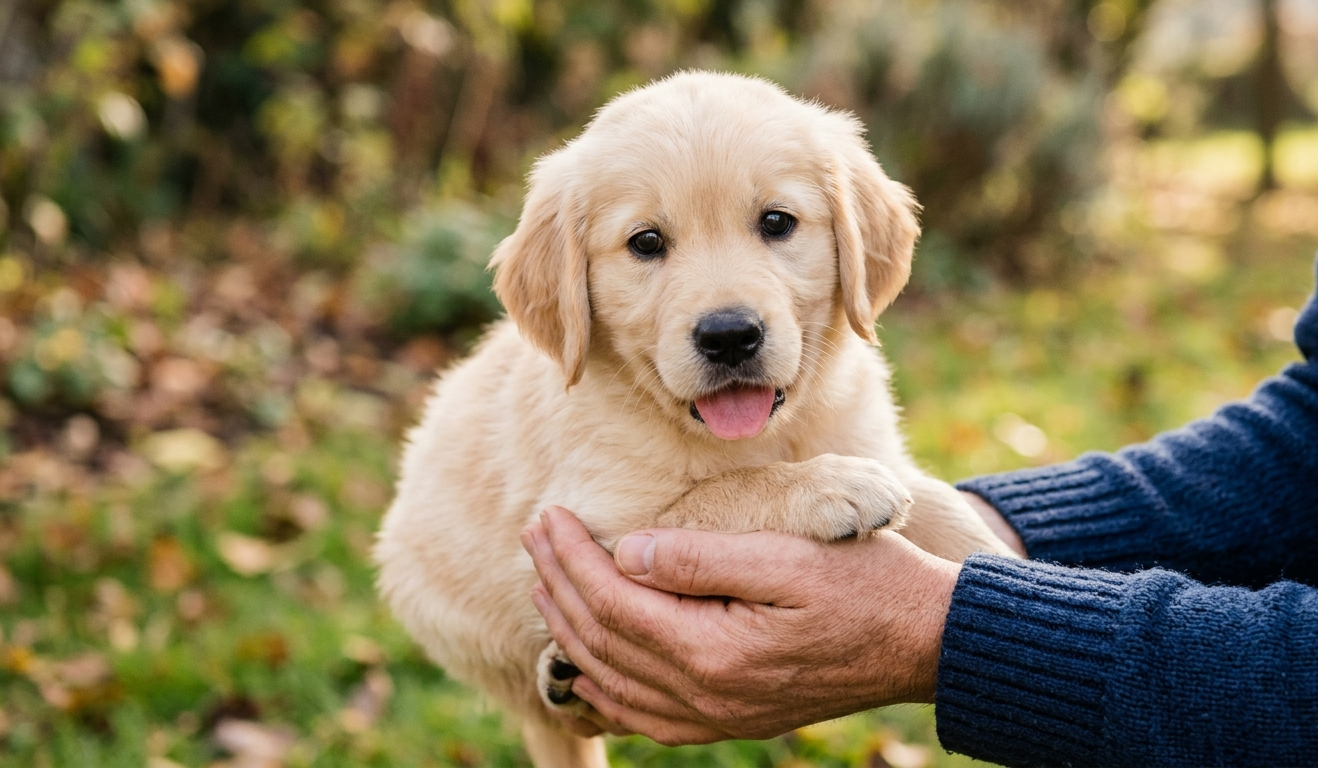
Puppy training is the foundation of raising a well-behaved, happy, and confident dog. From the moment your puppy enters your home, every interaction plays a role in shaping their behavior, habits, and personality. Without proper guidance, even the cutest puppies can develop unwanted behaviors like excessive barking, biting, or destructive chewing.
That’s why starting early with the right training approach is essential for long-term success. Puppy training is not just about teaching basic commands; it’s about building communication, trust, and discipline.
A structured approach like the 777 roles of puppy training helps you guide your puppy through every stage of development, from learning simple commands to developing emotional stability and social skills. This method ensures that no aspect of your puppy’s growth is overlooked.
Puppy training, when done consistently and positively, can completely transform your dog’s behavior. It turns confusion into clarity, chaos into control, and frustration into a strong, loving bond. In this guide, you’ll discover how the 777 roles of puppy training can shape your dog into a well-mannered companion and make your journey as a dog owner far more rewarding.
What exactly are the 777 roles of puppy training?
The idea of 777 roles is not to carry out hundreds of commands to memory. Instead, it is a comprehensive set of training responsibilities that cover all facets of your puppy’s development.
These roles include:
- Behavioral training
- Socialization
- Emotional development
- Communication skills
- Habit building
- Obedience training
- Environmental adaptation
7 Roles of Puppy Training Explained
- Training in Basic Commands
Teaching your puppy basic instructions like sit, stay, come, and down is the main goal of this function. These instructions help your puppy comprehend your expectations and serve as the cornerstone of obedience. By doing these every day, you can help your dog become more disciplined and manageable.
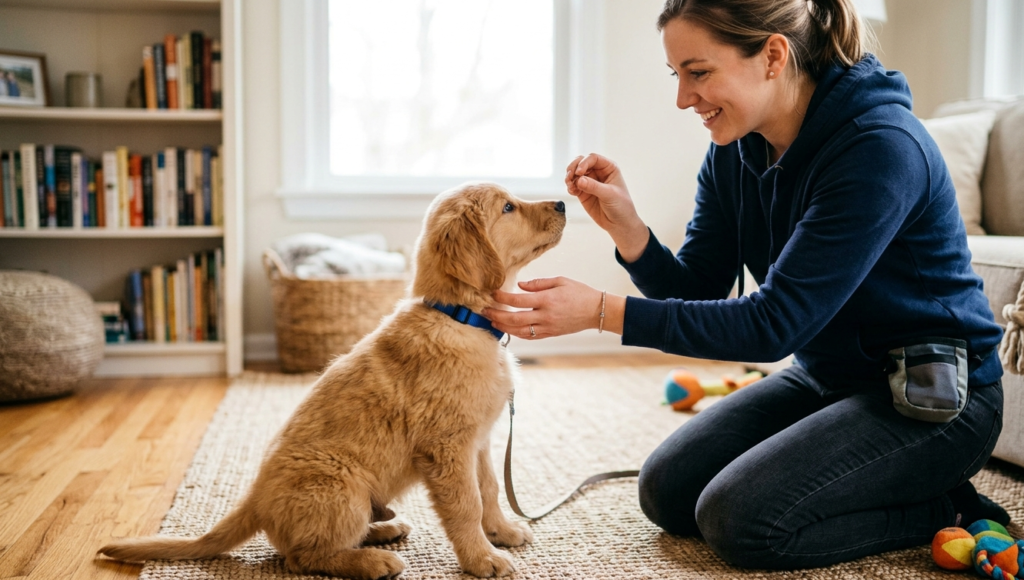
2.Training at Home
House training teaches your puppy how to use the bathroom properly. By teaching them where and when to go, it keeps your house tidy. This procedure is quicker and more efficient when it follows a regular schedule and receives encouragement.
3.Training in Crater.
Your dog will have a secure and cozy personal area thanks to crate training. Additionally, it discourages damaging activity when you’re not around and aids with housebreaking. When the crate is used properly, your puppy will feel safe and at ease.
4. Training in Socialization
Your pooch will feel more at ease around people, animals, and unfamiliar surroundings thanks to this position. Early exposure lessens anger, fear, and anxiety. A well-socialized puppy develops into an amiable and self-assured canine.
5.Leash Training
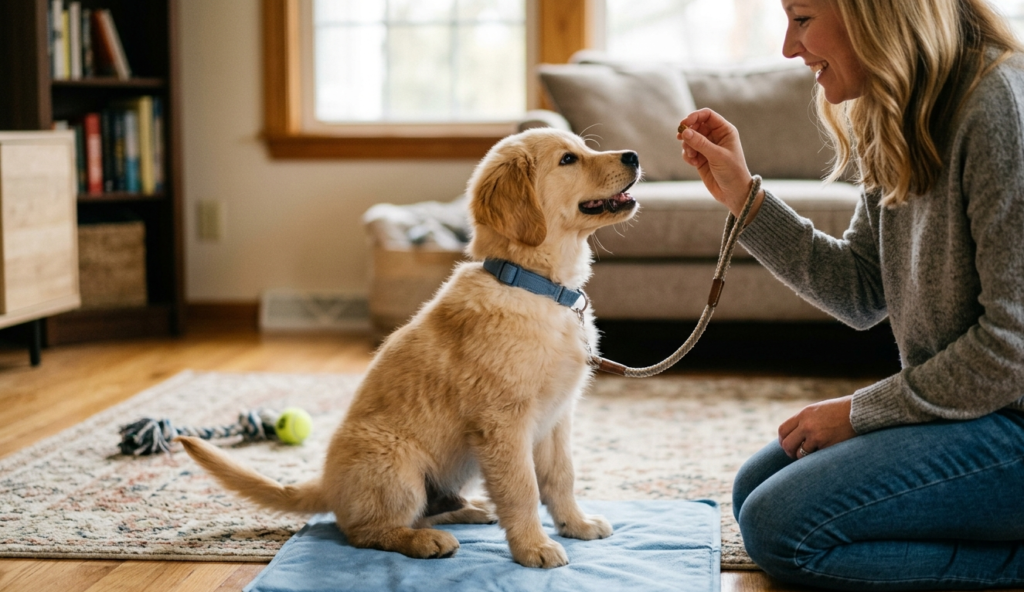
Your puppy can learn to walk calmly next to you without pulling or jumping, thanks to leash training. It guarantees improved management in public areas and enhances the pleasure of walks. Rewards and consistency are essential for success.

6.Training for Bite Inhibition
Puppies must learn to suppress their natural tendency to bite when playing. They learn to be kind and refrain from harming others in this capacity. This behavior is developed by redirecting their biting to toys and pausing play when necessary.
7.Training with Positive Reinforcement
This is among the best training techniques. Instead of criticizing bad behavior, it encourages rewarding positive behavior. Your puppy will learn more quickly and repeat good behaviors if you give them toys, treats, and praise.
7 Roles of Puppy Training (Table)
| # | Role of Puppy Training | What It Means | How to Apply | Result |
| 1 | Basic Commands Training | Teaching essential commands | Practice daily with rewards | Better obedience |
| 2 | House Training | Teaching potty habits | Follow routine and reward success | Clean home |
| 3 | Crate Training | Providing a safe space | Make crate comfortable and positive | Less anxiety |
| 4 | Socialization Training | Exposure to people and pets | Introduce new environments | Confident behavior |
| 5 | Leash Training | Walking calmly on leash | Reward calm walking | Controlled walks |
| 6 | Bite Inhibition Training | Controlling biting behavior | Redirect to toys, stop play | Gentle behavior |
| 7 | Positive Reinforcement | Rewarding good actions | Use treats and praise | Faster learning |
Common Mistakes to Avoid
Typical Errors to Avoid
Many pet parents make mistakes when training their puppies, even with the greatest of intentions.
Steer clear of these:
Inconsistency
Your puppy will become confused and make less progress if you change the guidelines.
Training Based on Punishment
Severe punishment can incite hostility and terror.
Lacking patience
It takes time to train. Anticipate gradual progress rather than immediate outcomes.
Ignoring Socialization
Your puppy may develop anxiety and fear if you don’t introduce them to new situations.
Advice for Successful Puppy Training
Use these helpful pointers to get the most out of the 777 roles approach:
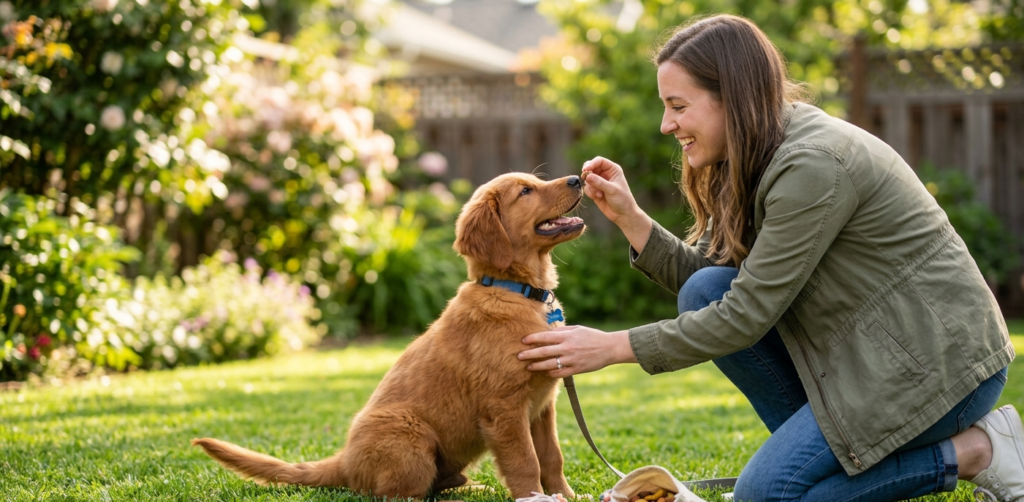
Get Started Early
It is simpler to mold behavior if you start early.
Keep Sessions Short
Puppies can’t focus for very long. Work out for five to ten minutes at a time.
Make Use of Positive Reinforcement
Reward good behavior with play, treats, or compliments.
Be Consistent
Use the same guidelines and directives each time.
Have patience.
Each puppy learns at a different rate.
1. What are the 777 roles of puppy training?
The 777 roles of puppy training is a complete and structured training system designed to develop every important aspect of a puppy’s behavior. It is not limited to basic commands only; instead, it focuses on obedience, communication, discipline, socialization, and emotional balance.
The main idea is to guide your puppy step by step so they grow into a well-mannered, confident, and friendly adult dog. This training approach works by dividing learning into different roles that cover all behavioral areas of a dog’s life.
From early habits to long-term discipline, it ensures nothing is missed during the critical growth stages of your puppy. That’s why many dog trainers prefer structured methods like this for long-lasting results.
2.Why is puppy training important?
Puppy training is extremely important because it shapes your dog’s behavior during the early stage of life when learning ability is at its highest. Without proper training, puppies may develop bad habits such as biting, barking excessively, jumping on people, or destroying household items.
These behaviors become harder to control as the dog grows older. Training also builds a strong bond between the owner and the puppy. It improves communication, trust, and understanding, making daily life easier and more enjoyable. A well-trained puppy is not only well-behaved but also more confident and comfortable in different environments.
3.At what age should puppy training start?
Puppy training should ideally begin at around 8 weeks of age, which is when puppies start adapting to their new home and surroundings. At this stage, they are very receptive to learning simple commands and routines. Starting early helps set the foundation for good behavior and prevents unwanted habits from forming.
Early training also helps puppies understand basic rules such as potty training, social behavior, and obedience commands. The sooner you begin, the easier it becomes to shape their behavior in a positive direction, making future training much smoother and more effective.
4.How long does it take to train a puppy?
The time it takes to train a puppy depends on several factors, such as age, breed, personality, and how consistent the owner is during training. Some puppies learn very quickly, while others may take a little more time to fully understand commands and routines. There is no fixed timeline because every puppy learns at its own pace.
Basic training like sit, stay, and come can usually be learned within a few weeks if practiced daily in short, focused sessions. However, this does not mean the puppy is fully trained. At this stage, they are only beginning to understand commands, and repetition is very important to strengthen their learning.
Complete behavior training, including obedience, discipline, leash walking, and socialization, usually takes a few months of consistent effort. Training is not a one-time process, it is continuous. With patience, regular practice, and positive reinforcement, your puppy gradually develops into a well-behaved and well-adjusted adult dog.
5.What is the most important role in puppy training?
All roles in puppy training are important, but basic obedience training and positive reinforcement are considered the true foundation of a well-behaved dog. Without obedience, a puppy cannot understand or follow instructions, and without positive reinforcement, learning becomes slow and stressful. Together, these two roles create the base on which all other training skills are built.
Basic obedience training focuses on teaching essential commands like sit, stay, come, and down. These commands help you communicate clearly with your puppy and guide their behavior in daily life. It also gives structure to your puppy’s routine, making them more disciplined, calm, and easier to manage in different situations.
On the other hand, positive reinforcement makes the learning process enjoyable for your puppy. Instead of punishment, you reward good behavior with treats, praise, or play. This encourages your puppy to repeat positive actions and helps build trust between you and your dog. It also reduces fear and confusion during training.
When obedience training and positive reinforcement are combined, they create a powerful learning system. Your puppy not only learns faster but also enjoys the process of training. This combination strengthens your bond, improves communication, and makes all other training roles more effective in the long run.
Conclusion
Puppy training is not just a task; it is a lifelong investment in your dog’s behavior, happiness, and well-being. By following a structured system like the 777 roles of puppy training, you can guide your puppy through every important stage of development, from basic obedience to emotional balance and social confidence. This approach helps you build a strong foundation that shapes a calm, disciplined, and well-mannered dog.
In the end, success in puppy training depends on consistency, patience, and positive reinforcement. When you stay committed to daily practice and understand your puppy’s needs.you don’t just train a pet, you build a deep and lasting bond. A well-trained puppy grows into a loyal companion that brings joy, comfort, and balance to your life for many years.

Puppy Obedience Training 101: A Beginner’s Guide to Raising a Well-Mannered Dog

Common Dog Behavior Problems and How to Fix Them

Puppy Commands for Off-Leash Safety: What Every Owner Needs

Best Age to Start Leash Training a Puppy for Calm Behavior

How to Fix Puppy Behavior Using Gentle Training

puppy-obedience-training-commands/Puppy Training Tips: A Complete Step-by-Step Guide for Beginners

Puppy Obedience Training 101: A Beginner’s Guide to Raising a Well-Mannered Dog
Common Dog Behavior Problems and How to Fix Them
Puppy Commands for Off-Leash Safety: What Every Owner Needs
Best Age to Start Leash Training a Puppy for Calm Behavior
How to Fix Puppy Behavior Using Gentle Training