
Puppy Training
How Soon Can I Potty Train My Puppy? Expert Tips for Fast Success

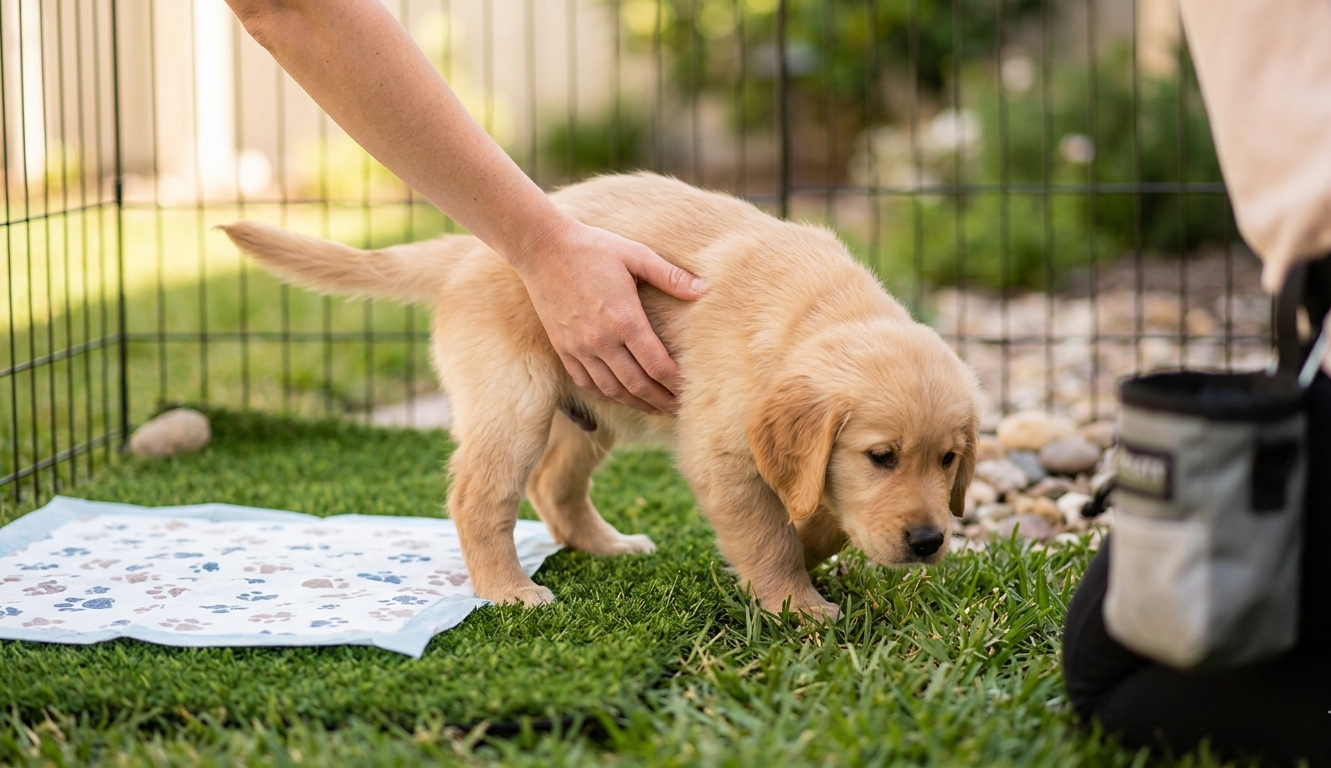
Potty training is one of the first and most important lessons every puppy needs to learn. While bringing home a new puppy is exciting, dealing with accidents around the house can quickly become stressful for many dog owners. One of the most common questions new pet parents ask is: “How soon can I potty train my puppy.
The good news is that most puppies can begin learning potty habits almost immediately after coming home. However, full potty training takes patience, consistency, and the right techniques. Some puppies learn within a few weeks, while others may take several months depending on their age, breed, personality, and training routine.
In this complete guide, you’ll learn how long potty training usually takes, the best expert tips for fast success, common mistakes to avoid, and practical strategies that make puppy potty training easier and more effective.
When Should You Start Potty Training a Puppy?
Potty training should begin as soon as your puppy gets home. The ideal time to start teaching pups proper potty habits is when they are 8 to 10 weeks old. Accidents are entirely normal in the beginning because young puppies are still learning how to manage their bladder.
Early training, however, makes it easier for your puppy to know where they should and shouldn’t go.
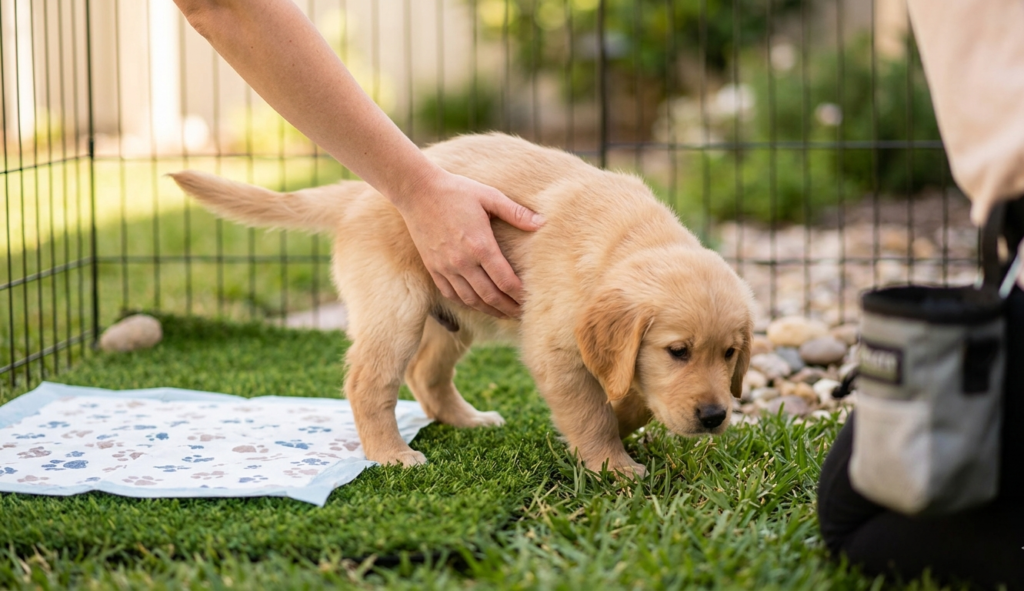
Starting early offers many benefits:
- Builds healthy routines quickly
- Prevents bad habits from developing
- Helps puppies feel secure and confident
- Makes future obedience training easier
- Reduces stress for owners
Puppies learn through repetition and consistency. The earlier you establish a routine, the faster your puppy will understand what is expected.
How Long Does It Take to Potty Train a Puppy?
Although each puppy learns differently, most puppies are mostly toilet-trained by the time they are four to six months old. While some breeds may require more time and care, others may pick things up more quickly.
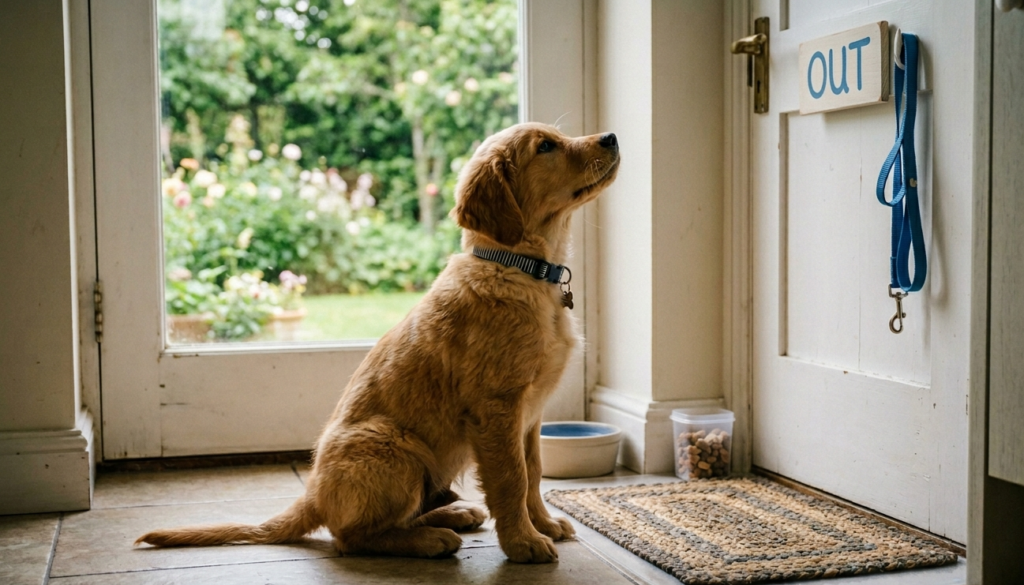
A general timeline for potty training is as follows:
| Puppy Age | Potty Training Progress | ||||
| 8–10 weeks | Frequent accidents, little bladder control | ||||
| 10–12 weeks | Starts understanding routines | ||||
| 5–6 months | Most puppies become mostly trained | ||||
| 6–12 months | Full consistency develops |
Due to their smaller bladders, smaller dog breeds like Yorkies or Chihuahuas may require more time. Bigger breeds frequently acquire bladder control more quickly. Keep in mind that consistency is more important than speed. The finest long-term outcomes are typically achieved with a methodical and careful approach.
Understanding Your Puppy’s Bladder Control
Your puppy’s physical capacity to contain their urine is a critical component of successful toilet training. A typical guideline that many trainers employ is:
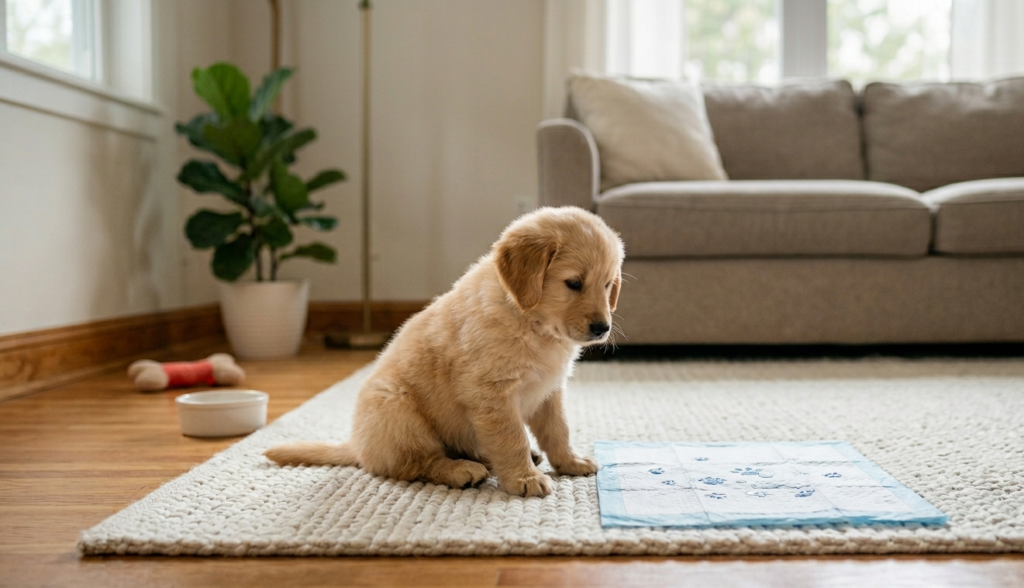
A puppy can usually hold their bladder for one hour per month of age.
For example:
- 2-month-old puppy = about 2 hours
- 3-month-old puppy = about 3 hours
- 4-month-old puppy = about 4 hours
But during activity, after meals, or after drinking water, pups regularly require toilet breaks. Young puppies are just not able to “hold it” for extended periods of time. Owners can avoid discomfort and set reasonable expectations by being aware of this.
Signs Your Puppy Needs to Go Potty
One of the quickest ways to avoid mishaps indoors is to become familiar with your puppy’s signals. Before they need to go outside, the majority of puppies exhibit behavioral or physical symptoms.
Keep an eye out for these typical warning signs:
Repeatedly sniffing the floor.
Circling around
Play abruptly stopped
Unexpectedly whining or barking.
scratching at the entrance
- Pacing or restlessness
- Squatting position
Take your puppy outdoors to their toilet area in a calm manner as soon as you observe these behaviors. Your puppy will associate outdoor excursions with bathroom time more quickly if you react quickly.
Expert Tips for Fast Puppy Potty Training Success
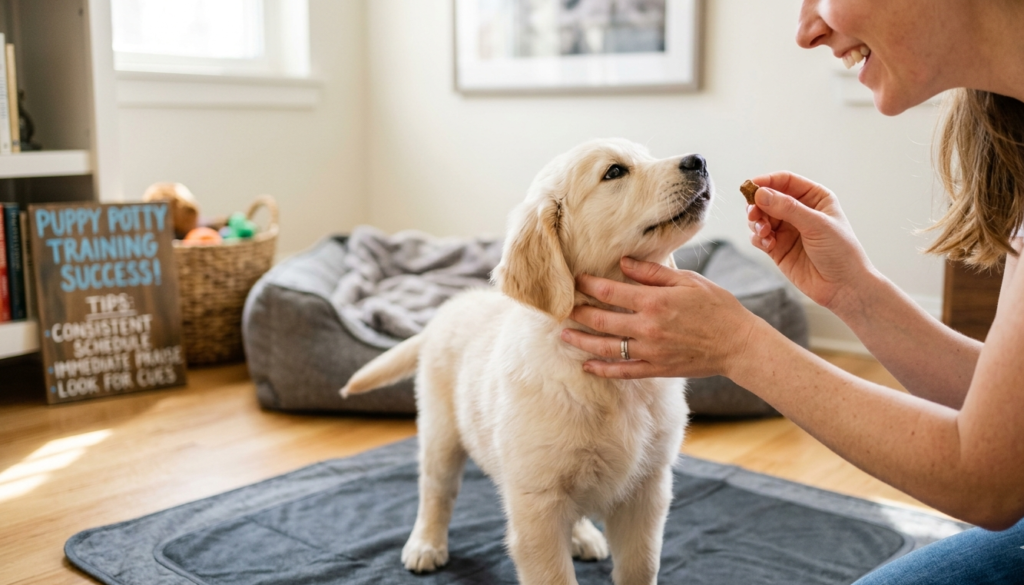
1. Create a Consistent Daily Routine
Routine is essential for dogs. Puppies who have a regular routine are better able to understand when and where toilet breaks occur.
Take the puppy outside:
- Right after you wake up
- After meals
- After consuming water
- Following a nap
- Following periods of play
- Ahead of bedtime
For potty training to be successful, consistency is essential.Instead of waiting too long, increase the number of potty breaks if your puppy has frequent accidents.
2. Always Use Positive Reinforcement
One of the best techniques for training puppies is positive reinforcement.
Each time your puppy successfully uses the restroom outside:
- Give them heartfelt praise.
- Give a tiny treat right away.
- Speak in a joyful tone.
- Play or show affection.
Your dog will learn exactly what they did well if you reward the action right away. Your dog might not associate the incentive with toilet activity if you wait a few minutes to give it to them.
3. Choose One Potty Area
Training can be accelerated significantly by using the same outside potty location each time. Dogs are naturally able to detect odors, and puppies are encouraged to use the restroom in the proper place by familiar fragrances.
When you take your puppy outside:
- Proceed straight to the restroom.
- Play should not be distracting at first.
- Use a standard command, such as “Go potty.”
- Be patient.
When your dog is done, give them a reward right away.
4.Supervise Your Puppy Closely
Due to owners’ failure to recognize early warning indicators, many potty training mishaps occur.
Until your puppy is properly trained:
- Keep them visible indoors.
- If necessary, use baby gates.
- Restrict access to big spaces.
- When training indoors, use a leash.
Potty training may take longer if your puppy engages in more mishaps indoors. Errors are stopped in their tracks by supervision.
Common Potty Training Mistakes to Avoid
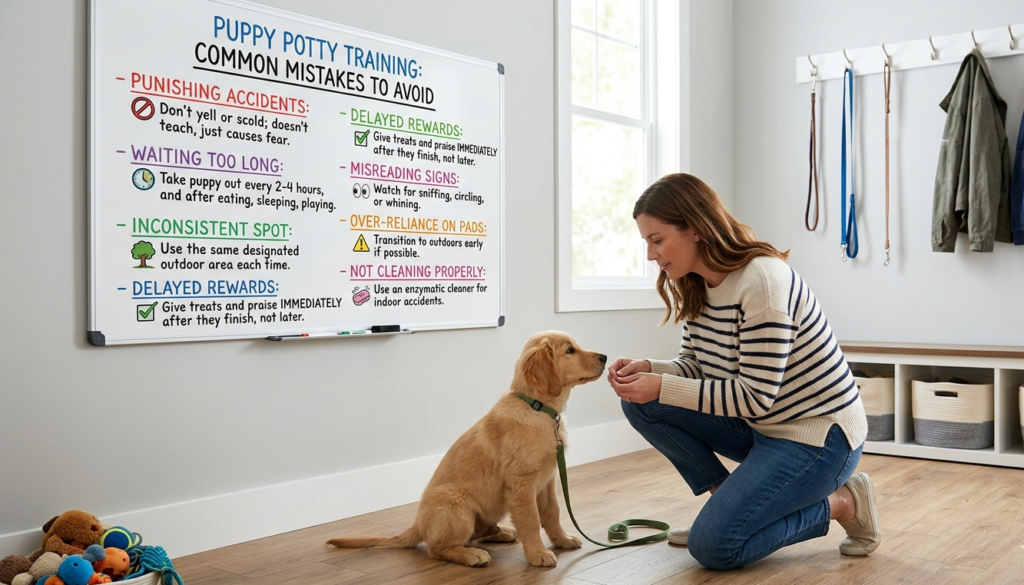
Punishing Your Puppy
Fear, worry, and perplexity can result from punishing accidents. Rather than learning appropriate toilet behavior, your pooch can learn to conceal mishaps.
- Rather than punishment:
- Calmly stop accidents
- Take your pet outside right away.
- Reward outdoor potty trips that are successful.
Giving Too Much Freedom Too Soon
Before training is finished, giving puppies unlimited access to the house frequently results in unreported mishaps. As your puppy grows more dependable, gradually give them more independence.
Inconsistent Training
Puppies get confused when family members employ different routines, rules, or commands. The same potty training regimen should be followed by every member of the household. Learning is greatly accelerated by consistency.
How fast can a puppy be potty trained?
Most puppies start learning potty habits within a few weeks, but complete potty training usually takes around 4 to 6 months. The speed of training depends on your puppy’s age, breed, personality, and how consistent you are with the routine. Some puppies learn faster when they receive regular outdoor breaks, positive reinforcement, and close supervision.
Young puppies have small bladders and limited control, so accidents are normal in the beginning. Staying patient and following a daily potty schedule can help your puppy learn much faster and develop long-term good habits.
What is the easiest dog breed to potty train?
Some dog breeds are naturally easier to potty train because they are highly intelligent and eager to please their owners. Labrador Retrievers, Golden Retrievers, Poodles, and Border Collies are often considered among the easiest breeds for potty training.
However, every puppy is different regardless of breed. Consistent training, positive rewards, and proper supervision play a much bigger role in success than breed alone. Even stubborn breeds can become fully potty trained with patience and routine.
Should I wake my puppy up at night to pee?
Yes, very young puppies often need nighttime potty breaks because they cannot hold their bladder for long periods. Puppies under 3 to 4 months old may need to go outside at least once during the night to prevent accidents in the crate or sleeping area.
As your puppy grows older, bladder control improves naturally. Gradually, your puppy will begin sleeping through the night without needing bathroom breaks. Keeping a consistent bedtime routine can speed up this process.
Is crate training necessary for potty training?
Crate training is not absolutely necessary, but it is one of the most effective tools for faster potty training. Dogs naturally avoid soiling their sleeping area, so a properly sized crate helps puppies learn bladder control and reduces indoor accidents.
When used correctly, the crate becomes a safe and comfortable space for your puppy. However, the crate should never be used as punishment because this can create fear and anxiety instead of positive learning.
It is very important to choose the correct crate size. The crate should be large enough for your puppy to stand up, turn around, and lie down comfortably, but not so large that they can use one side as a bathroom area. If the crate is too big, your puppy may not learn proper bladder control as effectively.
Crate training should always be a positive experience for your puppy. Never use the crate as punishment or force your puppy to stay inside for long periods. Add soft bedding, safe chew toys, and treats to make the crate feel secure and comfortable. With patience and consistency, crate training can become one of the most helpful tools for successful potty training.
Conclusion
Potty training a puppy is one of the most important parts of raising a happy and well-behaved dog. While every puppy learns at a different pace, most puppies can start understanding potty routines within a few weeks when training is consistent and positive. Creating a daily schedule, rewarding good behavior, and staying patient during accidents are the keys to long-term success.
Remember that potty training is a gradual process, not something that happens overnight. With proper supervision, regular outdoor breaks, and positive reinforcement, your puppy will slowly build healthy bathroom habits and gain better bladder control. Staying calm and consistent will help your puppy feel more confident and secure during training.
In the end, the time and effort you invest in potty training will strengthen the bond between you and your puppy while creating a cleaner, less stressful home environment.

Puppy Obedience Training 101: A Beginner’s Guide to Raising a Well-Mannered Dog

Common Dog Behavior Problems and How to Fix Them

Puppy Commands for Off-Leash Safety: What Every Owner Needs

Best Age to Start Leash Training a Puppy for Calm Behavior

How to Fix Puppy Behavior Using Gentle Training

puppy-obedience-training-commands/Puppy Training Tips: A Complete Step-by-Step Guide for Beginners

Puppy Obedience Training 101: A Beginner’s Guide to Raising a Well-Mannered Dog
Common Dog Behavior Problems and How to Fix Them
Puppy Commands for Off-Leash Safety: What Every Owner Needs
Best Age to Start Leash Training a Puppy for Calm Behavior
How to Fix Puppy Behavior Using Gentle Training