
Puppy Training
Leash Training a Puppy: 10 Expert Tips That Work Like Magic


Leash training your puppy or adult dog is one of the most important steps you can take for your dog’s physical and mental health. You both receive wonderful exercise, and your pooch stays happy and healthy when you can keep your puppy under control during a walk. Leash training a puppy can have major benefits for you and your puppy.
In practical terms, a leash allows your puppy to explore their new environment while giving you control and safety. Walking your puppy also requires it. Walking offers a chance to spend quality time with your family, is healthy for both you and your puppy , and aids in training. Everyone’s walks are more productive and pleasurable when they are leash-trained.
Walking your pooch can be an enjoyable way to spend time together, but if you’re not properly trained to use a leash, it can soon become a stressful tug-of-war. It’s never too late to start, whether you have a brand-new puppy or an older dog who never really mastered leash manners. Our goal is to assist you and your pet in becoming great walkers.
Teaching Leash Walking Step-by-Step
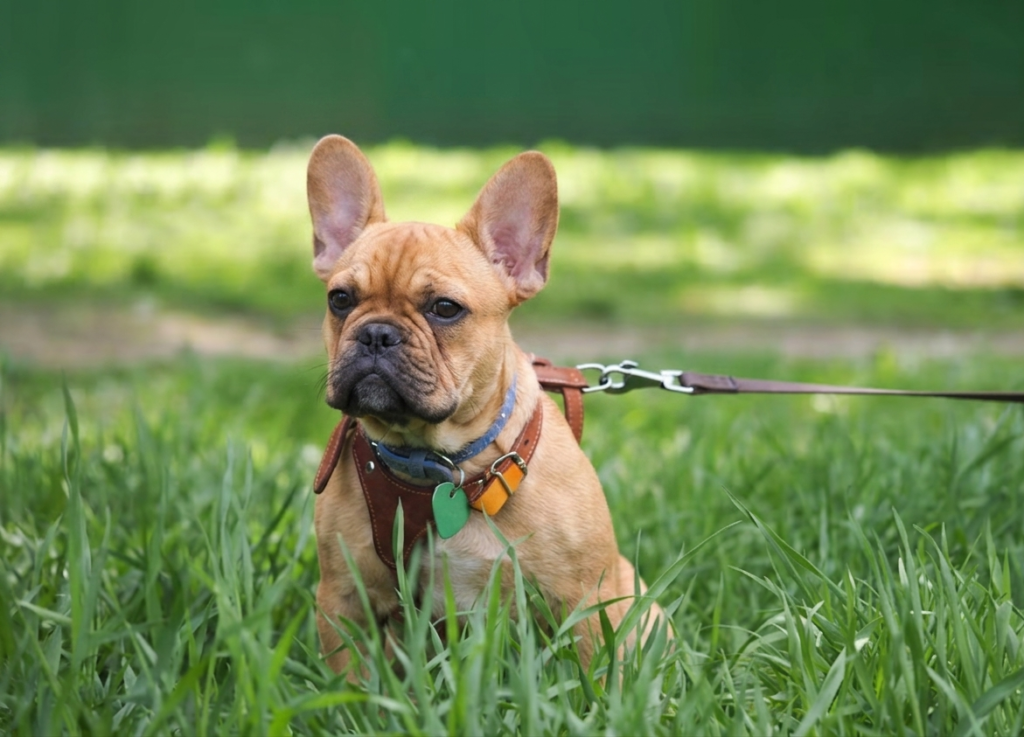
Leash training You can start leash walking right away as you get your puppy at home. Begin by getting used to wearing a harness and attaching a leash to it. At a young age, rewarding your pet for this behavior will help them learn how important it is to be near you .
1.Introducing a Marker Word
Your puppy must fully understand the reward marker before you can begin leash training. The clicker or a verbal marker like the word “yes” could be this marker. You want your pet to associate the click or marker word with doing the proper thing. Thus, a treat is on the way!
Leash training In a calm place, start by clicking or using your spoken marker word. Give your puppy a reward right away. Your pooch will begin to look to you for a treat when they hear your verbal marker or clicker after a few repetitions.
Leash training Your puppy will learn that they’ve done well when they hear this after a few repeats. The clicker/reward marker can now be used during training. Make sure you only use your reward marker when you can give your puppy a treat. They’ve been taught to anticipate it.
2.Rewarding Attention and Eye Contact
Puppies find the world to be both intriguing and distracting. We want to make sure that our puppies know that being close to us is rewarding as we work on their leash walking skills. In order to train puppies to watch us, we will first mark and treat them whenever they make eye contact or pay attention to us.
When your pooch looks at you while on a leash, click or use your marker word to reward them with a treat. We need to practice the art of engagement. Miller says, “We focus on those auto check-ins and eye contact.
Our pets are likely to exhibit this behavior in the future when going for walks since they have established value through checking in with us. This will ensure that they will naturally want to be near us.
3.Let’s Go or With Me Cues,
According to Let’s Go or With Me Cues, it’s essential to let our pets know exactly where we’re going as we walk so they won’t just be pulled along. For her, that means teaching general walk-with-me cues like “let’s go” and directional cues for turning left and right.
You’ll pair the cue with movement to accomplish this. Then, as you begin to walk, click, mark, and treat the dog every few steps. Say your dog’s name to grab their attention when it’s time to turn or change directions.
4.Teaching Automatic Leash-End Lookback
Sometimes your puppy will reach the end of the leash, even when walking on a loose leash. Instead of pulling on the leash, we want to teach your pooch to instinctively check in with us when they do this.
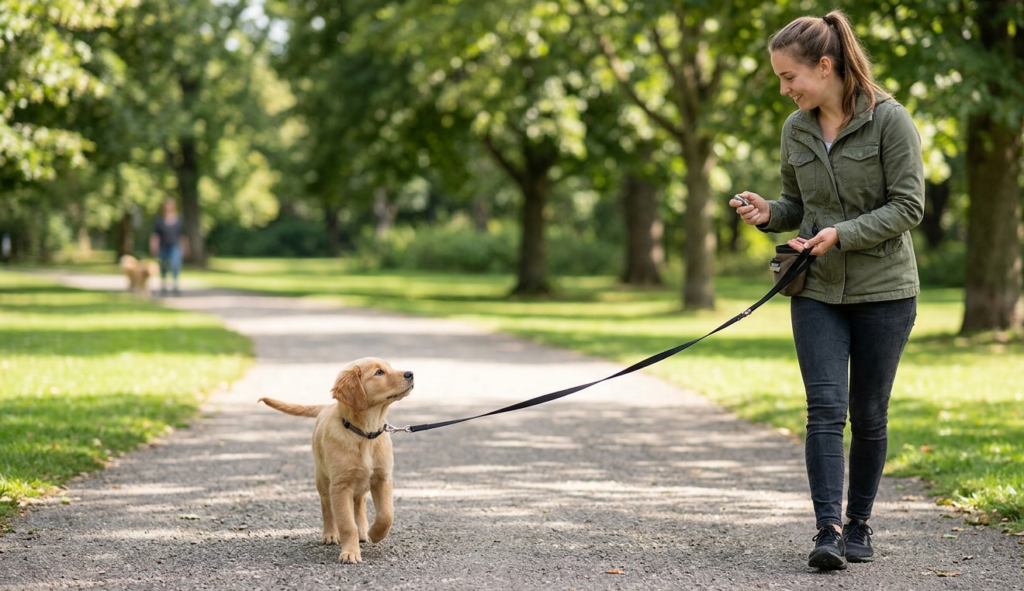
Miller tells pupils to pronounce their puppy’s name when they get to the end of the leash in order to accomplish this. “You start moving again when they look back, and you mark it, and they come back to you to get the reward.” Your puppy will learn to check in at the end of the leash automatically after receiving several rewards.
5.Bringing It Outside
You can start introducing your puppy to the distractions of being outside once they can walk on a loose leash inside your home or in the area. Make sure you have an abundance of inexpensive goodies on hand. Next, encourage your puppy to observe, and offer them praise if they pay attention. Cue your puppy to begin walking, and when you do so, give them lots of praise.

6.Common Leash Training Challenges
The secret to leash training is patience. It can take some time for puppies to fully understand the concept of loose leash walking, particularly in the presence of distractions. The main problem, according to Miller, is puppy owners “not telling our dogs what we do want.
Leash training In particular, we need to let our pets know when we’re going to change directions and that we want them to walk with us if we know they shouldn’t be pulling on their leashes. Another common issue is when a puppy tries to play with or pull at the leash by chewing on it.
7.Give Puppies More Choices
Giving your puppy more opportunities to sniff and choose where to walk may seem paradoxical, but it will help them pull less. Puppy owners should “make sure that they are going somewhere
several times a week where their puppy can just sniff and go wherever they want according to Miller.Puppies’ enrichment needs are greatly satisfied by these sniffy stroll possibilities, which allow them to explore and choose their own walking paths.
8.Formal Heeling Versus Leash Walking
It helps to visualize what you want leash walking to look like while teaching your pooch to walk on a leash. People typically want a puppy to walk beside them on a loose leash without tripping anyone or tugging on the leash.
Unlike AKC Rally or Obedience, polite leash walking is not a formal heel cue. If you follow those activities, you can eventually teach formal heeling, which is a more advanced talent. In order to walk on a loose leash, our dog must remain close to us and be able to walk behind us without dragging.
9.Pulling
It helps to visualize what you want leash walking to look like while teaching your puppy to frequently pull while they are on a leash. Instead of responding by pulling the leash, remain motionless until your puppy comes back to you.
Walk once more when they’ve calmed down. It’s crucial to have patience because this may take some time. To avoid too many distractions, such as squirrels to chase, start in your outdoor space.

10.Lunging, Barking, and Growling
Leash training Try to identify your puppy’s aggressive responses before they happen if you are aware of them. Give your puppy treats and make space between them and their trigger. This will teach them to pay attention to you when they notice a skateboarder, another puppy , etc.
How to teach puppy leash training?
Leash training a puppy starts with helping them feel comfortable wearing a collar or harness and introducing the leash in a calm, positive way. Let them wear it indoors first so it doesn’t feel scary. Begin walking in a quiet area and keep the leash loose; when your puppy walks beside you without pulling, reward them with treats or praise so they learn that staying close is a good thing.
If they start pulling, stop walking immediately and wait until the leash relaxes before moving again, teaching them that pulling won’t get them forward. Keep sessions short and fun, be consistent, and avoid harsh corrections over time, and your puppy will understand how to walk politely on a leash.
What is the 7 7 7 rule for puppies ?
Leash training with 7-7-7 rule for puppies is a simple socialization guideline that helps build a confident and well-adjusted dog. By around 7 weeks or the early puppy stage, your puppy should be gently introduced to 7 different people, 7 new environments like parks, streets, or homes .
7 different experiences, such as car rides, sounds, or surfaces. The goal is to expose them to variety in a positive, stress-free way so they grow up comfortable with the world instead of fearful or anxious.
How do you say ” I love you” in puppy speak?
Leash training In puppy “language,” saying I love you isn’t about words, it’s about actions and body signals. Dogs show love through gentle eye contact, tail wagging, staying close to you, licking, and relaxed body posture.
You can “say it back” by using a calm, soft voice, giving gentle pets, spending quality time, and being consistent and kind. These signals help your puppy feel safe, happy, and deeply connected to you.
What is the 5-second rule for walking puppies?
Leash training The 5-second rule for walking puppies is a quick way to check if the ground is safe for their paws. Place the back of your hand on the pavement for 5 seconds, and if it feels too hot or uncomfortable for you, it’s too hot for your puppy to walk on. This helps prevent burns and keeps walks safe, especially in warm weather.
Conclusion
Leash training your puppy takes patience, consistency, and positive reinforcement, but the results are truly worth it. By teaching proper leash manners early, you build a strong bond with your puppy while ensuring safe, stress-free walks.
Leash training Remember, every puppy learns at their own pace, stays calm, rewards good behavior, and keeps training sessions enjoyable. With time and practice, your puppy will become a confident, well-behaved walking companion.

Puppy Obedience Training 101: A Beginner’s Guide to Raising a Well-Mannered Dog

Common Dog Behavior Problems and How to Fix Them

Puppy Commands for Off-Leash Safety: What Every Owner Needs

Best Age to Start Leash Training a Puppy for Calm Behavior

How to Fix Puppy Behavior Using Gentle Training

puppy-obedience-training-commands/Puppy Training Tips: A Complete Step-by-Step Guide for Beginners

Puppy Obedience Training 101: A Beginner’s Guide to Raising a Well-Mannered Dog
Common Dog Behavior Problems and How to Fix Them
Puppy Commands for Off-Leash Safety: What Every Owner Needs
Best Age to Start Leash Training a Puppy for Calm Behavior
How to Fix Puppy Behavior Using Gentle Training